The American Genocide of the Indians—Historical Facts and Real Evidence

Totally disagree.
Sure there have been lots of invaders, but they generally are just out for some booty and they leave.
What the British colonists in the USA did was totally different.
We did not just do an imperialist colony like France and Spain did in Canada and Mexico.
Instead we tried to commit total genocide, and managed to use things like Smallpox and starvation by wiping out the buffalo, to kill over 90% of the Native Americans.
Invaders normally do not do that.
Like the Romans never wiped out local populations.
Neither did the Spanish, Mongols, Moghuls, Tatars, Turks, or anyone really.


It was the perfect storm or the "unperfect" Storm perhaps, yeah other civilizations off teh top of my head did not do that, however in what is now the U.S. it was partly a case of the modern world clashing with the old, a nation that had just come out of a civil war and had some very war hardened individuals in the ranks, gold found in the west, multiple peoples from many cultures immigrating into the U.S. ( it was not just British Colonists), not making excuses for bad things done, but if you made an algebraic equation out of it all, the components thrown into the U.S. equation was much different than Canada's and Mexico.. completely different set of circumstances. On the east coast you had a nation moving rapidly into industrialization, demanding resources...and the leadership back in Washington was far removed from whatever was going on in the West.
 
Indians did not have the wheel or gunpowder

They did have the wheel (multiple cultures had toys with wheels, and they did use the precursor of rolling logs to move heavy objects). So they absolutely understood what a "wheel" was. But without beasts of burden, there was no real use for the wheel. Nothing to pull a cart, and with the primitive agriculture (once again limited by no beasts of burden), not enough of a surplus to need carts in the first place.

And along with that all the other myriad things that follow the domestication of large livestock. Like writing, road making, more advanced forms of government, advanced mathematics, huge increases in the amount of land that can be planted and harvested, the list just goes on and on.

And really, gunpowder? Which had only been in Europe for about 200 years before they arrived in the Americas? Does that mean they were backwards and had "no technology" compared to the Chinese, who had invented it over 400 years earlier?

Oh, and do not even try to spin with the wheelbarrow. The first culture to invent that was the Chinese, in the 1st century BCE. Which happens to be about 2,000 years after the first chariot. And in Europe? Try the 12th century. Think about that, it took over a thousand years after the Chinese invented the wheelbarrow for it to appear in Europe.
 
And they were not organized

Not organized?

Holy hell, I guess the Mayans, Olmecs, Inca and Aztecs are all just fictional then.

And the Confederations that had developed in the tribes around the Great Lakes. Like the Three Fires Confederation, formed in around 800 CE. Or the Iroquois Confederacy, formed in the 12th century.

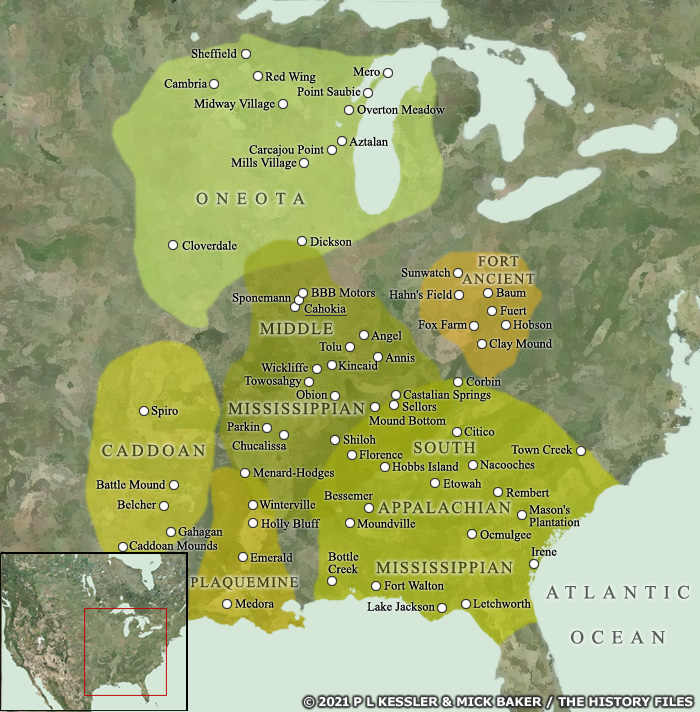
Or hell, the Mississippian Culture! That was a huge organization of multiple tribes, that covered most of the SE USA.

Map_Cultures_Mississippian_max.jpg


Now we do know a hell of a lot, such as it was an enormous culture with hundreds of settlements having been discovered. However, it was also like those that made Gobekli Tepe a pre-literate culture so it is almost impossible to know many details about how it operated. Other than it started to fragment in the mid 14th century, and had completely imploded at around the time of the War of the Roses in England.

But it was a culture that is believed to have been one of the largest Chalcolithic cultures on the planet. Not even Egypt before the Bronze Age was anywhere near as large as the Mississippian Culture was.

And the Aztecs actually were not unlike the Roman Empire, in that they had multiple "client tribes" that owed them fealty but were not actual members. Not unlike the status of the multiple client kingdoms of Rome. Except Rome did not demand they attack other non-affiliated tribes and bring back captives for human sacrifice in Rome.

It seems to me that you really do not know anything about American Indians before the Europeans arrived.
 
What I know is the concept of "war crimes" did not even EXIST until 1899.

Wrong.

The first organized "War Crime Trial" was in 1474, then the Burgundian knight Peter von Hagenhach was tried in a tribunal of the Holy Roman Empire for the crimes of his men. And he was convicted, sentenced to death, and executed.

There is also the Lieber Code, who fought in the Napoleonic Wars before emigrating to the US. And after the outbreak of the US Civil War, he wrote up a tract on how there should be an organized code of conduct for combatants. Which President Lincoln adapted into General Order 100 in 1863. And in it there were among things like the proper treatment of prisoners and non-combatants, and what were considered to be war crimes.


That was the first International Convention to discuss them, but the concept goes back much farther than that.
 
They did not do torture or slavery? are you sure of that? havent you ever heard of the Comanche? Not only did they torture but they also did slave trading

Most tribes had slavery. The Maya even had a form of chattel slavery. The Aztecs of course had slavery, but most of them were destined to have their hearts cut out on an alter in the end. The Haida and Tlingit of the Pacific Northwest not only had slavery, but were active slave traders in the Pre-Columbian era. Raiding other tribes for prisoners they would sell to other tribes.

And I have already mentioned the Morning Star Ritual of the Pawnee. We know the early Pawnee were part of the Mississippian Culture, and we also know that culture performed human sacrifices. And the Morning Star Ritual might be a holdover from that era. Where they would kidnap a pubescent girl from another tribe. Then after "grooming" her for several months torture her, gang rape her, then kill her and leave her body staked face down in the dirt in order to ensure the crops the next year were good.

I have to just shake my head at how some people completely misunderstand American Indian cultures.
 
It was the perfect storm or the "unperfect" Storm perhaps, yeah other civilizations off teh top of my head did not do that, however in what is now the U.S. it was partly a case of the modern world clashing with the old, a nation that had just come out of a civil war and had some very war hardened individuals in the ranks, gold found in the west, multiple peoples from many cultures immigrating into the U.S. ( it was not just British Colonists), not making excuses for bad things done, but if you made an algebraic equation out of it all, the components thrown into the U.S. equation was much different than Canada's and Mexico.. completely different set of circumstances. On the east coast you had a nation moving rapidly into industrialization, demanding resources...and the leadership back in Washington was far removed from whatever was going on in the West.
You are correct about the timeline of gunpowder in Europe

However even 200 years gave them a huge advantage over the natives
 
Not organized?

Holy hell, I guess the Mayans, Olmecs, Inca and Aztecs are all just fictional then.

And the Confederations that had developed in the tribes around the Great Lakes. Like the Three Fires Confederation, formed in around 800 CE. Or the Iroquois Confederacy, formed in the 12th century.

Or hell, the Mississippian Culture! That was a huge organization of multiple tribes, that covered most of the SE USA.

Map_Cultures_Mississippian_max.jpg


Now we do know a hell of a lot, such as it was an enormous culture with hundreds of settlements having been discovered. However, it was also like those that made Gobekli Tepe a pre-literate culture so it is almost impossible to know many details about how it operated. Other than it started to fragment in the mid 14th century, and had completely imploded at around the time of the War of the Roses in England.

But it was a culture that is believed to have been one of the largest Chalcolithic cultures on the planet. Not even Egypt before the Bronze Age was anywhere near as large as the Mississippian Culture was.

And the Aztecs actually were not unlike the Roman Empire, in that they had multiple "client tribes" that owed them fealty but were not actual members. Not unlike the status of the multiple client kingdoms of Rome. Except Rome did not demand they attack other non-affiliated tribes and bring back captives for human sacrifice in Rome.

It seems to me that you really do not know anything about American Indians before the Europeans arrived.
No native American Indian tribe qualified as organized when compared to the Europeans

All the tribes were swept aside by the new rulers of North America
 
Most tribes had slavery. The Maya even had a form of chattel slavery. The Aztecs of course had slavery, but most of them were destined to have their hearts cut out on an alter in the end. The Haida and Tlingit of the Pacific Northwest not only had slavery, but were active slave traders in the Pre-Columbian era. Raiding other tribes for prisoners they would sell to other tribes.

And I have already mentioned the Morning Star Ritual of the Pawnee. We know the early Pawnee were part of the Mississippian Culture, and we also know that culture performed human sacrifices. And the Morning Star Ritual might be a holdover from that era. Where they would kidnap a pubescent girl from another tribe. Then after "grooming" her for several months torture her, gang rape her, then kill her and leave her body staked face down in the dirt in order to ensure the crops the next year were good.

I have to just shake my head at how some people completely misunderstand American Indian cultures.
To be fair the europeans were descended from tribes just as primitive as the North American Indians

But by the time the two cultures met the Euro’s were far more advanced
 
Most tribes had slavery. The Maya even had a form of chattel slavery. The Aztecs of course had slavery, but most of them were destined to have their hearts cut out on an alter in the end. The Haida and Tlingit of the Pacific Northwest not only had slavery, but were active slave traders in the Pre-Columbian era. Raiding other tribes for prisoners they would sell to other tribes.

And I have already mentioned the Morning Star Ritual of the Pawnee. We know the early Pawnee were part of the Mississippian Culture, and we also know that culture performed human sacrifices. And the Morning Star Ritual might be a holdover from that era. Where they would kidnap a pubescent girl from another tribe. Then after "grooming" her for several months torture her, gang rape her, then kill her and leave her body staked face down in the dirt in order to ensure the crops the next year were good.

I have to just shake my head at how some people completely misunderstand American Indian cultures.
The Aztec also were cannibals. One of the reason their client tribes turned against them.
 
My point is the Indian killed whatever way to satisfy their needs, they were not driven by $$$$$$$$$$$$$$$$$$ like the white man.
They wasted meat and destroyed the environment as mich as anyone else only within the limitation of their technology

They were motivated by $$$$$$$$$$$ as soon as they nearned what $$$$$$$$$ was from contact with whites

$$$$$$$$$ is not a bad thing nor does motive to get it equal some sort of moral idictment for whites
 
My point is the Indian killed whatever way to satisfy their needs, they were not driven by $$$$$$$$$$$$$$$$$$ like the white man.
mr stick----Indians were motivated by WEALTH AND POWER just as is and has been by the rest
of humanity. They were not motivated by kindness to Buffalo
 
irosie91 can be a pill, but, oh, yes, the indigenous were motivated by power and greed.
 
As a ritual, not a food source.

Most Christians are cannibals also, so the point is?
That ritual witnessed the eating of tens of thousands of sacrificial victims per year.

At what point is it recognized as a food source?
 
15th post
They did have the wheel (multiple cultures had toys with wheels, and they did use the precursor of rolling logs to move heavy objects). So they absolutely understood what a "wheel" was. But without beasts of burden, there was no real use for the wheel. Nothing to pull a cart, and with the primitive agriculture (once again limited by no beasts of burden), not enough of a surplus to need carts in the first place.

And along with that all the other myriad things that follow the domestication of large livestock. Like writing, road making, more advanced forms of government, advanced mathematics, huge increases in the amount of land that can be planted and harvested, the list just goes on and on.

And really, gunpowder? Which had only been in Europe for about 200 years before they arrived in the Americas? Does that mean they were backwards and had "no technology" compared to the Chinese, who had invented it over 400 years earlier?

Oh, and do not even try to spin with the wheelbarrow. The first culture to invent that was the Chinese, in the 1st century BCE. Which happens to be about 2,000 years after the first chariot. And in Europe? Try the 12th century. Think about that, it took over a thousand years after the Chinese invented the wheelbarrow for it to appear in Europe.
You don't need beasts of burden to find the wheel useful. Wheelbarrows are universally found in all cultures outside the Americas as are pushcarts. A wheelbarrow roughly quadruples the carrying capacity of a person a pushcart does even more.
 
You think total war is acceptable. To you anything goes in war. You know nothing about the Geneva Conventions.

You know nothing of the wars fought in Europe for centuries, where the combatants did their best to avoid civilian casualties.

The Confederacy during the War of Northern Aggression demanded their troops refrain from harming civilians. Your great beloved Lincoln used total war tactics against the south.

Read a book for once.
Europeans never tried to avoid civilian casualties. Rape, murder and the burning of civilian property outside towns and cities was common, in fact it was the rule. Prior to the advent of railroads armies could be followed by the trail of destruction left in their wake. They looted the countryside for supplies and sieges always ended in orgies of mass rape, murder and arson.
 
Europeans never tried to avoid civilian casualties. Rape, murder and the burning of civilian property outside towns and cities was common, in fact it was the rule. Prior to the advent of railroads armies could be followed by the trail of destruction left in their wake. They looted the countryside for supplies and sieges always ended in orgies of mass rape, murder and arson.
Dumb. Throughout the 18th and 19th centuries, Europe
Europeans never tried to avoid civilian casualties. Rape, murder and the burning of civilian property outside towns and cities was common, in fact it was the rule. Prior to the advent of railroads armies could be followed by the trail of destruction left in their wake. They looted the countryside for supplies and sieges always ended in orgies of mass rape, murder and arson.
Now you admit to being ignorant. Never? Really?

Civilian Protection in War

In pre-modern wars, civilians were not typically seen as targets, and there was often an incentive to protect the population as they were an important economic element. This perspective is reflected in historical practices where the preservation of the civilian population was considered beneficial for the long-term stability and economic health of a region. The idea that civilians could be a strategic asset rather than a target is also supported by the notion that destroying civilian infrastructure or population could lead to long-term economic and social costs, which might outweigh any short-term military gains.Additionally, the protection of civilians was often seen as a way to maintain order and ensure the continued functioning of the economy, which was crucial for sustaining military efforts. However, it is important to note that this does not mean that civilians were never harmed; rather, the approach to warfare often involved a balance between military objectives and the preservation of civilian resources.
 
Back
Top Bottom