
- Thread starter
- #301
Navigation
Install the app
How to install the app on iOS
Follow along with the video below to see how to install our site as a web app on your home screen.
Note: This feature may not be available in some browsers.
More options
Style variation
You are using an out of date browser. It may not display this or other websites correctly.
You should upgrade or use an alternative browser.
You should upgrade or use an alternative browser.
Zone1 Tax the Rich! Make them Pay their Fair Share!
- Thread starter Chuz Life
- Start date

there4eyeM
unlicensed metaphysician
- Jul 5, 2012
- 21,425
- 5,829
- 280
This is something the rich should have been able to see coming and could easily have avoided it. Instead, they have exacerbated it. Like the extremists about firearms, refusal to re-examine and reform will lead to results that will be undesirable for everyone.

Carl in Michigan
Diamond Member
- Aug 15, 2016
- 65,298
- 50,107
- 3,615
Great idea if you change the fact that the top 1% of earners receive more than the bottom 60% in tax breaks and grants.

Top Content on LinkedIn
Explore top LinkedIn content from members on a range of professional topics.www.linkedin.com
The bottom 50% had an average tax rate of 3.7%, while the average tax rate for the top 1% was 26.1%

Grumblenuts
Gold Member
- Oct 16, 2017
- 16,064
- 5,543
- 210
"Workers Over Billionaires" is the more common version. Ask Musk if he feels violated by either phrasing.. ("Hey Grok, what does 'People Over Billionaires' mean?")Caught this on the car in front of me, today.
Is it not a fascist mentality to believe that "Billionaires" are not people too?View attachment 1174073

WorldWatcher
Platinum Member
The bottom 50% had an average tax rate of 3.7%, while the average tax rate for the top 1% was 26.1%
Now do total tax burden as the OP said and not just Federal Income tax.
WW
Carl in Michigan
Diamond Member
- Aug 15, 2016
- 65,298
- 50,107
- 3,615
You want the "rich" to pay a higher sales tax percentage?Now do total tax burden as the OP said and not just Federal Income tax.
WW
Are their property taxes higher?
WorldWatcher
Platinum Member
You want the "rich" to pay a higher sales tax percentage?
Nope.
Stop trying for a gott’cha by putting words in peoples mouths.
Are their property taxes higher?
Yep…. Are their rates higher? Normally not.
.
.
.
Now examine total tax burden as a function of percentage of income, not on in terms raw dollars.
All taxes federal, state, sales, embedded, etc.
WW
Carl in Michigan
Diamond Member
- Aug 15, 2016
- 65,298
- 50,107
- 3,615
Not everyone believes in your "progressive" tax system. People need incentive to earn more.Nope.
Stop trying for a gott’cha by putting words in peoples mouths.
Yep…. Are their rates higher? Normally not.
.
.
.
Now examine total tax burden as a function of percentage of income, not on in terms raw dollars.
All taxes federal, state, sales, embedded, etc.
WW
Carl in Michigan
Diamond Member
- Aug 15, 2016
- 65,298
- 50,107
- 3,615
Carl in Michigan
Diamond Member
- Aug 15, 2016
- 65,298
- 50,107
- 3,615

BULLDOG
Diamond Member
- Jun 3, 2014
- 105,192
- 38,782
- 2,250
That doesn't sound too bad until you consider what they actually paid after tax breaks and deductionsThe bottom 50% had an average tax rate of 3.7%, while the average tax rate for the top 1% was 26.1%
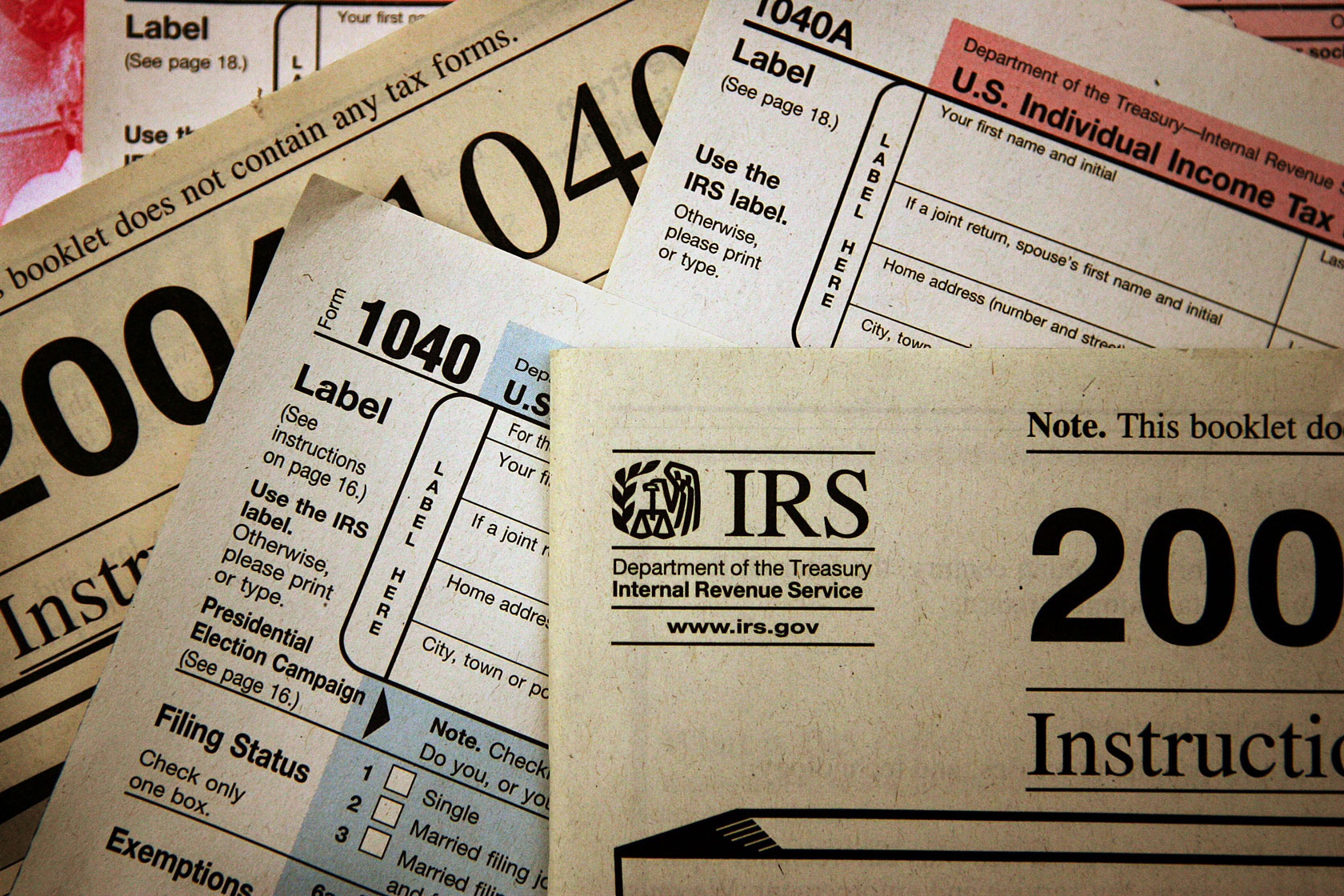
These 19 Fortune 100 Companies Paid Next to Nothing—or Nothing at All—in Taxes in 2021
Analysis shows that during a year of high corporate profits, many of the biggest corporations in America either paid minimal or no federal income taxes.
 www.americanprogress.org
Attachments

Admiral Rockwell Tory
Diamond Member
Your typing sucks and your math is bad. Do better.You just answered your own question.
Let's say the federal budget is $7 Trillion ($7,000,000,000,000) and the population is 330,000,000 people. That's $21,212.12 for every man, woman and child.
The idea is that everyone in the population is taxed equally. That's a little over $21K per person.
#1 Example: A person make an income of $1,000,000. Their tax is 2% of income.
#2 Example: A person makes $100,000. Their tax is 21.2% of income with $79K remaining.
#3 Example: A person make $25,000. Their tax is $84.8 of income with $4K remaining.
.
.
.
.
Using your definition of "...a burden, strain, or heavy demand..." who has a higher burden placed on their ability to function in sociaty. Who will find it a burden, strain, or heavy demand to supply the basics of Maslow's Hierarchy (food and shelter).
Oh, and the above assumes that all 330,000,000 people CAN work so exclude children, the elderly, the disabled, etc. The numbers are even worse.
If you want to assign the same amount (instead of percentage) as the "tax" on each person, give it a go. It ain't passing though.
And that's just the federal budget. Figure in State taxes which also tend to be percentage based and fixed taxes (property tax, sales tax, embedded taxes, etc. which are an ADDITIONAL tax burden and tend to be regressive and impact lower in middle income classes more than "the rich" exspecially when you look at total tax buren as a percentage of income.
This is just an example of concept of why we have a percentage based system instead of a fixed shared system. So don’t nit pick the numbers.
What would you suggest to replace a percentage system?
WW
WorldWatcher
Platinum Member
Not everyone believes in your "progressive" tax system. People need incentive to earn more.
Wrong again, seems to be an issue with you when you make assumptions about what others believes.
I actually support a relatively equal total tax burden as a function of percentage of all income.
All taxes considered include federal income taxes, state taxes, local taxes, FICA taxes, sales taxes, and embedded taxes.
All income includes wagers, salary, interest, dividends, stock options, pensions, capital gains, etc.
WW

leftwinger
Diamond Member
Everyone follows Tax Law to best of their abilities (but for daredevil criminals).
STAIN has a problem with the DEM RINO Tax code, not the filers.
If they have 100K employees each, they pay their income tax. 100s' of billions paid indirectly in all companies
They also re-invest capital per FED or local incentives. See states luring hi-tech. Ho-hum.
It gets messy. You already paid income Tax before you traded stocks? Lot of bookkeeping to keep track of simple sales tax or gas tax.
Property tax. Easy. But rich pay millions. Poor pay zero.
STAIN has a problem with the DEM RINO Tax code, not the filers.
If they have 100K employees each, they pay their income tax. 100s' of billions paid indirectly in all companies
They also re-invest capital per FED or local incentives. See states luring hi-tech. Ho-hum.
That doesn't sound too bad until you consider what they actually paid after tax breaks and deductions
These 19 Fortune 100 Companies Paid Next to Nothing—or Nothing at All—in Taxes in 2021
Analysis shows that during a year of high corporate profits, many of the biggest corporations in America either paid minimal or no federal income taxes.
Wrong again, seems to be an issue with you when you make assumptions about what others believes.
I actually support a relatively equal total tax burden as a function of percentage of all income.
All taxes considered include federal income taxes, state taxes, local taxes, FICA taxes, sales taxes, and embedded taxes.
All income includes wagers, salary, interest, dividends, stock options, pensions, capital gains, etc.
WW
It gets messy. You already paid income Tax before you traded stocks? Lot of bookkeeping to keep track of simple sales tax or gas tax.
Property tax. Easy. But rich pay millions. Poor pay zero.
WorldWatcher
Platinum Member
You already paid income Tax before you traded stocks?
Yes, that's why you don't pay income tax on the sale price of stocks, you pay income tax on only the profit.
And when someone does sell stocks they have held for a year or more that qualifies as long term capital gaines.
- 0% between other income of $0-$48,350
- 15% between other income of $48,351 to $533,400
- 20% over $533,400
So when you look at FIT only and the rates, it appears that high income earner pay more - which they do as an amount basis.
No look at taxable income (all sources) compared to total tax burden as a percentage.
Lot of bookkeeping to keep track of simple sales tax or gas tax.
So? They are still part of the tax burden.
Property tax. Easy. But rich pay millions. Poor pay zero.
Again, you focus on the dollar amount, not tax burden as a percentage of income.
WW
Let’s say one is required to take $40,000 from his IRA, and sells $40,000 of stock because he needs $80,000 for the year. The amount of gain from the stock sale is $20,000.Yes, that's why you don't pay income tax on the sale price of stocks, you pay income tax on only the profit.
And when someone does sell stocks they have held for a year or more that qualifies as long term capital gaines.
Regular tax rates over $48,000 are 22%, 24%, 32%, 35% and for over $530,000 are 35% and 37%
- 0% between other income of $0-$48,350
- 15% between other income of $48,351 to $533,400
- 20% over $533,400
So when you look at FIT only and the rates, it appears that high income earner pay more - which they do as an amount basis.
No look at taxable income (all sources) compared to total tax burden as a percentage.
So? They are still part of the tax burden.
Again, you focus on the dollar amount, not tax burden as a percentage of income.
WW
Is the $20,000 capital gain entirely tax-free since the regular income (from the IRA) is less than $48,000? Or is the $20,000 added to the $40,000 from the IRA taxable because total income exceeds $48,000?
WorldWatcher
Platinum Member
Let’s say one is required to take $40,000 from his IRA, and sells $40,000 of stock because he needs $80,000 for the year. The amount of gain from the stock sale is $20,000.
Is the $20,000 capital gain entirely tax-free since the regular income (from the IRA) is less than $48,000? Or is the $20,000 added to the $40,000 from the IRA taxable because total income exceeds $48,000?
I believe - check with a tax professional - that aggregate income is determined first to determine the Capital Gains Bracket, then that bracket applies to all capital gains.
In the above example - again check with a tax professional - aggregate income equals $40,000 as the $20,000 originally invested in the stocks already had income tax applied, so the resulting "profit" from the sale is $20,000. The tax rate would then be 0%.
In another scenerio - again check with a tax professional - add Social Security into the mix. Now the individual as incomies of $40,000 plus SS. So let's say SS is $2000 a month or $24,000 per year. That results in 40K + 24K = $64,000 in income. The Capital Gains rate applied would be 15% ($3,000). If taxes were paid at the standard rate for $64K, that would be 22% ($4400) on the stock income.
The suggested scenerio and alternate scenerios are based on gross income, however Captial Gains are actually based on Adjusted Gross Income after deductions. Just to be clear.
WW
Thanks so much for this explanation. Appreciate the time you took to type it out.I believe - check with a tax professional - that aggregate income is determined first to determine the Capital Gains Bracket, then that bracket applies to all capital gains.
In the above example - again check with a tax professional - aggregate income equals $40,000 as the $20,000 originally invested in the stocks already had income tax applied, so the resulting "profit" from the sale is $20,000. The tax rate would then be 0%.
In another scenerio - again check with a tax professional - add Social Security into the mix. Now the individual as incomies of $40,000 plus SS. So let's say SS is $2000 a month or $24,000 per year. That results in 40K + 24K = $64,000 in income. The Capital Gains rate applied would be 15% ($3,000). If taxes were paid at the standard rate for $64K, that would be 22% ($4400) on the stock income.
The suggested scenerio and alternate scenerios are based on gross income, however Captial Gains are actually based on Adjusted Gross Income after deductions. Just to be clear.
I will of course rely on a tax professional, but this was helpful.
Similar threads

- Replies
- 6
- Views
- 125

- Poll
- Replies
- 274
- Views
- 2K

- Poll
- Replies
- 33
- Views
- 446

- Replies
- 3
- Views
- 589

New Topics
-
-
Zone1 NJ Islam Sermon Gloats: Christianity is Dying, Islam is Growing
- Started by Thethingsz
- Replies: 6
-

-

-

Latest Discussions
-
 U.S. Gas Prices Hit Highest Level Since Beginning of War in Iran.
- Latest: Divine Wind
-

-

-

-