DennisPTate
Gold Member
- Nov 6, 2025
- 4,417
- 1,708
- 188
Here is my plan to pay off the national debts of Canada and the USA, [beginning this in Canada might be easier due to the fact that the foundation was laid in Bank of Canada policy from 1938 to 1974]?
Five hundred dollars per month...
for forty one million Canadian citizens and legal residents....
that is created in the same way as the Bank of Canada worked from
1938 to 1974.
Plus....NO INCOME TAX ON OVERTIME.... so that the twenty percent of our
population who do about eighty percent of the most valuable work in the economy have
an incentive to work extra!
No income tax on overtime would make the Canadian Dollar more valuable because
the Productivity of Canadians backs up the Canadian Dollar.
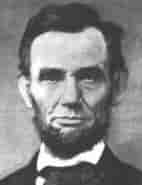
This exact same idea can work in the USA but you will have to go back to the time of
President Abraham Lincoln to find an economic precedent for this idea.
So.... if we give an Unconditional but Taxable Basic Minimum Income Supplement to all
forty one million Canadians regardless of what their income was in the last year, [or in the last month], then
this tends to break Canadians out from under the power of corrupt and greedy bureaucrats in Ottawa who want
more and more benefits...... more and more money for their services.... and more and more power over the lives
of ordinary citizens.
This fits with the fact that Mr. Avi Lewis is the new leader of Canada's New Democratic Party.
Oh Canada Movie 6 - Banking - 5
Just after the 2:20 minute mark in this video interview:
Forty one million Canadians
X $500 per month = twenty billion dollars per month goes into the economy THAT DOES NOT PRODUCE COMPOUND INTEREST OVER TIME OWING ON THAT TWENTY BILLION..... WHICH WILL SOON CAUSE THE CANADIAN FEDERAL DEFICIT TO BEGIN TO DECREASE BY ROUGHLY TWENTY BILLION DOLLARS PER MONTH BECAUSE THAT MONEY IS TAXED BACK INTO THE TREASURY AFTER IT TURNES OVER THREE TO FOUR TIMES IN THE ECONOMY!
THREE COURAGEOUS ECONOMISTS POOLED THEIR EFFORTS TO EXPLAIN THIS BECAUSE THEY KNEW THAT THE CBC AND THE OTTAWA SWAMP WOULD EAT THEM ALIVE IF THEY HAD ACTED ALONE!
Five hundred dollars per month...
for forty one million Canadian citizens and legal residents....
that is created in the same way as the Bank of Canada worked from
1938 to 1974.
Plus....NO INCOME TAX ON OVERTIME.... so that the twenty percent of our
population who do about eighty percent of the most valuable work in the economy have
an incentive to work extra!
No income tax on overtime would make the Canadian Dollar more valuable because
the Productivity of Canadians backs up the Canadian Dollar.
This exact same idea can work in the USA but you will have to go back to the time of
President Abraham Lincoln to find an economic precedent for this idea.
So.... if we give an Unconditional but Taxable Basic Minimum Income Supplement to all
forty one million Canadians regardless of what their income was in the last year, [or in the last month], then
this tends to break Canadians out from under the power of corrupt and greedy bureaucrats in Ottawa who want
more and more benefits...... more and more money for their services.... and more and more power over the lives
of ordinary citizens.

... IF this Basic Minimum Income was financed through the Bank of Canada in the manner that half of the money supply of Canada was created from 1938 to 1974?
So IF forty one million Canadians were all given five hundred dollars per month, from cradle to grave, that was financed by The Bank of Canada would this result in the federal deficit being paid down by roughly twenty billion Canadian Dollars per month?
Once money turns over in the economy three to four times it is taxed back into the coffers of the federal, provincial or municipal governments.
So IF forty one million Canadians were all given five hundred dollars per month, from cradle to grave, that was financed by The Bank of Canada would this result in the federal deficit being paid down by roughly twenty billion Canadian Dollars per month?
Once money turns over in the economy three to four times it is taxed back into the coffers of the federal, provincial or municipal governments.
[Ms. Betty Krawczyk] ...
- DennisPTate
- Replies: 4
- Forum: Canada
[Ms. Betty Krawczyk] :
HOW PIERRE TRUDEAU TURNED US INTO DEBT SLAVES
Click on the link above to watch Part 3 of my video series on the Canadian Banking System. Please also read accompanying text below.
Trudeaumania was just gearing up when I immigrated to Canada in late 1966. I, too, was impressed with Trudeau. He was intelligent, articulate, with liberal ideas. And as Prime Minister, Trudeau repatriated the Canadian Constitution and told the morals’ police to stay out of people’s bedrooms. But then…but then. As Anthony’s famous speech in Shakespeare’s play Julius Caesar reminds us… “the evil that men do live after them while the good is often interred with their bones. So let it be with Caesar.”
But somehow this worked backward for Trudeau. Many Canadians still think highly of Pierre Trudeau, but in 1974 he did one terrible thing that changed the lives, for present and future, of all Canadians, for the worse. Trudeau gave the leading operations of the Bank of Canada over to the private banks operating in Canada.
The Bank of Canada was first established by Prime Minister Richard Bennet in 1935 as a private central bank, but was then nationalized by William Lyon Mackenzie King in 1938. By nationalizing the bank, Mackenzie King meant for it to belong to the people so the Canadian government could borrow funds with little or no interest for capital expenditures. The mandate of the newly nationalized Bank of Canada was to act as the banker to the government and to manage the public debt. As Mackenzie King famously said: “Once a nation parts with the control of their currency and credit, it matters not who makes that nation’s laws. Usury, once in control, will wreck any nation. Until the control of the issue of currency and credit is restored to government and recognized as its most sacred responsibility, all talk of sovereignty of parliament and of democracy is idle and futile.”
So the Bank of Canada was nationalized in 1938 and the government could now borrow money with little or no interest. And it worked. The Canadian government built freeways, public transportation systems, subway line, airports, the St. Lawrence Seaway and funded a national health care system and the Canada Pension Plan. But then Trudeau, under the influence of the international financial group called Basel’s
Committee’s Recommendations (The Basel Committee on Banking Supervision) made the decision to halt the borrowing of money from the Bank of Canada, and instead, chose to borrow from the private banks who instead of lending to the government at no interest, or low interest, introduced higher interest rates along with compound interest.
All banks know very well the magic of compound interest. And Pierre Trudeau must have known that the mounting compounded national debt would lead to Canadians eventually owing a dollar fifty for every dollar of their disposable incomes. After all, he studied economics at the London School of Economics. Surely the professors there knew about compound interest.
So Pierre Trudeau, instead of feeling blessed that Canada, unlike the US, had a nationalized central bank, signed our bank away to the private banks. Couldn’t Trudeau, such an educated man, surmise that citizens in a few years would be struggling to make car payments and meet rent and mortgages and student loans and to buy healthy food while last year’s profits for the big five (that’s Royal Bank, TD Bank, Scotiabank, Bank of Montreal and CIBC amounted to $31.7 billion?) If he did, he didn’t care. But it doesn’t have to be this way. It really doesn’t. Our Bank of
Canada is still there. Next time." (Ms. Betty Krawczyk)

HOW PIERRE TRUDEAU TURNED US INTO DEBT SLAVES
HOW PIERRE TRUDEAU TURNED US INTO DEBT SLAVES Click on the link above to watch Part 3 of my video series on the Canadian Banking Syste...bettysearlyedition.blogspot.com
This fits with the fact that Mr. Avi Lewis is the new leader of Canada's New Democratic Party.
"We never should have privatized our debt and turned it over to the
private banks, we should have kept it in the hands of the Bank of Canada,
at least a major part of it, because then we would have been paying
interest back to ourselves." (NDP Leader Jack Layton)
Oh Canada Movie 6 - Banking - 5
Just after the 2:20 minute mark in this video interview:
Forty one million Canadians
X $500 per month = twenty billion dollars per month goes into the economy THAT DOES NOT PRODUCE COMPOUND INTEREST OVER TIME OWING ON THAT TWENTY BILLION..... WHICH WILL SOON CAUSE THE CANADIAN FEDERAL DEFICIT TO BEGIN TO DECREASE BY ROUGHLY TWENTY BILLION DOLLARS PER MONTH BECAUSE THAT MONEY IS TAXED BACK INTO THE TREASURY AFTER IT TURNES OVER THREE TO FOUR TIMES IN THE ECONOMY!
THREE COURAGEOUS ECONOMISTS POOLED THEIR EFFORTS TO EXPLAIN THIS BECAUSE THEY KNEW THAT THE CBC AND THE OTTAWA SWAMP WOULD EAT THEM ALIVE IF THEY HAD ACTED ALONE!
Appendix B – The Bank of CanadaMust Finance our Country, Debt-FreeSay Three Economists
<sup>français</sup><sup><strong> </strong></sup>
(An article published in the March-April, 1995 issue of the Michael Journal.
The introduction and comments are from Alain Pilote.)
Thanks to the sacrifices that have been made for over sixty years by the “White Berets” of the “Michael” and “Vers Demain” Journals, more and more people in high places are discovering the absurdity of the present financial system, and the urgency for the Federal Government to create its own money, interest free, instead of borrowing it at interest from private banks. Here are excerpts from a pamphlet published in 1992 entitled “The Deficit Made Me Do It!”, edited by Ed Finn, of the Canadian Centre for Policy Alternatives (251 Laurier Avenue West, Suite 804, Ottawa, Ont., K1P 5J6), in which three economists — Harold Chorney, of Concordia University in Montreal, John Hotson, of the University of Waterloo, and Mario Seccareccia, of the University of Ottawa — “debunk the myths about government debt,” and repeat, in their own words, what Louis Even and the Social Crediters of the “Michael” Journal have been explaining since 1939. (An updated version of this pamphlet, entitled “10 Deficit Myths”, was issued in January, 1996, and is also available from the same address mentioned above,)
Here is a text that makes a change with the conventional speeches of economists that are disconnected from reality. Moreover, this text points out the real problems and solutions concerning the public debt, at a time when several people are talking about slashing government spending — even social programs, like the pensions and unemployment insurance — to reduce the deficit. The subtitles are from the “Michael” Journal:
by Harold Chorney, John Hotson, and Mario Seccareccia
“Governments these days find it easy to defend cuts in services and programs. All they have to do is point to their annual deficits and their total accumulated debts. (As of March, 1994, Canada's public debt was about $546 billion.) This public debt provides the politicians with a convenient excuse for cutting spending or raising taxes. Or both. «We're broke,» they tell us plaintively. «We can't afford to increase public services, or even keep them at their present level.»
A lesson of war
“As the deep recession dragged into 1992, Finance Minister Don Mazankowski said he couldn't do anything about it. His hands were tied, he said. The federal government was broke. The cupboard was bare. The deficit and accumulated national debt were so enormous that his first priority had to be to reduce them — even if that meant prolonging the recession and making it even worse.
“So his budget contained almost nothing to revive the sick economy. With interest payments on the debt gobbling up one-third of tax revenue, his response was to keep taxes high and axe more public services and agencies. Like Martin Luther before him, Mazankowski in effect proclaimed: «Here stand I. I cannot do otherwise.»
“But it doesn't take an economist to see that in fact he could. All you have to do is imagine what the government would do if it got involved in another Gulf War — or if that war were still raging. Would the Finance Minister have brought down the same kind of budget? Would he have said, «We'd like to keep on fighting, but we're broke, so we're calling our troops back»? Not on your life!
“Did Canada surrender half way through World War II because the national debt had grown even larger than the Gross Domestic Product (GDP)? Of course not! Somehow the extra money was found. If it wasn't by raising taxes or borrowing from the private banks, why, the Bank of Canada simply created all the money the government needed — and at near-zero interest rates, too!
“When World War II ended, the national debt relative to the national income was more than twice as large as it is now. But was the country ruined? Did we have to declare national bankruptcy? Far from it! Instead, Canada's economy boomed and the country prospered for most of the post-war period.
The Bank of Canada has failed in its duty
“Why isn't the same thing happening today? Why was a much larger national debt shrugged off in 1945, while today's much smaller debt (as a percentage of GDP) is being used as an excuse to let the economy stagnate?
“The answer can be found at the Bank of Canada. During the war, and for 30 years afterward, the government could borrow what it needed at low rates of interest, because the government's own bank produced up to half of all the new money. That forced the private banks to keep their interest rates low, too.
“Since the mid-1970s, however, the Bank of Canada, with government consent, has been creating less and less of the new money, while letting the private banks create more and more. Today «our» bank creates a mere 2% of each year's new money supply, while allowing the private banks to gouge the government — and of course you and me, as well — with outrageously high interest rates. And it is these extortionate interest charges that are the principal cause of the rapid escalation of the national debt. If the federal government were paying interest at the average levels that prevailed from the 1930s to the mid-1970s, it would now be running an operating surplus of about $13 billion!”
The updated version (January, 1996) of the pamphlet expresses the same ideas:
“The Bank of Canada was established in 1935 by an Act of Parliament. In its legislative mandate, it is directed to promote economic growth and employment, as well as preserving the value of the Canadian dollar.
“Shortly after the Bank opened its doors, it was faced with the bankruptcy of provincial governments due to the Depression. Interpreting its mandate widely, as it is supposed to do, it made precedent-setting loans to restore the finances of Manitoba. Generous loans to other provinces followed.
“World War II found Canada ready and determined to act in the Allied cause. The war effort of the federal government was financed through enormous deficits and very low interest rates brought about by the Bank of Canada. At war's end, the national debt stood at about 120% of Gross Domestic Product (GDP), nearly double the level of today. Yet Canada went on to enjoy the greatest period of economic growth in its history...
“(Now) the Bank of Canada has decided that any government spending not financed by taxation is inflationary, so it no longer extends credit to the government by holding bonds and Treasury bills. Its small holdings of government debt are confined to the banknotes needed by the economy for currency in circulation...” (End of 1996 updated version's excerpts.)
Interest rates and inflation
“Thousands of years of sad experience with the concentration of wealth and debt slavery caused all the ancient books of wisdom — including the Bible and the Koran — to condemn the charging of immoderate rates of interest.(...) The conventional wisdom, however, is that inflation is the greatest threat to the economy and must be restrained by raising interest rates. This flies in the face of the common-sense observation that rising prices (inflation) are caused by rising costs, and that interest rates are costs. So raising them will raise prices, not lower them.
“Also raised by this policy, of course, is the income of the money-lenders, which explains why they subscribe so fervently to the perverse doctrine that high interest rates are somehow anti-inflationary. Certainly the world's bankers and other money-lenders have gained much from the nonsensical notion that, while giving workers a big raise is inflationary, giving money-lenders a big raise is not.
“Many economists rail against «wage push», and it's true that wages have risen by 2,700% over the past 50 years. But in the same period government tax revenue went up by 3,400%, and net interest by 26,000%! Yet, most of the economic textbooks that deplore rising wages don't even mention the tax and interest pushes. And it is not because they are complex ideas — rather, they are simple and obvious — but because it would be so embarrassing for economists to admit they've made a boner of such magnitude: that their theory of monetary policy violates basic principles of scientific logic.
The creation of money
“One of the most pervasive myths about the government deficit is that governments which spend more than they receive in revenue must borrow the difference, thus increasing the public debt.
“In fact, a government can choose to create the needed additional money instead of borrowing it from the banks, the public, or foreigners.
“Business and the conservatives in politics and the media are horrified by the suggestion that the government exercise its right to create more money. They claim it would precipitate another ruinous bout of inflation.
“But money creation is money creation — whether by a private bank or the Bank of Canada. And a government in debt only to the government's own bank is not really in debt at all. If it wants to go through the rigamarole of having the Treasury «borrow» from the central bank and later pay interest, that is a minor matter of bookkeeping. As long as the central bank's profits are returned to the Treasury, the results are much the same as if the Treasury had created the money itself.
“There is no reason why the growth of Canada's money supply (averaging about $22 billion annually in recent years) could not be more substantially created by the Bank of Canada. If that policy had been followed, the federal government would not have been obliged to add to its debts to pay interest on old debts. Instead, the Bank of Canada has produced barely 2% of the money added in recent years, while the chartered banks added the rest as they made loans to households, businesses, and all levels of government. At the very least, the Bank of Canada and the chartered banks should share the privilege of creating money on a 50-50 basis.
“Those who dismiss such a proposal as «inflationary» should be required to explain why it would be more inflationary for the government's bank to create $11 billion and the private banks $11 billion, rather than the present practice of having the government's bank create $0.7 billion and the private banks $21.3 billion!
“Clearly the current problem of the Canadian government's deficit is not its absolute size, or its size relative to the GDP, but the insane way it is being financed. A return to the policies of the World War II era, when the Bank of Canada produced almost one-half of the new money at near-zero interest, would do wonders for the economy, while greatly shrinking the deficit... The first order of business for a post-Mulroney-era government must be to regain effective control of the Bank of Canada and make it the primary source of money creation.
“It is ludicrous for the government to put billions of dollars into circulation by borrowing from the private banks, when it can create the extra money it needs, virtually free.
Banks create money
“We have to keep in mind that our monetary economy only grows when the money supply grows. Under the present debt-driven system, the only way we can increase the money supply is by borrowing it into existence from the private banks, thereby increasing our indebtedness to them.
“It can't be stressed too much that the private banks, unlike non-bank lenders, create the money they lend. They do not — as is so widely imagined, even by the bankers themselves — lend their depositors' money. The amount of new money created by a bank loan, however, is only sufficient to pay back the principal. No money is created to pay the interest, except that which is paid to the holders of bank deposits. That's why debts must continually grow faster and faster in order for each layer of additional debt and interest to be paid.
“If that strikes you as a very dumb and dangerous way to operate a monetary system, you're right. Clearly it would be much safer and more sensible to have at least a large amount of the needed new money spent into circulation debt free by the federal government — or lent by it interest free to the junior levels of government which lack the power to create money. Reform of the monetary system is therefore the key to controlling the deficit and lowering the public debt.” (End of the three economists' pamphlet.)
* * *
Comments of the Michael Journal
We congratulate these three economists who dare to go off the beaten track. More and more people are echoing the message of the Social Crediters of the “Michael” Journal, and they urge the Federal Government to create its own money, and to put the Bank of Canada at the service of the Canadians.
The Minister of Finance and “orthodox” economists keep repeating that this solution (government-created money) is unworkable, since, according to them, it would automatically bring about runaway inflation. Yet, this policy of government-created money was actually tried out successfully in Canada during World War II (when half of the money supply was created by the Bank of Canada), and it is during those years that Canada's economy boomed the most, with near-zero inflation.
Others will say that the Bank of Canada cannot reduce its interest rates (the Bank Rate, which is set every Tuesday by the Bank of Canada), because if the rate is too low (lower than that of the United States, for example), foreign investors will flee Canada and invest their money in other countries with higher interest rates, where their investments will yield higher returns. This argument would fall by itself if the Federal Government would create its own money, instead of borrowing it. Figures made in Canada are just as good as figures made abroad to finance production made in Canada. Besides, what would Canada do if it were the only country in the world, with no foreign countries from which it could get money? Should we be condemned to starvation in front of our own goods, through lack of figures to buy them?
The three economists quoted above suggested that the Bank of Canada should create half of the money supply in our country. This suggestion is timid! What the Social Crediters of the Michael Journal propose is that the Bank of Canada should create all of the money supply for Canada, since money creation cannot be left in the hands of private interests. Make no mistake: private banks would still exist, and still lend money, but they would not have the power to create new money with their loans. When a chartered bank makes a loan to a business or individual, the bank would get the money for the loan from the Bank of Canada, interest free. The private bank would be accountable to the Bank of Canada for that money, having to return it to the central bank when the loan is paid back to the private bank. (This technique is explained in detail in the first pages of Louis Even's booklet, “A Sound and Effective Financial System”.)
The Bank of Canada has been diverted from its purpose, and instead of being the Bank of the Canadians, it has become the bankers' bank. The Chrétien Government must bring the Bank of Canada to heel, and have it finance the needs of our nation, debt free. It is the only solution to solve the problem of the deficit and the debt.
Several groups are lobbying for more spending cuts; some even say that our Finance Minister did not go far enough with spending cuts in his last budget. It only makes less money left into circulation, which makes the situation even tougher for all Canadians. As the three economists mentioned above put it in their pamphlet, “strident calls for cutbacks and belt-tightening measures are, in tough economic times, the worst possible course to follow. It is in fact a lethal prescription for recreating the widespread unemployment and suffering of the 1930s.”
Mr. Prime Minister, you don't wish such a state of affairs to occur, do you? Well, to prevent if from happening, you have no alternative but to apply the Social Credit principles of Clifford Hugh Douglas and Louis Even!
Moreover, all the premiers who complain about the reduction of transfer payments to the provinces in the federal budget, should join forces to pressure the federal government to put the Bank of Canada at the service of all the Canadians, and finance the provinces with interest-free money. But make no mistake: if our governments are not backed up by public opinion, they won't have the courage to challenge the power of the Financiers. So it is your duty, dear readers of the Michael Journal, to create this public opinion in favour of a return to an honest debt-free money system, by getting all your friends and acquaintances to subscribe to the Michael Journal. This is the prime requAppendix B — The Bank of Canada Must Finance our Country, Debt-Free, Say Three Economists
Here are excerpts from a pamphlet published in 1992 entitled The Deficit Made Me Do It!, edited by Ed Finn, of the Canadian Centre for Policy Alternatives, in which three economists (Harold Chorney, John Hotson, and Mario Seccareccia) debunk the myths about government debt, and repeat, in their...famguardian.org
Last edited: