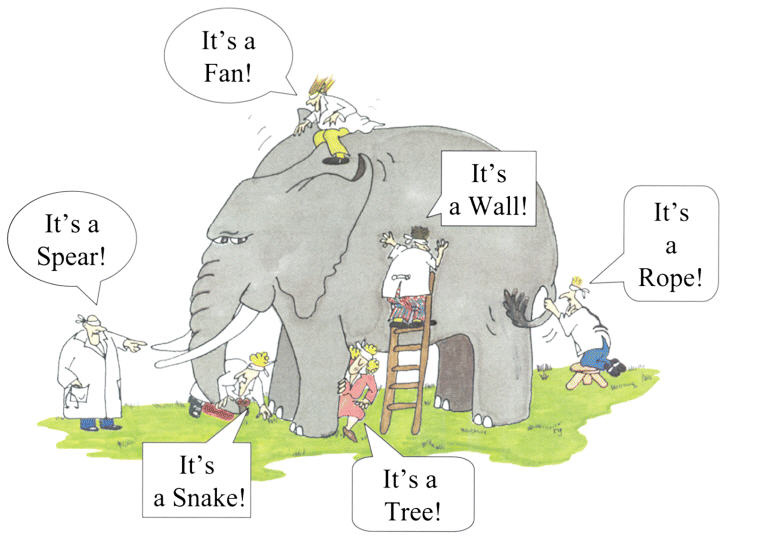
..."Truth is not interpretable."
Of course it is. Ask ten people to describe an auto accident. Ask the members of any religion if their beliefs are the truth. ...
I think it's problematic to characterize subjective takes on objective reality as 'personal
truths', when they may or may not be accurate interpretations of the
true nature of the situation or thing in question. An erroneous interpretation is a personal falsehood, not a personal truth; and the prospect that one may be wrong in his or her interpretation should be given priority over the possibility that he or she may also be right. Just because someone
might happen to be correct WRT X-situation, is no reason for that person to claim that he or she
is right and thereby in possession of a 'personal truth'.
In my view, this goes straight to the heart of the epistemic distinction between 'knowledge' and 'belief'. We are only justified in a truth claim if and when we
know it to be true (as opposed to merely
believing it to be true). In line with this,
justifiable claims to truth are limited to situations in which the determinants of truth are in no way subject to interpretation.
iamwhatiseem said:
..."So the reason "it is true to one person and not another is because BELIEF is in the eye if the beholder."
iamwhatiseem said:
Exactly. And that person's belief is that person's truth.
Only for those who are willing to allow that potential untruths can rightly be classified as "personal truths". As a proponent of the philosophical notion of objective truth, I personally wouldn't be among that group.
What you're describing in the falling rock analogy are subjective
beliefs which may or may not correspond to the objective truth of the situation. As such, in my opinion, they don't qualify as justifiable claims to
knowledge of truth.