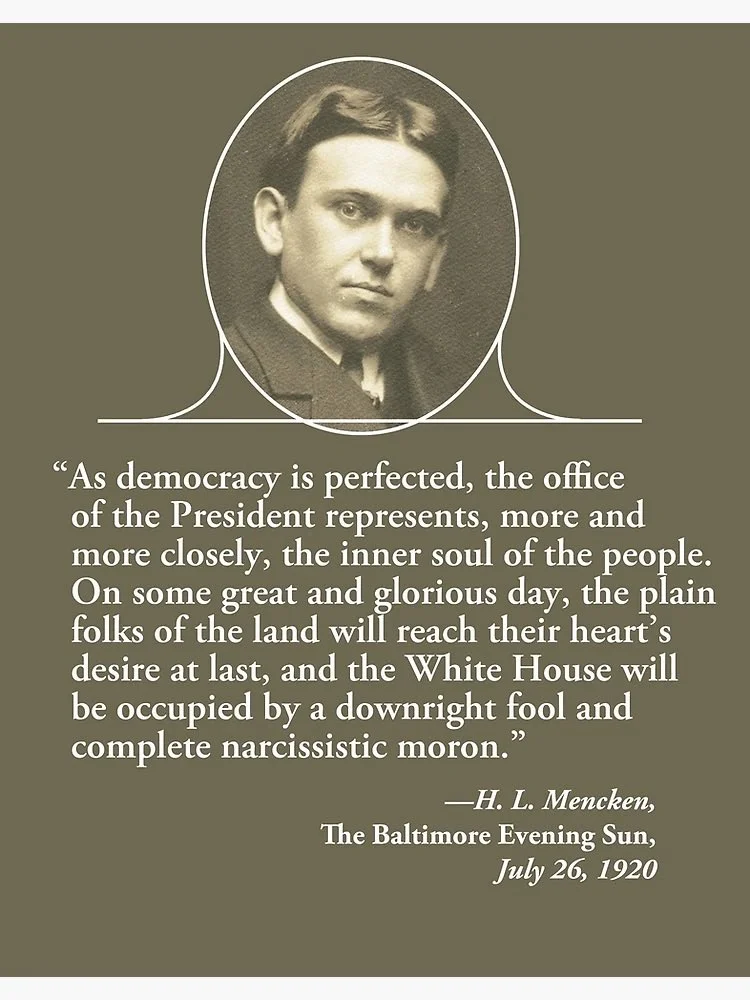
Is Democracy Doomed? Absent Friction Our Impulses Doom Us

citygator

There is a 25% Tariff to read my posts
Gold Supporting Member
Joined
Jun 23, 2019
Messages
32,746
Reaction score
26,868
Points
2,790
Location
Charlotte
Democracy is doomed. Or at least it is vulnerable… especially when mass communication rewards spectacle over competence.

What social media has done is not “break” democracy so much as remove many of the old filters that used to slow bad politics down.

For most of modern democracy, political power was filtered through institutions:
  • parties
  • editors
  • local machines
  • donors
  • gatekeepers
  • credentialed press
  • slower news cycles
Those systems were flawed, elitist, and often exclusionary - but they did impose friction. Friction matters.

Social media strips out friction and replaces it with incentives optimized for:
  • outrage
  • tribal loyalty
  • confidence over competence
  • virality over expertise
  • emotional simplicity over complexity
That is a terrible environment for selecting thoughtful leaders.

The problem is not that democracy gives ordinary people a voice. The problem is that modern media increasingly rewards the traits most dangerous in democratic politics:
  • narcissism
  • demagoguery
  • performative certainty
  • conspiracy fluency
  • emotional manipulation
That creates a real selection bias. The people best adapted to winning attention are often not the people best suited to governing.

Democracies can only survive if they rebuild friction:
  • stronger institutions
  • independent courts
  • professional civil service
  • trusted local journalism
  • electoral systems that punish extremism
  • civic norms that reward competence over charisma
Democracy fails when:
  1. institutions become weak,
  2. voters become cynical,
  3. truth becomes optional,
  4. politics becomes entertainment,
  5. and power becomes identity theater.

Mencken missed the target but hit the tree. He was right about one thing: democracies can elevate mediocrity and vanity. And whether democracy survives it depends less on whether people are flawed—which they always have been—and more on whether institutions can still restrain the worst instincts of mass politics.


IMG_1083.webp
 
Last edited:
Democracy is doomed. Or at least it is vulnerable… especially when mass communication rewards spectacle over competence.

What social media has done is not “break” democracy so much as remove many of the old filters that used to slow bad politics down.

For most of modern democracy, political power was filtered through institutions:
  • parties
  • editors
  • local machines
  • donors
  • gatekeepers
  • credentialed press
  • slower news cycles
Those systems were flawed, elitist, and often exclusionary - but they did impose friction. Friction matters.

Social media strips out friction and replaces it with incentives optimized for:
  • outrage
  • tribal loyalty
  • confidence over competence
  • virality over expertise
  • emotional simplicity over complexity
That is a terrible environment for selecting thoughtful leaders.

The problem is not that democracy gives ordinary people a voice. The problem is that modern media increasingly rewards the traits most dangerous in democratic politics:
  • narcissism
  • demagoguery
  • performative certainty
  • conspiracy fluency
  • emotional manipulation
That creates a real selection bias. The people best adapted to winning attention are often not the people best suited to governing.

Democracies can only survive if they rebuild friction:
  • stronger institutions
  • independent courts
  • professional civil service
  • trusted local journalism
  • electoral systems that punish extremism
  • civic norms that reward competence over charisma
Democracy fails when:
  1. institutions become weak,
  2. voters become cynical,
  3. truth becomes optional,
  4. politics becomes entertainment,
  5. and power becomes identity theater.

Mencken was right about one thing: democracies can elevate mediocrity and vanity. And whether democracy survives it depends less on whether people are flawed—which they always have been—and more on whether institutions can still restrain the worst instincts of mass politics.
Merely a translation of the exchange of who controls what the masses hear, see, and think...it says/means...'one day our grip on the masses will have slipped through our fingers due to the loss of self-awareness and replaced with self-aggrandizement while those we shuttle around doing our dirty work will take the wheel from us and attempt/dare to go it on their own in which case the need to "resist" their efforts will be the clarion call'...welcome to your world HLM
 
Democracy is doomed. Or at least it is vulnerable… especially when mass communication rewards spectacle over competence.

What social media has done is not “break” democracy so much as remove many of the old filters that used to slow bad politics down.

For most of modern democracy, political power was filtered through institutions:
  • parties
  • editors
  • local machines
  • donors
  • gatekeepers
  • credentialed press
  • slower news cycles
Those systems were flawed, elitist, and often exclusionary - but they did impose friction. Friction matters.

Social media strips out friction and replaces it with incentives optimized for:
  • outrage
  • tribal loyalty
  • confidence over competence
  • virality over expertise
  • emotional simplicity over complexity
That is a terrible environment for selecting thoughtful leaders.

The problem is not that democracy gives ordinary people a voice. The problem is that modern media increasingly rewards the traits most dangerous in democratic politics:
  • narcissism
  • demagoguery
  • performative certainty
  • conspiracy fluency
  • emotional manipulation
That creates a real selection bias. The people best adapted to winning attention are often not the people best suited to governing.

Democracies can only survive if they rebuild friction:
  • stronger institutions
  • independent courts
  • professional civil service
  • trusted local journalism
  • electoral systems that punish extremism
  • civic norms that reward competence over charisma
Democracy fails when:
  1. institutions become weak,
  2. voters become cynical,
  3. truth becomes optional,
  4. politics becomes entertainment,
  5. and power becomes identity theater.

Mencken missed the target but hit the tree. He was right about one thing: democracies can elevate mediocrity and vanity. And whether democracy survives it depends less on whether people are flawed—which they always have been—and more on whether institutions can still restrain the worst instincts of mass politics.


View attachment 1248145
Pretty interesting. It's inferred there, but "algorithmic journalism" is only exacerbating the problem and increasing this division we're seeing as basic realities continue to diverge.

I have no idea what could fix that. Some kind of industry self-regulation (like FINRA for the financial sector) might have some value, but this just may be too big and deep now.
 
The Corrupt Democrat Party is creating one party states.
If they are able to create enough of them, they will make America a one party country.
When the Crazy Progressives use the word "democracy", it means a one party totalitarian police state where opposition leaders are arrested and executed.
 
The Corrupt Democrat Party is creating one party states.
If they are able to create enough of them, they will make America a one party country.
When the Crazy Progressives use the word "democracy", it means a one party totalitarian police state where opposition leaders are arrested and executed.
I’m not sure you’re following the thought exercise. The issue isn’t the lack of power of minority parties in their own states. That does need to be addressed. The issue is elected Leaders are more and more becoming performance artists and not administrators, leaders, functional experts, committed service workers, and the type of people needed to run the largest most complex economy and country in the world.
 

New Topics

Back
Top Bottom