
a negative is true unless a positive is proven. Not the other way around.Then you need to provide evidence of this truth which no one in the history of mankind has. Until then shut up about it being the truth.Yeah, it's a power issue.
Sorry, the truth exists whether or not you believe it. And we are perfectly correct in saying that the truth is, God exists and will pass judgement on us all.
I can say the same in regard to there being no God. You need to provide proof that God does not exist or otherwise shut up about your own conjecture being "truth." See how that works?
Navigation
Install the app
How to install the app on iOS
Follow along with the video below to see how to install our site as a web app on your home screen.
Note: This feature may not be available in some browsers.
More options
Style variation
You are using an out of date browser. It may not display this or other websites correctly.
You should upgrade or use an alternative browser.
You should upgrade or use an alternative browser.
If you don't believe in God...
- Thread starter Big Black Dog
- Start date

If someone tells me that I can't take something with a grain of salt, that is when I know I need a very large grain of salt.
No shit. And she said one minute science tells you one thing then the next it changes. Yea, based on evidence! Anyways, I wanted to point out to her that religion does that too. For years they told me/us Adam and Eve were real people and Mosus was real and Noah and the Arc really happened and now they're telling me those are all allegories. Well if they are allegories, so is the jesus story. A ******* lie is what I call it. Allegory, story, fable, lie. What's the diff?
Exactly, Science is only as good as our next discovery. Tomorrow they'll find something else and change their minds. How much stake did you put into your Netherlander grandparents? You should have taken that proof with a great big grain of salt, since they know now that it's not true. Unless you still believe that Neanderthal turned into modern man. He was all the rage when I was in school. Now not so much.
When man said there were 3 dimensions, God showed us Christ in the sixth when He would appear and disappear without the benefit of a door. 3 dimensions were all the rage until Einstein. Now not so much.
The God of Abraham does not 'do that too'. He didn't tell us that there were 3 dimensions and then change up his story when we found a 4th.
So, what do you require to believe that Christ lived, died and lived again? Are you willing to believe the people that were there?
Not unless they can tell me themselves. And even then I wouldn't believe it.
There is no evidence to support any of the claims made in the Bible concerning the existence of a god. Any evidence proposed by theists to support the Bibles various historical and supernatural claims is non-existent at best, manufactured at worst.
The Bible is not self-authenticating; it is simply one of many religious texts. Like those other texts, it itself constitutes no evidence for the existence of a god. Its florid prose and fanciful content do not legitimise it nor distinguish it from other ancient works of literature.
The Bible is historically inaccurate [2], factually incorrect, inconsistent [2] and contradictory. It was artificially constructed by a group of men in antiquity and is poorly translated, heavily altered and selectively interpreted. Entire sections of the text have been redacted over time.
There is no contemporary evidence for Jesus existence or the Bibles account of his life; no artefacts, dwellings, works of carpentry, self-written manuscripts, court records, eyewitness testimony, official diaries, birth records, reflections on his significance or written disputes about his teachings. Nothing survives from the time in which he is said to have lived.
All historical references to Jesus derive from hearsay accounts written decades or centuries after his supposed death. These historical references generally refer to early Christians rather than a historical Jesus and, in some cases, directly contradict the Gospels or were deliberately manufactured.
The Gospels themselves contradict one-another [2] on many key events and were constructed by unknown authors up to a century after the events they describe are said to have occurred. They are not eyewitness accounts. The New Testament, as a whole, contains many internal inconsistencies as a result of its piecemeal construction and is factually incorrect on several historical claims, such as the early existence of Nazareth, the reign of Herod and the Roman census. Like the Old Testament, it too has had entire books and sections redacted.
The Biblical account of Jesus has striking similarities with other mythologies and texts and many of his supposed teachings existed prior to his time. It is likely the character was either partly or entirely invented [2] by competing first century messianic cults from an amalgamation of Greco-Roman, Egyptian and Judeo-Apocalyptic myths and prophecies.
Even if Jesus existence could be established, this would in no way validate Christian theology or any element of the story portrayed in the Bible, such as the performance of miracles or the resurrection. Simply because it is conceivable a heretical Jewish preacher named Yeshua lived circa 30 AD, had followers and was executed, does not imply the son of a god walked the Earth at that time.
The motivation for belief in a divine, salvational Jesus breaks down when you accept evolution:
Now, if the book of Genesis is an allegory, then sin is an allegory, the Fall is an allegory and the need for a Savior is an allegory but if we are all descendants of an allegory, where does that leave us? It destroys the foundation of all Christian doctrineit destroys the foundation of the gospel. - Ken Ham
A particular standard of evidence is required to prove any claim. This standard is adjusted depending upon the nature of the claim. Since gods existence is an extraordinary claim, perhaps the most extraordinary claim, proving it requires equally extraordinary evidence.
The standard of evidence required to prove a gods existence is immediately more than any personal anecdote, witness testimony, ancient book or reported miracle none of which can be considered extraordinarily reliable. The human mind is also highly susceptible to being fooled and even fooling itself. One could be suffering from an hallucination or a form of undiagnosed schizophrenia, hysteria or psychosis, ruling out even our own senses as reliable evidence gathering mechanisms in this case. As strange as it sounds, misunderstood aliens might even be attempting to interact with us using extremely advanced technology. In fact, reality itself could be a computer simulation which we unknowingly inhabit.
Every conceivable argument, every imaginable piece of evidence for god is not without some fatal flaw or more likely explanation which precludes it from being used as definitive proof. Note: This is not the same as being close-minded.
There is, however, a simple answer to this question: God is what it would take to convince an atheist. An omniscient god would know the exact standard of evidence required to convince any atheist of its existence and, being omnipotent, it would also be able to immediately produce this evidence. If it wanted to, a god could conceivably change the brain chemistry of any individual in order to compel them to believe. It could even restructure the entire universe in such a way as to make non-belief impossible.
In short, a god actually proving its own existence is what would convince any atheist of said gods existence.
Because if the only way the supreme creator of the entire universe can demonstrate his existence to me is to create images of Mary or Jesus on food items, Im not impressed.
No snake talked to Adam. You keep saying that...
And if the religious people here believe that nothing is true in the Bible, or that some things are and some aren't, then I want them to explain how they know which are and which aren't. Since God's ways are not our ways, do we only accept the things we can wrap our little human brain around?
Disregard the people, not the Book. If they believe the NT, and not the OT, then they also don't believe Christ.
Christ said every word of the OT was from God. If Adam and Eve didn't exist, then the God of the people that were here yesterday is a liar and they don't need to believe they need Christ to remove the original sin either. Without Adam there is no original sin. They have developed their own version of God. They have taken away from and added to, to make their God more plausible.
So where are you at Sealy? Christ existed but had nothing to do with being the Son of God? He never existed? Existed but couldn't work miracles?
And are you willing to accept eyewitness accounts of the whole event, written in Hebrew by participants in the events that transpired?
And to those Christians who don't believe there was an Adam and Eve, a Moses, a Noah, what else did God lie to us about?
Great. Because if this is the bar you set, your numbers are going to go down dramatically and then I'll be happy. I'll be happy when only 3 out of 10 Americans call themselves Christians and 1 out of 10 are Muslims and us intelligent humans who don't swallow an ancient lie are in control.
What happened to the 999 other gods before the old testament? Were all those gods made up? So human's made up the Greek gods but you can't see it's possible/probable that someone invented the Jewish religion? You do realize the Mormon religion is made up right? Or do you really believe god told Joseph Smith that YOUR form of Christianity is corrupted and that he should start a new church? Funny your little human brain can tell that's a lie but the one your parents brainwashed you from birth with, that one is real.

The muslims believe just as hard as you do. They're idiots too.

GWV5903
Gold Member
Ok. Let's take them in turn....
Stealing from your employer. Someone is holding your family hostage at home and you either steal from your employer or they kill them. Your child is sick and if you don't buy some medicine she will die, you have no money and your only choice is steal or watch her die. You discover your employer is secretly polluting the town's water supply and the only way to bring this to light is to steal confidential files.
Flipping off a car. I'm not sure how this fits the discussion, but I do it because it makes me feel empowered. Is it better to just internalize the anger?
Yes, the bombardier made a choice. Defend his country or not. Do you drop the bombs to kill thousands in order to shorten the war and save millions? Which is right and which is wrong?
I get that what is right for you is right for you, even if not for me. That is my point as well. Just because something is right for me does not make it RIGHT. It just makes it right for me. And it only makes it right under specific circumstances. There are no absolutes.
These are excuses, there are numerous ways to get help besides stealing...
Ignore the other driver, best choice, anything else is wrong...
The bombardier is the tough one I will agree, but they had a choice somewhere...
The use of absolute is for conjecture only, people are inherently born with this knowledge of right vs. wrong, good vs. evil...
No. People are not born with this inherent knowledge. If that were the case, we would not need to teach children to share. We are taught this.
Everything is a choice. There are always options no matter what the situation. The question is which choice to make. Mostly that is mundane, but if good and evil were absolutes, then there would be no choice. It would be obvious for everyone. It is not because there are no absolutes. All choices involve the weighing of consequences and is never clean. If you find all such choices to be clear, then you have lived a very lucky life indeed.
Yes they are...
You can teach children to share all you want, but there are adults who still do not know how to share...
Yes everything is a choice...
It doesn't have to be clean to determine if its right or wrong...
At the moment I usually do find them clear, it's when I doubt myself I make the wrong choice...

PratchettFan
Gold Member
- Jun 20, 2012
- 7,238
- 746
- 190
a negative is true unless a positive is proven. Not the other way around.Then you need to provide evidence of this truth which no one in the history of mankind has. Until then shut up about it being the truth.
I can say the same in regard to there being no God. You need to provide proof that God does not exist or otherwise shut up about your own conjecture being "truth." See how that works?
No. That is a complete fallacy. Nothing can be considered true, negative or positive, until it is proven.
a negative is true unless a positive is proven. Not the other way around.I can say the same in regard to there being no God. You need to provide proof that God does not exist or otherwise shut up about your own conjecture being "truth." See how that works?
No. That is a complete fallacy. Nothing can be considered true, negative or positive, until it is proven.
non-existence is the default.
PratchettFan
Gold Member
- Jun 20, 2012
- 7,238
- 746
- 190
a negative is true unless a positive is proven. Not the other way around.
No. That is a complete fallacy. Nothing can be considered true, negative or positive, until it is proven.
non-existence is the default.
What marvelous faith you have. I shall wait for you to provide any proof at all to support this, other than your insistence that I believe. But I shall not hold my breath.
a negative is true unless a positive is proven. Not the other way around.I can say the same in regard to there being no God. You need to provide proof that God does not exist or otherwise shut up about your own conjecture being "truth." See how that works?
No. That is a complete fallacy. Nothing can be considered true, negative or positive, until it is proven.
There is no such thing as proof except maybe in math.

Big Black Dog
Platinum Member
- May 20, 2009
- 23,425
- 8,072
- 890
- Thread starter
- #169
My goodness. Those that do not believe in God have been speaking out very boldly and getting their message out concerning their non-belief. It's ok to not believe in God if that is your desire but I have a news flash for you. You cannot prove that God does not exist any more than I can prove that He does exist. My belief in God is based on my faith that He does in fact exist. Your non-belief is based on something else - whatever that might be but the bottom line is you cannot prove that God does not exist any more than I can prove that He does.

LadyGunSlinger
Conservative Babe
- Feb 6, 2011
- 19,589
- 3,355
- 280
The bottom line is that top evolutionary scientists cannot convincingly support their theory, and instead rely heavily on unfounded assumptions- FACT
It is thoroughly illogical to obsess yourself with something which never existed.
It is thoroughly illogical to obsess yourself with something which never existed.
Last edited:

The Irish Ram
LITTLE GIRL / Ram Tough
No shit. And she said one minute science tells you one thing then the next it changes. Yea, based on evidence! Anyways, I wanted to point out to her that religion does that too. For years they told me/us Adam and Eve were real people and Mosus was real and Noah and the Arc really happened and now they're telling me those are all allegories. Well if they are allegories, so is the jesus story. A ******* lie is what I call it. Allegory, story, fable, lie. What's the diff?
Exactly, Science is only as good as our next discovery. Tomorrow they'll find something else and change their minds. How much stake did you put into your Netherlander grandparents? You should have taken that proof with a great big grain of salt, since they know now that it's not true. Unless you still believe that Neanderthal turned into modern man. He was all the rage when I was in school. Now not so much.
When man said there were 3 dimensions, God showed us Christ in the sixth when He would appear and disappear without the benefit of a door. 3 dimensions were all the rage until Einstein. Now not so much.
The God of Abraham does not 'do that too'. He didn't tell us that there were 3 dimensions and then change up his story when we found a 4th.
So, what do you require to believe that Christ lived, died and lived again? Are you willing to believe the people that were there?
Not unless they can tell me themselves. And even then I wouldn't believe it.
There is no evidence to support any of the claims made in the Bible concerning the existence of a god. Any ‘evidence’ proposed by theists to support the Bible’s various historical and supernatural claims is non-existent at best, manufactured at worst.
The Bible is not self-authenticating; it is simply one of many religious texts. Like those other texts, it itself constitutes no evidence for the existence of a god. Its florid prose and fanciful content do not legitimise it nor distinguish it from other ancient works of literature.
The Bible is historically inaccurate [2], factually incorrect, inconsistent [2] and contradictory. It was artificially constructed by a group of men in antiquity and is poorly translated, heavily altered and selectively interpreted. Entire sections of the text have been redacted over time.
There is no contemporary evidence for Jesus’ existence or the Bible’s account of his life; no artefacts, dwellings, works of carpentry, self-written manuscripts, court records, eyewitness testimony, official diaries, birth records, reflections on his significance or written disputes about his teachings. Nothing survives from the time in which he is said to have lived.
All historical references to Jesus derive from hearsay accounts written decades or centuries after his supposed death. These historical references generally refer to early Christians rather than a historical Jesus and, in some cases, directly contradict the Gospels or were deliberately manufactured.
The Gospels themselves contradict one-another [2] on many key events and were constructed by unknown authors up to a century after the events they describe are said to have occurred. They are not eyewitness accounts. The New Testament, as a whole, contains many internal inconsistencies as a result of its piecemeal construction and is factually incorrect on several historical claims, such as the early existence of Nazareth, the reign of Herod and the Roman census. Like the Old Testament, it too has had entire books and sections redacted.
The Biblical account of Jesus has striking similarities with other mythologies and texts and many of his supposed teachings existed prior to his time. It is likely the character was either partly or entirely invented [2] by competing first century messianic cults from an amalgamation of Greco-Roman, Egyptian and Judeo-Apocalyptic myths and prophecies.
Even if Jesus’ existence could be established, this would in no way validate Christian theology or any element of the story portrayed in the Bible, such as the performance of miracles or the resurrection. Simply because it is conceivable a heretical Jewish preacher named Yeshua lived circa 30 AD, had followers and was executed, does not imply the son of a god walked the Earth at that time.
The motivation for belief in a divine, salvational Jesus breaks down when you accept evolution:
“Now, if the book of Genesis is an allegory, then sin is an allegory, the Fall is an allegory and the need for a Savior is an allegory – but if we are all descendants of an allegory, where does that leave us? It destroys the foundation of all Christian doctrine—it destroys the foundation of the gospel.” - Ken Ham
A particular standard of evidence is required to prove any claim. This ‘standard’ is adjusted depending upon the nature of the claim. Since god’s existence is an extraordinary claim, perhaps the most extraordinary claim, proving it requires equally extraordinary evidence.
The standard of evidence required to prove a god’s existence is immediately more than any personal anecdote, witness testimony, ancient book or reported miracle – none of which can be considered extraordinarily reliable. The human mind is also highly susceptible to being fooled and even fooling itself. One could be suffering from an hallucination or a form of undiagnosed schizophrenia, hysteria or psychosis, ruling out even our own senses as reliable evidence gathering mechanisms in this case. As strange as it sounds, misunderstood aliens might even be attempting to interact with us using extremely advanced technology. In fact, reality itself could be a computer simulation which we unknowingly inhabit.
Every conceivable argument, every imaginable piece of evidence for god is not without some fatal flaw or more likely explanation which precludes it from being used as definitive proof. Note: This is not the same as being close-minded.
There is, however, a simple answer to this question: God is what it would take to convince an atheist. An omniscient god would know the exact standard of evidence required to convince any atheist of its existence and, being omnipotent, it would also be able to immediately produce this evidence. If it wanted to, a god could conceivably change the brain chemistry of any individual in order to compel them to believe. It could even restructure the entire universe in such a way as to make non-belief impossible.
In short, a god actually proving its own existence is what would convince any atheist of said god’s existence.
“Because if the only way the supreme creator of the entire universe can demonstrate his existence to me is to create images of Mary or Jesus on food items, I’m not impressed.”
Well they won't be calling you anytime soon. They're dead. And because you wouldn't believe them even if they did, then you're quest isn't for the truth, it's for show.
The rest of your post is the garbage that comes with not wanting to hear the truth.
There is plenty of bible proof. All saying the opposite of what you say. It throws a 'monkey' wrench in your bias.
Suffice it to say there is proof, and you run from it.
Last edited:
If you have the faith of a Mustard seed you could move mountains.Exactly, Science is only as good as our next discovery. Tomorrow they'll find something else and change their minds. How much stake did you put into your Netherlander grandparents? You should have taken that proof with a great big grain of salt, since they know now that it's not true. Unless you still believe that Neanderthal turned into modern man. He was all the rage when I was in school. Now not so much.
When man said there were 3 dimensions, God showed us Christ in the sixth when He would appear and disappear without the benefit of a door. 3 dimensions were all the rage until Einstein. Now not so much.
The God of Abraham does not 'do that too'. He didn't tell us that there were 3 dimensions and then change up his story when we found a 4th.
So, what do you require to believe that Christ lived, died and lived again? Are you willing to believe the people that were there?
Not unless they can tell me themselves. And even then I wouldn't believe it.
There is no evidence to support any of the claims made in the Bible concerning the existence of a god. Any evidence proposed by theists to support the Bibles various historical and supernatural claims is non-existent at best, manufactured at worst.
The Bible is not self-authenticating; it is simply one of many religious texts. Like those other texts, it itself constitutes no evidence for the existence of a god. Its florid prose and fanciful content do not legitimise it nor distinguish it from other ancient works of literature.
The Bible is historically inaccurate [2], factually incorrect, inconsistent [2] and contradictory. It was artificially constructed by a group of men in antiquity and is poorly translated, heavily altered and selectively interpreted. Entire sections of the text have been redacted over time.
There is no contemporary evidence for Jesus existence or the Bibles account of his life; no artefacts, dwellings, works of carpentry, self-written manuscripts, court records, eyewitness testimony, official diaries, birth records, reflections on his significance or written disputes about his teachings. Nothing survives from the time in which he is said to have lived.
All historical references to Jesus derive from hearsay accounts written decades or centuries after his supposed death. These historical references generally refer to early Christians rather than a historical Jesus and, in some cases, directly contradict the Gospels or were deliberately manufactured.
The Gospels themselves contradict one-another [2] on many key events and were constructed by unknown authors up to a century after the events they describe are said to have occurred. They are not eyewitness accounts. The New Testament, as a whole, contains many internal inconsistencies as a result of its piecemeal construction and is factually incorrect on several historical claims, such as the early existence of Nazareth, the reign of Herod and the Roman census. Like the Old Testament, it too has had entire books and sections redacted.
The Biblical account of Jesus has striking similarities with other mythologies and texts and many of his supposed teachings existed prior to his time. It is likely the character was either partly or entirely invented [2] by competing first century messianic cults from an amalgamation of Greco-Roman, Egyptian and Judeo-Apocalyptic myths and prophecies.
Even if Jesus existence could be established, this would in no way validate Christian theology or any element of the story portrayed in the Bible, such as the performance of miracles or the resurrection. Simply because it is conceivable a heretical Jewish preacher named Yeshua lived circa 30 AD, had followers and was executed, does not imply the son of a god walked the Earth at that time.
The motivation for belief in a divine, salvational Jesus breaks down when you accept evolution:
Now, if the book of Genesis is an allegory, then sin is an allegory, the Fall is an allegory and the need for a Savior is an allegory but if we are all descendants of an allegory, where does that leave us? It destroys the foundation of all Christian doctrineit destroys the foundation of the gospel. - Ken Ham
A particular standard of evidence is required to prove any claim. This standard is adjusted depending upon the nature of the claim. Since gods existence is an extraordinary claim, perhaps the most extraordinary claim, proving it requires equally extraordinary evidence.
The standard of evidence required to prove a gods existence is immediately more than any personal anecdote, witness testimony, ancient book or reported miracle none of which can be considered extraordinarily reliable. The human mind is also highly susceptible to being fooled and even fooling itself. One could be suffering from an hallucination or a form of undiagnosed schizophrenia, hysteria or psychosis, ruling out even our own senses as reliable evidence gathering mechanisms in this case. As strange as it sounds, misunderstood aliens might even be attempting to interact with us using extremely advanced technology. In fact, reality itself could be a computer simulation which we unknowingly inhabit.
Every conceivable argument, every imaginable piece of evidence for god is not without some fatal flaw or more likely explanation which precludes it from being used as definitive proof. Note: This is not the same as being close-minded.
There is, however, a simple answer to this question: God is what it would take to convince an atheist. An omniscient god would know the exact standard of evidence required to convince any atheist of its existence and, being omnipotent, it would also be able to immediately produce this evidence. If it wanted to, a god could conceivably change the brain chemistry of any individual in order to compel them to believe. It could even restructure the entire universe in such a way as to make non-belief impossible.
In short, a god actually proving its own existence is what would convince any atheist of said gods existence.
Because if the only way the supreme creator of the entire universe can demonstrate his existence to me is to create images of Mary or Jesus on food items, Im not impressed.
We'll they won't be calling you anytime soon. They're dead. And because you wouldn't believe them even if they did, then you're quest isn't for the truth, it's for show.
The rest of your post is the garbage that comes with not wanting to hear the truth.
There is plenty of bible proof. All saying the opposite of what you say. It throws a 'monkey' wrench in your bias.
Suffice it to say there is proof, and you run from it.
Prove to me that there is a single Christian out there with the faith of a Mustard seed and show me a mountain that has moved.

LadyGunSlinger
Conservative Babe
- Feb 6, 2011
- 19,589
- 3,355
- 280
If you have the faith of a Mustard seed you could move mountains.Not unless they can tell me themselves. And even then I wouldn't believe it.
There is no evidence to support any of the claims made in the Bible concerning the existence of a god. Any evidence proposed by theists to support the Bibles various historical and supernatural claims is non-existent at best, manufactured at worst.
The Bible is not self-authenticating; it is simply one of many religious texts. Like those other texts, it itself constitutes no evidence for the existence of a god. Its florid prose and fanciful content do not legitimise it nor distinguish it from other ancient works of literature.
The Bible is historically inaccurate [2], factually incorrect, inconsistent [2] and contradictory. It was artificially constructed by a group of men in antiquity and is poorly translated, heavily altered and selectively interpreted. Entire sections of the text have been redacted over time.
There is no contemporary evidence for Jesus existence or the Bibles account of his life; no artefacts, dwellings, works of carpentry, self-written manuscripts, court records, eyewitness testimony, official diaries, birth records, reflections on his significance or written disputes about his teachings. Nothing survives from the time in which he is said to have lived.
All historical references to Jesus derive from hearsay accounts written decades or centuries after his supposed death. These historical references generally refer to early Christians rather than a historical Jesus and, in some cases, directly contradict the Gospels or were deliberately manufactured.
The Gospels themselves contradict one-another [2] on many key events and were constructed by unknown authors up to a century after the events they describe are said to have occurred. They are not eyewitness accounts. The New Testament, as a whole, contains many internal inconsistencies as a result of its piecemeal construction and is factually incorrect on several historical claims, such as the early existence of Nazareth, the reign of Herod and the Roman census. Like the Old Testament, it too has had entire books and sections redacted.
The Biblical account of Jesus has striking similarities with other mythologies and texts and many of his supposed teachings existed prior to his time. It is likely the character was either partly or entirely invented [2] by competing first century messianic cults from an amalgamation of Greco-Roman, Egyptian and Judeo-Apocalyptic myths and prophecies.
Even if Jesus existence could be established, this would in no way validate Christian theology or any element of the story portrayed in the Bible, such as the performance of miracles or the resurrection. Simply because it is conceivable a heretical Jewish preacher named Yeshua lived circa 30 AD, had followers and was executed, does not imply the son of a god walked the Earth at that time.
The motivation for belief in a divine, salvational Jesus breaks down when you accept evolution:
Now, if the book of Genesis is an allegory, then sin is an allegory, the Fall is an allegory and the need for a Savior is an allegory but if we are all descendants of an allegory, where does that leave us? It destroys the foundation of all Christian doctrineit destroys the foundation of the gospel. - Ken Ham
A particular standard of evidence is required to prove any claim. This standard is adjusted depending upon the nature of the claim. Since gods existence is an extraordinary claim, perhaps the most extraordinary claim, proving it requires equally extraordinary evidence.
The standard of evidence required to prove a gods existence is immediately more than any personal anecdote, witness testimony, ancient book or reported miracle none of which can be considered extraordinarily reliable. The human mind is also highly susceptible to being fooled and even fooling itself. One could be suffering from an hallucination or a form of undiagnosed schizophrenia, hysteria or psychosis, ruling out even our own senses as reliable evidence gathering mechanisms in this case. As strange as it sounds, misunderstood aliens might even be attempting to interact with us using extremely advanced technology. In fact, reality itself could be a computer simulation which we unknowingly inhabit.
Every conceivable argument, every imaginable piece of evidence for god is not without some fatal flaw or more likely explanation which precludes it from being used as definitive proof. Note: This is not the same as being close-minded.
There is, however, a simple answer to this question: God is what it would take to convince an atheist. An omniscient god would know the exact standard of evidence required to convince any atheist of its existence and, being omnipotent, it would also be able to immediately produce this evidence. If it wanted to, a god could conceivably change the brain chemistry of any individual in order to compel them to believe. It could even restructure the entire universe in such a way as to make non-belief impossible.
In short, a god actually proving its own existence is what would convince any atheist of said gods existence.
Because if the only way the supreme creator of the entire universe can demonstrate his existence to me is to create images of Mary or Jesus on food items, Im not impressed.
We'll they won't be calling you anytime soon. They're dead. And because you wouldn't believe them even if they did, then you're quest isn't for the truth, it's for show.
The rest of your post is the garbage that comes with not wanting to hear the truth.
There is plenty of bible proof. All saying the opposite of what you say. It throws a 'monkey' wrench in your bias.
Suffice it to say there is proof, and you run from it.
Prove to me that there is a single Christian out there with the faith of a Mustard seed and show me a mountain that has moved.
Yeshua HaMashiac
Temple Destruction Foretold
1Jesus came out from the temple and was going away when His disciples came up to point out the temple buildings to Him. 2And He said to them, "Do you not see all these things? Truly I say to you, not one stone here will be left upon another, which will not be torn down." 3As He was sitting on the Mount of Olives, the disciples came to Him privately, saying, "Tell us, when will these things happen, and what will be the sign of Your coming, and of the end of the age?"
THE TEMPLE DESTROYED, 70 A.D.
The fulfillment of Christ's prophecy concerning the destruction of the magnificent temple at Jerusalem not only reveals the year of Christ's crucifixion, but also ended one phase of God's plan for the salvation of humanity and ushered in the next phaseChrist's return to conquer and rule the earth.
In 40 B.C., the Roman senate appointed Herod, later known as Herod The Great, as the ruler of Judea. Herod had previously served as the governor of Galilee and was a personal friend of Mark Antony before Antony was defeated by Octavian. Later Herod became a friend of Octavian who became the first Roman emperor as Caesar Augustus.
Herod the Great ruled Judea for the next 36 years, during which time he began many huge building projects including the building of a new Temple in Jerusalem for the worship of God. From the beginning of the Temple project in 19 B.C., it took 46 years to complete the main building and another 36 years to finish the entire Temple complex. This was a huge undertaking which required a tremendous amount of labor and money. This new temple was said to be a larger and a more beautiful temple than the one that Solomon built.
The historian Josephus said that much of the exterior of the Temple was covered with gold that reflected the fiery rays of the sun. Moreover, he said that, from a distance, the Temple appeared like a mountain covered with snow. This was probably because those parts that were not covered with gold were made of white stone.
From what is said in many writings about Herod's Temple, it was indeed a magnificent structure of awesome proportions. However, four years after it's completion, it was totally destroyed and wiped from the face of the earth.
During Jesus' time, many of the Jews were so awe struck and impressed with the grandeur of the Temple that they replaced the worship of God with respect and reverence for the Temple complex itself. However, Jesus was not impressed with the Temple's physical structure, because he knew that the Sovereign God was greater than any building that man could construct, no matter how grand and beautiful it was.

PixieStix
Platinum Member
- Apr 2, 2009
- 15,125
- 5,498
- 370
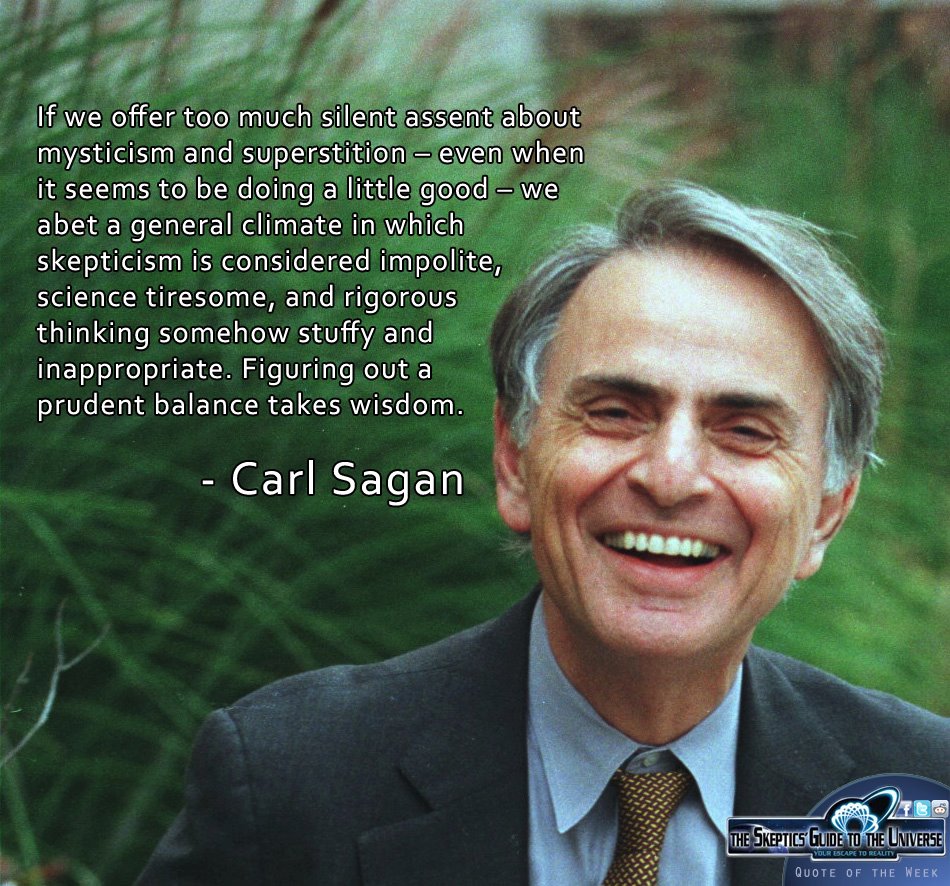
It is far better to grasp the Universe as it really is than to persist in delusion, however satisfying and reassuring. Carl Sagan
God is an ever-receding pocket of ignorance thats getting smaller and smaller as time goes on.- Neil deGrasse Tyson
"Depart from me I never knew you" ~God~ ..as you stand before the Throne of Judgement

itfitzme
Silver Member
It is far better to grasp the Universe as it really is than to persist in delusion, however satisfying and reassuring. Carl Sagan
God is an ever-receding pocket of ignorance thats getting smaller and smaller as time goes on.- Neil deGrasse Tyson
"Depart from me I never knew you" ~God~ ..as you stand before the Throne of Judgement
Carl Sagan and Neil deGrasse are real people.

This quote that you attribute to "god" is, in fact, attributable to Mathew and written is a book commonly called "the bible".
There in lies the difference between sanity and delusion, reality and fantacy, speaking the truth and lying.
itfitzme
Silver Member
My goodness. Those that do not believe in God have been speaking out very boldly and getting their message out concerning their non-belief. It's ok to not believe in God if that is your desire but I have a news flash for you. You cannot prove that God does not exist any more than I can prove that He does exist. My belief in God is based on my faith that He does in fact exist. Your non-belief is based on something else - whatever that might be but the bottom line is you cannot prove that God does not exist any more than I can prove that He does.
You are, though, entirely wrong. "God" is demonstrably disprovable and simply false. This belief that it can't be proven as false is the result of lacking knowledge about science. You might want to read up on hypothesis testing. In the mean time, you should avoid talking about things for which you have no knowledge.
LadyGunSlinger
Conservative Babe
- Feb 6, 2011
- 19,589
- 3,355
- 280
My goodness. Those that do not believe in God have been speaking out very boldly and getting their message out concerning their non-belief. It's ok to not believe in God if that is your desire but I have a news flash for you. You cannot prove that God does not exist any more than I can prove that He does exist. My belief in God is based on my faith that He does in fact exist. Your non-belief is based on something else - whatever that might be but the bottom line is you cannot prove that God does not exist any more than I can prove that He does.
You are, though, entirely wrong. "God" is demonstrably disprovable and simply false. This belief that it can't be proven as false is the result of lacking knowledge about science. You might want to read up on hypothesis testing. In the mean time, you should avoid talking about things for which you have no knowledge.
Then show us your proof. You don't have any scientific proof any more than believers have their own proof as to existence. To tell someone to stop talking about their belief system because you believe your own supersedes their speech right is arrogant and obnoxious.
PixieStix
Platinum Member
- Apr 2, 2009
- 15,125
- 5,498
- 370
“It is far better to grasp the Universe as it really is than to persist in delusion, however satisfying and reassuring.” – Carl Sagan
“God is an ever-receding pocket of ignorance that’s getting smaller and smaller as time goes on.”- Neil deGrasse Tyson
"Depart from me I never knew you" ~God~ ..as you stand before the Throne of Judgement
Carl Sagan and Neil deGrasse are real people.
Yes, but they are not God, now...are they? No one will stand before them
You didn't answer my question. Where are the moving mountains that will prove someone has enough faith to move them?If you have the faith of a Mustard seed you could move mountains.We'll they won't be calling you anytime soon. They're dead. And because you wouldn't believe them even if they did, then you're quest isn't for the truth, it's for show.
The rest of your post is the garbage that comes with not wanting to hear the truth.
There is plenty of bible proof. All saying the opposite of what you say. It throws a 'monkey' wrench in your bias.
Suffice it to say there is proof, and you run from it.
Prove to me that there is a single Christian out there with the faith of a Mustard seed and show me a mountain that has moved.
Yeshua HaMashiac
Temple Destruction Foretold
1Jesus came out from the temple and was going away when His disciples came up to point out the temple buildings to Him. 2And He said to them, "Do you not see all these things? Truly I say to you, not one stone here will be left upon another, which will not be torn down." 3As He was sitting on the Mount of Olives, the disciples came to Him privately, saying, "Tell us, when will these things happen, and what will be the sign of Your coming, and of the end of the age?"…
THE TEMPLE DESTROYED, 70 A.D.
The fulfillment of Christ's prophecy concerning the destruction of the magnificent temple at Jerusalem not only reveals the year of Christ's crucifixion, but also ended one phase of God's plan for the salvation of humanity and ushered in the next phase—Christ's return to conquer and rule the earth.
In 40 B.C., the Roman senate appointed Herod, later known as Herod The Great, as the ruler of Judea. Herod had previously served as the governor of Galilee and was a personal friend of Mark Antony before Antony was defeated by Octavian. Later Herod became a friend of Octavian who became the first Roman emperor as Caesar Augustus.
Herod the Great ruled Judea for the next 36 years, during which time he began many huge building projects including the building of a new Temple in Jerusalem for the worship of God. From the beginning of the Temple project in 19 B.C., it took 46 years to complete the main building and another 36 years to finish the entire Temple complex. This was a huge undertaking which required a tremendous amount of labor and money. This new temple was said to be a larger and a more beautiful temple than the one that Solomon built.
The historian Josephus said that much of the exterior of the Temple was covered with gold that reflected the fiery rays of the sun. Moreover, he said that, from a distance, the Temple appeared like a mountain covered with snow. This was probably because those parts that were not covered with gold were made of white stone.
From what is said in many writings about Herod's Temple, it was indeed a magnificent structure of awesome proportions. However, four years after it's completion, it was totally destroyed and wiped from the face of the earth.
During Jesus' time, many of the Jews were so awe struck and impressed with the grandeur of the Temple that they replaced the worship of God with respect and reverence for the Temple complex itself. However, Jesus was not impressed with the Temple's physical structure, because he knew that the Sovereign God was greater than any building that man could construct, no matter how grand and beautiful it was.
How about something that has occurred during the last couple hundred years not ancient word of mouth history.

Last edited:
itfitzme
Silver Member
My goodness. Those that do not believe in God have been speaking out very boldly and getting their message out concerning their non-belief. It's ok to not believe in God if that is your desire but I have a news flash for you. You cannot prove that God does not exist any more than I can prove that He does exist. My belief in God is based on my faith that He does in fact exist. Your non-belief is based on something else - whatever that might be but the bottom line is you cannot prove that God does not exist any more than I can prove that He does.
You are, though, entirely wrong. "God" is demonstrably disprovable and simply false. This belief that it can't be proven as false is the result of lacking knowledge about science. You might want to read up on hypothesis testing. In the mean time, you should avoid talking about things for which you have no knowledge.
Then show us your proof. You don't have any scientific proof any more than believers have their own proof as to existence. To tell someone to stop talking about their belief system because you believe your own supersedes their speech right is arrogant and obnoxious.
To tell someone to stop talking about their belief system because you believe your own supersedes their speech right is arrogant and obnoxious.
Now you're just sounding childish. Talking about something of which you lack knowledge. It is, for all practical purposes, bearing false wittness. Surely you don't need me to explain what that means.
There is no rule about "freedom of spech" that applies here at all. The freedom of speach is a constitutional restriction on the governmemt? A private business can make you leave their premises if they don't like what you are saying.
Not to mention the fact that everyone elses right speak is no less than yours. I'm just telling you that you might want to rethink this making statements about science when you haven't even begun to give it as much study as you have the bible. It's just a matter of common sense.
Amd there is certainly nothing wrong with anyone making recommendations to someone else, telling them that they should or shouldn't do something. Personally, I've always solicited others opinions. People pay other people to tell them what to do.
Then show us your proof. You don't have any. scientific proof any more than believers have their own proof as to existence..
Sorry, but knowledge and science aren't as easy as you would like. It is certainly not as easily attained as is your belief system. Knowlege takes effort and time. Faith requires the opposite.
First, you're going to have to learn advanced mathematics and statistics. Then you have to learn physics, from mechanics to modern. You will need thermodynamics and basic chemistry as well. That would be an excellent start. In that, I've made reference to no fewer than nine text books of which the knowlege has been thoroughly examined and tested by millions of professionals over thousands of years.
As good as it may sound, that science can't prove non-existance, the foundation of the sciences, especially modern complex sciences, relies on the fact that we can prove things are not possible and don't exist. But to truely appreciate the power of the technique requires a bit of basic knowledge.
That you should find this all somehow arrogant and obnoxious just stands as evidence of immaturity. To be arrogant requires that I should be exaggerating my level of knowledge. That would be you, speaking of science of which you know you have little knowledge. As for me, having been thoroughly examined, year in and year out over the course of some twenty plus years, by some of the smartest people that you or I shpuld be so lucky to know, means I cannot even begin to exaggerate my level of knowlwdge
Similar threads


- Replies
- 10
- Views
- 186

- Replies
- 14
- Views
- 207

New Topics
-
 India’s government is upset about H-1B delays because their citizens are “stranded” back home?
- Started by excalibur
- Replies: 2
-
 Jake Auchincloss ripped by Democrats for calling Senate hopeful Graham Platner’s Nazi tattoo ‘disqualifying’
- Started by Dont Taz Me Bro
- Replies: 1
-
 People are starting to realize that our 2 party corporate system isn't working,
- Started by the watcher
- Replies: 6
-
-
Trump Is Dying - The Walter Reed Lie, for the 100th Time - Rick Wilson - May 26
- Started by Dante
- Replies: 11


