
CrusaderFrank
Diamond Member
- May 20, 2009
- 162,076
- 88,674
- 2,645
- Thread starter
- #441
Giza, not built by Egyptians
They were there already
Follow along with the video below to see how to install our site as a web app on your home screen.
Note: This feature may not be available in some browsers.
Short on the Barabar Caves.
They speak to a technology and understanding that our “primitive” ancestors were not presumed to possess

Home made telescopes mirrors need to be smooth within 50 nanometers ... 1/4 of a wavelength of blue light ... but that's glass, which is relatively soft like granite ... William Herschel achieved this accuracy well before Leon Foucault invented his knife-edge test ...
You want hard, try quartzite, garnet or porcelain ... all common and all will easily work granite ... ask any stoneworker if they'd rather work granite or jasper ...

Which then leads to the question, who made the quartzite tooling to work the granite. Garnet crystals are likewise very difficult to use in a non industrial society.Home made telescopes mirrors need to be smooth within 50 nanometers ... 1/4 of a wavelength of blue light ... but that's glass, which is relatively soft like granite ... William Herschel achieved this accuracy well before Leon Foucault invented his knife-edge test ...
You want hard, try quartzite, garnet or porcelain ... all common and all will easily work granite ... ask any stoneworker if they'd rather work granite or jasper ...
The inhabitants of Gobekli Tepi apparently were .
They buried their amazing city and probably walked all the way down to the Nile for no reasons that we have yet figured .

The ice age was the event that set back humanity. Its very likely there were advanced civilizations that were devastated but some survived. They helped the less developed survivors rebuildWith the recent discovery of Gobekli Tepi, it's indisputable that a prior, advanced human civilization was laid low during the Younger Dryas. By itself it speaks to a prior civilization that warned doom from the sky above. Then you add to it that the Egyptian Priest who told that the destruction happened 9,000 years prior, also dating back to the Younger Dryas.
With respect to the dating of the Sphinx and Great Pyramid, it's clear that these were already there when the Egyptians arrived. Since both the Sphinx and Pyramids show water erosion, they too predate the Younger Dryas. The question is: did the builder of the Pyramids intentionally make a construct they KNEW would survive the certain destruction?
Humans have been the same genetically for 200,000 plus years. The idea that we only developed technology a few thousand years ago is now demonstrable false. They was at least one prior, advanced civilization. I suspect there were others as well
Thoughts?
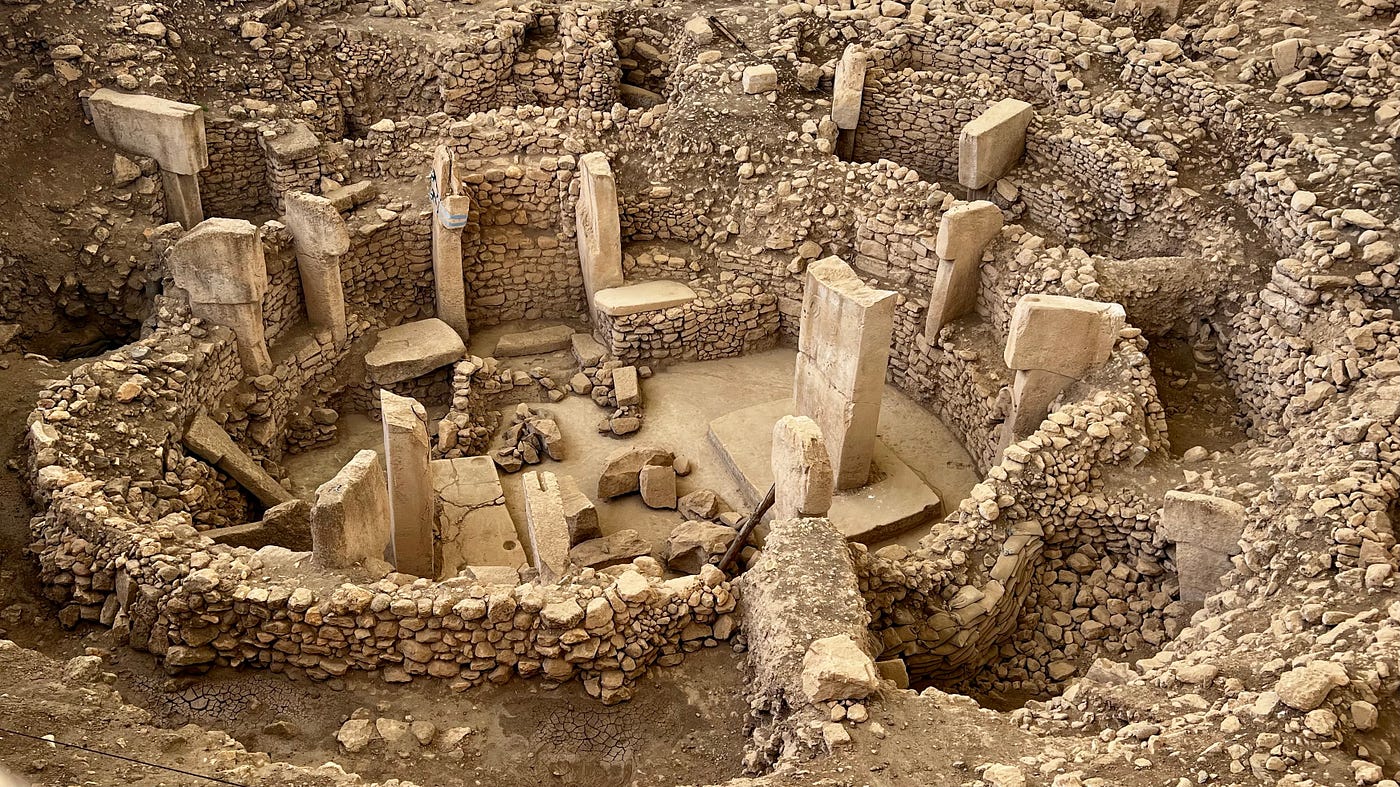
Göbekli Tepe - Wikipedia
View attachment 853673
Thats not the actual great flood. When the ice age ended there was a great floodThe great flood was 2900 BC in the Euphrates River Basin.
Yes, that's when the oceans rose by over 250 feet. All the communities along continental shelf (where the majority of the people lived) would have been destroyed.Thats not the actual great flood. When the ide age ended there was a great flood
W
Which then leads to the question, who made the quartzite tooling to work the granite. Garnet crystals are likewise very difficult to use in a non industrial society.
Porcelain is far too brittle for use in polishing. But it is excellent where it can be used for high heat environments.
But all of those uses presupposes an industrial society.
The ice age was the event that set back humanity. Its very likely there were advanced civilizations that were devastated but some survived. They helped the less developed survivors rebuild
Do you mean "How did we haft quartzite to make a hammer?" ... perhaps explain what you mean by "making quartzite tooling" ... the instagram message this is about specifically says "Quartz-rich granite conduits" ...
The Iron Age never reached India until the Industrial Age? ... I disagree ... I think these folks had steel tools to carve out the caves ... and the finish work isn't unique ... the question is there's no archaeological evidence of how the polishing technology reached that part of India ... no "in between" evolutionary steps ... not that humans weren't capable ...
Build a telescope by hand someday, you'll learn a lot about polishing rock ... William Herschel discovered Uranus in 1783, before James Watt initiated the Industry Age in 1796 ... so, 50 nm tolerance is below human eye-sight, strictly made by hand ... no industry needed ... just steel ...
The Barabar Caves were carved 100's of years after the discovery of diamonds in India ... these folks could polish corundum ... they didn't need magic ...
You have no idea when the Barabar Caves were carved!
You're saying they used diamond tipped drills and sanders?
"The Barabar Hill Caves are the oldest surviving rock-cut caves in India, dating from the Maurya Empire (322–185 BCE), some with Ashokan inscriptions, located in the Makhdumpur region of Jehanabad district, Bihar, India, 24 km (15 mi) north of Gaya."
Wikipedia cites Sir Alexander Cunningham (1871) page 43 ...
I'm saying they used iron ... or the best steel in the local area ... Iron Age India ...
To grind granite requires tooling of dome sort. The do it on a massive scale requires either massive tooling, or powerful tooling. To make the grinds precise, on massive pieces, requires the ability to measure micro imperfections across large slabs. Some with compound curves.Do you mean "How did we haft quartzite to make a hammer?" ... perhaps explain what you mean by "making quartzite tooling" ... the instagram message this is about specifically says "Quartz-rich granite conduits" ...
The Iron Age never reached India until the Industrial Age? ... I disagree ... I think these folks had steel tools to carve out the caves ... and the finish work isn't unique ... the question is there's no archaeological evidence of how the polishing technology reached that part of India ... no "in between" evolutionary steps ... not that humans weren't capable ...
Build a telescope by hand someday, you'll learn a lot about polishing rock ... William Herschel discovered Uranus in 1783, before James Watt initiated the Industry Age in 1796 ... so, 50 nm tolerance is below human eye-sight, strictly made by hand ... no industry needed ... just steel ...
The Barabar Caves were carved 100's of years after the discovery of diamonds in India ... these folks could polish corundum ... they didn't need magic ...
You claimed that the ancients could have used quartzite to grind down the granite.
Telescopes and their lenses are quite small. Until you get up into the large reflecting telescopes, and their immense mirrors, none of which are possible in a pre industrial society.Or emery ... and iron works granite ...
Did you understand the reference to telescope making ... you're saying this can't be done at home? ...
... or just say you believe in magic and I won't bother you anymore ...

BINGO. As so does every material scientist and civil engineer in the world. You should read up on the life of Edward Leedskalnin for another related but interesting story about someone who worked a lot with stone. Leonard Nimoy did an interesting take on him back in his old 'In Search Of' TV series. Scientists and engineers are faced with many puzzles of cutting, polishing, moving and fitting of stone from very ancient times which challenge if not exceed what we can practically do today. Can you imagine if we built stone buildings today whose pieces fit so precisely together that no mortar was even needed and could stand for thousands of years?You are ignoring the size of these granite slabs. It is that size, and the precision of their polishing, that I find remarkable.
An interesting point. Maybe it is because broken, such objects are easily lost as common stones, or maybe the decorative element simply factored into it. Marble, jade, et al. are all very decorative. Granite isn't so much, especially in small sizes.The other thing I find interesting is the lack of small, highly worked granite objects. There are objects in abundance made of other, mainly softer materials. But not granite.
Telescopes and their lenses are quite small. Until you get up into the large reflecting telescopes, and their immense mirrors, none of which are possible in a pre industrial society.
You are ignoring the size of these granite slabs. It is that size, and the precision of their polishing, that I find remarkable.
The other thing I find interesting is the lack of small, highly worked granite objects. There are objects in abundance made of other, mainly softer materials.
But not granite.
So you do believe in magic? ... you're defending the claim that this was done with copper and antler tools ... or that this cave was carved by extraterrestrial aliens ...I find the work remarkable as well ... but still of human manufacture ... if you want to promote voo-doo hexes, don't expect me to respect your scientific opinions ...


