The American Genocide of the Indians—Historical Facts and Real Evidence

Hunting grounds were vast tracts because the critters they hunted were constantly on the move. So the hunting ground was where the critters were, RIGHT THEN.

Not some amorphous region.

No actually they had territorial boundaries. the tribes didn't just migrate around at random, they split up into bands and followed specific trails and returned to the same regions in cycles. When they ran across other tribes encroaching, they ran them off or slaughtered them. They took slaves when it was convenient and tortured any captive males for family fun and entertainment. Large territories were more important to hunting tribes than for farming tribes, the latter needed less land to support an equivalent population size.
 
Hunting grounds were vast tracts because the critters they hunted were constantly on the move. So the hunting ground was where the critters were, RIGHT THEN.

Not some amorphous region.

Animals migrated over the same trails every year, until weather conditions and lack of forage made them seek other regions.. Even then they still tried the older trails first. Same way birds do.
 
The Sioux and Comanche warred on other tribes as well, eventually controlling huge regions.

Well, the Sioux never really "controlled" much of anything. They quite literally were eternally passing through areas.

At the time that Europeans first arrived on the Continent, they were still in the Lower Mississippi. The Sioux was simply one of a great many tribes that belonged to the Mississippian Culture when it imploded in the 15th century.

And even though that is only around 600 years ago, it might as well be 6,000 or 60,000 years ago because that entire culture was pre-literate and almost nothing of that time remains, even in oral traditions. However, we know from the archaeological record and the behavior of the tribes in the region that the end was violent and bloody. With the villages rapidly building fortifications and the amount of human sacrifices increasing. Was it a civil war? Invasion? Religious split? We simply do not know. But we do know that in less than 200 years a group that we do not even know their own name for themselves, and other than building in stone used wood and earth and likely rivaled the Aztecs in sophistication simply dissolved into multiple tribes.

The majority settled down into the tribal areas we know when Europeans arrived, but the Sioux were different. They never settled anywhere, but took up an eternal migration. Moving from somewhere around New Orleans up to around the Great Lakes at the time that Jamestown was established. Fighting every tribe they met, finally meeting the Potawatomie where they were defeated and forced to turn west. Passing through Illinois, Wisconsin, and Minnesota and finally arriving in the Dakotas by the time of the Louisiana Purchase. And being well into the Dakotas at the time of the US Civil War.

But here is the thing, they really were just passing through. All that territory that people now think as "theirs", that was Crow land. And their advance groups that were "leading the way" were already starting to fight with the Shoshone in Western Wyoming when they were finally forced onto reservations.

So their "controlling huge regions" is a big misnomer, as it was not in the way Europeans would do it. Once they moved on, nothing mattered. They controlled nothing in Mississippi, Arkansas, Tennessee, or any of the other areas they passed through. They did not leave behind any settlements, no buildings, no colonies. They never tried to settle down anywhere, and appeared to be on an eternal migration to somewhere. If the Europeans had never arrived, by this time they would likely be somewhere around the mouth of the Columbia River and trying to decide if they turn north or south.

I have long looked on the Sioux as a "wild card" among the Indian tribes. They were true nomads, and unlike all other tribes never really had a "home". All of the others would build villages, stake out preferred hunting and growing areas, and establish trading networks. The Sioux did none of these, with a tribal group establishing themselves in an area for 5-10 years then simply moving on. Not even the Apache were that nomadic. One of the closest I can think of that survived like that in Eurasia were the Bedouin. They also live a similar lifestyle, but have ranges each group will move through even today.
 
Well, the Sioux never really "controlled" much of anything. They quite literally were eternally passing through areas.

At the time that Europeans first arrived on the Continent, they were still in the Lower Mississippi. The Sioux was simply one of a great many tribes that belonged to the Mississippian Culture when it imploded in the 15th century.

And even though that is only around 600 years ago, it might as well be 6,000 or 60,000 years ago because that entire culture was pre-literate and almost nothing of that time remains, even in oral traditions. However, we know from the archaeological record and the behavior of the tribes in the region that the end was violent and bloody. With the villages rapidly building fortifications and the amount of human sacrifices increasing. Was it a civil war? Invasion? Religious split? We simply do not know. But we do know that in less than 200 years a group that we do not even know their own name for themselves, and other than building in stone used wood and earth and likely rivaled the Aztecs in sophistication simply dissolved into multiple tribes.

The majority settled down into the tribal areas we know when Europeans arrived, but the Sioux were different. They never settled anywhere, but took up an eternal migration. Moving from somewhere around New Orleans up to around the Great Lakes at the time that Jamestown was established. Fighting every tribe they met, finally meeting the Potawatomie where they were defeated and forced to turn west. Passing through Illinois, Wisconsin, and Minnesota and finally arriving in the Dakotas by the time of the Louisiana Purchase. And being well into the Dakotas at the time of the US Civil War.

But here is the thing, they really were just passing through. All that territory that people now think as "theirs", that was Crow land. And their advance groups that were "leading the way" were already starting to fight with the Shoshone in Western Wyoming when they were finally forced onto reservations.

So their "controlling huge regions" is a big misnomer, as it was not in the way Europeans would do it. Once they moved on, nothing mattered. They controlled nothing in Mississippi, Arkansas, Tennessee, or any of the other areas they passed through. They did not leave behind any settlements, no buildings, no colonies. They never tried to settle down anywhere, and appeared to be on an eternal migration to somewhere. If the Europeans had never arrived, by this time they would likely be somewhere around the mouth of the Columbia River and trying to decide if they turn north or south.

I have long looked on the Sioux as a "wild card" among the Indian tribes. They were true nomads, and unlike all other tribes never really had a "home". All of the others would build villages, stake out preferred hunting and growing areas, and establish trading networks. The Sioux did none of these, with a tribal group establishing themselves in an area for 5-10 years then simply moving on. Not even the Apache were that nomadic. One of the closest I can think of that survived like that in Eurasia were the Bedouin. They also live a similar lifestyle, but have ranges each group will move through even today.

Mostly rubbish. The Comanche ran the Apaches out of Texas and all the way to Arizona Tribes like the Osage were nearly exterminated by the Sioux. Even after sent to reservations they feared the Soiux; they ended up on the worthless land' they last occupied in Oklahoma because they trade off the good land to them to avoid being chased off. The 'worthless' land turned out to be oil rich and they ended up becoming the richest tribe in America because of the trade.

Not capable of exterminating anybody? So who wiped out Custer? Bavarian midgets from outer space? Who reduce the Huron to 300 from around 45,000, and long before Europeans could do more than trade from posts in Canada?
 
"Mushroom brought in his comment: that they lacked the means to exterminate other tribes."
This thread isn't solely about the Plains-Indians. And the vast majority of Red- Indians lived in the Great-Lakes vicinity and along the Western part of the USA.
So far I haven't seen any proof from Mushroom or you or whoever, to support this "nonsense" claim.
 
No actually they had territorial boundaries. the tribes didn't just migrate around at random, they split up into bands and followed specific trails and returned to the same regions in cycles.

Almost universally true, other than the Sioux. They had no territorial boundaries, and were simply moving west by the 1700s. Just as when they started their trek they were somewhere around New Orleans and simply started moving north. For all the other tribes, that is true. They generally moved in seasonal-annual cycles through the same areas repeatedly. Archaeologists have sifted through their middens and tracked their presence in an area through the trash piles of their settlements. Most seeming to be inhabited in roughly 1-2 year cycles before moving on to the next. And often times even if the majority moved on a small grouping (possibly elders or infirm) would remain behind as the majority moved on.

And many had rather sophisticated networks of settlements and trade. This is especially true of those from the Great Lakes through New England. They had a rarity in North America, permanent settlements. And alliances that stretched back hundreds of years, likely through ancient family ties. The Anishinaabe being one that has long fascinated me for obvious reasons.

Commonly called the "Council of Three Fires", that is the Chippewa (Ojibwe), the Ottawa (Odawa), and the Potawatomie. An alliance believed to have been formalized before 800 CE. And among them, each grouping had rather interesting titles for themselves in the alliance.

The Chippewa were the "Older Brother", the Ottawa the "Middle Brother", and the Potawatomie the "Younger Brother". The Chippewa were also the "Keepers of the Faith", the Ottawa the "Keepers of Trade", and the Potawatomie the "Keepers of the Fire". And their Council when the French arrived were meeting at Michilimackinac, what we now call Mackinac Island. This was a permanent settlement where the three groups held council, as well as arranged trade (particularly with the Wyandot). As well as fighting the Iroquois who kept trying to move into the area.

The various tribes were all very different from each other. Most would have what we would call "ranges", but some also pretty much settled down almost permanent settlements. This can especially be seen in those from Northern California through British Columbia. Where the bi-annual salmon runs would allow them to remain in a single location and feed themselves year round.

Likely only moving when a catastrophe occurred, such as the Cascadia Earthquake of 1700. When Lewis and Clark passed through the area in 1805, they saw fairly "new" villages, saw ones abandoned a century before, and also saw the devastation left behind, and heard the tales of everything being destroyed.
 
Tribes like the Osage were nearly exterminated by the Sioux.

But the Sioux fought everybody. And they were also simply passing through the area. At the time they were forced onto reservations, they leading edge of their migration was butting heads with the Shoshone in Idaho.

There is a reason that they tend to have a bad reputation with all tribes they met. But they never settled down. In short, they wanted to pass through, and you let them or you fought them. Most tribes fought them.
 
Animals migrated over the same trails every year, until weather conditions and lack of forage made them seek other regions.. Even then they still tried the older trails first. Same way birds do.
And that's why the Plains-Indians did not have fixed territorial boundaries - they however used to congregate at certain holy/spiritual sites e.g. The Black Mountains or e.g. Manitou Springs/Colorado.

IIRC the Comanche came for today's Canada - and the Sioux from the Mississippi vicinity - therefore they were on an endless trip - which got eventually halted by the Europeans/Americans.
 
Last edited:
History is filled with atrocity, war, bloodshed. Note that no one recounts the torture and atrocities the native tribes did to one another and to the white settlers.

Although your comment is certainly an important and valid point in all that happened there is no denying the veracity of the opening post.

Canada's Prime Minister Stephen Harper at least did a public apology for some aspects of what happened here in Canada.

On June 11, 2008, Prime Minister Stephen Harper issued a formal apology on behalf of the Canadian government to former students of Indian Residential Schools. The apology acknowledged the policy of assimilation was wrong, caused lasting harm, and recognized the government’s role in systemic abuse, neglect, and the forced separation of children from their families.
www.rcaanc-cirnac.gc.ca +3
Key Aspects of the Apology:
  • The Apology: Delivered in the House of Commons, Harper apologized for the "sad chapter" of residential schools and the "profoundly negative" impact on Indigenous culture, heritage, and language.
  • Targeted Issues: The statement recognized that the school system aimed to separate children from their families and cultures. It acknowledged the failure to protect children from abuse and neglect, and the lasting intergenerational trauma caused by this separation.
  • Context: The apology was a cornerstone of the Indian Residential Schools Settlement Agreement, which also established the Truth and Reconciliation Commission of Canada.
  • Purpose: The intent was to begin a new relationship based on knowledge of shared history, mutual respect, and reconciliation.
    Facing History & Ourselves +6
While significant for many survivors, some critics noted that the apology was seen by some as framing the schools as a purely historical issue rather than an ongoing legacy, and argued it required more concrete follow-up actions.


After what Prime Minister Stephen Harper did, Chief Kenny Blacksmith and other Canadian First Nations Chiefs got together and prayed on behalf of Canada that we be forgiven for the guilt of our past. I do believe that something similar could positively alter the future of the USA.

I have seen evidence that we actually live in a Multiverse and the future that occurs depends do a huge extent on our actions and decisions now.


Last edited:
Although your comment is certainly an important and valid point in all that happened there is no denying the veracity of the opening post.

Canada's Prime Minister Stephen Harper at least did a public apology for some aspects of what happened here in Canada.


After what Prime Minister Stephen Harper did, Chief Kenny Blacksmith and other Canadian First Nations Chiefs got together and prayed on behalf of Canada that we be forgiven for the guilt of our past. I do believe that something similar could positively alter the future of the USA.

I have seen evidence that we actually live in a Multiverse and the future that occurs depends do a huge extent on our actions and decisions now.
I hope not. There is no such thing as generational guilt. Recognize that wrongs were committed and move on. I don't feel any guilt due to the torture and cannibalism committed by my Iroquois ancestors.
 
Although your comment is certainly an important and valid point in all that happened there is no denying the veracity of the opening post.

Canada's Prime Minister Stephen Harper at least did a public apology for some aspects of what happened here in Canada.


After what Prime Minister Stephen Harper did, Chief Kenny Blacksmith and other Canadian First Nations Chiefs got together and prayed on behalf of Canada that we be forgiven for the guilt of our past. I do believe that something similar could positively alter the future of the USA.

I have seen evidence that we actually live in a Multiverse and the future that occurs depends do a huge extent on our actions and decisions now.


But there will be no forgiveness.
 
But there will be no forgiveness.

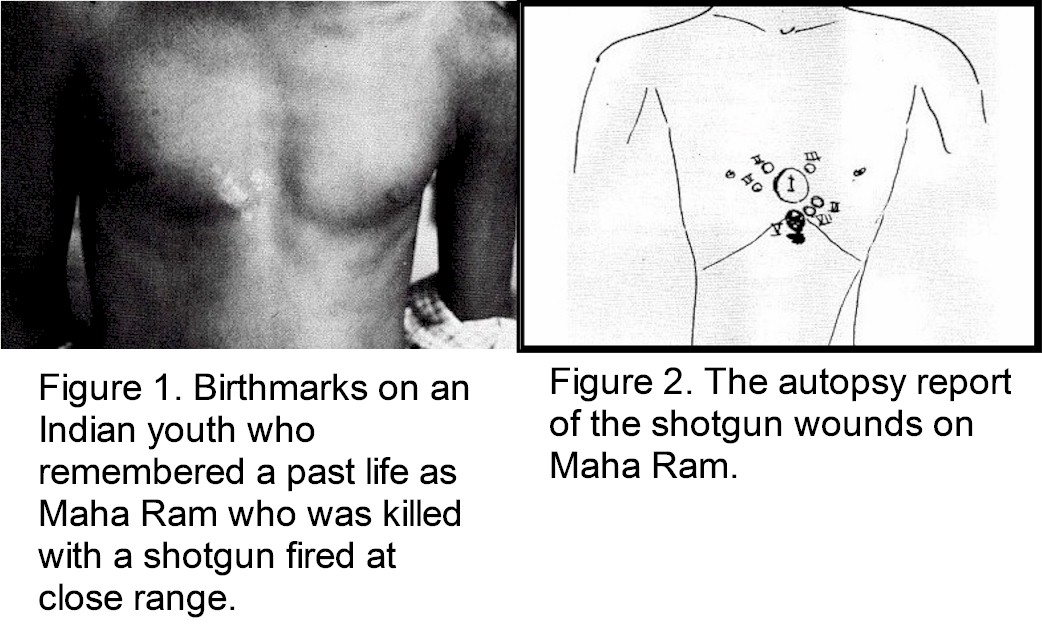
Do you know who Dr. Ian Stevenson is?

Do you understand why I would mention his name in the context of this discussion?


There is evidence in support of the idea that Messiah Yeshua - Jesus may have been mentored by the Essene Jewish Community and He may have been in agreement with the Dr. Ian Stevenson research, [and that is merely an introduction to the full topic]. The Gilgul Cycle of Judaism is a part of what I am referring to.

Un-forgiveness is one of the most rapid and certain ways to take our own lives as well as the lives of everybody around us into a hellish state. Un-forgiveness depends on our being IGNORANT of the implications of the Gilgil Cycle of Judaism and the Dr. Ian Stevenson research.

 
Do you know who Dr. Ian Stevenson is?

Do you understand why I would mention his name in the context of this discussion?


There is evidence in support of the idea that Messiah Yeshua - Jesus may have been mentored by the Essene Jewish Community and He may have been in agreement with the Dr. Ian Stevenson research, [and that is merely an introduction to the full topic]. The Gilgul Cycle of Judaism is a part of what I am referring to.

Un-forgiveness is one of the most rapid and certain ways to take our own lives as well as the lives of everybody around us into a hellish state. Un-forgiveness depends on our being IGNORANT of the implications of the Gilgil Cycle of Judaism and the Dr. Ian Stevenson research.


that's nice.

There will still be no forgiveness.

The next time there is something, ANYTHING, that requires some native interest vs white Canadian interests,

the historical "sin" of hte past, will still be part of the equation. No one will go, well, that's been forgiven, so, we are all equal now.

It will still be about what can be done to favor the indians, at the expense of the white man.


So, what is the point of this?
 
that's nice.

There will still be no forgiveness.

The next time there is something, ANYTHING, that requires some native interest vs white Canadian interests,

the historical "sin" of hte past, will still be part of the equation. No one will go, well, that's been forgiven, so, we are all equal now.

It will still be about what can be done to favor the indians, at the expense of the white man.


So, what is the point of this?

Your anger about the past is understandable but if you would like to have Shalom and peace of mind you should do some research on the evidence that virtually none of us lives merely once.

I believe that near death experiencer John J. Davis passed on a message to all of us that can be a first step toward forgiving and loving even our enemies because in another time and place we may have behaved far worse than they are behaving now, [or how their grandparents behaved a century or two or three ago].


[Near death experiencer John J. Davis] :

Past Lives​

The next building he took me to was another large building with columns all along the front and the sides. He took me inside, and one of the rooms he took me to looked just like a theater, like we have today. There was a single movie screen in front, and my guide said, “I’m going to show you past lifetimes.” This was something I had a hard time with because, being a Catholic, being raised in the church and reading the Bible, there is no talk of past lifetimes. But the truth is, we are eternal. We exist forever; we never die. We can have many, many lifetimes—as many as we want. It’s totally up to us.

He said, “I’m going to show you some different lifetimes.” All of a sudden, the screen turned on, and the first life he showed me, I was a monk. I had a shaved head, and I was wearing a red gown or tunic, and I was teaching kids. In that lifetime, my job was to teach kids about life in a monastery. What was so interesting is I knew by looking at this where that lifetime occurred, and it was somewhere in Southeast Asia. Then it went blank.

Then the screen came on again, and he showed me another life. This time I was a shoe peddler. I had a little wheelbarrow with a bunch of shoes in it. My job in that lifetime was I fixed people’s shoes. I would go to their homes in the village, get the shoes they wanted me to fix, take them back to my shop, fix them, and then bring them back to the people. That was my job. That life took place somewhere in Eastern Europe. Then that life disappeared.

Then another life showed up, and this was of a fisherman. I was a fisherman in a little raggedy boat on a lake. I had nets, and I was tossing these nets into the water, and part of my job in that life was to help feed the community through catching fish. That lifetime happened somewhere in the Middle East.

....


Two, three or four hundred years ago your spirit or soul may have been in a White Settler.......
two, three or four hundred years ago the spirit or soul of somebody who is obviously Caucasian in 2026 might have been in the body of one of your First Nations grandparents.

Before you were born you volunteered to take on the burden of being in the position that you are now in so that you will yourself learn more about forgiveness... so that you can teach about forgiveness once you go back into the afterlife realms.


If I have learned even a little bit from studying NDE accounts since 1990 it is that there is a high degree of probability that that is one part of your mission, and mine as well.

My mom's ancestors were from Southern Ireland... but my dad's ancestors were from Northern Ireland.


I grew up listening to the Irish songs of Rebellion made famous by the Clancy Brothers and Tommy Makem, but it would be insanity for me to seek to join the IRA, [my last name would betray me anyway]?


Last edited:
Your anger about the past is understandable but if you would like to have Shalom and peace of mind you should do some research on the evidence that virtually none of us lives merely once.
.....


it's not the past. It's the present and the future.

I'm done paying for the sins of other people that sort of looked like me a long time ago.


THe next time someone wants to benefit at my expense because of some shit that went down over a century before I was born, they should **** off.
 
15th post
And that's why the Plains-Indians did not have fixed territorial boundaries - they however used to congregate at certain holy/spiritual sites e.g. The Black Mountains or e.g. Manitou Springs/Colorado.

IIRC the Comanche came for today's Canada - and the Sioux from the Mississippi vicinity - therefore they were on an endless trip - which got eventually halted by the Europeans/Americans.

The Apache language is related to the Canadians, not the Comanche.
 
I grew up listening to the Irish songs of Rebellion made famous by the Clancy Brothers and Tommy Makem, but it would be insanity for me to seek to join the IRA, [my last name would betray me anyway]?

When I was a teenager, I found an album of Irish rebellion songs. I wore the thing out. It is a genre all to itself. Great stuff.
 
Back
Top Bottom