First there the planet warms, then the CO2 levels rise. That is what all of the data says, but the morons on the left believe it to be the other way around. The simple fact is the earth came out of the last mini-ice age around 1850. Long before the combustion engine was invented.
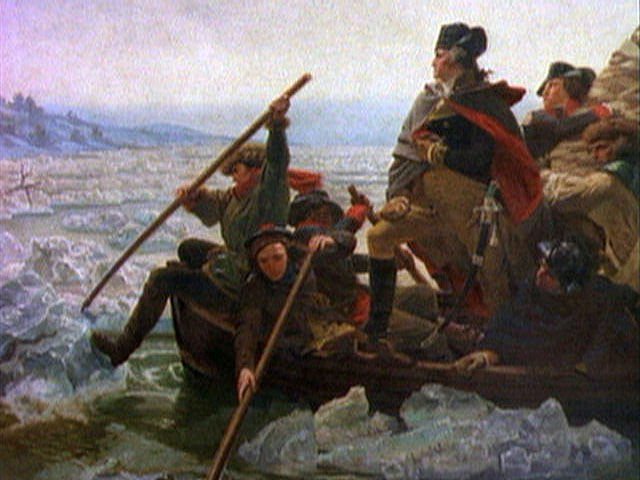
This famous Leutze painting from Christmas night 1776. One thing most prominent in the painting is the ice choked Delaware River in Trent, NJ.
Well, that river has not been frozen over that time of year since around 1850.
Liberals have no clue. They have been utterly ruined and it is just hilarious watching all of the liberals try and insist that man has caused this mass warming.
As though any of them have any freaking clue about climatology.
Some more factual data that the left will reject, as that global warming ship hull is being crushed by thick ice packs.
--------------------------------------------------
CO2 lags temperature
"An article in Science magazine illustrated that a rise in carbon dioxide did not precede a rise in temperatures, but actually lagged behind temperature rises by 200 to 1000 years. A rise in carbon dioxide levels could not have caused a rise in temperature if it followed the temperature." (Joe Barton)
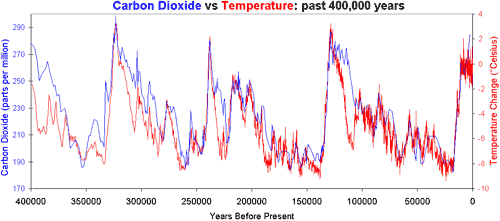
Earth’s climate has varied widely over its history, from ice ages characterised by large ice sheets covering many land areas, to warm periods with no ice at the poles. Several factors have affected past climate change, including solar variability, volcanic activity and changes in the composition of the atmosphere. Data from Antarctic ice cores reveals an interesting story for the past 400,000 years. During this period, CO2 and temperatures are closely correlated, which means they rise and fall together. However, based on Antarctic ice core data, changes in CO2 follow changes in temperatures by about 600 to 1000 years, as illustrated in Figure 1 below. This has led some to conclude that CO2 simply cannot be responsible for current global warming.
Figure 1: Vostok ice core records for carbon dioxide concentration and temperature change.
This statement does not tell the whole story. The initial changes in temperature during this period are explained by changes in the Earth’s orbit around the sun, which affects the amount of seasonal sunlight reaching the Earth’s surface. In the case of warming, the lag between temperature and CO2 is explained as follows: as ocean temperatures rise, oceans release CO2 into the atmosphere. In turn, this release amplifies the warming trend, leading to yet more CO2 being released. In other words, increasing CO2 levels become both the cause and effect of further warming. This positive feedback is necessary to trigger the shifts between glacials and interglacials as the effect of orbital changes is too weak to cause such variation. Additional positive feedbacks which play an important role in this process include other greenhouse gases, and changes in ice sheet cover and vegetation patterns.
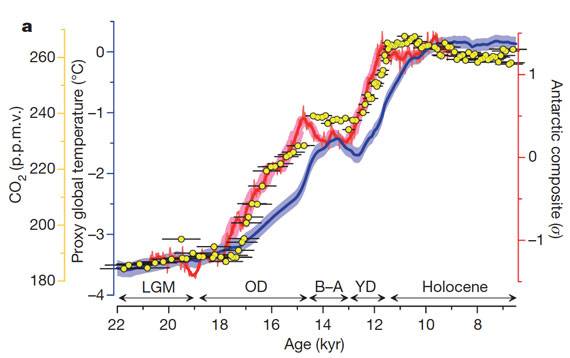
A 2012 study by Shakun et al. looked at temperature changes 20,000 years ago (the last glacial-interglacial transition) from around the world and added more detail to our understanding of the CO2-temperature change relationship. They found that:
The Earth's orbital cycles trigger the initial warming (starting approximately 19,000 years ago), which is first reflected in the the Arctic.
This Arctic warming caused large amounts of ice to melt, causing large amounts of fresh water to flood into the oceans.
This influx of fresh water then disrupted the Atlantic Ocean circulation, in turn causing a seesawing of heat between the hemispheres. The Southern Hemisphere and its oceans warmed first, starting about 18,000 years ago.
The warming Southern Ocean then released CO2 into the atmosphere starting around 17,500 years ago, which in turn caused the entire planet to warm via the increased greenhouse effect.

 Proven to be manipulated data and the leaked emails, not to mention your very own scientists are changing their position should have sent up red flags for those who do some critical thinking. But, it wouldn't for those who have an agenda.