Oh, wow. You must be talking about a different Vietnam on a different planet. The Vietnam here on Earth is still ranked as one of the most repressive, brutal regimes on the planet, even according to left-leaning human rights groups such as
Human Rights Watch and
Amnesty International. In its most recent report, Human Right Watch notes that "Vietnamese authorities severely restrict the rights to freedom of expression, association, peaceful assembly, movement, and religion. . . ." (
LINK).
On the 60,000-some executions:
Repression in the Socialist Republic of Vietnam
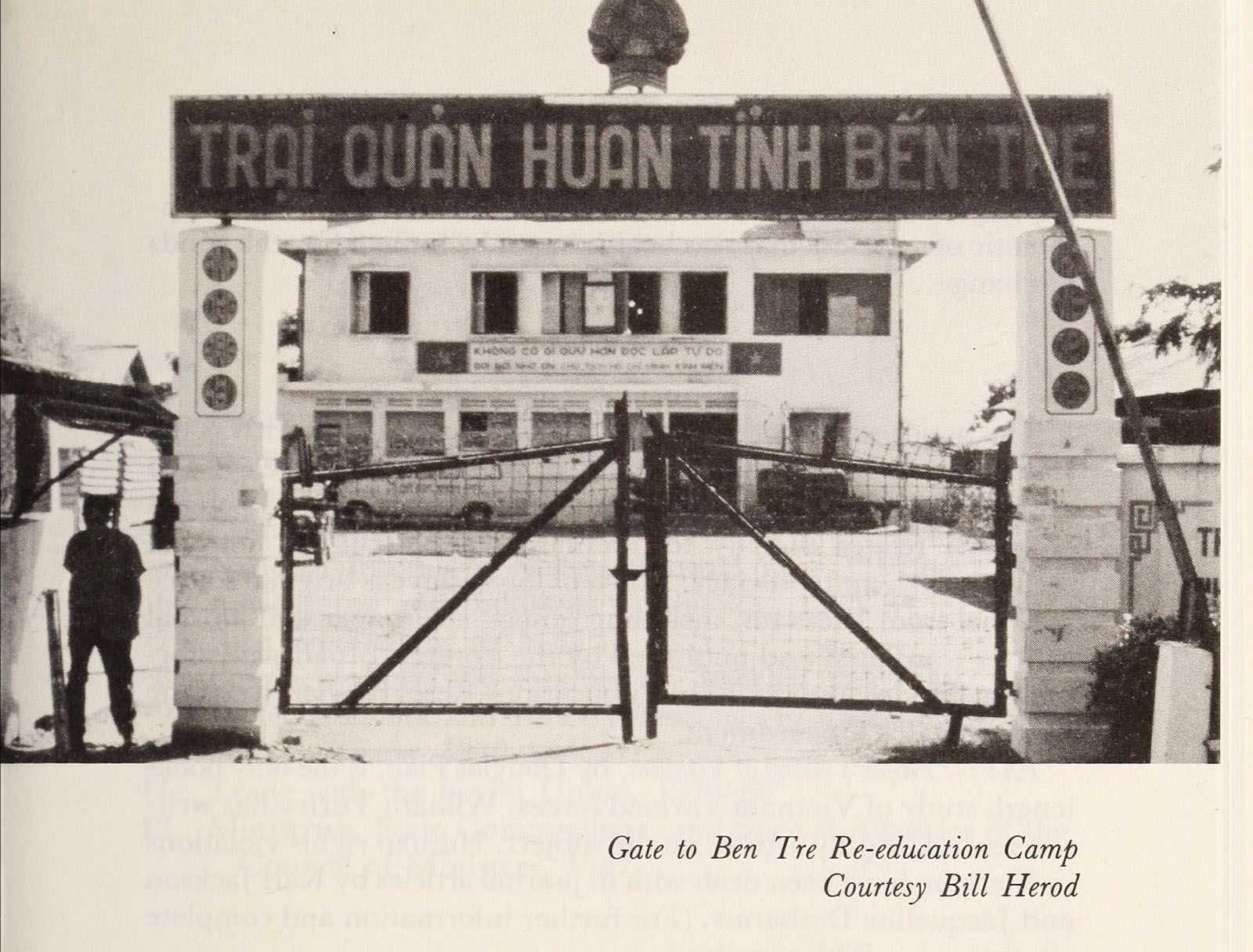
Some info on Vietnam's brutal concentration camps ("reeducation camps"):
Actor Ke Huy Quan and “Everything Everywhere All At Once” made history at this year’s Oscars. Despite being the first person of Vietnamese heritage to win

thevietnamese.org
If you want to get some idea of the horror that the Communists imposed on the South Vietnamese after the war, read
A Viet Cong Memoir: An Inside Account of the Vietnam War and Its Aftermath, written by Truong Nhu Tang, a former Viet Cong high official who was also a minister in the Viet Cong's shadow government, the PRG. He defected and fled Vietnam after the war after he saw the tyranny that the Communists were imposing. He described Communist rule as a "reign of terror."
Here are a few of the facts Tang discussed in his book:
-- After Saigon fell in April 1975, the North Vietnamese imposed a “reign of terror” on the South that included “outrages of every description” (pp. 280-281). These outrages caused Tang to realize that North Vietnam’s Communists were not interested in a genuine national unity government but in “the ruthless consolidation of power” (p. 281).
-- Tang said that Communist terrorism included “a wave of arbitrary arrests that scythed [slashed] through the cities and villages” (p. 279).
-- Tang said that at least 300,000 people were put into brutal “reeducation camps” (i.e., concentration camps), and he noted that this figure only counted the number of former government officers, state officials, and members of South Vietnam’s political party who were formally summoned for reeducation (p. 282). He added,
This figure does not include people who were arrested in the sweeps by governmental organs and military authorities that terrorized both Saigon and the provinces during that period. (p. 282)
Subsequent research puts the number of South Vietnamese sent to concentration camps at over 800,000.
-- The “reeducation” camps were “vicious” and “destructive” (p. 274). Tang complained about the camps to the PRG president, Huynh Tan Phat, but was told the camps were necessary and would continue (pp. 274-276). He even complained about the camps directly to North Vietnam’s prime minister, Pham Van Dong, but to no avail (pp. 280-282).
I discuss these facts and many others in my 2025 book
Reclaiming the Vietnam War: The Betrayal of South Vietnam.


 Many former collaborators and traitors were sent to camps to learn what it means to be a proud Vietnamese and not a Puppet of Colonialists and Imperialists, and who told you 60,000 were executed? what happened to the predicted bloodbath that you clowns said would happen when the NVA entered Saigon? it never happened according to you clowns there would have been mass murder, now today Vietnam is a vibrant Country and independent and you can't stand it.