When was war declared against Venezuela?

The arguments for the President having the power to order this attack are relatively weak.

One speaks of whether the USSC would approve, but it is obscure who would have legal standing to challenge the attack. Possibly a living relative of one (or more) of the deceased mariners.

No doubt Democrat operatives will cook something up. They are determined to feed the legal industry to bursting.
 

Boat Suspected of Smuggling Drugs Is Said to Have Turned Before U.S. Attacked It​

The Trump administration has argued that the summary killing of 11 people it accused of running drugs was legal under the laws of war.

A Venezuelan boat that the U.S. military destroyed in the Caribbean last week had altered its course and appeared to have turned around before the attack started because the people onboard had apparently spotted a military aircraft stalking it, according to American officials familiar with the matter.

The military repeatedly hit the vessel before it sank, the officials added, speaking on the condition of anonymity to discuss a sensitive matter. The administration has claimed the boat was carrying drugs.

The disclosures provide new details about an operation that was a startling departure from traditional drug interdiction efforts, escalating President Trump’s use of the military for matters typically handled by law enforcement. Legal specialists have disputed that it was lawful for the military, on President Trump’s orders, to target and kill drug smuggling suspects as if they were combatants in a war.


Does declaring war against drug smugglers mean we can bomb people in Mexico? Importantly, where is the hard evidence the trump government made about the boat and the people in it?

Vitally, have the Repub's in Congress scheduled hearings on the matter of the government's claimed justification? If not why not?
Trump is now an international war criminal. He can be arrested anywhere in the world at any time. The U.S. now has a POTUS who cannot leave the country safely without fear of arrest.
 
So, you're opposed to the sinking of a Venezuelan drug runner boat with millions of dollars worth of dangerous drugs aboard
First, I want to see evidence of that assertion. I don't trust anything the regime says. Second, the regime has yet to produce a legal rationale for sinking the boat and killing it's occupants.

Either we are a nation governed by law or we aren't. We can't not be a nation ruled by the principle of "the ends justifies the means."
 
No doubt Democrat operatives will cook something up. They are determined to feed the legal industry to bursting.
Legal challenges to trump claiming dubiously constitutional powers are the Dem's fault?
 
Got a link for that nonsense? Tell the ICC has an arrest warrant out for him.
On first impression, the recent strike on Tren de Aragua seems to fit comfortably within this framework. The “national interests” prong of the above two-part test is not particularly constraining. Past presidents have justified far more substantial military action on such flexible national interests as promoting regional stability in areas far further afield than the Caribbean, which the United States has long identified as an area of special concern to its national interests. A similar logic could readily apply to narcotics trafficking given its well-documented impact on the United States and broader Western Hemisphere. And it seems unlikely that Tren de Aragua (or even Venezuela) will be able and willing to mount a military response whose “nature, scope, and duration” rise to the level of a “war for constitutional purposes” so as to implicate possible Declare War Clause limitations. If this most recent strike proves to be the beginning of a longer campaign, then it may eventually raise questions about the War Powers Resolution’s 60- to 90-day cutoff. But that deadline remains a ways off, and, in any event, the executive branch has long employed legal interpretations that limit this requirement’s application to campaigns involving intermittent military operations, none of which have been the subject of meaningful pushback by Congress or the federal courts. In short, on their face, the Trump administration’s actions appear consistent with the permissive standards applied by the executive branch when it comes to the use of force.

Yet this analysis elides a key fact that distinguishes the Trump administration’s recent strike from the actions of its predecessors: Here, for the first time in recent memory, the United States has directly targeted individuals who are traditionally understood to be civilians. This isn’t one of the variables in the test put forward by the executive branch. But it’s still a distinction with potential legal significance.
 
First, I want to see evidence of that assertion. I don't trust anything the regime says. Second, the regime has yet to produce a legal rationale for sinking the boat and killing it's occupants.

Either we are a nation governed by law or we aren't. We can't not be a nation ruled by the principle of "the ends justifies the means."

The US declared them a terrorist organziation, same line of logic/law Obama used to drone other terrorists.
 
On first impression, the recent strike on Tren de Aragua seems to fit comfortably within this framework. The “national interests” prong of the above two-part test is not particularly constraining. Past presidents have justified far more substantial military action on such flexible national interests as promoting regional stability in areas far further afield than the Caribbean, which the United States has long identified as an area of special concern to its national interests. A similar logic could readily apply to narcotics trafficking given its well-documented impact on the United States and broader Western Hemisphere. And it seems unlikely that Tren de Aragua (or even Venezuela) will be able and willing to mount a military response whose “nature, scope, and duration” rise to the level of a “war for constitutional purposes” so as to implicate possible Declare War Clause limitations. If this most recent strike proves to be the beginning of a longer campaign, then it may eventually raise questions about the War Powers Resolution’s 60- to 90-day cutoff. But that deadline remains a ways off, and, in any event, the executive branch has long employed legal interpretations that limit this requirement’s application to campaigns involving intermittent military operations, none of which have been the subject of meaningful pushback by Congress or the federal courts. In short, on their face, the Trump administration’s actions appear consistent with the permissive standards applied by the executive branch when it comes to the use of force.
Yet this analysis elides a key fact that distinguishes the Trump administration’s recent strike from the actions of its predecessors: Here, for the first time in recent memory, the United States has directly targeted individuals who are traditionally understood to be civilians. This isn’t one of the variables in the test put forward by the executive branch. But it’s still a distinction with potential legal significance.
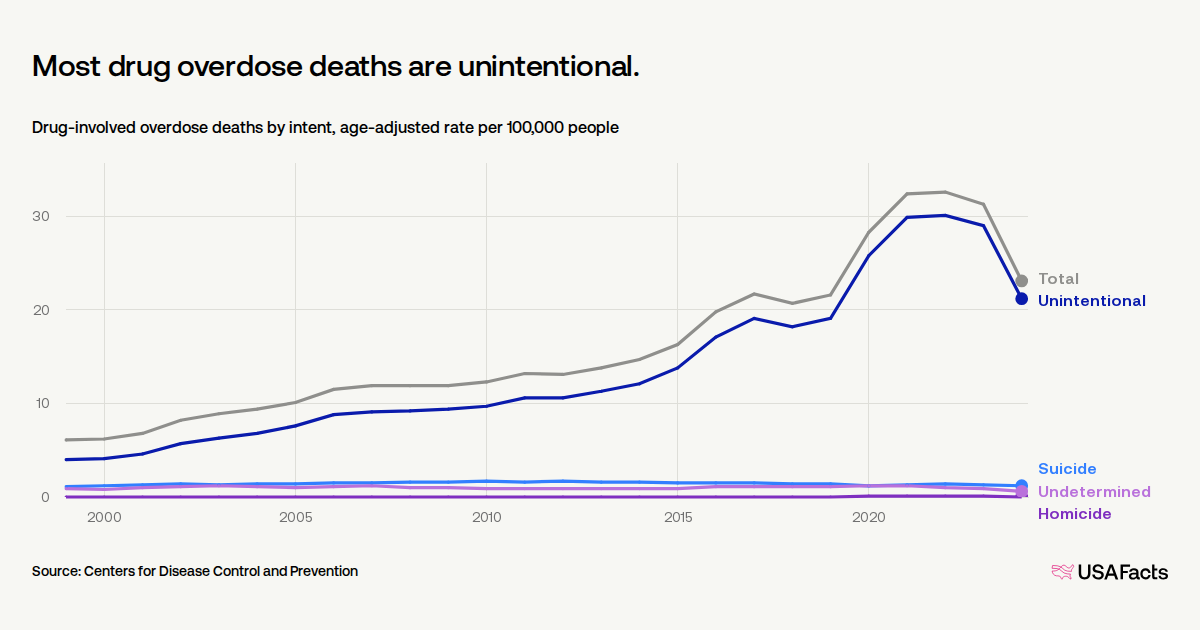
Trump targeted terrorists who kill 100,000 Americans a year with illicit drugs. Its legal.
 
On first impression, the recent strike on Tren de Aragua seems to fit comfortably within this framework. The “national interests” prong of the above two-part test is not particularly constraining. Past presidents have justified far more substantial military action on such flexible national interests as promoting regional stability in areas far further afield than the Caribbean, which the United States has long identified as an area of special concern to its national interests. A similar logic could readily apply to narcotics trafficking given its well-documented impact on the United States and broader Western Hemisphere. And it seems unlikely that Tren de Aragua (or even Venezuela) will be able and willing to mount a military response whose “nature, scope, and duration” rise to the level of a “war for constitutional purposes” so as to implicate possible Declare War Clause limitations. If this most recent strike proves to be the beginning of a longer campaign, then it may eventually raise questions about the War Powers Resolution’s 60- to 90-day cutoff. But that deadline remains a ways off, and, in any event, the executive branch has long employed legal interpretations that limit this requirement’s application to campaigns involving intermittent military operations, none of which have been the subject of meaningful pushback by Congress or the federal courts. In short, on their face, the Trump administration’s actions appear consistent with the permissive standards applied by the executive branch when it comes to the use of force.

Yet this analysis elides a key fact that distinguishes the Trump administration’s recent strike from the actions of its predecessors: Here, for the first time in recent memory, the United States has directly targeted individuals who are traditionally understood to be civilians. This isn’t one of the variables in the test put forward by the executive branch. But it’s still a distinction with potential legal significance.
The U.S.Navy is charted to keep the seas lanes open from danger. Danger that affects us. We have shown little aggressiveness at this as for drug cartels as much as we should.
 
Got a link for that nonsense? Tell the ICC has an arrest warrant out for him.
A competent POTUS would have waited until the boat was at least in U.S. waters to murder the crew.


International law generally prohibits extrajudicial killings, the deliberate and state-sponsored assasination of an individual or individuals, and the United States banned political assassinations in 1976 via an executive order. However, the Trump administration has argued that such strikes are permitted under both U.S. and international law due to the immediate threat posed by drug cartels, claiming such strikes to be a form of self-defense.

Former military officials, however, aren’t buying the Trump administration’s defense.

“If someone is retreating, where’s the ‘imminent threat’ then?” said Rear Adm. Donald Guter, speaking with the New York Times. “Where’s the ‘self-defense’? They are gone if they ever existed – which I don’t think they did.”


Boat Suspected of Smuggling Drugs Is Said to Have Turned Before U.S. Attacked It​

The Trump administration has argued that the summary killing of 11 people it accused of running drugs was legal under the laws of war.

A Venezuelan boat that the U.S. military destroyed in the Caribbean last week had altered its course and appeared to have turned around before the attack started because the people onboard had apparently spotted a military aircraft stalking it, according to American officials familiar with the matter.

The military repeatedly hit the vessel before it sank, the officials added, speaking on the condition of anonymity to discuss a sensitive matter. The administration has claimed the boat was carrying drugs.

The disclosures provide new details about an operation that was a startling departure from traditional drug interdiction efforts, escalating President Trump’s use of the military for matters typically handled by law enforcement. Legal specialists have disputed that it was lawful for the military, on President Trump’s orders, to target and kill drug smuggling suspects as if they were combatants in a war.


Does declaring war against drug smugglers mean we can bomb people in Mexico? Importantly, where is the hard evidence the trump government made about the boat and the people in it?

Vitally, have the Repub's in Congress scheduled hearings on the matter of the government's claimed justification? If not why not?


So?
 
Did you think repeating an unproven assertion would be persuasive?
I can't help that you are uninformed. 105,000 in 2023. Killing terrorists is legal.
Maybe you just start stupid threads without knowing what they are really about or true? Just as long as they are TDS
 
15th post
A competent POTUS would have waited until the boat was at least in U.S. waters to murder the crew.
International law generally prohibits extrajudicial killings, the deliberate and state-sponsored assasination of an individual or individuals, and the United States banned political assassinations in 1976 via an executive order. However, the Trump administration has argued that such strikes are permitted under both U.S. and international law due to the immediate threat posed by drug cartels, claiming such strikes to be a form of self-defense. Former military officials, however, aren’t buying the Trump administration’s defense.
“If someone is retreating, where’s the ‘imminent threat’ then?” said Rear Adm. Donald Guter, speaking with the New York Times. “Where’s the ‘self-defense’? They are gone if they ever existed – which I don’t think they did.”
We aren't under international law dumbass. We aren't under the ICC either.
We also don't give a **** what unnamed "military officials" aren't buying.
Killing drug cartel members is perfectly legal.
 
We aren't under international law dumbass. We aren't under the ICC either.
We also don't give a **** what unnamed "military officials" aren't buying.
Killing drug cartel members is perfectly legal.
Prove they were drug cartel members. Don't just parrot what your cult has told you.
 

New Topics

Back
Top Bottom