This article has been adapted from a lecture delivered by experienced U.S. Ambassador and Assistant Secretary of Defense for International Security Affairs from 1993-94 — Chas Freeman — to the Committee for the Republic.
It discusses the drift toward war over Taiwan and carefully reviews the history of our relations with Communist China. The writer is one of the most insistent anti-war, anti-militarist voices speaking on this issue in the U.S., but even he has little hope and few suggestions for avoiding what he calls our present bipartisan “sleepwalking” into major conflict there. The article was written a few weeks ago. Here are just a few highlights:
“Taiwan is an established American foreign policy success story that appears to be nearing the end of its shelf life. Management of the Taiwan question has long been the key to peace or war – possibly nuclear war – between the United States and China. Now, the door may be closing to peace....
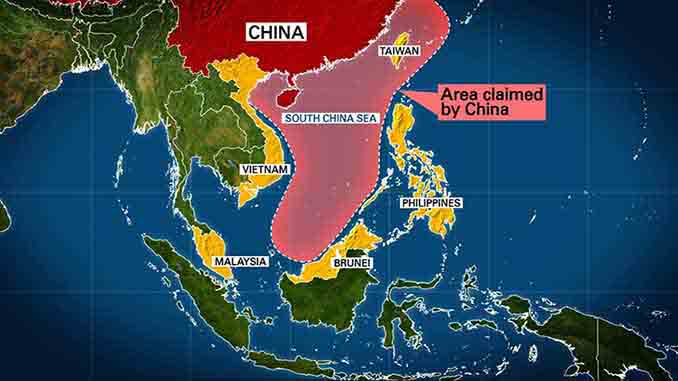
“The PLA, according to some U.S. military and intelligence experts, could now destroy Taiwan at will and take it in as little as three days.... As was true of Hanoi, Beijing is a determinedly nationalist opponent that enjoys the balance of fervor in its struggle to end the American-backed division of its country.
“To normalize relations with Beijing, successive U.S. presidents gave specific commitments in three carefully negotiated joint communiqués. These documents – issued in 1972, 1979, and 1982 – are the foundation of Sino-American relations. In them, the U.S. government promised that it would no longer maintain official relations with Taipei, that it would have no troops and military installations on the island, and that it would sell only carefully selected defensive weapons to Taiwan on a restrained basis. In the third communiqué, the United States agreed to limit the quality and reduce the quantity of its arms sales to Taiwan.
“Over the succeeding decades, Washington has progressively eroded or set aside every one of these strictures.... On November 12, 2020 (nine days after the U.S. presidential election made his boss a lame duck), Secretary of State Mike Pompeo completed the trashing of the “one-China” stipulation by declaring (inaccurately) that ‘Taiwan has not been part of China.’
“By progressively going back on its word, Washington has established a reputation in China for faithlessness that precludes anyone there trusting further American commitments. Pro forma protests that the United States stands by the “three joint communiqués” fool no one but amnesiac Americans. The resulting distrust precludes new Sino-American understandings about how to manage differences over Taiwan. But without such understandings, the escalating contradictions between Chinese nationalism and Taiwanese identity politics are taking us toward conflict....
“As long as the people of Taiwan continue to believe that they have a blank check from the United States that they can fill out in American blood, they will feel free to ... push the envelope even more than they already have. Meanwhile, whatever they do, the military balance in the area will continue to shift against them. So, Taipei must decide whether to seek a negotiated accommodation with the Chinese across the Strait or risk a war with them that – even with American backing – would destroy the island’s democracy and prosperity without gaining independence for it....
“There is no advantage to dispelling the current ambiguity. But surely, we must base our management of the Taiwan issue on a considered judgment about what we are and are not prepared to do to reduce the danger of war over it, even if we keep that judgment to ourselves.
“A shifting balance of power, stiff-necked nationalism in Beijing, delusions of immunity from harm in Taipei, and a strange mixture of bravado and inattention in Washington provide all the ingredients for a tragedy. I see no easy answers for any of the participants to halt their march toward catastrophe.”
Chas Freeman Responsible Statecraft
The outgoing Pompeo State Department worked overtime putting the U.S. on a collision course with Beijing. It has just officially accused China of “genocide” in Xinjiang and gone further in treating Taiwan as an independent country than any administration since the mid-1970s. Biden’s Secretary of State has repeated the genocide charge. The U.S. is now the only country in the world to use this provocative language, though it is still possible it may be diplomatically withdrawn.
But the problem of Taiwan remains. Every act of the U.S. or Taiwan to move toward independence now makes China more likely to put an end to this question once and for all. The sanctions pressure the U.S. has imposed on Taiwan high tech chip manufacturers not to continue selling to their biggest customers in China may itself already have decided the question, with China now just awaiting the proper moment.
What do serious people here think about this issue?
Please read the whole article before responding.
Please don’t make this into a partisan issue.
It is truly one of the great geo-political problems of our times.