So just BS. Like "higher earners pay higher rates" contradicting the headline claim? LMAOROG. Sure MOST INCOME FROM THE 400 RICHEST, THIS STUDY, PAYS CAPITAL GAINS. THAT ALONE REFUTES THE BS
But yes when the TOP 1% CBO, TAX POLICY CENTER, ETC FIND THE TAX SYSTEM IS STILL PROGRESSIVE, BARELY
The U.S. federal individual income tax is highly progressive, with the top 1% paying roughly 40% of all federal income taxes. However, when combined with regressive state/local sales taxes and payroll taxes,
the overall tax system is only mildly progressive. While income taxes target high earners, tax expenditures and capital gains preferences lower the overall progressivity.
America's tax system is just barely progressive, and not nearly as progressive as many suggest or as progressive as it could be. There is plenty of room for lawmakers to improve the progressivity of the tax code to combat economic, wealth, and racial inequality.

itep.org
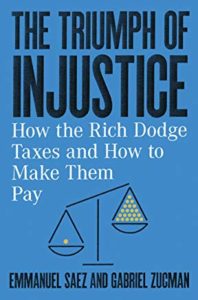
In their 2019 book The Triumph of Injustice: How the Rich Dodge Taxes and How to Make Them Pay, , economists Emmanuel Saez and Gabriel Zucman
do not include unrealized capital gains in their core measure of taxable income to analyze tax rates in 2018.
The Clausen Center is proud to share this new title by UC Berkeley's own Gabriel Zucman and Emmanuel Saez: The Triumph of Injustice: How the Rich Dodge Taxes and How to Make Them Pay.

clausen.berkeley.edu
Based on studies like those in
The Triumph of Injustice (referenced in Zucman 2024), economists Emmanuel Saez and Gabriel Zucman generally focus on
realized income and taxes actually paid in their core analysis of effective tax rates for 2018. While they argue for taxing wealth, t
heir core tax rate calculations typically exclude unrealized capital gains.
Therefore, for their primary 2018 tax burden estimations, Saez and Zucman do not include unrealized capital gains in their core taxable income measure.