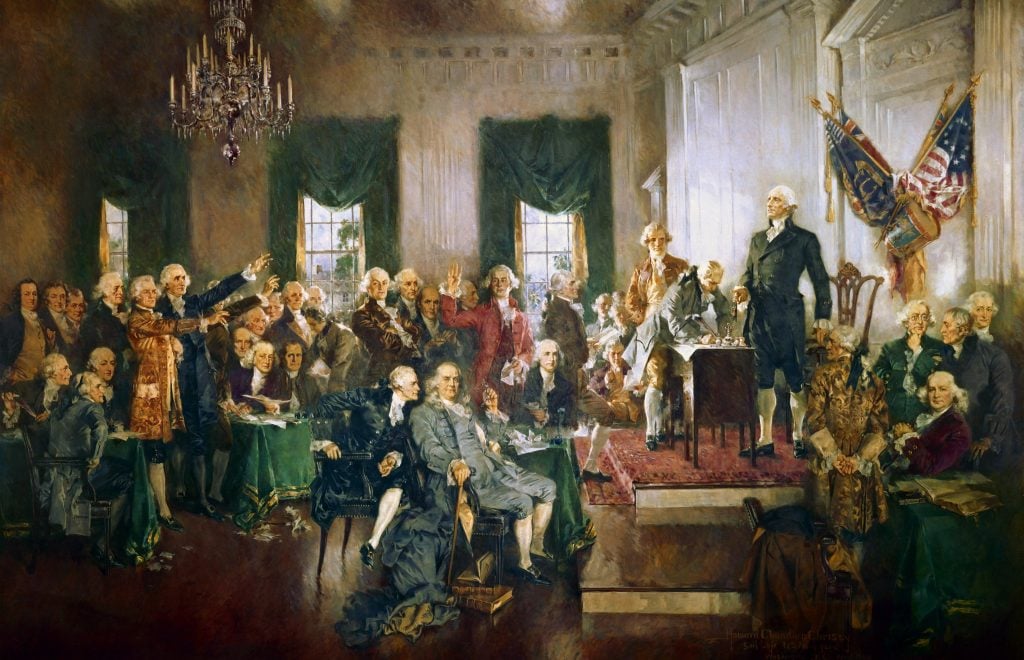
When a group of citizens approached Benjamin Franklin after the constitutional convention and asked him what kind of government the convention had established, he replied, "A republic, if you can keep it."
Your post is a product of the substandard education that our public schools are providing. America was founded as a republic, and the founding fathers often referred to our founding principles as "republican principles" and "republicanism," with a small "r" to refer to concepts instead of party.
"Democratic principals"??? You should have said "democratic principles," with a small "d" for "democratic." And the word is "principles," not "principals." Check a dictionary.
This is sad and embarrassing. Go read the Pledge of Allegiance: "We pledge allegiance to the flag of the United States of America, and to the REPUBLIC for which it stands. . . ."
If you spent one hour in the writings of the founding fathers, you would discover that they founded a republic, not a purely majority-rule democracy. In a generic sense, we have democratic government--small "d"--because we have elections--but we are not a "democracy" in the technical definition of the term because we do not have absolute or pure majority rule.
Luckily, we still have some checks and balances against what the framers sometimes called the "tyranny of the majority."
Read and educate yourself on your own country's founding:
Constitution 101 resource for Perspectives on the Constitution: A Republic, If You Can Keep It
constitutioncenter.org
Our system is republican in that the Founders understood that the public is the only legitimate sovereign of government. But it is not wholly democratic, in that they feared the abuse of that authority by the people and designed an instrument of government intended to keep temporary, imprudent...

www.aei.org
In a new book, Randall Holcombe lays out the case for why "the Founders had no intention of designing a government that would respond to the will of the majority."

fee.org