Spare me the martyr act. Your passive-aggressive thing is as bad as what anyone else here is doing.
Yet you're not frustrated at all with the insult-spammers. You only get frustrated when people dare disagree with you or your "side", no matter how civil they are about it.
Why were water temperatures so high?
Why was the ice so thin before the storm, already on a record melt pace?
Why was there so much open warm water to feed the storm?
Why didn't big storms in previous years melt the ice?
Both Westwall and you don't want to discuss such things, and the problems it presents for the "but ... it was just one storm!" theory. I would think that such noble truth seekers would be more interested in discussion.
No, it hasn't. That's just plain wrong. The earth warmed fast for the first thousand years after the ice age, then it entered a very slow cooling trend. That's how the orbital factors push the climate. We were still in that slow cooling trend, and we should have still been in that slow cooling trend for thousands of years. Instead, we flipflopped recently to some fast warming.
Then you should be very interested in exploring why the natural cycle of slow cooling suddenly flipflopped to fast warming. If you look into it, you'll find no natural process can explain it. AGW theory is the only theory out there that explains the observed data.
Incorrect. As the previous post talked about, the models do an excellent job of hindcasting. Not being idiots, scientists know a model doesn't have credibility for futurecasting if it can't hindcast.
That's political conspiracy nonsense. You don't see the AGW side here making political rants.
Sorry, but I took 7th grade science.
Yeah, we know....too bad you obviously never went any further.
Retarded drivel with no relation to reality. You just reveal how completely ignorant about science you are.
Well, duh!!! You have a talent for stating the obvious as if nobody had ever thought of it before. The mark of a true retard.
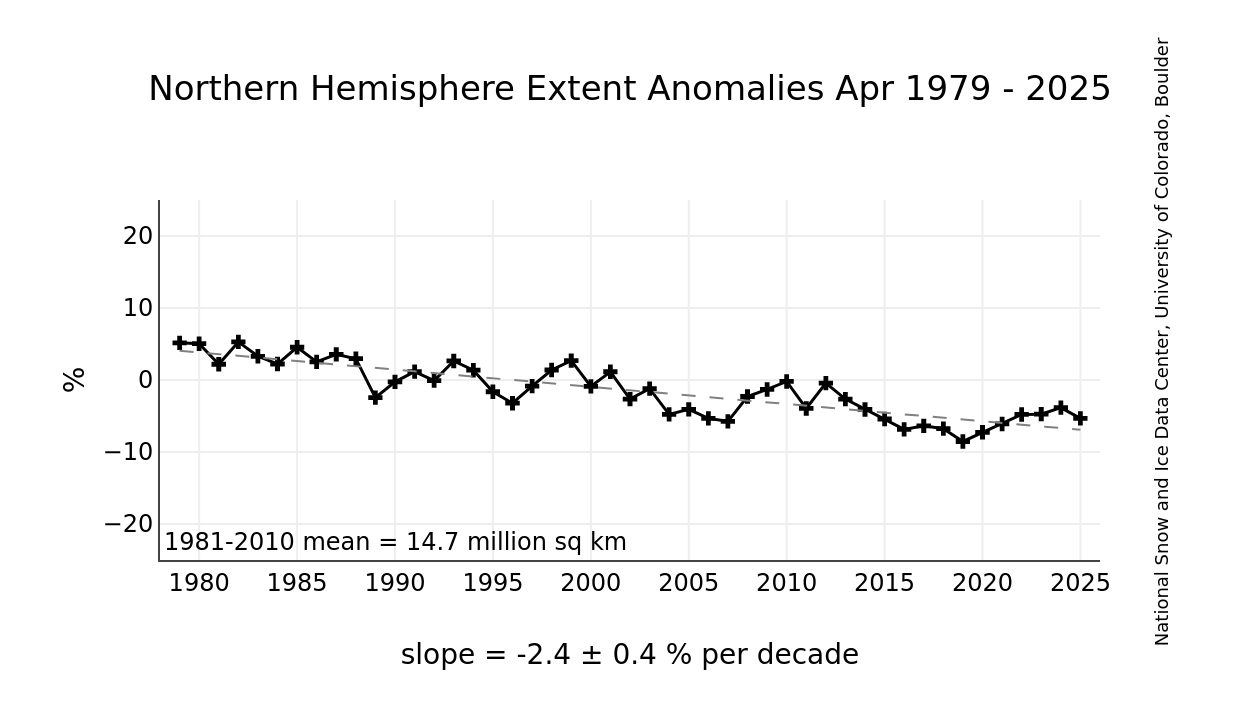
If the world wasn't warming rapidly, the number of record hot days would be approximately equal to the number of record cold days, statistically.
Instead....
Record high temperatures far outpace record lows across U.S.
University Corporation for Atmospheric Research
November 12, 2009
(excerpts)
BOULDERSpurred by a warming climate, daily record high temperatures occurred twice as often as record lows over the last decade across the continental United States, new research shows. The ratio of record highs to lows is likely to increase dramatically in coming decades if emissions of greenhouse gases continue to climb. "Climate change is making itself felt in terms of day-to-day weather in the United States," says Gerald Meehl, the lead author and a senior scientist at the National Center for Atmospheric Research (NCAR). "The ways these records are being broken show how our climate is already shifting." If temperatures were not warming, the number of record daily highs and lows being set each year would be approximately even. Instead, for the period from January 1, 2000, to September 30, 2009, the continental United States set 291,237 record highs and 142,420 record lows, as the country experienced unusually mild winter weather and intense summer heat waves. A record daily high means that temperatures were warmer on a given day than on that same date throughout a weather station's history. The authors used a quality control process to ensure the reliability of data from thousands of weather stations across the country, while looking at data over the past six decades to capture longer-term trends.
The study also found that the two-to-one ratio across the country as a whole could be attributed more to a comparatively small number of record lows than to a large number of record highs. This indicates that much of the nation's warming is occurring at night, when temperatures are dipping less often to record lows. This finding is consistent with years of climate model research showing that higher overnight lows should be expected with climate change. "If the climate weren't changing, you would expect the number of temperature records to diminish significantly over time," says Claudia Tebaldi, a statistician with Climate Central who is one of the paper's co-authors. "As you measure the high and low daily temperatures each year, it normally becomes more difficult to break a record after a number of years. But as the average temperatures continue to rise this century, we will keep setting more record highs." The study team focused on weather stations that have been operating since 1950. They found that the ratio of record daily high to record daily low temperatures slightly exceeded one to one in the 1950s, dipped below that level in the 1960s and 1970s, and has risen since the 1980s. The results reflect changes in U.S. average temperatures, which rose in the 1950s, stabilized in the 1960s, and then began a warming trend in the late 1970s. Even in the first nine months of this year, when the United States cooled somewhat after a string of unusually warm years, the ratio of record daily high to record daily low temperatures was more than three to two
Good thing the climate scientists use far more data than just the (actually quite adequate) satellite observations. Data that you are apparently far too ignorant to know about.
LIAR! No they don't. That storm only lasted a few days and the only reason it moved so much ice is that the ice was already thin and on the verge of melting anyway. Here's what the scientists at the National Snow and Ice Data Center have to say about it.
Arctic sea ice extent settles at record seasonal minimum
NSIDC
September 19, 2012
(excerpts)
The six lowest seasonal minimum ice extents in the satellite record have all occurred in the last six years (2007 to 2012). In contrast to 2007, when climatic conditions (winds, clouds, air temperatures) favored summer ice loss, this years conditions were not as extreme. Summer temperatures across the Arctic were warmer than average, but cooler than in 2007. The most notable event was a very strong storm centered over the central Arctic Ocean in early August. It is likely that the primary reason for the large loss of ice this summer is that the ice cover has continued to thin and become more dominated by seasonal ice. This thinner ice was more prone to be broken up and melted by weather events, such as the strong low pressure system just mentioned. The storm sped up the loss of the thin ice that appears to have been already on the verge of melting completely.
You mean you don't know how often but that is because you are an ignorant and very clueless retard. Scientists have a lot of data on the history of the polar ice and they know a lot more than you imagine that they do.
There is no evidence indicating that there have been any melt downs as severe as the current one for at least the last 6000 years and that one happened very, very slowly.
But of course, instead of looking at the actual scientific studies, denier cult nutjobs like you always choose to go with the error filled rants of some non-climate scientist and professional denier writing an opinion piece in a small newpaper. LOLOLOL......sooooo retarded....
Just for fun I'll also debunk the lies and misinformation in your little denier cult propaganda piece.
This moron hasn't "
shown" diddlysquat, torture. I'd tell him to quit quoting nonsense and pseudo-science from denier cult blogs or books that only impresses retards like yourself. Besides which, it wouldn't matter at all to the theory of anthropogenic global warming if there had been a bigger melt in 1974 than 1979. Global warming has been happening for over a century and really strongly since the 1970's, you clueless imbecile.
Ah, not too surprisingly for a denier cult retard like you, you've latched onto the latest denier cult myth, just as phony as the rest of them. There is no "
seesaw effect". The Arctic has lost over half the sea ice extent that was there in the 1980's and the rate of sea ice extent loss is over 15% per decade and the rate of ice volume loss is even higher, while over the same time frame Antarctica has seen a slightly growing maximum sea ice extent that is happening at a rate of only 1% per decade. Antarctic sea ice melts back to almost zero every southern hemisphere summer and reforms every winter. This years Antarctic sea ice extent was also not a record at the time Taylor's article appeared in Forbes (except for that one particular day). Overall sea ice extent there has been higher over 8 times in the last dozen years. It is definitely not in some kind of mystical balance with the north polar ice. Also, as the sea ice around Antarctica grows very, very slightly, the land based ice sheets on Antarctica are losing ice mass at an accelerating rate. The volume of sea ice is a miniscule fraction of the volume of the ice in the Antarctic ice sheets and ice shelves.
Another lie. The scientists say the Arctic ice loss is mainly being driven by global warming.
This denier dufus is quoting the NSIDC as if they support his nonsense. How about looking at the rest of the article he's quoting.
A summer storm in the Arctic
NSIDC
August 14, 2012
(free to reproduce - see copyright and use statement at end)
Arctic sea ice extent during the first two weeks of August continued to track below 2007 record low daily ice extents. As of August 13, ice extent was already among the four lowest summer minimum extents in the satellite record, with about five weeks still remaining in the melt season. Sea ice extent dropped rapidly between August 4 and August 8. While this drop coincided with an intense storm over the central Arctic Ocean, it is unclear if the storm prompted the rapid ice loss. Overall, weather patterns in the Arctic Ocean through the summer of 2012 have been a mixed bag, with no consistent pattern.
Overview of conditions
Arctic sea ice extent on August 13 was 5.09 million square kilometers (1.97 million square miles). This is 2.69 million square kilometers (1.04 million square miles) below the 1979 to 2000 average extent for the date, and is 483,000 square kilometers (186,000 square miles) below the previous record low for the date, which occurred in 2007. Low extent for the Arctic as a whole is driven by extensive open water on the Atlantic side of the Arctic, the Beaufort Sea, anddue to rapid ice loss over the past two weeksthe East Siberian Sea. Ice is near its normal (1979 to 2000) extent only off the northeastern Greenland coast. Ice near the coast in eastern Siberia continues to block sections of the Northern Sea Route. The western entrance to the Northwest Passage via McClure Strait remains blocked.
Conditions in context
The average pace of ice loss since late June has been rapid at just over 100,000 square kilometers (38,000 square miles) per day. However, this pace nearly doubled for a few days in early August during a major Arctic cyclonic storm, discussed below. Unlike the summer of 2007 when a persistent pattern of high pressure was present over the central Arctic Ocean and a pattern of low pressure was over the northern Eurasian coast, the summer of 2012 has been characteried by variable conditions. Air tempertures at the 925 hPa level (about 3000 feet above the ocean surface) of 1 to 3 degrees Celsius (1.8 to 5.4 degrees Fahrenheit) above the 1981 to 2012 average have been the rule from central Greenland, northern Canada, and Alaska northward into the central Arctic Ocean. Cooler than average conditions (1 to 2 degrees Celsius or 1.8 to 3.6 degrees Fahrenheit) were observed in a small region of eastern Siberia extending into the East Siberian Sea, helping explain the persistence of low concentration ice in this region through early August.
The Great Arctic Cyclone of 2012
A low pressure system entered the Arctic Ocean from the eastern Siberian coast on August 4 and then strengthened rapidly over the central Arctic Ocean. On August 6 the central pressure of the cyclone reached 964 hPa, an extremely low value for this region. It persisted over the central Arctic Ocean over the next several days, and slowly dissipated. The storm initially brought warm and very windy conditions to the Chukchi and East Siberian seas (August 5), but low temperatures prevailed later.
Low pressure systems over the Arctic Ocean tend to cause the ice to diverge or spread out and cover a larger area. These storms often bring cool conditions and even snowfall. In contrast, high pressure systems over the Arctic cause the sea ice to converge. Summers dominated by low pressure systems over the central Arctic Ocean tend to end up with greater ice extent than summers dominated by high pressure systems.
However, the effects of an individual strong storm, like that observed in early August, can be complex. While much of the region influenced by the August cyclone experienced a sudden drop in temperature, areas influenced by winds from the south experienced a rise in temperature. Coincident with the storm, a large area of low concentration ice in the East Siberian Sea (concentrations typically below 50%) rapidly melted out. On three consecutive days (August 7, 8, and 9), sea ice extent dropped by nearly 200,000 square kilometers (77,220 square miles). This could be due to mechanical break up of the ice and increased melting by strong winds and wave action during the storm. However, it may be simply a coincidence of timing, given that the low concentration ice in the region was already poised to rapidly melt out.
Use and Copyright - You may download and use any imagery or text from our Web site, unless it is specifically stated that the information has limitations for its use. Please credit the National Snow and Ice Data Center.
Bullshit.
Is Antarctica Melting?
NASA
01.12.10
Graph of Antartic Mass Variation since 2002The continent of Antarctica has been losing more than 100 cubic kilometers (24 cubic miles) of ice per year since 2002.
There has been lots of talk lately about Antarctica and whether or not the continent's giant ice sheet is melting. One new paper 1, which states theres less surface melting recently than in past years, has been cited as "proof" that theres no global warming. Other evidence that the amount of sea ice around Antarctica seems to be increasing slightly 2-4 is being used in the same way. But both of these data points are misleading. Gravity data collected from space using NASA's Grace satellite show that Antarctica has been losing more than a hundred cubic kilometers (24 cubic miles) of ice each year since 2002.
Polar Ice Loss Is Accelerating, Scientists Say
The New York Times
March 11, 2011
(excerpts)
On Wednesday, a research team led by a NASA scientist unveiled a new study that is sure to stir debate on the topic. The paper concludes that ice loss from both Greenland and Antarctica is accelerating, and that the ice sheets impact on the rise in sea levels in the first half of the 21st century will be substantially higher than previous studies had projected. The increasing ice loss means that, for the first time, Greenland and Antarctica appear to be adding more to sea-level rise than the worlds other reserves of ice primarily mountain glaciers, which are also melting because of rising temperatures. In 2006 alone, the study estimated that the two ice sheets lost roughly 475 billion metric tons of ice. If the rates of melting observed in the study were to continue, the ice sheets could add nearly six inches to the rise in global sea levels in the next forty years a far larger contribution than the United Nations Intergovernmental Panel on Climate Change, the international scientific body, has projected.
The studys findings that ice loss in Greenland has accelerated strikingly over the last two decades are largely in line with the conclusions of other researchers. But the estimate that Antarctica is also rapidly shedding ice was challenged by other scientists, who believe the continents ice sheet remains largely in balance. We think that their estimate of the loss from Antarctica is much too large, said Jay Zwally, a glaciologist with NASAs Goddard Space Flight Center. Dr. Rignot said he stood by his conclusions about Antarctica, which were derived from data from two independent measurement techniques dating back 20 years.
This is about the only honest thing this denier cult dingbat says in his article. Too bad it debunks his claim of a Arctic/Antarctic 'see-saw effect'. The Arctic is losing sea ice extent at a rate of about fifteen and a half percent per decade and Antarctica is gaining sea ice extent at a rate of only 1% per decade. LOL. What a retarded liar.
Another lie, entirely unsupported by the facts. But it is a popular denier cult myth.
They have but this guy is too brainwashed and politically motivated to bother checking and finding out.
Here is a very good article that discusses this issue of Antarctic sea ice and it has some specific info to answer this denier cultist's question.
Forget the Melting Arctic, Sea Ice in Antarctica is Growing!
Published: September 30th, 2012
(excerpts)

Trends in Antarctic sea ice cover. Credit: Cryosphere Today.
Still, if the planet is warming, how can the sea ice be expanding in the waters surrounding Antarctica in the first place? Keeping in mind that it isnt expanding by much, scientists offer several possible explanations. One is that theres been more precipitation in recent decades (which itself could well be due to global warming). That puts a cap of relatively fresh water atop the denser, saltier water below, and in winter, when that top layer cools, it stays on top rather than mixing with the warmer water underneath, thus encouraging the growth of ice. Another factor may be the ozone hole that opens up at this time every year over the South Pole. Ozone loss tends to cool the upper atmosphere an effect that percolates down to the surface. Still another factor is purely natural climate variation, which is still happening even though manmade global warming has a growing influence on every aspect of the Earths climate system with every passing decade.
In any case, climate scientists have long expected that the Arctic would warm up faster than the Antarctic. After all, the former is an ocean surrounded by land, while the latter is land surrounded by ocean. Wind patterns, weather systems and ocean currents behave differently at the two poles. And because the coldest part of the Antarctic is land, the ice there has been able to accumulate into a giant ice cube the size of a continent and up to two miles thick which tends to hold back local warming considerably. By the second half of the century, however, climatologists say that the human warming signal will become more apparent, and Antarctic sea ice will begin to follow its Arctic cousin in a downward spiral. That, in turn, could speed up melting of the all-important Antarctic land ice, thereby raising global sea levels.
As for the low sea ice in the Arctic this year, it has happened before:
Anecdotal rubbish. There is a great deal of solid scientific evidence indicating that the Arctic sea ice extent and volume have not been this low in the last 6000 years.
UPDATE: NASA now admits that the storm caused most of the melt: This year, a powerful cyclone formed off the coast of Alaska and moved on Aug. 5 to the center of the Arctic Ocean, where it churned the weakened ice cover for several days. The storm cut off a large section of sea ice north of the Chukchi Sea and pushed it south to warmer waters that made it melt entirely. It also broke vast extensions of ice into smaller pieces more likely to melt. See statement and video animation here.
ttp://tucsoncitizen.com/wryheat/2012/09/24/the-arctic-antarctic-seesaw/]The Arctic-Antarctic seesaw - Wry Heat
Another lie. NASA did not "
admit that the storm caused most of the melt". Here's the NASA article that this denier cult propagandist cites in his newspaper opinion piece and here's what NASA actually said about the storm. The Arctic ice was melting at an unusually high rate all summer and the sea ice extent was already lower than the 2007 low when this storm formed. The storm only lasted for 4 or 5 days. Scientist say that the storm "played a role" in the unusually high level of ice loss this year but they don't "admit" that it was the main cause as this liar claims. He must be used to fooling people who are too lazy and stupid to check up on his fraudulent claims.
Arctic Sea Ice Hits Smallest Extent In Satellite Era
NASAArctic Sea Ice Hits Smallest Extent... of the Arctic sea ice on September 16, 2012.
09.19.12
This year, a powerful cyclone formed off the coast of Alaska and moved on Aug. 5 to the center of the Arctic Ocean, where it churned the weakened ice cover for several days. The storm cut off a large section of sea ice north of the Chukchi Sea and pushed it south to warmer waters that made it melt entirely. It also broke vast extensions of ice into smaller pieces more likely to melt.
"The storm definitely seems to have played a role in this year's unusually large retreat of the ice", Parkinson said. "But that exact same storm, had it occurred decades ago when the ice was thicker and more extensive, likely wouldn't have had as prominent an impact, because the ice wasn't as vulnerable then as it is now."