LOL! I have to laugh at this. Because even in the CNN article it states how the gun played a role in the trade. And then there the small natter of whites going to Africa to make the purchases. Maybe if the participating Africans had taken their slaves into Europe and sold them on the blocks. I might feel a tad bit different. Because most Africans did not participate willingly in this and many Africans did not participate at all.
I suggest you read Walter Rodneys work
The 15 Ways Europe Underdeveloped Africa
Dr. Walter Rodney is one of the 50 Most Important Pan-Africans in history. His book How Europe Underdeveloped Africa would become his crucifix. <a class="g1-link g1-link-more" href="https://www.panafricanalliance.com/walter-rodney/">More</a>

www.panafricanalliance.com
Now what about Jim Crow, are we going to start conjuring up stories of how blacks helped whites decided that Jim Crow should be the law too? I mean, how many altered stories and lies are some whites willing to tell themselves?
10 Ways American Slavery Continued Long After The Civil War
Mark Oliver
Slavery in America didn’t end with the
Emancipation Proclamation. It lived on—even after the Civil War had ended and the 13th Amendment had been put into place.
The Civil War brought the Confederate States back into the Union, but the people who lived in the South weren’t through fighting. They were determined to keep things exactly as they were during the heyday of slavery.
They made state laws that let them keep black people in essential servitude. As a result, slavery in America lived on for a lot longer than most people realize.
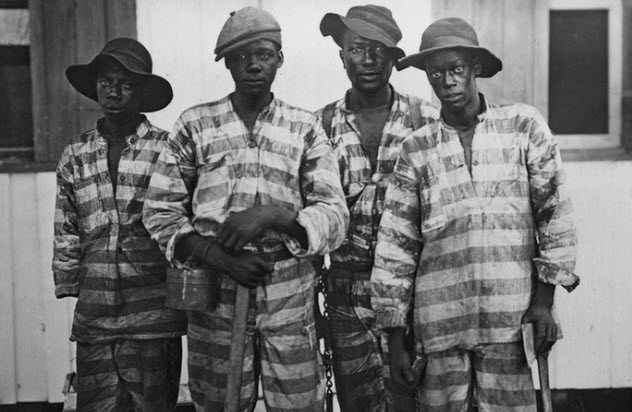
Slavery Was Used As A Legal Punishment
Photo via
Wikimedia
The
13th Amendment didn’t make all forms of slavery illegal. It kept one exception. Slavery, it ruled, was still permitted “as a punishment for crime.”
All the Southern states had to do was find a reason to arrest their former slaves, and they could legally throw them right back on the plantation. So, Southern politicians set up a series of laws called the “
Black Codes” that let them arrest black people for almost anything.
In Mississippi, a black person could be arrested for anything from using obscene language to selling cotton after sunset. If he was as much as caught using a bad word, he could be charged, leased out as a slave laborer, and put to work in chain gangs and work camps on farms, mines, and quarries.
It happened a lot. By 1898, 73 percent of Alabama’s revenue came from leasing out convicts as slaves.
The enslaved convicts were treated terribly. They were beaten so brutally and viciously that, in one year, one of every four enslaved convicts died while working. Work camps kept secret, unmarked graves where they would bury men they’d beaten to death to hide the evidence. By the end, those graves held the mutilated bodies of at least 9,000 men.
Slavery in America didn’t end with the Emancipation Proclamation. It lived on---even after the Civil War had ended and the 13th Amendment had been put

listverse.com
I supposed blacks did this to themselves too.