I am not surprised you can't answer the question.Yes, I had feeling you'd struggle with that one, these things often get you all flustered.
Navigation
Install the app
How to install the app on iOS
Follow along with the video below to see how to install our site as a web app on your home screen.
Note: This feature may not be available in some browsers.
More options
Style variation
You are using an out of date browser. It may not display this or other websites correctly.
You should upgrade or use an alternative browser.
You should upgrade or use an alternative browser.
Lutecia James won’t stop her vendetta against Trump
- Thread starter Lisa558
- Start date
Are you saying that a property is only worth a certain amount? It can vary...by a shit ton.Facts don’t matter, so I can say that my salary is going to be $1 million really soon even if it’s only $500,000. So I’m not lying. I’m just saying what my salary is going to be.

Sherlock Holmes
Gold Member
- Jul 1, 2024
- 13,698
- 5,465
- 208
I am not surprised you can't answer the question.

Sherlock Holmes
Gold Member
- Jul 1, 2024
- 13,698
- 5,465
- 208
Good to see a socialist being quoted here warning us about totalitarian governments, thank you.

Everyone uses the numbers to their own advantage. Usually, banks have appraisers they trust do the appraisals. Its then a moot point.As I understand the process, the applicant uses the highest appraisal it can to get the best conditions, the lender uses the lowest appraisal it can limit its risk.

Foxfyre
Eternal optimist
The borrower does not hire the appraisers. The lender hires the appraiser. More evidence you're likely making this up as you go along.I don’t have any idea how you could get that from what I posted.
On one property, the appraiser told Trump it was worth $15 million. Trump wrote down $160 million.
And there is NOTHING illegal by placing an asking price on your property that exceeds the value of the appraisal. Millions and millions do that all the time.
It is up to the buyer to decide whether to meet the asking price or negotiate a better one that may or may not be close to the appraised evaluation.
And it is up the lender to determine if he wants to make the loan whatever the requested amount is. If he loans more than the appraised value, that is his business and is in no way illegal unless it violates banking laws. In almost all cases it won't.
Last edited:

Marener
Diamond Member
- Jul 26, 2022
- 64,980
- 27,579
- 2,173
Sure. If it’s unique.Yes and no. In the appraising of a unique property, it becomes a "dartboard" appraisal.
There’s nothing that unique about most of the properties in question.
Marener
Diamond Member
- Jul 26, 2022
- 64,980
- 27,579
- 2,173
Well, obviously not since it’s a fact established in trial that Trump had his own appraisals for at least some of his properties. Which he ignored and made his own values.The borrower does not hire the appraisers. The lender hires the appraiser.
You think Trump is the only one to inflate those numbers? Inflating the numbers is part of the game. Everyone does it.The properties that Trump lied about were not being used as collateral. The collateral was a gold course which had a fair third party appraisal.
These properties were part of a statement of financial condition. So again, do you expect the bank to independently appraise every property that Trump has interest in? That’s dozens upon dozens of properties.
You obviously don’t know much about the case we are discussing.

Which is, The State
Category:
Appraiser News Editions, Real Estate Appraisers0

| > McKissock Learning > AMC Guide > OREP E&O ★★★★★ “They are knowledgeable, professional, and understand urgency.” – Joe Thweatt |
[td width="151px"]
 [/td]
[/td]
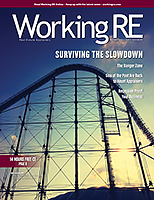
Appraiser Disciplinary Levels and Their Consequences
by Kendra Budd, Editor
Years ago, the appraisal industry used to be an unlicensed and vastly unmonitored business. Nowadays, that is far from the case. Years ago, it was decided that states needed a standard of practice, but how were they going to determine those standards? That’s when states began adopting USPAP.
The Uniform Standards of Professional Appraisal Practice (USPAP) soon became the generally recognized ethical and performance standard for the appraisal profession in the United States. States began to immediately enforce USPAP, with each state deciding the level of sanction based on the facts and circumstances of each case. Decades later, the “Voluntary Appraiser Disciplinary Action Matrix” was offered to the states. These were created to discipline appraisers as needed, based on the level of their violation. Many states do not use the matrix.
In his CE course, Learning from the Mistakes of Others, attorney and educator Mel Black explains the appraisal disciplinary levels and the consequences that follow once an appraiser is in violation of them. It’s important for appraisers to be aware of these disciplinary actions, so they know how to best avoid potential mistakes.
Here’s what we learned.
The Ethics Rule
The Ethics Rule as described by USPAP is: “An appraiser must promote and preserve the public trust inherent in appraisal practice by observing the highest standards of professional ethics.” Meaning that an appraiser must comply with USPAP when required by law or regulations, or by agreement with a client.
The Ethics Rule is divided into three sections:
• ConductThe conduct portion of the Ethics Rule refers to the fact that, an appraiser must perform assignments without impartiality, objectivity, and independence—all without accommodation of personal interests. “An appraiser must not perform an assignment with bias; must not advocate the cause or interest of any party or issue, must not accept an assignment that includes the reporting of predetermined opinions and conclusions,” explains Black.
This section even goes into detail that an appraiser must not engage in criminal conduct.
“The conduct section is simple,” Black explained, “Be independent, impartial, and objective in everything when acting as an appraiser and focus on appraising the property and not the people. That’s it.” Essentially, the conduct section is put into place to make certain that appraisers are always conducting themselves in a professional manner.
• Management
Management is set in place to ensure an appraiser must disclose that they paid a fee or commission, or gave a thing of value in connection with the procurement of an assignment. According to USPAP, said disclosure “must appear in the certification and in any transmittal letter in which conclusions are stated.” However, the amount paid to the appraiser is not required to be disclosed.
Furthermore, Black emphasizes, “this clause means an appraiser must not accept an assignment, or have a compensation that is contingent on the reporting of a predetermined result, the amount of a value opinion, or a direction in assignment results that favors the cause of the client, etc.” This section even applies to an appraiser’s advertisements that might be false, misleading, or exaggerated.
• Confidentiality
Finally, confidentiality is pretty self-explanatory in nature. An appraiser not only must protect the confidentiality of the appraiser-client relationship, but also must act in good faith with regards to the legitimate interest of the client, as well as have a complete understanding of confidentiality and privacy laws applicable with an assignment.
This includes that an appraiser must not disclose any confidential information or assignment results to anyone other than the client, or parties they have specially authorized, state appraiser regulatory agencies, or any third party authorized by law.
An appraiser must take all reasonable steps to safeguard all confidential and assignment results, and to make sure that their employees are aware of the prohibitions on disclosure of the information as well. “If an appraiser’s activity is in conflict of the confidentiality section, they not only risk getting punished by the state, but may also face civil liability as well,” Black informs us.
(story continues below)
Appraiser Disciplinary Levels and Their Consequences
> McKissock Learning > AMC Guide > OREP E&O ★★★★★ “They are knowledgeable, professional, and understand urgency.” – Joe Thweatt Appraiser Disciplinary Levels and Their Consequences by Kendra Budd, Editor Years ago, the appraisal industry used to be an unlicensed and vastly unmonitored business...
 www.workingre.com

Frankeneinstein
Gold Member
Meh...does feel that way sometimes but jus on the netIf you are truly a democrat, then you are the loneliest person in the world.
Marener
Diamond Member
- Jul 26, 2022
- 64,980
- 27,579
- 2,173
By a factor of 10?Are you saying that a property is only worth a certain amount? It can vary...by a shit ton.
Marener
Diamond Member
- Jul 26, 2022
- 64,980
- 27,579
- 2,173
So it’s not fraud because everyone commits fraud.You think Trump is the only one to inflate those numbers? Inflating the numbers is part of the game. Everyone does it.
Gotcha.
You know this how? The [parcel where Trump said he would like to build 7 mansions on it? Whats it worth?Sure. If it’s unique.
There’s nothing that unique about most of the properties in question.
Sherlock Holmes
Gold Member
- Jul 1, 2024
- 13,698
- 5,465
- 208
As Al Capone tried to argue once...You think Trump is the only one to inflate those numbers? Inflating the numbers is part of the game. Everyone does it.
The real estate game is what it is.So it’s not fraud because everyone commits fraud.
Gotcha.
When I appraised properties, often the lender said what they needed for the final value. I always told them after the appraisal results came in, then we would learn together what the value was.You think Trump is the only one to inflate those numbers? Inflating the numbers is part of the game. Everyone does it.
More. A farm just outside of town might be worth 40 grand an acre. But if you know you could get a half million per acre from a developer, what would you put on your appraisal for what its worth?By a factor of 10?

dudmuck
Diamond Member
The Hillary campaign incorrectly recorded purpose of payment for opposition research as "legal expense". most of the fine was paid by DNC, approx $105k and then the campaign paid the remaining $8k.AI Overview
In 2022, Hillary Clinton's 2016 presidential campaign and the Democratic National Committee (DNC) agreed to pay $113,000 to settle a Federal Election Commission (FEC) investigation into whether they violated campaign finance law
.
Just a tad less than Trump. no?
There is no "hard and fast" worth to real estate. Thats why the game is the way it is.As Al Capone tried to argue once...
Similar threads

- Replies
- 189
- Views
- 2K

- Replies
- 64
- Views
- 1K

- Replies
- 2
- Views
- 113

- Replies
- 6
- Views
- 152


New Topics
-
James Talarico Says Black Churches Understand Jesus Better than White Churches
- Started by Hollie
- Replies: 1
-
 If it wasn’t caught on camera everyone would post about it as an anti-Semitic act.
- Started by Andrew_Jackson_FTW
- Replies: 0
-

-

-
Question for members do you see my signature?
- Started by Mortimer
- Replies: 5


