Turns out Republicans were wrong.
One of the biggest economic arguments this year was over whether extra unemployment benefits made it impossible for employers to hire.
Republican governors cut the federal compensation early, and Democrats made no effort to keep the benefits in place, even though they didn’t agree that the money hurt hiring.
But the past several months have strongly suggested that the extra jobless pay wasn’t holding back hiring after all. The federal benefits fully expired early in September — and instead of surging, job growth slowed dramatically that month.
Meanwhile, there remain an unprecedented 10 million job openings, and some businesses still complain they can’t find workers. What’s going on?
The coronavirus pandemic is still roiling the economy as some workers hesitate to fill available jobs.

www.huffpost.com
More than 3 million people avoided work out of fear of catching COVID-19 in September, roughly the same number who avoided work for that reason back in June, before the delta variant had taken off. But 4 million said they were sick with the disease or caring for someone who was, up from 1.7 million in June, according to an analysis of federal survey data by Mark Zandi, chief economist at Moody’s Analytics.
“There is a long list of reasons why it has been difficult for businesses to fill the record number of open positions, and while the extra unemployment insurance benefits is on the list, it is towards the bottom,” Zandi said in an email. “Sick workers and fear of getting sick are at the top of the list.”
For more than a year, Republicans have decried the federal unemployment benefits as employment killers. Those benefits were first approved by both Republicans and Democrats under former President Donald Trump at $600 per week, and then again at $300 per week, in 2020.
Republicans escalated their complaints once President Joe Biden was in office, claiming that Democrats were paying people not to work and causing a widespread labor shortage. Democrats extended the $300 per week federal unemployment benefit, paid out on top of state unemployment benefits, through the beginning of September in the American Rescue Plan, the multitrillion COVID-19 relief bill passed in March.
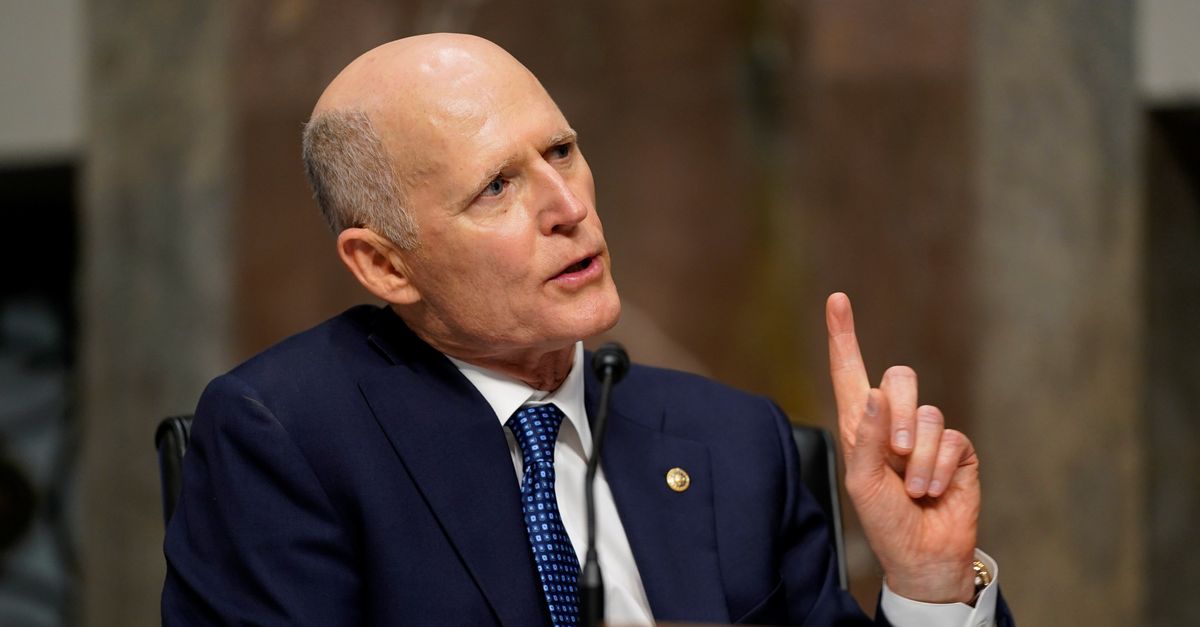
“We shouldn’t have policies in place that disincentivize people from returning to the workforce,” Sen. Rick Scott (R-Fla.) said at the time.
That sentiment was echoed by Republicans all summer.
Their claims were backed anecdotally by restaurant and hospitality-sector business owners who were finding it difficult to hire workers, even as businesses began to open up. Republican governors across the country cut federal unemployment benefits short over the summer, refusing to use the funds approved by Congress and arguing that the cutoff would push people back to work and put an end to the labor shortage.
But the states that cut benefits didn’t see stronger job gains than the states that didn’t. And now that the benefits have fully expired, the latest data from the U.S. Labor Department showed weaker hiring and little change in the labor participation rate.