What you’re describing isn’t actually what the models do. Climate models aren’t trying to erase natural variability; they explicitly include solar cycles, volcanic forcing, orbital effects, ocean circulation patterns, and internal variability. The runs with only natural forcings show exactly that, natural variability, yet those runs still fail to match the observed post-1950 warming. That failure isn’t a zero natural variability artifact; it’s literally the natural component being applied, and the shortfall is what requires anthropogenic CO2 and other greenhouse gases to reproduce reality.
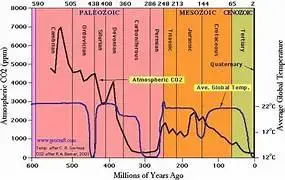
The feedback factor of 3.5× the direct CO2 forcing isn’t pulled out of thin air either. It comes from observed climate responses in the paleoclimate record, modern instrumental data, and physics-based constraints on water vapor, ice albedo, clouds, and ocean heat uptake. It isn’t just a model guess; it’s how the climate system empirically amplifies the base radiative forcing. Models tuned to match reality still have to reproduce hundreds of independent signals simultaneously, Arctic amplification, stratospheric cooling, glacier retreat, ENSO variability, ocean heat uptake, not just the global mean temperature. You cannot fake all of that by arbitrarily assuming CO2 causes all warming.
So the attribution to CO2 isn’t a circular assumption. It’s the result of testing the system with natural forcings applied first, seeing where it falls short, and then adding anthropogenic forcing to see if the model reproduces observed changes, and it does. That’s the core logic behind attribution.