Are yu suggesting that Obama was blocked from jacking up taxes on the rich by republicans who were in the minority in both congressioanl houses?Sure, Obama was blackmailed by the GOP for the 2010 Dubya extension, Obama wanted to increase taxes on those making $250,000+ a year, the GOP said no, he settled for 2 year extension then it went up. Biden increased it too
The Democrats NEVER had a 60 vote margin
Debunking the Myth: Obama's Two-Year Supermajority
This timeline shows the facts.
President Obama was sworn in on January 20, 2009 with just 58 Senators to support his agenda.
He should have had 59, but Republicans contested Al Franken's election in Minnesota and he didn't get seated for seven months.
The President's cause was helped in April when Pennsylvania's Republican Senator Arlen Specter switched parties.
That gave the President 59 votes -- still a vote shy of the super majority.
But one month later, Democratic Senator Byrd of West Virginia was hospitalized and was basically out of commission.
So while the President's number on paper was 59 Senators -- he was really working with just 58 Senators.
Then in July, Minnesota Senator Al Franken was finally sworn in, giving President Obama the magic 60 -- but only in theory, because Senator Byrd was still out.
In August, Senator Ted Kennedy of Massachusetts died and the number went back down to 59 again until Paul Kirk temporarily filled Kennedy's seat in September.
Any pretense of a supermajority ended on February 4, 2010 when Republican Scott Brown was sworn into the seat Senator Kennedy once held.
Do you see a two-year supermajority?

Debunking the Myth: Obama's Two-Year Supermajority
Mitt Romney's at it again -- shading the truth on CBS News' 60 Minutes. He's perpetuating the false Republican narrative that President Obama should have gotten more done during his first two years in office because he had a supermajority in the Senate.www.huffpost.com
ALL THIS AS THE US ECONOMY WAS FAILING BECAUSE DUBYA CHEERED ON THE PONZI SCHEME CALLED SUBPRIME BUBBLE.
UNEMPLOYMENT HIT 10% LATE 2009, STILL AT 9.6% INTO 2010.
when were they going to be able to do it?
Navigation
Install the app
How to install the app on iOS
Follow along with the video below to see how to install our site as a web app on your home screen.
Note: This feature may not be available in some browsers.
More options
Style variation
You are using an out of date browser. It may not display this or other websites correctly.
You should upgrade or use an alternative browser.
You should upgrade or use an alternative browser.
The national debt just crossed $39 trillion—almost doubling since Trump vowed to erase it
- Thread starter EvilEyeFleegle
- Start date
You join every other democrat who has failed to disprove Archer's allegations.Devon Archer the felon who was supposed to pay $60 million restitution until Cheeto pardoned him? irrefutable? lmaorog
Let's assume Obamna did nothing to increase the debt. How then did the debt double during his term?Show the laws Obama passed that created the debt?
October 10, 2012
Downturn and Legacy of Bush Policies Drive Large Current Deficits
Economic Recovery Measures, Financial Rescues Have Only Temporary Impact
View attachment 1238274
DUBYA/GOP PRIVATIZATION OF MEDICARE AND PART D IN 2003, COST THE FEDERAL GENERAL FUND OVER $230+ BILLION THIS YEAR ALONE. WITHOUT A SINGLE PENNY OF FUNDING FROM THEM, ON THE BILL PASSED IN THE MIDDLE OF THE NIGHT
...The final version of the bill, a compromise worked out by House and Senate negotiators, was adopted in the House by a vote of 220 to 215. But a roll-call vote, which rarely exceeds 20 minutes, began at 3 a.m. and was held open for nearly three hours, as Republican leaders and Bush administration officials scrambled to quell a conservative rebellion.
As the voting drew on, a few lawmakers fell asleep, but still it was not gaveled to an end. Eventually, just before dawn, after a series of small dramas played out in the milling crowd on the House floor, a few lawmakers switched their votes and put the bill over the top.
Democrats, who overwhelmingly opposed the legislation, asserted that the Republicans had won illegitimately, ''Florida style,'' Nancy Pelosi, the House Democratic leader, put it. Republican leaders dismissed the criticism, elated at finally delivering legislation that was six years in the making.
NO PAYWALL
FLASHBACK NOVEMBER 22, 2003: How Republicans Squeaked Out A Thriller On Medicare Part D
The bill came to a vote at 3 a.m. on November 22. After 45 minutes, the bill was losing, 219-215, with David Wu (D-OR-1) not voting. Speaker Dennis Hastert and Majority Leader Tom DeLay sought to convince some of dissenting Republicans to switch their votes, as they had in June. Istook, who had always been a wavering vote, consented quickly, producing a 218-216 tally. In a highly unusual move, the House leadership held the vote open for hours as they sought two more votes. Then-Representative Nick Smith (R-MI) claimed he was offered campaign funds for his son, who was running to replace him, in return for a change in his vote from "nay" to "yea." After controversy ensued, Smith clarified no explicit offer of campaign funds was made, but that that he was offered "substantial and aggressive campaign support" which he had assumed included financial support.
About 5:50 a.m., convinced Otter and Trent Franks (AZ-2) to switch their votes. With passage assured, Wu voted yea as well, and Democrats Calvin M. Dooley (CA-20), Jim Marshall (GA-3) and David Scott (GA-13) changed their votes to the affirmative. But Brad Miller (D-NC-13), and then, Republican John Culberson (TX-7), reversed their votes from "yea" to "nay". The bill passed 220-215.

FLASHBACK NOVEMBER 22, 2003: How Republicans Squeaked Out A Thriller On Medicare Part D
A flashback to a pivotal moment in Medicare history. Explore how Republicans navigated this critical legislation.www.businessinsider.com
A prson could be easily fooled by impressive charts about growth to erroneously believe that inflation and costs of living were much lower under Biden and Obama than they were under Trump.And those bad habits are practiced by both sides of the Swamp Party aisle. The following chart isn't up-to-date but it gives a good indication that neither Party is interested in keeping the debt under control.
View attachment 1238276
This article provides some good information on the topic. It appears that Obama (currently) wins the prize for accumulating the highest amount of debt during his two terms in office but at the rate Trump is going, he'll win the crown for being the biggest spender of all time.
Did Trump rack up more debt than any other president?
As White House and congressional Republican negotiators met to hammer out a way to raise the nation’s debt limit, Housewww.politifact.com

The cost of living sucked under Obama and Biden. And the cost of living sucks under Trump. That's my point. For me ... there's freedom in not being a Dem or Repub cult member. Both sides take turns screwing the American people.A prson could be easily fooled by impressive charts about growth to erroneously believe that inflation and costs of living were much lower under Biden and Obama than they were under Trump.
A prson could be easily fooled by impressive charts about growth to erroneously believe that inflation and costs of living were much lower under Biden and Obama than they were under Trump.And those bad habits are practiced by both sides of the Swamp Party aisle. The following chart isn't up-to-date but it gives a good indication that neither Party is interested in keeping the debt under control.
View attachment 1238276
This article provides some good information on the topic. It appears that Obama (currently) wins the prize for accumulating the highest amount of debt during his two terms in office but at the rate Trump is going, he'll win the crown for being the biggest spender of all time.
Did Trump rack up more debt than any other president?
As White House and congressional Republican negotiators met to hammer out a way to raise the nation’s debt limit, House
Quite a large majority of Americans likely experienced 1st hand how much worse the economy was under Obama and Biden than it was under Trump.The cost of living sucked under Obama and Biden. And the cost of living sucks under Trump. That's my point. For me ... there's freedom in not being a Dem or Repub cult member. Both sides take turns screwing the American people.

/—-/ Exporting countries absorb part of the tariffs to stay competitive, importers and retailers absorb some of it to be competitive and the consumer dumb enough to buy foreign crap pay the rest.No canuck,
What I posted was not fake news. All tariffs are basically a tax on American consumers.
Hint: here’s a workaround. BUY AMERICA MADE AND AVOID THE TARIFFS.
How many times do you clowns have to be told that?

HikerGuy83
Diamond Member
- Dec 26, 2021
- 21,649
- 17,070
- 2,288
Yeah...love deatails.Show the laws Obama passed that created the debt?
October 10, 2012
Downturn and Legacy of Bush Policies Drive Large Current Deficits
Economic Recovery Measures, Financial Rescues Have Only Temporary Impact
View attachment 1238274
DUBYA/GOP PRIVATIZATION OF MEDICARE AND PART D IN 2003, COST THE FEDERAL GENERAL FUND OVER $230+ BILLION THIS YEAR ALONE. WITHOUT A SINGLE PENNY OF FUNDING FROM THEM, ON THE BILL PASSED IN THE MIDDLE OF THE NIGHT
...The final version of the bill, a compromise worked out by House and Senate negotiators, was adopted in the House by a vote of 220 to 215. But a roll-call vote, which rarely exceeds 20 minutes, began at 3 a.m. and was held open for nearly three hours, as Republican leaders and Bush administration officials scrambled to quell a conservative rebellion.
As the voting drew on, a few lawmakers fell asleep, but still it was not gaveled to an end. Eventually, just before dawn, after a series of small dramas played out in the milling crowd on the House floor, a few lawmakers switched their votes and put the bill over the top.
Democrats, who overwhelmingly opposed the legislation, asserted that the Republicans had won illegitimately, ''Florida style,'' Nancy Pelosi, the House Democratic leader, put it. Republican leaders dismissed the criticism, elated at finally delivering legislation that was six years in the making.
NO PAYWALL
FLASHBACK NOVEMBER 22, 2003: How Republicans Squeaked Out A Thriller On Medicare Part D
The bill came to a vote at 3 a.m. on November 22. After 45 minutes, the bill was losing, 219-215, with David Wu (D-OR-1) not voting. Speaker Dennis Hastert and Majority Leader Tom DeLay sought to convince some of dissenting Republicans to switch their votes, as they had in June. Istook, who had always been a wavering vote, consented quickly, producing a 218-216 tally. In a highly unusual move, the House leadership held the vote open for hours as they sought two more votes. Then-Representative Nick Smith (R-MI) claimed he was offered campaign funds for his son, who was running to replace him, in return for a change in his vote from "nay" to "yea." After controversy ensued, Smith clarified no explicit offer of campaign funds was made, but that that he was offered "substantial and aggressive campaign support" which he had assumed included financial support.
About 5:50 a.m., convinced Otter and Trent Franks (AZ-2) to switch their votes. With passage assured, Wu voted yea as well, and Democrats Calvin M. Dooley (CA-20), Jim Marshall (GA-3) and David Scott (GA-13) changed their votes to the affirmative. But Brad Miller (D-NC-13), and then, Republican John Culberson (TX-7), reversed their votes from "yea" to "nay". The bill passed 220-215.
FLASHBACK NOVEMBER 22, 2003: How Republicans Squeaked Out A Thriller On Medicare Part D
A flashback to a pivotal moment in Medicare history. Explore how Republicans navigated this critical legislation.
Obama was president while the debt went up 7 to 9 trillion. Suck on it.
HikerGuy83
Diamond Member
- Dec 26, 2021
- 21,649
- 17,070
- 2,288
Sorry Charlie, but right now each president R or D will be eating over 1 trillion in interest thanks to Biden.Trump is going, he'll win the crown for being the biggest spender of all time.
If you pull that away from Trump and Biden, then compare them to Obama, Obama gets the prize.
At the same time, you can look at the congress and ask where they were in all this. Obama had the house for just one term.
Republicans in the federal congress are just as stupid as democrats.....well, except for maybe AOC.

Guess those tariffs are looking pretty good now.Somehow, I'm not surprised..it seems that spending other people's money has been our President's go-to since childhood.
It's clear that Trump, like all the others before him, only give lip service to reducing the debt.
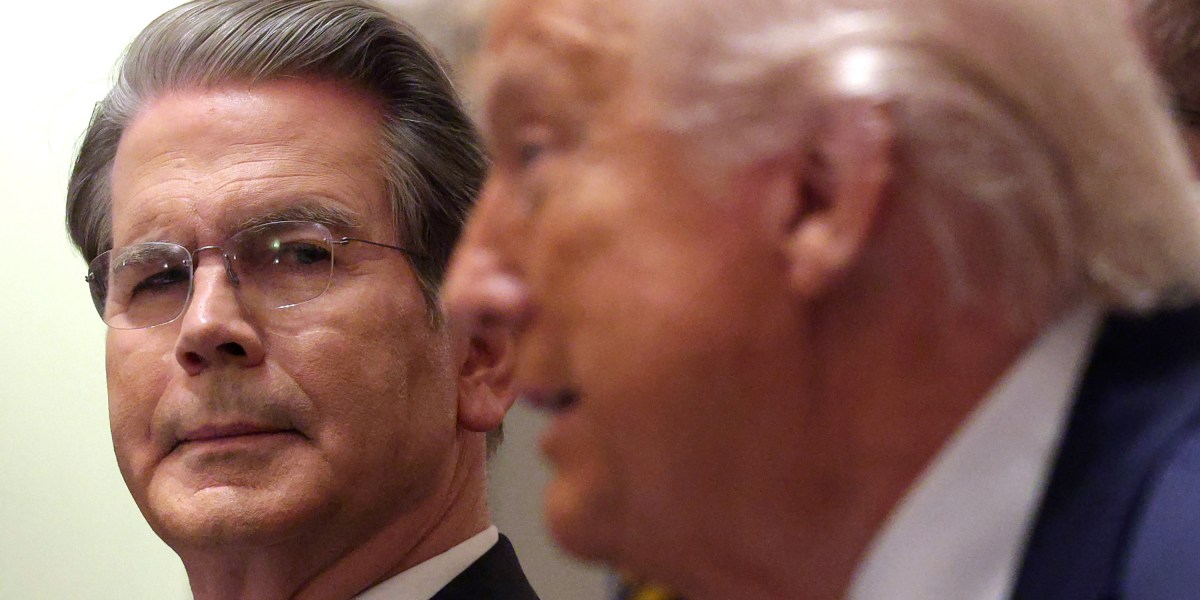
The national debt just crossed $39 trillion—almost doubling since Trump vowed to erase it | Fortune
Budget experts agree on one thing. The debt is on an "unsustainable" trajectory.fortune.com
The United States national debt crossed $39 trillion for the first time Tuesday, arriving at the grim milestone less than five months after it first hit $38 trillion in late October—a pace of accumulation that budget watchdogs and academic economists are now calling, with unusual unanimity, “unsustainable.”
The milestone, confirmed in Wednesday’s Daily Treasury Statement, lands amid a politically charged moment: it comes roughly two weeks before the ten-year anniversary of President Trump’s 2016 campaign promise to eliminate the national debt within eight years. Instead, the gross national debt has roughly doubled since Trump first took office—it was $19.9 trillion in January 2017.
“Our moral duty to the taxpayer requires us to make our Government leaner and more accountable,” President Trump wrote in March 2017, as he issued an executive order directing OMB Director Mick Mulvaney to submit a comprehensive plan to reorganize Executive Branch departments and agencies in order to keep his promise to put in place common sense reforms to eliminate waste so that the Government better serves all Americans. “We’re going to do more with less,” Trump said at the time.
“As America soars past $39 trillion in debt, we must recognize this alarming rate of growth and the significant financial burden we are putting on the next generation,” Michael A. Peterson, CEO of the Peter G. Peterson Foundation, told Fortune in a statement. “Borrowing trillion after trillion at this rapid pace with no plan in place is the definition of unsustainable.”
It's the only way we can pay that back.
Congress has no intention on paying that back.
Soon as the Dems take over they'll wipe it from the books and tell us to go get fucked.
HikerGuy83
Diamond Member
- Dec 26, 2021
- 21,649
- 17,070
- 2,288
The ARRA.Show the laws Obama passed that created the debt?
Next question. And spare me some left wing economists twisted analysis that somehow deflects what Obama did. He was the first to carry a trillion dollar deficit.
And there was more than one.

JonKoch
Gold Member
- May 14, 2017
- 2,993
- 516
- 130
The FELON that saidWere you attempting to refute Archer's testimony?
.Mr. Archer’s testimony was fairly dispassionate. He said he was not aware of any wrongdoing by the elder Mr. Biden
Now why would I need to do that?
JonKoch
Gold Member
- May 14, 2017
- 2,993
- 516
- 130
You do know what POLITICS is right?Why did Clinton express regret about the US failure to honor the promises made in the Budapest mermorandum?
JonKoch
Gold Member
- May 14, 2017
- 2,993
- 516
- 130
You mean you are on a forum and don't know the majority needs 60 votes in the Senate yo move bills?Are yu suggesting that Obama was blocked from jacking up taxes on the rich by republicans who were in the minority in both congressioanl houses?
YES THE GOP BLOCKED OBAMA'S 2010 ATTEMPT TO INCREASE TAXES ON THE RICHEST
JonKoch
Gold Member
- May 14, 2017
- 2,993
- 516
- 130
Cool. Make sure to have Comer get the Biden crime family. Maybe 34 time felon Cheeto could direct his DOJ?You join every other democrat who has failed to disprove Archer's allegations.
JonKoch
Gold Member
- May 14, 2017
- 2,993
- 516
- 130
Let's assume Obamna did nothing to increase the debt. How then did the debt double during his term?
How does debt increase? Hmm maybe Ronnie, Dubya and GOP policies that don't stop the day the next guy arrives? You know it's policies like UNFUNDED WARS, UNFUNDED TAX CUTS, UNFUNDED MEDICARE EXPANSION, BAD "OVERSIGHT" LIKE CHEERING ON THE BANKSTERS PONZI SCHEME CALLED SUBPRIME HOUSING BUBBLE?
Former Federal Reserve Chairman Alan Greenspan admitted in October 2008 that he made a "mistake" in his ideology that banks could self-regulate to protect shareholders, acknowledging a "flawed" model in his oversight during the subprime mortgage crisis. He called the crisis a "once-in-a-century credit tsunami"
“In the summer of 2003, leaders of the four federal agencies that oversee the banking industry gathered to highlight the Bush administration's commitment to reducing regulation. They posed for photographers behind a stack of papers wrapped in red tape.”
JonKoch
Gold Member
- May 14, 2017
- 2,993
- 516
- 130
A prson could be easily fooled by impressive charts about growth to erroneously believe that inflation and costs of living were much lower under Biden and Obama than they were under Trump.
- Obama Administration: Inflation was relatively low and stable, averaging approximately 1.46% to 1.5% annually.
- Trump Administration (First Term): Inflation averaged approximately 2.1% to 2.46% in the first three to four years (pre-pandemic), which was higher than the Obama average but still historically low.
- Food Prices: Over the long term, food prices were relatively stable under both, with a 5.9% increase under Obama and a 6.1% increase under Trump (as of Oct 2020
JonKoch
Gold Member
- May 14, 2017
- 2,993
- 516
- 130
True, when the GOP dig holes they dig it deepYeah...love deatails.
Obama was president while the debt went up 7 to 9 trillion. Suck on it.
Economic Downturn and Legacy of Bush Policies Continue to Drive Large Deficits Economic Recovery Measures, Financial Rescues Have Only Temporary Impact
JonKoch
Gold Member
- May 14, 2017
- 2,993
- 516
- 130
CONServative "math" huh?Sorry Charlie, but right now each president R or D will be eating over 1 trillion in interest thanks to Biden.
If you pull that away from Trump and Biden, then compare them to Obama, Obama gets the prize.
At the same time, you can look at the congress and ask where they were in all this. Obama had the house for just one term.
Republicans in the federal congress are just as stupid as democrats.....well, except for maybe AOC.
JonKoch
Gold Member
- May 14, 2017
- 2,993
- 516
- 130
Guess those tariffs are looking pretty good now.
It's the only way we can pay that back.
Congress has no intention on paying that back.
Soon as the Dems take over they'll wipe it from the books and tell us to go get fucked.
OR maybe we can just get back to GOOD GOVERNMENT POLICY AND INCREASE TAXES?
Instead of gutting taxes on the richest?
Federal tax revenue has historically averaged around 17%–18% of GDP over the past 50 years, ranging from roughly 14.5% to 20%.
As of early 2026, federal revenue for fiscal year 2025 was approximately 17% of GDP. Revenue peaked near 20% in 2000 (Clinton) and hit lows of 14.6%–14.8% during the 2009–2010 recession (Obama, Thanks Dubya/GOP)
SEEE CLINTON HERE? Then Dubya? Then Obama? Then Cheeto?
CARE TO NOTE WHEN REVENUES GO UP AND WHEN THEY GO DOWN?
CORPORATIONS
Similar threads

- Replies
- 13
- Views
- 636
- Replies
- 54
- Views
- 871


- Replies
- 5
- Views
- 112
- Replies
- 106
- Views
- 1K


New Topics
-
-
 Zone1 St. Nicholas, the Patron Saint of Pawnbrokers?
- Started by 1srelluc
- Replies: 0
-
-

-


