IM2
Diamond Member
- Mar 11, 2015
- 117,287
- 153,118
- 3,645
The best thing that happened for China was us being stupid enough to put Trump back in office. What Trump is doing has our trading partners looking to a large market like China. There are more than 1 billion people there. A lot of money can be made.
When President Trump visited China in late 2017, Xi Jinping welcomed him with a grand display of Chinese history and culture: a four-hour private tour of the Forbidden City culminating in a performance by the Peking Opera.
Eight years, a pandemic and two trade wars later, Mr. Trump is returning to Beijing, where the theme of future dominance, not ancient majesty, has filled domestic and international headlines with articles about dancing robots, drone swarms and the quiet hum of electric vehicles.
China increasingly casts itself not as a fading civilization trying to catch up to the West but as a superpower poised to surpass it. Chinese nationalists and state-linked commentators say they have Mr. Trump to thank. America under his rule, they say, validates Mr. Xi’s worldview centered on “the rise of the East and decline of the West.”
For decades, many Chinese viewed the United States with a mix of admiration, envy and resentment. America represented wealth, technological sophistication and institutional confidence. Even critics of Washington who reviled the American system often assumed that it worked.
Mr. Trump’s ascent and his volatile second term shattered that image.
In January, a nationalistic Beijing think tank affiliated with Renmin University published a triumphant report about Mr. Trump’s first year back in office. The report argued that his tariffs, attacks on allies, anti-immigration policies and assaults on the American political establishment had inadvertently strengthened China while weakening the United States. Its title: “Thank Trump.”

 www.nytimes.com
Fo you people who want to dismiss this here:
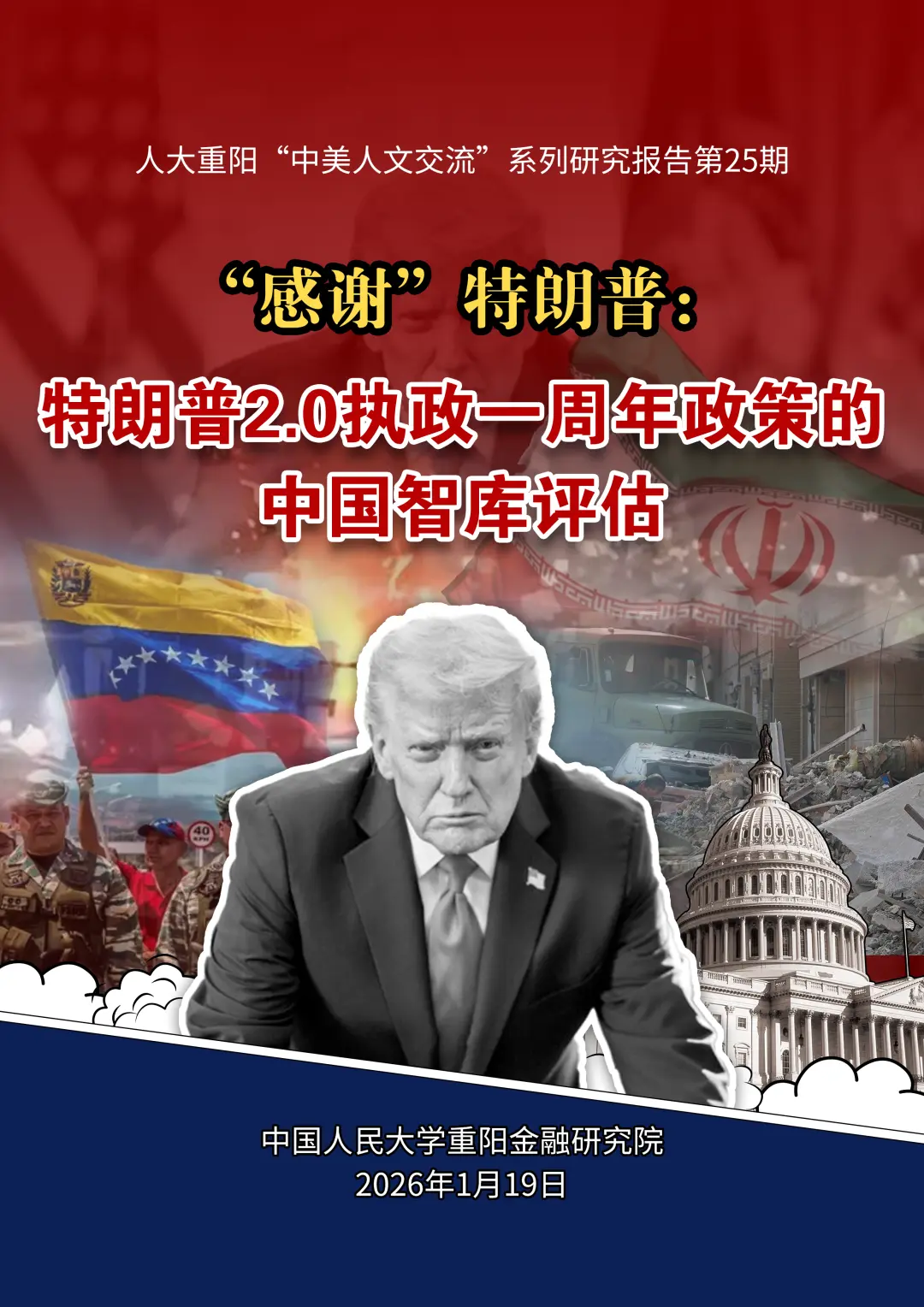
From China's perspective, we "thank you" for this anniversary with a dialectical soberness: this "thank you" is by no means an endorsement of hegemonic behavior, but a systematic observation of the "backward pressure effect" stimulated by pressure, and a confident examination of China's institutional resilience, market potential and strategic determination.
● Trump 2.0 staged "deficit magic" with the "Big and American Act". Tax cuts and spending expansions, soaring debt limits, and exchanging $4.1 trillion in future borrowings for a 0.4 percentage point GDP "digital boom". The result is that the deficit has grown far more than the economic growth, the debt ratio has rushed to 124%, and structural imbalances have exacerbated social divisions. We are "grateful" to the White House for this vivid negative teaching, this leverage game of "eating grain", which finally proves that if there is only one move left in macro policy, no matter how beautiful the packaging is, it cannot hide the sound of being hollowed out.
●Trump 2.0 waved the stick of "reciprocal tariffs", wanting to reshape global trade and force manufacturing to return. The result was "800 wounds to the enemy and 1,000 losses to themselves". Costs are driving up inflation, supply chains are becoming more fragmented, and allies are losing trust. China's trade has accelerated its diversification under pressure, its dependence on the United States has plummeted, and its technological independence has accelerated. This drama of "America trapped itself" finally makes us "thankful" this powerful "reverse booster".
●Trump's "economic revival" has evolved into a classic stagflation dilemma. The cliff-like decline in job growth and the stubbornness of tariff-driven inflation coexist. The so-called "manufacturing reshoring" is accompanied by a wave of corporate layoffs and intensifying social injustice, and the price of "America First" is the systematic erosion of people's purchasing power. We are "grateful" for this vivid experiment in policy comparison, and this picture of the United States, which is "more expensive, slower, and more uncertain" has become the best contrast to China's stable market and efficient governance.
● Trump's "Department of Government Efficiency" staged a political reality show. The goal is to cut trillions of dollars, resulting in idling institutions, purges of professional bureaucrats, and record-breaking government shutdowns. This toss in the name of "anti-bureaucracy" actually replaces professional ability with political loyalty, causing national governance to fall into a vicious circle of "the more reform there is, the more inefficient it becomes". In this regard, we are "grateful" for this negative textbook, which interprets the difference between "sports rectification" and "institutional governance" so thoroughly.
● Trump's "tough turn" on immigration and militarized clearance in the name of a national emergency. The data of illegal immigration has plummeted, but the price is intensifying social divisions, the labor market being damaged, and the international image collapsing. This set of "governance" that roughly simplifies complex issues inadvertently weakens the attractiveness of the United States to global talent. We are "grateful" to the negative practice of the United States, which has made China the preferred direction for more international talents with its continuously optimized entrepreneurial environment, gradually increasing scientific research investment and broad development space.
● Trump wielded a conservative scalpel in the name of "restoring sanity". Repeal diversity and inclusion policies, a single official language, and condone law enforcement violence. This combination of punches turned social rifts from undercurrents into tsunamis, pushing the United States to the brink of civil war. In contrast, China is committed to building bridges of social unity. We are "grateful" for this radical controlled experiment that makes the difference between the paths of "American division" and "Chinese cohesion" so clear.
For the rest:
China Increasingly Views Trump’s America as an Empire in Decline
For decades, many Chinese viewed the United States with a mix of admiration, envy and resentment. President Trump’s volatile second term shattered that image.When President Trump visited China in late 2017, Xi Jinping welcomed him with a grand display of Chinese history and culture: a four-hour private tour of the Forbidden City culminating in a performance by the Peking Opera.
Eight years, a pandemic and two trade wars later, Mr. Trump is returning to Beijing, where the theme of future dominance, not ancient majesty, has filled domestic and international headlines with articles about dancing robots, drone swarms and the quiet hum of electric vehicles.
China increasingly casts itself not as a fading civilization trying to catch up to the West but as a superpower poised to surpass it. Chinese nationalists and state-linked commentators say they have Mr. Trump to thank. America under his rule, they say, validates Mr. Xi’s worldview centered on “the rise of the East and decline of the West.”
For decades, many Chinese viewed the United States with a mix of admiration, envy and resentment. America represented wealth, technological sophistication and institutional confidence. Even critics of Washington who reviled the American system often assumed that it worked.
Mr. Trump’s ascent and his volatile second term shattered that image.
In January, a nationalistic Beijing think tank affiliated with Renmin University published a triumphant report about Mr. Trump’s first year back in office. The report argued that his tariffs, attacks on allies, anti-immigration policies and assaults on the American political establishment had inadvertently strengthened China while weakening the United States. Its title: “Thank Trump.”
China Increasingly Views Trump’s America as an Empire in Decline
For decades, many Chinese viewed the United States with a mix of admiration, envy and resentment. President Trump’s volatile second term shattered that image.
Fo you people who want to dismiss this here:
"Thanks" Trump: China's think tank assessment of Trump's 2.0 policy on the first anniversary of his administration
Release time: 2026-01-20 Author: National People's Congress ChongyangFrom China's perspective, we "thank you" for this anniversary with a dialectical soberness: this "thank you" is by no means an endorsement of hegemonic behavior, but a systematic observation of the "backward pressure effect" stimulated by pressure, and a confident examination of China's institutional resilience, market potential and strategic determination.
● Trump 2.0 staged "deficit magic" with the "Big and American Act". Tax cuts and spending expansions, soaring debt limits, and exchanging $4.1 trillion in future borrowings for a 0.4 percentage point GDP "digital boom". The result is that the deficit has grown far more than the economic growth, the debt ratio has rushed to 124%, and structural imbalances have exacerbated social divisions. We are "grateful" to the White House for this vivid negative teaching, this leverage game of "eating grain", which finally proves that if there is only one move left in macro policy, no matter how beautiful the packaging is, it cannot hide the sound of being hollowed out.
●Trump 2.0 waved the stick of "reciprocal tariffs", wanting to reshape global trade and force manufacturing to return. The result was "800 wounds to the enemy and 1,000 losses to themselves". Costs are driving up inflation, supply chains are becoming more fragmented, and allies are losing trust. China's trade has accelerated its diversification under pressure, its dependence on the United States has plummeted, and its technological independence has accelerated. This drama of "America trapped itself" finally makes us "thankful" this powerful "reverse booster".
●Trump's "economic revival" has evolved into a classic stagflation dilemma. The cliff-like decline in job growth and the stubbornness of tariff-driven inflation coexist. The so-called "manufacturing reshoring" is accompanied by a wave of corporate layoffs and intensifying social injustice, and the price of "America First" is the systematic erosion of people's purchasing power. We are "grateful" for this vivid experiment in policy comparison, and this picture of the United States, which is "more expensive, slower, and more uncertain" has become the best contrast to China's stable market and efficient governance.
● Trump's "Department of Government Efficiency" staged a political reality show. The goal is to cut trillions of dollars, resulting in idling institutions, purges of professional bureaucrats, and record-breaking government shutdowns. This toss in the name of "anti-bureaucracy" actually replaces professional ability with political loyalty, causing national governance to fall into a vicious circle of "the more reform there is, the more inefficient it becomes". In this regard, we are "grateful" for this negative textbook, which interprets the difference between "sports rectification" and "institutional governance" so thoroughly.
● Trump's "tough turn" on immigration and militarized clearance in the name of a national emergency. The data of illegal immigration has plummeted, but the price is intensifying social divisions, the labor market being damaged, and the international image collapsing. This set of "governance" that roughly simplifies complex issues inadvertently weakens the attractiveness of the United States to global talent. We are "grateful" to the negative practice of the United States, which has made China the preferred direction for more international talents with its continuously optimized entrepreneurial environment, gradually increasing scientific research investment and broad development space.
● Trump wielded a conservative scalpel in the name of "restoring sanity". Repeal diversity and inclusion policies, a single official language, and condone law enforcement violence. This combination of punches turned social rifts from undercurrents into tsunamis, pushing the United States to the brink of civil war. In contrast, China is committed to building bridges of social unity. We are "grateful" for this radical controlled experiment that makes the difference between the paths of "American division" and "Chinese cohesion" so clear.
For the rest: