What We Get Wrong About Closing the Racial Wealth Gap
Yesterday you were shown that the opinion many of you here hold that - Greater educational attainment or more work effort on the part of blacks will close the racial wealth gap- is folly and that-"The pattern is evident: studying hard and working hard clearly is not enough for black families to make up for their marginalized financial position."
So now we will examine another reality.
Myth 2: The racial homeownership gap is the “driver” of the racial wealth gap
A 2017 New York Times Magazine article by renowned sociologist Matthew Desmond stated what he thought to be obvious (and uncontroversial): “[d]ifferences in homeownership rates remain the prime driver of the nation’s racial wealth gap.” Desmond is far from alone in perpetuating this misperception. A 2015 report from the think tank Demos claimed “[e]liminating disparities in homeownership rates and returns would substantially reduce the racial wealth gap,” while the Institute on Assets and Social Policy at Brandeis University wrote an entire report on how interest deductions for home-owners “drive” the racial wealth gap. After all, the typical household, regardless of race, holds most of its wealth in home equity. Since black families own homes at substantially lower rates than their white counterparts, the argument has it that if blacks only achieved rates of home ownership similar to whites, the racial wealth gap would be eliminated.
The word “drive” suggests a causal link between homeownership/home equity and intergenerational wealth. However, a major flaw in this reasoning is that, by definition, homeownership/home equity is a componen t of wealth. Hence, the statement that “homeownership drives wealth” is equivalent to saying that “wealth drives wealth.”
As discussed below under Myth 5, blacks with positive wealth do tend to have a greater share of their asset portfolio in homeownership than whites, since a home is the largest (usually) non-depreciating major asset held by most American households, regardless of race. Nonetheless, in the aggregate, whites have considerably more resources than blacks, greater home equity and also higher values in every other type of asset.
Furthermore, empirically, the evidence simply does not support the claim that the racial homeownership gap explains the racial wealth gap. Figure 4 shows median household wealth by homeownership rates. For those house holds who do not own a home, wealth levels are low for both white and black households; however black non - homeowner households have a mere $120 in net worth – insufficient to feed a family for a week. The data indicates that white households who are not ho me - owners hold 31 - times more wealth than black households that do not.
Among households that own a home, white households have nearly $ 140,000 more in net worth than black households. While the wealth ratio between whites and blacks may narrow somewhat among those who own a home, a six-figure wealth differential remains. Clearly increased homeownership is far from sufficient to close the racial wealth gap.
Homeownership and wealth are clearly correlated, but it is a severe misstatement to claim that if blacks owned homes at the same rate as whites the racial wealth gap would be closed. To be sure, a sizeable difference in ownership rates exists, as well as a dramatic difference in home equity across black and white homeowners.
Figures from the 2017 U.S. Census indicate that 72.5 percent of whites own a home compared with 42 percent of blacks.3 Nevertheless, substantial regional variation exists. For instance, in Los Angeles, blacks have slightly higher homeownership rates than Asian Indians; however, using data from the National Asset Scorecard for Communities of Color Project ( NASCC), Asian Indian households in Los Angeles have substantially greater levels of wealth than blacks despite, statistically, having no greater likelihood of owning a home (De La Cruz-Viesca et al. 2016).
While closing the gap in homeownership rates may have some benefits, the story is complicated. Indeed, there are various pathways to wealth and assets in which wealth is stored, and these pathways and assets will vary across context, including geographic location. Nonetheless, a major underlying difference in homeownership rates is an initial difference in endowments.
Broad-based homeownership in the United States as a means to achieve economic security was brought about through public policy reforms, starting with New Deal legislation. The New Deal created relatively sound long-term mortgage markets and down payment capital finance. It also reduced down payment requirements for homeownership. This transformed the housing landscape, allowing many working-class households to move from the rental lifestyle to obtaining a piece of the American dream - owning a home.
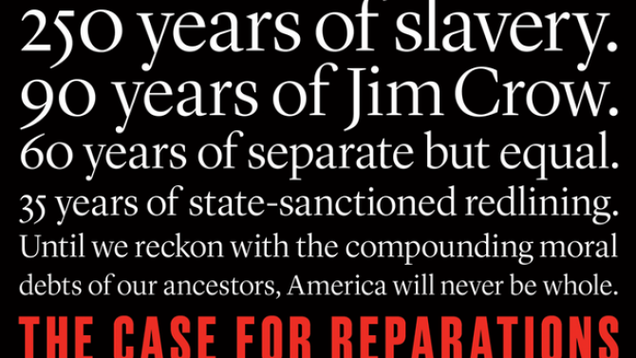
Yet the path to homeownership has been riddled with entrenched racism, as the Federal Housing Administration (FHA) systematically refused loan applications to black families through the policy of redlining.5 Richard Rothstein (2017) has made the following observation in a recent book on the racialized character of post-World War II social mobility policies:
"[My book] The Color of Law is concerned with consistent government policy that was employed in the mid-twentieth century to enforce residential racial segregation. There were many specific government actions that prevented African Americans and whites from living among one another, and I categorize them as unconstitutional... For example, many African American World War II veterans did not apply for government-guaranteed mortgages for suburban purchases because they knew the Veterans Administration would reject them on account of their race, so applications were pointless. Those veterans then did not gain wealth from home equity appreciation as did white veterans, and their descendants could not inherit that wealth as did white veterans’ descendants.
Further, the racialized history of housing policy in the U.S., including residential segregation, redlining, and discriminatory credit practices, have exacerbated inequality in wealth and homeownership rates and have alsso contributed to the rate of return on the asset itself. Part of the persistent wealth-gap across homeownership status may be explained by the fact that a home is one of the only assets in which the race of the owner affects the rate of return."
Further, the idea that homeownership creates wealth simply may put the relationship backward. Rather than homeownership creating wealth, having family wealth in the first place leads to homeownership, particularly high equity homeownership. As we discussed in the introduction, blacks have minimal initial wealth to invest in homes or pass down to their children to assist with down payments. Research by Gittleman and Wolff (2004) suggests that when black households do obtain some wealth, one of the first assets they purchase, similar to other Americans, is a house. But without sufficient wealth in the first place, households have limited means to invest in homeownership. Wealth, after all, begets more wealth.
While achieving parity in homeownership and rates of return on housing is certainly a worthwhile goal that might improve economic security, stability and fairness, it is a widely held myth that improving homeownership rates amongst black households will close the racial wealth gap.
Today, simply advocating the purchase of a new home will not overcome the existing gap produced by national policies. As illustrated above, even blacks who own their home encounter a large racial disparity in home values. If the goal truly is to eliminate the racial wealth gap, policymakers should be concerned with providing, at the very least, an initial, significant financial endowment to black young adults to invest in an asset like a new home, as well as an aggressive campaign against housing and lending discrimination, which limits the asset appreciation of the housing stock and financial products available to blacks.
Myth 3 tomorrow.