...don't need to
..and remember these people that believed in god believed the earth was flat and the center of the Universe...they denigrated/punished people who thought the earth was not the center of the Universe
....these people that believed in god tortured people ....these people that believed in god robbed/pillaged/sacked a christian town for $$$$--how nice of the christians
Siege of Zara - Wikipedia
these same people today are raping/molesting children!!--and many others [ the hierarchy ] try/tried to protect the child rapists people that believe in god
..and I've always wondered what is the big deal of all the Christmas songs about jesus will bring peace/savoir/god's son/etc etc---but the world hasn't gotten better...in fact, 2000 years after jesus came we had the greatest destruction/murder/rape/robbery/etc
etc etc etc
You ******* little pig. You don't know jack shit. Christian scientists changed the world you bloody fool. Here's just part of accomplishments asshole. I detest ignorance and you are a prime example of what teachers are barzooka barfing out these days.
Little Hoggs everywhere.
Before the eighteenth century
See also:
List of medieval European scientists,
Byzantine science, and
Scientific revolution
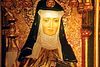 Hildegard of Bingen
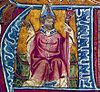 Robert Grosseteste
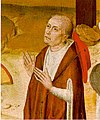 Nicholas of Cusa
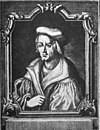 Otto Brunfels
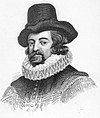 Francis Bacon
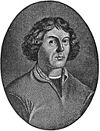 Nicolaus Copernicus
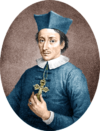 Nicolas Steno
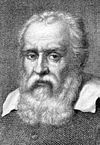 Galileo Galilei
 Blaise Pascal
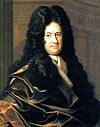 Gottfried Leibniz
 Emanuel Swedenborg
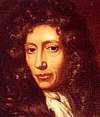 Robert Boyle
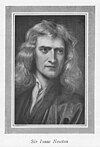 Isaac Newton
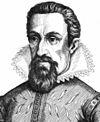 Johannes Kepler
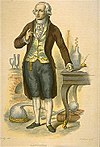 Antoine Lavoisier
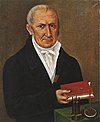 Alessandro Volta
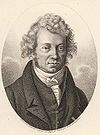 André-Marie Ampère
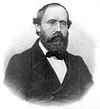 Bernhard Riemann
- Hildegard of Bingen (1098–1179): also known as Saint Hildegard and Sibyl of the Rhine, was a German Benedictine abbess. She is considered to be the founder of scientific natural history in Germany[2]
- Robert Grosseteste (c.1175–1253): Bishop of Lincoln, he was the central character of the English intellectual movement in the first half of the 13th century and is considered the founder of scientific thought in Oxford. He had a great interest in the natural world and wrote texts on the mathematical sciences of optics, astronomy and geometry. He affirmed that experiments should be used in order to verify a theory, testing its consequences and added greatly to the development of the scientific method.[3]
- Albertus Magnus (c.1193–1280): Patron saint of scientists in Catholicism who may have been the first to isolate arsenic. He wrote that: "Natural science does not consist in ratifying what others have said, but in seeking the causes of phenomena." Yet he rejected elements of Aristotelianism that conflicted with Catholicism and drew on his faith as well as Neo-Platonic ideas to "balance" "troubling" Aristotelian elements.[note 1][4]
- Jean Buridan (1300–58): was a French philosopher and priest. One of his most significant contributions to science was the development of the theory of impetus, that explained the movement of projectiles and objects in free-fall. This theory gave way to the dynamics of Galileo Galilei and for Isaac Newton's famous principle of Inertia.
- Nicole Oresme (c.1323–1382): Theologian and bishop of Lisieux, he was one of the early founders and popularizers of modern sciences. One of his many scientific contributions is the discovery of the curvature of light through atmospheric refraction.[5]
- Nicholas of Cusa (1401–1464): Catholic cardinal and theologian who made contributions to the field of mathematics by developing the concepts of the infinitesimal and of relative motion. His philosophical speculations also anticipated Copernicus’ heliocentric world-view.[6]
- Otto Brunfels (1488–1534): A theologian and botanist from Mainz, Germany. His Catalogi virorum illustrium is considered to be the first book on the history of evangelical sects that had broken away from the Catholic Church. In botany his Herbarum vivae icones helped earn him acclaim as one of the "fathers of botany".[7]
- William Turner (c.1508–1568): He is sometimes called the "father of English botany" and was also an ornithologist. Religiously he was arrested for preaching in favor of the Reformation. He later became a Dean of Wells Cathedral, but was expelled for nonconformity.[8]
- Ignazio Danti (1536–1586): As bishop of Alatri he convoked a diocesan synod to deal with abuses. He was also a mathematician who wrote on Euclid, an astronomer, and a designer of mechanical devices.[9]
- Francis Bacon (1561–1626): Considered among the fathers of empiricism and is credited with establishing the inductive method of experimental science via what is called the scientific method today.[10][11]
- Galileo Galilei (1564–1642): was an Italian astronomer, physicist, engineer, philosopher, and mathematician who played a major role in the scientific revolution during the Renaissance.[12][13]
- Laurentius Gothus (1565–1646): A professor of astronomy and Archbishop of Uppsala. He wrote on astronomy and theology.[14]
- Pierre Gassendi (1592–1655): Catholic priest who tried to reconcile Atomism with Christianity. He also published the first work on the Transit of Mercury and corrected the geographical coordinates of the Mediterranean Sea.[15]
- Anton Maria of Rheita (1597–1660): Capuchin astronomer. He dedicated one of his astronomy books to Jesus Christ, a "theo-astronomy" work was dedicated to the Blessed Virgin Mary, and he wondered if beings on other planets were "cursed by original sin like humans are."[16]
- Blaise Pascal (1623–1662): Jansenist thinker;[note 2] well known for Pascal's law (physics), Pascal's theorem (math), and Pascal's Wager (theology).[17]
- Nicolas Steno (1638–1686): Lutheran convert to Catholicism, his beatification in that faith occurred in 1987. As a scientist he is considered a pioneer in both anatomy and geology, but largely abandoned science after his religious conversion.[18][19]
- Isaac Barrow (1630–1677): English theologian, scientist, and mathematician. He wrote Expositions of the Creed, The Lord's Prayer, Decalogue, and Sacraments and Lectiones Opticae et Geometricae.[20]
- Juan Lobkowitz (1606–1682): Cistercian monk who did work on Combinatorics and published astronomy tables at age 10. He also did works of theology and sermons.[21]
- Seth Ward (1617–1689): Anglican Bishop of Salisbury and Savilian Chair of Astronomy from 1649–1661. He wrote Ismaelis Bullialdi astro-nomiae philolaicae fundamenta inquisitio brevis and Astronomia geometrica. He also had a theological/philosophical dispute with Thomas Hobbes and as a bishop was severe toward nonconformists.[22]
- Robert Boyle (1627–1691): Prominent scientist and theologian who argued that the study of science could improve glorification of God.[23][24] A strong Christian apologist, he is considered one of the most important figures in the history of Chemistry.
- Isaac Newton (1643–1727): Prominent scientist during the Scientific Revolution. Physicist, discoverer of gravity, and an alchemist and an obsessed Christian apologist, was obsessed with trying to discern the date of the Rapture from the Bible.
- Johannes Kepler (1571–1630): Prominent astronomer of the Scientific Revolution, discovered Kepler's laws of planetary motion.
1701–1800 A.D. (18th century)[edit]
- John Ray (1627–1705): English botanist who wrote The Wisdom of God manifested in the Works of the Creation. (1691) The John Ray Initiative[25] of Environment and Christianity is also named for him.[26]
- Gottfried Leibniz (1646–1716): He was a philosopher who developed the philosophical theory of the Pre-established harmony; he is also most noted for his optimism, e.g., his conclusion that our Universe is, in a restricted sense, the best possible one that God could have created. He also made major contributions to mathematics, physics, and technology. He created the Stepped Reckoner and his Protogaea concerns geology and natural history. He was a Lutheran who worked with convert to Catholicism John Frederick, Duke of Brunswick-Lüneburg in hopes of a reunification between Catholicism and Lutheranism.[27]
- Stephen Hales (1677–1761): Copley Medal winning scientist significant to the study of plant physiology. As an inventor designed a type of ventilation system, a means to distill sea-water, ways to preserve meat, etc. In religion he was an Anglican curate who worked with the Society for the Promotion of Christian Knowledge and for a group working to convert black slaves in the West Indies.[28]
- Firmin Abauzit (1679–1767): physicist and theologian. He translated the New Testament into French and corrected an error in Newton's Principia.[29]
- Emanuel Swedenborg (1688–1772): He did a great deal of scientific research with the Royal Swedish Academy of Sciences having commissioned work by him.[30] His religious writing is the basis of Swedenborgianism and several of his theological works contained some science hypotheses, most notably the Nebular hypothesis for the origin of the Solar System.[31]
- Albrecht von Haller (1708–1777): Swiss anatomist, physiologist known as "the father of modern physiology." A Protestant, he was involved in the erection of the Reformed church in Göttingen, and, as a man interested in religious questions, he wrote apologetic letters which were compiled by his daughter under the name .[32]
- Leonhard Euler (1707–1783): significant mathematician and physicist, see List of topics named after Leonhard Euler. The son of a pastor, he wrote Defense of the Divine Revelation against the Objections of the Freethinkers and is also commemorated by the Lutheran Church on their Calendar of Saints on May 24.[33]
- Antoine Lavoisier (1743–1794): considered the "father of modern chemistry". He is known for his discovery of oxygen's role in combustion, developing chemical nomenclature, developing a preliminary periodic table of elements, and the law of conservation of mass. He was a Catholic and defender of scripture.[34]
- Herman Boerhaave (1668–1789): remarkable Dutch physician and botanist known as the founder of clinical teaching. A collection of his religious thoughts on medicine, translated from Latin into English, has been compiled under the name Boerhaaveìs Orations.[35]
- John Michell (1724–1793): English clergyman who provided pioneering insights in a wide range of scientific fields, including astronomy, geology, optics, and gravitation.[36][37]
- Maria Gaetana Agnesi (1718–1799): mathematician appointed to a position by Pope Benedict XIV. After her father died she devoted her life to religious studies, charity, and ultimately became a nun.[38]
- Carl Linnaeus (1707-1778): Swedish botanist, physician, and zoologist, "father of modern taxonomy".
1801–1900 A.D. (19th century)[edit]
Further information:
List of parson-naturalists
- Joseph Priestley (1733–1804): Nontrinitarianim clergyman who wrote the controversial work History of the Corruptions of Christianity. He is credited with discovering oxygen.[note 3]
- Alessandro Volta (1745–1827): Italian physicist who invented the first electric battery. The unit Volt was named after him.[39]
- Samuel Vince (1749–1821): Cambridge astronomer and clergyman. He wrote Observations on the Theory of the Motion and Resistance of Fluids and The credibility of Christianity vindicated, in answer to Mr. Hume's objections. He won the Copley Medal in 1780, before the period dealt with here ended.[40]
- Isaac Milner (1750–1820): Lucasian Professor of Mathematics known for work on an important process to fabricate Nitrous acid. He was also an evangelical Anglican who co-wrote Ecclesiastical History of the Church of Christ with his brother and played a role in the religious awakening of William Wilberforce. He also led to William Frend being expelled from Cambridge for a purported attack by Frend on religion.[41]
- William Kirby (1759–1850): A Parson-naturalist who wrote On the Power Wisdom and Goodness of God. As Manifested in the Creation of Animals and in Their History, Habits and Instincts and was a founding figure in British entomology.[42][43]
- Georges Cuvier (1769–1832): French naturalist and zoologist, sometimes referred to as the "father of paleontology".
- Andre Marie Ampere (1775–1836): one of the founders of classical electromagnetism. The unit for electric current, Ampere, is named after him.[44]
- Olinthus Gregory (1774–1841): he wrote Lessons Astronomical and Philosophical in 1793 and became mathematical master at the Royal Military Academy in 1802. An abridgment of his 1815 Letters on the Evidences of Christianity was done by the Religious Tract Society.[45]
- John Abercrombie (1780–1844): Scottish physician and Christian philosopher[46] who created the a textbook about neuropathology.
- William Buckland (1784–1856): Anglican priest/geologist who wrote Vindiciae Geologiae; or the Connexion of Geology with Religion explained. He was born in 1784, but his scientific life did not begin before the period discussed herein.[47]
- Mary Anning (1799–1847): paleontologist who became known for discoveries of certain fossils in Lyme Regis, Dorset. Anning was devoutly religious, and attended a Congregational, then Anglican church.[48]
- Marshall Hall (1790–1857): notable English physiologist who contributed with anatomical understanding and proposed a number of techniques in medical science. A devout Christian, his religious thoughts were collected in the biographical book Memoirs of Marshall Hall, by his widow (1861). He was also an abolitionist who opposed slavery on religious grounds. He believed slavery to be a sin against God and denial of the Christian faith.[49]
- Lars Levi Læstadius (1800–1861): botanist who started a revival movement within Lutheranism called Laestadianism. This movement is among the strictest forms of Lutheranism. As a botanist he has the author citation Laest and discovered four species.[50]
- Edward Hitchcock (1793–1864): geologist, paleontologist, and Congregationalist pastor. He worked on Natural theology and wrote on fossilized tracks.[51][52]
- Benjamin Silliman (1779–1864): chemist and science educator at Yale; the first person to distill petroleum, and a founder of the American Journal of Science, the oldest scientific journal in the United States. An outspoken Christian,[53] he was an old-earth creationist who openly rejected materialism.
- Bernhard Riemann (1826–1866): son of a pastor, [note 4] he entered the University of Göttingen at the age of 19, originally to study philology and theology in order to become a pastor and help with his family's finances. Changed to mathematics upon the suggestion of Gauss.[54] He made lasting contributions to mathematical analysis, number theory, and differential geometry, some of them enabling the later development of general relativity.
- William Whewell (1794–1866): professor of mineralogy and moral philosophy. He wrote An Elementary Treatise on Mechanics in 1819 and Astronomy and General Physics considered with reference to Natural Theology in 1833.[55][56] He is the wordsmith who coined the terms "scientist", "physicist", "anode", "cathode" and many other commonly used scientific words.
- Michael Faraday (1791–1867): Glasite church elder for a time, he discussed the relationship of science to religion in a lecture opposing Spiritualism.[57][58] He is known for his contributions in establishing electromagnetic theory and his work in chemistry such as establishing electrolysis.
- James David Forbes (1809–1868): physicist and glaciologist who worked extensively on the conduction of heat and seismology. He was a devout Christian as can be seen in the work "Life and Letters of James David Forbes" (1873).
- Charles Babbage (1791–1871): mathematician and analytical philosopher known as the first computer scientist who originated the idea of a programmable computer. He wrote the Ninth Bridgewater Treatise,[59][60] and the Passages from the Life of a Philosopher (1864) where he raised arguments to rationally defend the belief in miracles.[61]
- Adam Sedgwick (1785–1873): Anglican priest and geologist whose, A Discourse on the Studies of the University discusses the relationship of God and man. In science he won both the Copley Medal and the Wollaston Medal.[62]
- John Bachman (1790–1874): wrote numerous scientific articles and named several species of animals. He also was a founder of the Lutheran Theological Southern Seminary and wrote works on Lutheranism.[63]
- Temple Chevallier (1794–1873): Priest and astronomer who did Of the proofs of the divine power and wisdom derived from the study of astronomy. He also founded the Durham University Observatory, hence the Durham Shield is pictured.[64]
- Robert Main (1808–1878): Anglican priest who won the Gold Medal of the Royal Astronomical Society in 1858. Robert Main also preached at the British Association of Bristol.[65]
- James Clerk Maxwell (1831–1879): Although Clerk as a boy was taken to Presbyterian services by his father and to Anglican services by his aunt, while still a young student at Cambridge he underwent an Evangelical conversion that he described as having given him a new perception of the Love of God.[note 5] Maxwell's evangelicalism "committed him to an anti-positivist position."[66][67] He is known for his contributions in establishing electromagnetic theory (Maxwell's Equations) and work on the chemical kinetic theory of gases.
- James Bovell (1817–1880): Canadian physician and microscopist who was member of Royal College of Physicians. He was the mentor of William Osler, as well as an Anglican minister and religious author who wrote about natural theology.[68]
- Andrew Pritchard (1804–1882): English naturalist and natural history dealer who made significant improvements to microscopy and wrote the standard work on aquatic micro-organisms. He devoted much energy to the chapel he attended, Newington Green Unitarian Church.
- Gregor Mendel (1822–1884): Augustinian Abbot who was the "father of modern genetics" for his study of the inheritance of traits in pea plants.[69] He preached sermons at Church, one of which deals with how Easter represents Christ's victory over death.[70]
- Lewis Carroll (1832–1898): [real name: Charles Lutwidge Dodgson], English writer, mathematician, and Anglican deacon. Robbins' and Rumsey's investigation of Dodgson's method, a method of evaluating determinants, led them to the Alternating Sign Matrix conjecture, now a theorem.
- Heinrich Hertz (1857–1894): German physicist who first conclusively proved the existence of the electromagnetic waves.
- Philip Henry Gosse (1810–1888): Marine biologist who wrote Aquarium (1854), and A Manual of Marine Zoology (1855–56). He is more famous, or infamous, as a Christian Fundamentalist who coined the idea of Omphalos (theology).[71]
- Asa Gray (1810–1888): His Gray's Manual remains a pivotal work in botany. His Darwiniana has sections titled "Natural selection not inconsistent with Natural theology", "Evolution and theology", and "Evolutionary teleology." The preface indicates his adherence to the Nicene Creed in concerning these religious issues.[72]
- Julian Tenison Woods (1832–1889): co-founder of the Sisters of St Joseph of the Sacred Heart who won a Clarke Medal shortly before death. A picture from Waverley Cemetery, where he's buried, is shown.[73]
- Louis Pasteur (1822-1895): French biologist, microbiologist and chemist renowned for his discoveries of the principles of vaccination, microbial fermentation and pasteurization.
- James Dwight Dana (1813–1895): geologist, mineralogist, and zoologist. He received the Copley Medal, Wollaston Medal, and the Clarke Medal. He also wrote a book titled Science and the Bible and his faith has been described as "both orthodox and intense."[74]
- James Prescott Joule (1818–1889): Joule studied the nature of heat, and discovered its relationship to mechanical work. This led to the law of conservation of energy, which led to the development of the first law of thermodynamics. The SI derived unit of energy, the joule, is named after James Joule.[75]
- John William Dawson (1820–1899): Canadian geologist who was the first President of the Royal Society of Canada and served as President of both the British and the American Association for the Advancement of Science. A presbyterian, he spoke against Darwin's theory and came to write The Origin of the World, According to Revelation and Science (1877) where he put together his theological and scientific views.[76]
- Armand David (1826–1900): Catholic missionary to China and member of the Lazarists who considered his religious duties to be his principal concern. He was also a botanist with the author abbreviation David and as a zoologist he described several species new to the West.[77]
REST AT LINK.
List of Christians in science and technology - Wikipedia
these people do not negate the child rapist/molesters
the '''christians'' who TORTURED people
the christians who stole $$$$/land/etc in the name of ''god''
etc
they are HYPOCRITES big time--'''don't sin'' ---but then they go RAPING children
Yes
harmonica they DO count as sins,
and worse if they are serving as pharisees and elders in the church and do wrong, that is judged harsher.
What determines heaven or hell is the degree to which we FORGIVE and resolve the causes of sins.
Forgiveness does not mean to forget tolerate or enable wrongs. It means to let go of negative emotional attachment to them, so we can have peace of mind
and focus on corrections, prevention and solutions.
Forgiveness that leads to Restorative Justice and Peace
allows us to correct and end the wrongs and ills that
otherwise repeat in cycles of suffering and injustice in the world.
Regardless how severe the sins are, by forgiving them this opens the door to understanding and correcting all causes.
I forgive Tinydancer for his vulgar, vile attack on me
Great
harmonica the more you can forgive wrongs, the more you can correct the causes.
As for proof of God, what we can do is prove that different sides can reconcile our terms for what we mean by God. For example God meaning universal Truth or Wisdom. Or God's law meaning Laws or Forces of Life or Nature. God meaning the energy of love, or Good will that motivates all humanity as one.
Similarly we can reconcile our beliefs about Jesus or Justice, regardless what we call these concepts. The meaning of Justice, Equal Justice Under Law, Justice with Mercy, Peace and Justice can be universally recognized and established even if we use different languages or religions to express the principles needed for Justice in society and relations.
Again
harmonica the key factor is forgiveness.
whether people are Christian or nonchristian, believers in a personified God, or nontheistic secular gentiles who believe in natural law and science it is "forgiveness" of conflicts and problems that allows us to reconcile, and unforgiveness that divides and obstructs us otherwise.


