'Palestinian'

This is NOT to say that Arabs shouldn't live here, but:

Jund Filastin

Let's see:
جند فلسطين‎‎, "military district of Palestine" was one of the military districts of the Ummayad and Abbasid Caliphate province of Bilad al-Sham (Syria), organized soon after the Muslim conquest of the Levant in the 630s.

Jund Filastin, which encompassed most of Palaestina Prima and Palaestina Tertia, included the newly established city of Ramla as its capital. (No Jerusalem?)

According to al-Biladhuri, the main towns of the district, following its conquest by the Rashidun Caliphate, were Gaza, Sebastia, Nablus, Caesarea, Ludd, Yibna, Imwas, Jaffa, Rafah, and Bayt Jibrin.
(Again No Jerusalem??)

--------------------------------------------------------------------------------------------------------------------

What's even more interesting:

The Arab tribes that settled Jund Filastin after the Muslim conquest were the Lakhm, Kindah, Qais, Amilah, Judham and the Kinanah;[2]
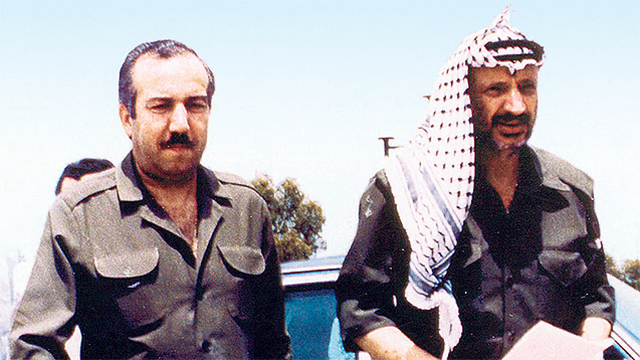
 
Khalil Ibrahim al-Wazir aka 'Abu Jihad' - the organizer of the Coastal Road massacre, leader and co founder of Fatah

77.jpg


The Wazirs or Waziris (Pashto: وزير‎) are a Karlani Pashtun tribe found in Pakistan and on its border with Afghanistan. The tribe comprises two geographically separate subgroups and are found in the Waziristan region that takes its name from them. The Utmanzai are settled in the North Waziristan Agency and the Ahmadzai are in the South Waziristan Agency.[1][2][3] Those subgroups are in turn divided further, for example into Utmanzai tribes such as the Bakka Khel and Jani Khel.[4]

The common ancestor of the Ahmadzai and Utmanzai is believed by them to be the eponymous Wazir, who is also ancestor to the Mehsud tribe that has since taken a distinct and divergent path. Through Wazir, the tribes trace their origins to Karlani and thence to the founder of the Pashtun lineage, Qais Abdur Rashid.[5] Some western ethnologists consider them of being mix of Scythian or Tatar ethnicity.[1]
 
The Hasbara plants continue to make things up. There own sources contradict their claims or make them appear ridiculous. Forgetting that there was no place called Jeruslaem when the Muslims conquered Palestine as it was called Aelia Capitolina and was an exclusively Christian city.

The only Arabian tribes to "settle" in Palestine were nomadic Bedouins which, pursuant to the small populations the desert could support were always small in number. The Arabians arrived as rulers made up a very small part of the invading armies, essentially the officer corps. The "Arabs" in Palestine are the descendants of the indigenous people who converted to Christianity during later Roman rule and then many of whom converted to Islam during Muslim rule.

The Hasbara financed fantasists can make things up all they want. It doesn't change the fact that Europeans of the Judaic faith, with the help and support of the world's most powerful colonial empire, invaded Palestine, colonized it and now rule over the native people. The native people rightfully are fighting to regain their rights and land, something all colonized people do, sometimes successfully and sometimes unsuccessfully.
 
The Hasbara plants continue to make things up. There own sources contradict their claims or make them appear ridiculous. Forgetting that there was no place called Jeruslaem when the Muslims conquered Palestine as it was called Aelia Capitolina and was an exclusively Christian city.

The only Arabian tribes to "settle" in Palestine were nomadic Bedouins which, pursuant to the small populations the desert could support were always small in number. The Arabians arrived as rulers made up a very small part of the invading armies, essentially the officer corps. The "Arabs" in Palestine are the descendants of the indigenous people who converted to Christianity during later Roman rule and then many of whom converted to Islam during Muslim rule.

The Hasbara financed fantasists can make things up all they want. It doesn't change the fact that Europeans of the Judaic faith, with the help and support of the world's most powerful colonial empire, invaded Palestine, colonized it and now rule over the native people. The native people rightfully are fighting to regain their rights and land, something all colonized people do, sometimes successfully and sometimes unsuccessfully.

Oh, my. The boy is cutting and pasting all of his usual slogans and clichés.
 
"One of Arafat's first presidential measures was to establish the
Tribal Affairs Department through Presidential decree no. 161 for the year 1994. This is considered the reconsolidation of the role of the informal justice system.
Birzeit University Institute of Law, 2006a: 37. International attention was focused on the relationship between the Authority and the Islamist opposition movement and, to an extent, accusations of corruption in the PA"


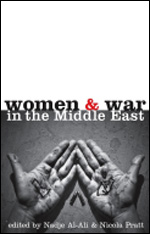
9781848131859.jpg


Women and War in the Middle East
 
They did not even call themselves Palestinians until the middle 1960s.

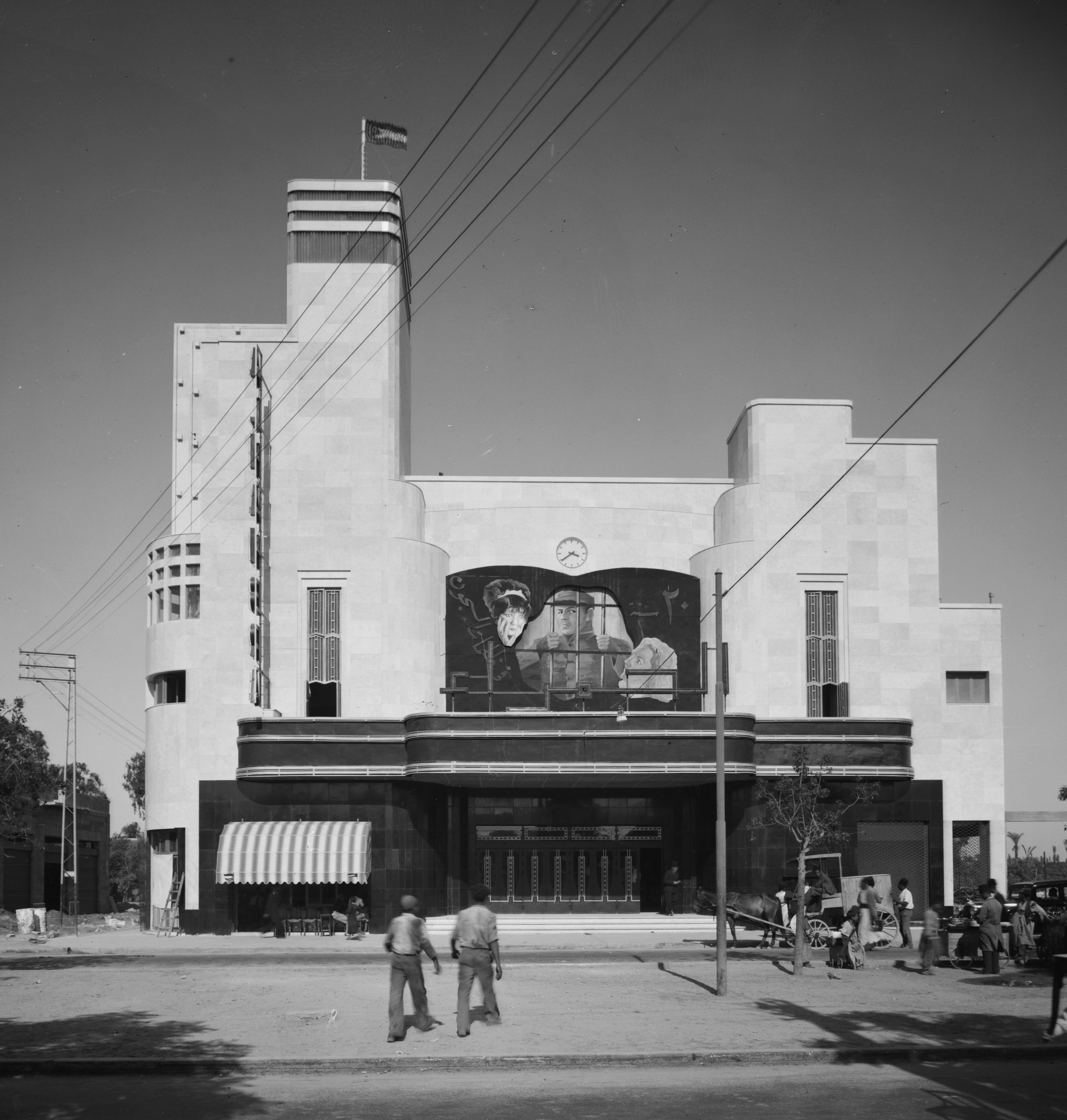
Al Hambra Theatre, Jaffa 1937, flying Palestinian flag.
Jaffa_Alhambra_Cinema03562ucroped.jpg


You need to get off that propaganda.
That's the flag of the Arab league liar, which later became the Jordanian flag,

The Paletinian flag circa 1960's, is a total knock off of the Jordanian flag. Another reason why Palestinian is a hoax and a made up identity.
 
By looking through the wrong end of the telescope, many in the Western world think of tribal people as nomads, riding camels and living in harsh and remote desert areas. This is not the reality in the Arab Middle East, where the distinction between tribal and non-tribal does not correspond in any significant way between nomadic and settled populations. The majority of Middle Eastern tribes do not move.

Tribal populations, for instance, in Iraq and Yemen are settled farmers, who plant fruits and vegetables beside their sorghum and mill et. Remarkably, tribal identity in the region is still alive in the socio-political consciousness of millions of Arabs residing in modern globalising cities. This unique phenomenon is one of the excellent mirrors to reflect how tribalism in the Arab world is not a way of life.

Rather, it is an identity, which is grounded in cultural psychology and politics. In other words, tribalism in the Middle East is culturally rooted and politically shaped. It’s uneven development and strength in the region is the outcome of the divergent and changing types of state formation, colonial penetration, economic growth and societal changes.

It is also important to note that the relationships between political administrations, whether foreign or indigenous, and tribes in the region were never fixed. Instead, they were always subject to adjustments in response to alterations in security, economic and political circumstances.

The only fixed feature in these relations is that tribes become strong when political administrations are weak. In other words, the strength of the tribes is closely linked to the weakness of the state. In light of this, the role of tribes in state building in the Middle East is balanced by the role of the state in destroying tribes...

The exercise of power by tribes and their leaders should not be seen, however, as a tribally-motivated attempt to overthrow modern state institutions and replace them by a traditional tribal political order. Rather, Arab tribal leaders prefer the extraction of maximum political concessions and economic benefits from the state, without being directly involved in the complex management of state affairs.

Tribes and tribalism in the Arab Spring

The+Banu+al-Abbas+The+Banu+al-Abbas+%28or+family+of+Abbas%29+are+named+after+al-Abbas+ibn+Abd+al-Muttalib+%28see+Family+Tree%29.jpg
 
"One of Arafat's first presidential measures was to establish the
Tribal Affairs Department through Presidential decree no. 161 for the year 1994. This is considered the reconsolidation of the role of the informal justice system.
Birzeit University Institute of Law, 2006a: 37. International attention was focused on the relationship between the Authority and the Islamist opposition movement and, to an extent, accusations of corruption in the PA"


9781848131859.jpg


Women and War in the Middle East
SUMMARY

The Palestinian local elections held May 13 showed that Palestinians voted for tribal and independent lists instead of political lists, giving serious cause for concern.


"Hamas, the Islamic Jihad and the Popular Front for the Liberation of Palestine boycotted the elections on the grounds that they were held in the West Bank and not the Gaza Strip. Hamas refused to hold the elections in Gaza in protest against the Palestinian High Court of Justice’s calling off in September 2016 of the local elections that were scheduled for the next month, as well as in protest of President Mahmoud Abbas’ formation of the Local Elections Court on Jan. 10 without consulting the Palestinian factions....

Yousef Tamiza, a campaign manager for the tribal National Alliance list in the town of Idna in Hebron, in the south of the West Bank, told Al-Monitor that the National Alliance list won 10 out of 13 seats, and included an alliance of seven families in the city of Hebron, namely the Tamiza, Islimiya, Abu Jahisha, Khalawah, Abu Zeltah, Awad and Abu Asaad families. Independent lists won the other three seats.

Nashar said that in many of the West Bank governorates and villages, voters opted for independent and tribal lists because they are tired of the Palestinian parties and their political affiliations, which he said have a negative impact on the interests of citizens. Also, he added, voters have become convinced that partisan lists never implement their electoral programs....

Abdel Sattar Qassem, a professor of political science at An-Najah National University in Nablus, told Al-Monitor that the victory of the tribal lists in many municipal councils in the local elections poses a threat to the Palestinian people because of the return of what he called "tribal reunification" at the expense of the national public interest. He attributed this to the people’s loss of confidence in political parties.

He told Al-Monitor, “There is a great leadership vacuum in the Palestinian arena — both socially and politically — and someone had to fill this vacuum, so families and tribes managed to do so.”

He added, “Tribes are a separatist social structure, not a unitary one. Each family works to preserve its own interests, regardless of the public interest, and this is why a great danger is lurking. Social and political division will come to affect individuals and families in one town, whereas it has been until now only confined to Hamas and Fatah.”

The resurgence of Palestinian tribalism

RTX35N3A-570.jpg
 
Palestine Liberation Organization
During the January 1964 Arab League summit, Egyptian president Gamal Abdel Nasser decided to establish an organization to represent the Palestinians. In May 1964, the Palestine Liberation Organization or PLO was established with the purpose of the "liberation of Palestine" through armed struggle, with much of its violence aimed at Israeli civilians.
2011_May_Sun__08_41_25.jpg


The original Palestinian National Covenant stated in 1964:

Article 1. Palestine is an Arab homeland bound by strong national ties to the rest of the Arab Countries and which together form the large Arab homeland.

Article 11. The Palestinian people firmly believe in Arab unity, and in order to play its role in realizing this goal, it must, at this stage of its struggle preserve its Palestinian personality and all its constituents. It must strengthen the consciousness of its existence and stand against any attempt or plan that may weaken or disintegrate its personality.

Article 12. Arab unity and the liberation of Palestine are two complementary goals; each prepares for the attainment of the other. Arab unity leads to the liberation of Palestine, and the liberation of Palestine leads to Arab unity. Working for both must go side by side.
https://books.google.co.il/books?id...UAhULKlAKHd75C-oQ6AEIODAC#v=onepage&q&f=false


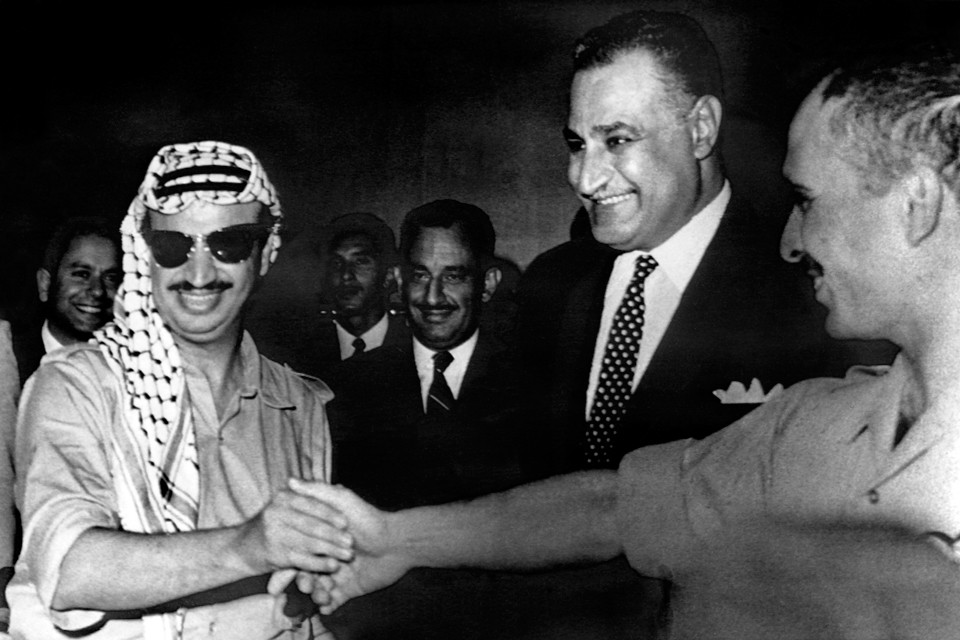
Yasser Arafat (left), Egyptian President Gamal Abdel Nasser (center) and King Hussein of Jordan (right).
palestine_01.jpg
 
Last edited:
Are you trying to make some sort of point? Of course the Palestinians want the liberation of Palestine. Why wouldn't they?
 
All I see is 'Arab homeland', 'Arab Nation' and 'Arab unity' and Palestine being just a small puzzle piece in one large Arab country throughout the whole of ME, the one Arafat was talking about:
 
All I see is 'Arab homeland', 'Arab Nation' and 'Arab unity' and Palestine being just a small puzzle piece in one large Arab country throughout the whole of ME, the one Arafat was talking about:


So what? Palestine was inhabited by Muslim and Christians that believed that a unified Arab state was a good thing. It doesn't mean that they were not Palestinian nationalists. Again, what is your point.
 
All I see is 'Arab homeland', 'Arab Nation' and 'Arab unity' and Palestine being just a small puzzle piece in one large Arab country throughout the whole of ME, the one Arafat was talking about:


So what? Palestine was inhabited by Muslim and Christians that believed that a unified Arab state was a good thing. It doesn't mean that they were not Palestinian nationalists. Again, what is your point.


Actually, it's quite obvious why you don't speak on behalf of Moslems and xtians who occupied the Ottoman controlled land area called Pal'istan.

Quite obviously, those Moslems and xtians didn't think enough of the idea to make any concerted effort toward a unified Arab state.

Have you considered that xtians, being a minority in an Arab state would face the same discrimination and oppression heaped on all minority religions in Arab-Islamist majority nations?

No, of course you never think things through.
 
All I see is 'Arab homeland', 'Arab Nation' and 'Arab unity' and Palestine being just a small puzzle piece in one large Arab country throughout the whole of ME, the one Arafat was talking about:


So what? Palestine was inhabited by Muslim and Christians that believed that a unified Arab state was a good thing. It doesn't mean that they were not Palestinian nationalists. Again, what is your point.


Point? I just present what I learn about the Palestinians and their supporters.
You conclude on Yourself...

Montelatici wrote (post #139)
"Yes, Jerusalem should be 100% Christian. We have the power, why should we allow non-believers to have any authority in Jerusalem? Why do we need to be fair or accommodating? Throw out the troublemakers. Deus Vult."

Why Montelatici 'doesn't 'understand' I wonder?:rolleyes:
 
Last edited:
What's to conclude? That the Palestinians were subjected to colonialism and now occupation? Everyone that's a neutral knows that.
 
Who cares what a parrot thinks, especially when talking for "EVERYONE"...
 
15th post
Will tribalism dominate upcoming Palestinian elections?

Summary:
As electoral lists form in the runup to the local Palestinian elections, various political factions worry that tribal and family loyalties will trump political affiliations.


Hamas' representative to the Central Elections Commission, Sami Abu Zuhri, told Al-Monitor, “Hamas will not take part in local elections through partisan lists in the Gaza Strip and the West Bank. Rather, it will support lists consisting of competent and professional candidates and some family figures. Hamas does not overlook family affiliations in local elections, provided that this factor does not overshadow the candidates’ competence, professionalism and political affiliation. This is because local elections concern local councils in each town, village or city. Family and tribal affiliations are strongly present, but should not be a major criterion in the formation of electoral lists.”

Iyad Qarnaz, Fatah’s representative in the Central Elections Commission, told Al-Monitor, “The tribal affiliations were taken into account during the formation of Fatah’s lists — as tribes consist of a key component of Palestinian society — but not at the expense of competency-related criteria. This is because competencies are important for the furthering of the citizens’ interests, and Fatah is striving to form an electoral list guaranteeing fair representation of all Palestinian social groups. On election day, Fatah members will be voting for those candidates selected by the movement, rather than candidates based on tribal affiliation, in a way that is satisfactory to the families and that serves the people’s interests at the same time.”

Tribes and families have opposed candidates suggested by factions and promoted their own candidates despite their rejection by the parties’ leadership and popular base. Many electoral lists are thus being formed based on familial and tribal factors. In some cases a single family has placed multiple candidates in a single list, and in others, the same family nominated candidates in competing lists to guarantee a win.

Will tribalism dominate upcoming Palestinian elections?
------------------------------------------------------------------------------------

What tribe was Yasser Arafat from?
israel_hussein_arafat_hh_02854418.jpg
 
Again, Hasbara tactics. I said "everyone that's a neutral". You Hasbara types think you are more clever than us gentiles, but that is not the case. Many of us gentiles have been brainwashed, but there are many us that have not. More importantly, many Jews, if not the majority, agree with us.
 
I find it extremely humorous that Zionist Jews complain about tribalism.
 
Again, Hasbara tactics. I said "everyone that's a neutral". You Hasbara types think you are more clever than us gentiles, but that is not the case. Many of us gentiles have been brainwashed, but there are many us that have not. More importantly, many Jews, if not the majority, agree with us.

The Monty speaks "for us", because The Monty says so.
 
Back
Top Bottom