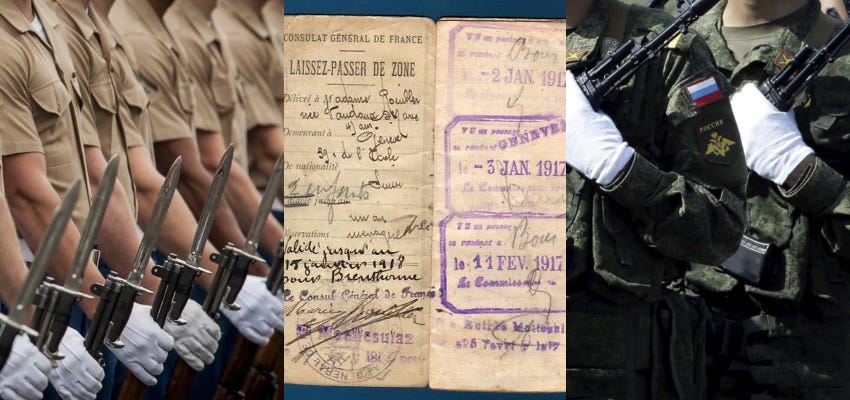
Nothing makes us more sensible of the immense relapse into which the world fell after the First World War than the restrictions on man’s freedom of movement and the diminution of his civil rights.
Before 1914 the earth had belonged to all. People went where they wished and stayed as long as they pleased.
There were no permits, no visas, and it always gives me pleasure to astonish the young by telling them that before 1914 I traveled from Europe to India and to America without passport and without ever having seen one. One embarked and alighted without questioning or being questioned, one did not have to fill out a single one of the many papers which are required today. […]
The world was on the defensive against strangers, everywhere they got short shrift. The humiliations which once had been devised with criminals alone in mind now were imposed upon the traveler, before and during every journey. […]
If I reckon up the many forms I have filled out during these years, declarations on every trip, tax declarations, foreign exchange certificates, border passes, entrance permits, departure permits, registrations on coming and on going; the many hours I have spent in ante-rooms of consulates and officials, the many inspectors, friendly and unfriendly, bored and overworked, before whom I have sat, the many examinations and interrogations at frontiers I have been through, then I feel keenly how much human dignity has been lost in this century which, in our youth, we had credulously dreamed of as one of freedom, as of the federation of the world.
The loss in creative work, in thought, as a result of those spirit-crushing procedures is incalculable. Have not many of us spent more time studying official rules and regulations than works of the intellect!
The first excursion in a foreign country was no longer to a museum or to a world renowned view, but to a consulate, to a police office, to get a “permit.”