Unfortunately, that article a fatal misunderstanding of how evolution functions.
Genetic mutation doesn't happen to adapt fitness to the environment. Genetic mutations are unrelated to the suitability of the organism to survive. Genes have no way of perceiving the requirements of survival in the environment. Genetic mutations are spontaneous and random and are mostly inconsequential to the organism, frequently harmful, and only occasionally useful in adaptability to the environment. When a mutation is useful, that increases the likelihood of it being passed on to future generations.
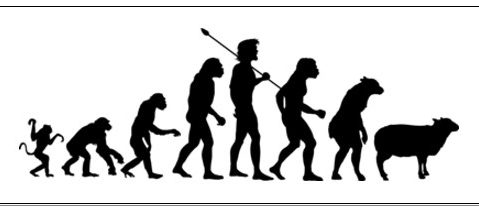
The experiment proves that organisms mutate and that those mutations are passed on. It would be highly unlikely for a major adaptive change to occur -- particularly in the closed and controlled environment of the experiment -- in as few as 70,000 generations. Human evolution happened over 85 million years or 6.5 million generations.
You mean the experiment doesn't understand evolution. The article simply reported on the longest running experiment on evolution ending in failure.
And no, mutations are not beneficial to any organism.
And as I posted in another thread, DNA research shows humans, apes, aardvarks, etc all appeared at the same time, less than 200K years ago according to their timescale.