I wanted to circle back to this again.
"massive target area of the average aircraft carrier"
OK, let's look at that realistically. To start with, an aircraft carrier is not all that "massive". This is somewhere around 200,000 square feet.
There is around 28 million square feet in a square mile.
A Carrier and her support group will in general be spread out over around 10 square miles of ocean. That 280 million square feet.
And once again, you have to add in the almost insane factors like those targets are all moving in almost random directions,
and you can't see them.
Oh, when talking about weapons like the DF-21D things for an attacker would be much simpler, if the Captain of the carrier was stupid enough to be operating his ship 10 miles off the coast and by himself. Then a 10 missile barrage would most likely have a decent chance of hitting the ship.
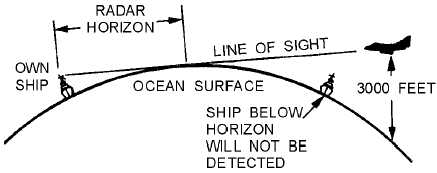
But that is not how the Navy operates. Outside of very selected locations like the Persian Gulf (specifically around the Straight of Hormuz), the carrier is in reality going to be something like 80-100+ miles off shore. If possible it will even be behind some geographical feature like an island so no how powerful the RADAR is there is no way to not only bend it so that it can see beyond the horizon (which they can not do), it also can not see through the island.
That is the biggest reason why such groups operate "over the horizon". Once an object is over the horizon (around 25 miles depending on height of the object), it's simply invisible.
Once again, this is "simple physics". When setting up a RADAR, a lot of care is taken into where we place it. First, always try and place it on the highest ground available. This is why back in the NIKE era it was almost always placed on mountaintops. That negates some of the curvature of the earth and extends the range. But only by a couple of miles, not by 30 miles unless you can somehow find a mountain that is a mile high right on the shoreline.
Then you have the effects of backscatter of the surface and the almost impossible issue of trying to decide which of the moving targets out there is the one you want to attack. I have actually been simplifying a lot of the problems, but another one that is well known is the backscatter of the water itself. For objects on the surface (land or water) it tends to make them "fuzzy" and hard to separate out. Even more so the more you add effects like waves.
But the most effective way to keep surface groups out of danger of anything land based is to simply keep your ships over the horizon. Because it is a simple fact that what you can't see, you can't hit.
And yes, I have talked to Squids about the expected actions of the Navy say if China decided to attack Taiwan. In the early phases of build-up and negotiation, the Navy like would have a Nimitz class carrier sitting between Taiwan and China. But that is only during the "pre-game warm-up" to a war as a show of force. Still over the horizon of China, as a show of force.
But once it got closer to an actual war starting, that carrier group would move to the other side of Taiwan. Leaving an independent Destroyer Group between China and Taiwan for early warning and air defense purposes. Meanwhile, the actual carrier is far to sea behind Taiwan. Invisible both due to distance but the island would be obstructing it.
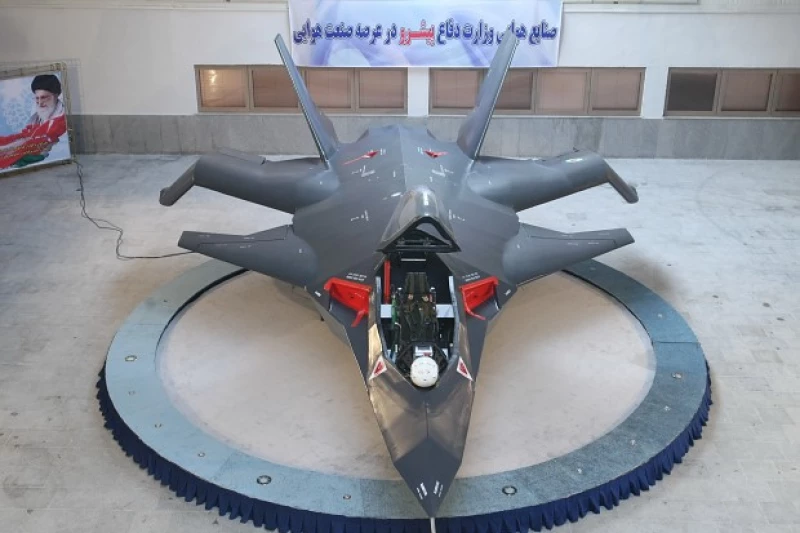
After all, the range of an F-35C is over 1,200 miles. Why in the hell would the carrier be sitting between the island and mainland? It would not, even during WWII our carriers did not sit right off the shore and launch their aircraft against islands the Marines were storming. That was where the Battleships and Cruisers were. The Carriers were 50 miles or so off-shore, well out of the range of any kinds of weapons that could possibly be used against them.