If I were smart enough to build a weapon that could annihilate the world, I would keep it to myself. Evil leftwingers always manage to steal these things. Same with big piles of money.Ironically, the most horrific weapon we have yet invented became the instrument of peace. No nuclear armed country dares use it, knowing they will be turned to glass in minutes.
Navigation
Install the app
How to install the app on iOS
Follow along with the video below to see how to install our site as a web app on your home screen.
Note: This feature may not be available in some browsers.
More options
Style variation
You are using an out of date browser. It may not display this or other websites correctly.
You should upgrade or use an alternative browser.
You should upgrade or use an alternative browser.
Happy Hiroshima Day!
- Thread starter Weatherman2020
- Start date

Weatherman2020
Diamond Member
- Thread starter
- #462
You made my point for me.Silly. The Japanese were a first world nation at the time. They weren’t goat herders and living in caves. They had massive cities with first world infrastructure.
Again, we need to understand history.
And no, the Japanese were not starving in August 45.
Jarlaxle
Gold Member
"Admiral William Leahy, White House chief of staff and chairman of the Joint Chiefs of Staff during the war. Leahy wrote in his 1950 memoirs that "the use of this barbarous weapon at Hiroshima and Nagasaki was of no material assistance in our war against Japan. The Japanese were already defeated and ready to surrender." Moreover, Leahy continued, "in being the first to use it, we had adopted an ethical standard common to the barbarians of the Dark Ages. I was not taught to make war in that fashion, and wars cannot be won by destroying women and children."
That is bullshit. Even after two atomic bombs, surrendering damn near got Hirohito assassinated!
Part of the reason for the A bomb is that Europe was closer to Great Britain....so they could carpet-bomb Germany.
Carpet-bombing Japan would be a much more difficult premise....so they needed something to do the job with just a couple of aircraft.
Bullshit. B-29s carrying incendiaries had nearly leveled most cities in Japan.
Jarlaxle
Gold Member
All heinous acts and all war crimes,for which no one has been prosecuted.
Bullshit. By the standards of 1945, both cities were valid targets. The only war crime is losing.
the plan was to use bamboo spears and to human wave attack the invasion beaches
True, though children as young as nine were also being trained as suicide bombers.
Jarlaxle
Gold Member
Yeah and you think they could have beaten the US military. Lol.
Stop listening to those voices in your head. Nobody but you has claimed that.
we did not ask for the Emperor ever. Our terms never said he had to leave,
He should have been dragged from his palace, knelt down, and shot.
Yes it did. The Japanese feared the USG would hang the emperor in front of the palace.
Which is exactly what should have been done, though simply shooting him would have been easier.

Unkotare
Diamond Member
- Aug 16, 2011
- 147,005
- 33,371
- 2,180
.Are American values determined by the actions of other nations? Is that what you think?
Unkotare
Diamond Member
- Aug 16, 2011
- 147,005
- 33,371
- 2,180
."1950s[edit]
- 1957: Prime Minister Kishi Nobusuke said to the people of Burma: "We view with deep regret the vexation we caused to the people of Burma in the war just passed. In a desire to atone, if only partially, for the pain suffered, Japan is prepared to meet fully and with goodwill its obligations for war reparations. The Japan of today is not the Japan of the past, but, as its Constitution indicates, is a peace-loving nation."[6]
- 1957: Prime Minister Kishi Nobusuke said to the people of Australia: "It is my official duty, and my personal desire, to express to you and through you to the people of Australia, our heartfelt sorrow for what occurred in the war."[7]
1960s[edit]
- June 22, 1965: Minister of Foreign Affairs Shiina Etsusaburo said to the people of South Korea: "In our two countries' long history there have been unfortunate times, it is truly regrettable and we are deeply remorseful" (Signing of the Treaty on Basic Relations between Japan and South Korea).
1970s[edit]
- September 29, 1972: Prime Minister Kakuei Tanaka said to the people of the People's Republic of China: "The Japanese side is keenly conscious of the responsibility for the serious damage that Japan caused in the past to the Chinese people through war, and deeply reproaches itself. Further, the Japanese side reaffirms its position that it intends to realize the normalization of relations between the two countries from the stand of fully understanding 'the three principles for the restoration of relations' put forward by the Government of the People's Republic of China. The Chinese side expresses its welcome for this" (Joint Communique of the Government of Japan and the Government of the People's Republic of China).[8]
1980s[edit]
- August 24, 1982: Prime Minister Zenkō Suzuki said: "I am painfully aware of Japan's responsibility for inflicting serious damages [on Asian nations] during the past war." "We need to recognize that there are criticisms that condemn [Japan's occupation] as invasion" (Press Conference on the textbook controversy).[9]
- August 26, 1982: Chief Cabinet Secretary Kiichi Miyazawa said to the people of the Republic of Korea: "1. The Japanese Government and the Japanese people are deeply aware of the fact that acts by our country in the past caused tremendous suffering and damage to the peoples of Asian countries, including the Republic of Korea (ROK) and China, and have followed the path of a pacifist state with remorse and determination that such acts must never be repeated. Japan has recognized, in the Japan-ROK Joint Communique, of 1965, that the 'past relations are regrettable, and Japan feels deep remorse,' and in the Japan-China Joint Communique, that Japan is 'keenly conscious of the responsibility for the serious damage that Japan caused in the past to the Chinese people through war and deeply reproaches itself.' These statements confirm Japan's remorse and determination which I stated above and this recognition has not changed at all to this day. 2. This spirit in the Japan-ROK Joint Communique, and the Japan-China Joint Communique, naturally should also be respected in Japan's school education and textbook authorization.
- September 6, 1984: Emperor Hirohito said to President Chun Doo Hwan: "It is indeed regrettable that there was an unfortunate past between us for a period in this century and I believe that it should not be repeated again." (Meeting with President Chun Doo Hwan.)[10]
- September 7, 1984: Prime Minister Yasuhiro Nakasone said: "There was a period in this century when Japan brought to bear great sufferings upon your country and its people. I would like to state here that the government and people of Japan feel a deep regret for this error."[11]
- October 23, 1985: Prime Minister Yasuhiro Nakasone, in a speech to the United Nations, said: "On June 6, 1945, when the UN Charter was signed in San Francisco, Japan was still fighting a senseless war with 40 nations. Since the end of the war, Japan has profoundly regretted the unleashing of rampant ultra nationalism and militarism and the war that brought great devastation to the people of many countries around the world and to our country as well" (Speech to the United Nations).
- 1989: Prime Minister Takeshita Noboru, in a speech in the Japanese Diet, said: "As we have made clear previously at repeated opportunities, the Japanese government and the Japanese people are deeply conscious of the fact that the actions of our country in the past caused suffering and loss to many people in neighboring countries. Starting from our regret and resolve not to repeat such things a second time, we have followed a course as a "Peace Nation" since then. This awareness and regret should be emphasized especially in the relationship between our countries and the Korean Peninsula, our nearest neighbors both geographically and historically. At this opportunity as we face a new situation in the Korean Peninsula, again, to all peoples of the globe, concerning the relationship of the past, we want to express our deep regret and sorrow" (Speech in the Japanese Diet).
1990s[edit]
- April 18, 1990: Minister of Foreign Affairs Taro Nakayama said to the people of South Korea: "Japan is deeply sorry for the tragedy in which these (Korean) people were moved to Sakhalin not of their own free will but by the design of the Japanese government and had to remain there after the conclusion of the war" (188th National Diet Session Lower House Committee of Foreign Affairs).[12]
- May 24, 1990: Emperor Akihito, in a meeting with South Korean President Roh Tae Woo, said: "Reflecting upon the suffering that your people underwent during this unfortunate period, which was brought about by our nation, I cannot but feel the deepest remorse" (Meeting with President Roh Tae Woo).[13]
- May 25, 1990: Prime Minister Toshiki Kaifu, in a meeting with President Roh Tae Woo, said: "I would like to take the opportunity here to humbly reflect upon how the people of the Korean Peninsula went through unbearable pain and sorrow as a result of our country's actions during a certain period in the past and to express that we are sorry" (Summit meeting with President Roh Tae Woo in Japan).[14]
- January 1, 1992: Prime Minister Kiichi Miyazawa, in a press conference, said: "Concerning the comfort women, I apologize from the bottom of my heart and feel remorse for those people who suffered indescribable hardships".
- January 16, 1992: Prime Minister Kiichi Miyazawa, in a speech at dinner with President Roh Tae Woo, said: "We the Japanese people, first and foremost, have to bear in our mind the fact that your people experienced unbearable suffering and sorrow during a certain period in the past because of our nation's act, and never forget the feeling of remorse. I, as a prime minister, would like to once again express a heartfelt remorse and apology to the people of your nation".[15]
- January 17, 1992: Prime Minister Kiichi Miyazawa, at a policy speech on a visit to South Korea, said:. "What we should not forget about relationship between our nation and your nation is a fact that there was a certain period in the thousands of years of our company when we were the victimizer and you were the victim. I would like to once again express a heartfelt remorse and apology for the unbearable suffering and sorrow that you experienced during this period because of our nation's act." Recently the issue of the so-called 'wartime comfort women' is being brought up. I think that incidents like this are seriously heartbreaking, and I am truly sorry".[16]
- July 6, 1992. Chief Cabinet Secretary Koichi Kato said: "The Government again would like to express its sincere apology and remorse to all those who have suffered indescribable hardship as so-called 'wartime comfort women,' irrespective of their nationality or place of birth. With profound remorse and determination that such a mistake must never be repeated, Japan will maintain its stance as a pacifist nation and will endeavor to build up new future-oriented relations with the Republic of Korea and with other countries and regions in Asia. As I listen to many people, I feel truly grieved for this issue. By listening to the opinions of people from various directions, I would like to consider sincerely in what way we can express our feelings to those who suffered such hardship" (Statement by Chief Cabinet Secretary Koichi Kato on the Issue of the so-called "Wartime Comfort Women" from the Korean Peninsula).[17]
- August 4, 1993: Chief Cabinet Secretary Yōhei Kōno said: "Undeniably, this was an act, with the involvement of the military authorities of the day, that severely injured the honor and dignity of many women. The Government of Japan would like to take this opportunity once again to extend its sincere apologies and remorse to all those, irrespective of place of origin, who suffered immeasurable pain and incurable physical and psychological wounds as comfort women" (Statement by the Chief Cabinet Secretary Yohei Kono on the result of the study on the issue of "comfort women"),[18]
- August 11, 1993: Prime Minister Morihiro Hosokawa, at the first press conference after his inauguration, said: "I myself believe it was a war of aggression, a war that was wrong".[19]
- August 23, 1993: Prime Minister Morihiro Hosokawa said in a speech at the 127th National Diet Session: "After 48 years from then, our nation has become one of nations that enjoy prosperity and peace. We must not forget that it is founded on the ultimate sacrifices in the last war, and a product of the achievements of the people of the previous generations. We would like to take this opportunity to clearly express our remorse for the past and a new determination to the world. Firstly at this occasion, we would like to express our deep remorse and apology for the fact that invasion and colonial rule by our nation in the past brought to bear great sufferings and sorrow upon many people" .[20]
- September 24, 1993: Prime Minister Morihiro Hosokawa said, at the 128th National Diet Session:. "I used the expression war of aggression and act of aggression to express honestly my recognition which is the same as the one that the act of our nation in the past brought to bear unbearable sufferings and sorrow upon many people, and to express once again deep remorse and apology".[21]
- August 31, 1994: Prime Minister Tomiichi Murayama said in a speech: "Japan's actions in a certain period of the past not only claimed numerous victims here in Japan but also left the peoples of neighboring Asia and elsewhere with scars that are painful even today. I am thus taking this opportunity to state my belief, based on my profound remorse for these acts of aggression, colonial rule, and the like caused such unbearable suffering and sorrow for so many people, that Japan's future path should be one of making every effort to build world peace in line with my no-war commitment. It is imperative for us Japanese to look squarely to our history with the peoples of neighboring Asia and elsewhere. Only with solid basis of mutual understanding and confidence that can be built through overcoming the pain on both sides, can we and the peoples of neighboring countries together clear up the future of Asia-Pacific.... On the issue of wartime 'comfort women,' which seriously stained the honor and dignity of many women, I would like to take this opportunity once again to express my profound and sincere remorse and apologies. With regard to this issue as well, I believe that one way of demonstrating such feelings of apologies and remorse is to work to further promote mutual understanding with the countries and areas concerned as well as to face squarely to the past and ensure that it is rightly conveyed to future generations. This initiative, in this sense, has been drawn up consistent with such belief" (Statement by Prime Minister Tomiichi Murayama on the "Peace, Friendship, and Exchange Initiative").[22]
- June 9, 1995: House of Representatives, National Diet of Japan passed a resolution stating: "On the occasion of the 50th anniversary of the end of World War II, this House offers its sincere condolences to those who fell in action and victims of wars and similar actions all over the world. Solemnly reflecting upon many instances of colonial rule and acts of aggression in the modern history of the world, and recognizing that Japan carried out those acts in the past, inflicting pain and suffering upon the peoples of other countries, especially in Asia, the Members of this House express a sense of deep remorse" (Resolution to renew the determination for peace on the basis of lessons learned from history).[23]
- July 1995: Prime Minister Tomiichi Murayama said in a statement: "The problem of the so-called wartime comfort women is one such scar, which, with the involvement of the Japanese military forces of the time, seriously stained the honor and dignity of many women. This is entirely inexcusable. I offer my profound apology to all those who, as wartime comfort women, suffered emotional and physical wounds that can never be closed" (Statement by Prime Minister Tomiichi Murayama on the occasion of the establishment of the "Asian Women's Fund").[24]
- August 15, 1995: Prime Minister Tomiichi Murayama said in a statement: "During a certain period in the not-too-distant past, Japan, through its colonial rule and aggression, caused tremendous damage and suffering to the people of many countries, particularly those of Asia. In the hope that no such mistake will be made in the future, I regard, in a spirit of humanity, these irrefutable facts of history, and express here once again my feelings of deep remorse and state my heartfelt apology" (Statement by Prime Minister Tomiichi Murayama 'On the occasion of the 50th anniversary of the war's end').[25]
- June 23, 1996: Prime Minister Ryutaro Hashimoto said in a press conference: "Hashimoto mentioned the aspects of Japan's colonial rule of the Korean Peninsula such as the forced Japanization of Korean people's name and commented "It is beyond imagination how this injured the hearts of Korean people". Hashimoto also touched on the issue of Korean comfort women and said "Nothing injured the honor and dignity of women more than this and I would like to extend words of deep remorse and the heartfelt apology" (Joint press conference at summit meeting with President Kim Young Sam in South Korea).[26]
- October 8, 1996: Emperor Akihito said in a speech at a dinner with the South Korean president, Kim Dae Jung: "There was a period when our nation brought to bear great sufferings upon the people of the Korean Peninsula." "The deep sorrow that I feel over this will never be forgotten".[27]
- January 13, 1998: Press Secretary published: "Statement by Prime Minister Ryutaro Hashimoto on World War II prisoners of war. Q: At the meeting last night with Prime Minister Blair, did Prime Minister Hashimoto really apologize for the prisoners of war. Spokesman Hashimoto: The important thing is that the Prime Minister of Japan expressed the feelings of deep remorse and stated heartfelt apologies to the people who suffered in World War II directly to the Prime Minister of the United Kingdom. This was the second meeting between Prime Minister Hashimoto and Prime Minister Blair and we considered the meeting very important, especially this year. Making use of this opportunity, Prime Minister Hashimoto expressed his remorse and apology on behalf of the Government of Japan; this is very important. Prime Minister Blair fully understands the importance of the statement made by Prime Minister Hashimoto on this issue. His press opportunities after the talks objectively reflect what the two gentlemen talked about" (Press Conference by the Press Secretary).[28] In a follow-up interview, spokesman Tanaka for Prime Minister Hashimoto clarified that "Our sense of apology and our sense of remorse was addressed to all the countries which have gone through the experiences of the last world war."[29]
- July 15, 1998: Prime Minister Ryutaro Hashimoto, in a letter to the Netherlands Prime Minister Willem Kok: "The Government of Japan, painfully aware of its moral responsibility concerning the issue of so-called "wartime comfort women," has been sincerely addressing this issue in close cooperation with the Asian Women's Fund which implements the projects to express the national atonement on this issue. Recognizing that the issue of comfort women, with an involvement of the Japanese military authorities at that time, was a grave affront to the honor and dignity of large numbers of women, I would like to convey to Your Excellency my most sincere apologies and remorse to all the women who underwent immeasurable and painful experiences and suffered incurable physical and psychological wounds as comfort women.... By the Statement of Prime Minister in 1995, the Government of Japan renewed the feelings of deep remorse and the heartfelt apology for tremendous damage and suffering caused by Japan to the people of many countries including the Netherlands during a certain period in the past. My cabinet has not modified this position at all, and I myself laid a wreath to the Indisch Monument with these feelings on the occasion of my visit to the Netherlands in June last year" (The contents of the letter of the then Japanese Prime Minister Ryutaro Hashimoto sent to ).[30]
- October 8, 1998: Prime Minister Keizō Obuchi said in a declaration: "Looking back on the relations between Japan and the Republic of Korea during this century, Prime Minister Obuchi regarded in a spirit of humility the fact of history that Japan caused, during a certain period in the past, tremendous damage and suffering to the people of the Republic of Korea through its colonial rule, and expressed his deep remorse and heartfelt apology for this fact. President Kim accepted with sincerity this statement of Prime Minister Obuchi's recognition of history and expressed his appreciation for it. He also expressed his view that the present calls upon both countries to overcome their unfortunate history and to build a future-oriented relationship based on reconciliation as well as good-neighborly and friendly cooperation" (Japan-South Korea Joint Declaration A New Japan-South Korea Partnership towards the Twenty-first Century).[31]
- November 26, 1998: Prime Minister Keizō Obuchi said in a declaration: "Both sides believe that squarely facing the past and correctly understanding history are the important foundation for further developing relations between Japan and China. The Japanese side observes the 1972 Joint Communique of the Government of Japan and the Government of the People's Republic of China and the August 15, 1995, Statement by former Prime Minister Tomiichi Murayama. The Japanese side is keenly conscious of the responsibility for the serious distress and damage that Japan caused to the Chinese people through its aggression against China during a certain period in the past and expressed deep remorse for this. The Chinese side hopes that the Japanese side will learn lessons from the history and adhere to the path of peace and development. Based on this, both sides will develop long-standing relations of friendship" (Japan-China Joint Declaration On Building a Partnership of Friendship and Cooperation for Peace and Development).[32]
2000s[edit]
- August 10, 2000: Consul-General of Japan in Hong Kong Itaru Umezu said: "In fact, Japan has clearly and repeatedly expressed its sincere remorse and apologies, and has dealt sincerely with reparation issues. These apologies were irrefutably expressed, in particular in Prime Minister Tomiichi Murayama's official statement in 1995, which was based on a cabinet decision and which has subsequently been upheld by successive prime ministers, including Prime Minister Yoshirō Mori. Mr. Murayama said that Japan 'through its colonial rule and aggression, caused tremendous damage and suffering to the people of many countries, particularly to those of Asian nations. In the hope that no such mistake be made in the future, I regard, in a spirit of humility, these irrefutable facts of history, and express here once again my feelings of deep remorse and state my heartfelt apology'" (Japan Has Faced Its Past. Far Eastern Economic Review, August 10, 2000).[33]
- August 30, 2000: Minister for Foreign Affairs Yōhei Kōno said in an address during his visit to the People's Republic of China: "I believe that Japan's perception of history was clearly set out in the Statement by Prime Minister Tomiichi Murayama issued, following a Cabinet Decision, on the fiftieth anniversary of the end of World War II. As a member of the Cabinet, I participated in the drafting of that Statement. The spirit contained therein has been carried forth by successive administrations and is now the common view of the large number of Japanese people" (Address by Minister for Foreign Affairs Yōhei Kōno During His Visit to the People's Republic of China).[34]
- April 3, 2001: Chief Cabinet Secretary Yasuo Fukuda said: "Japan humbly accepts that for a period in the not too distant past, it caused tremendous damage and suffering to the people of many countries, particularly to those of Asian nations, through its colonial rule and aggression, and expresses its deep remorse and heartfelt apology for this. Such recognition has been succeeded by subsequent Cabinets and there is no change regarding this point in the present Cabinet" (Comments by the Chief Cabinet Secretary, Yasuo Fukuda on the history textbooks to be used in junior high schools from 2002).[35]
- September 8, 2001: Minister for Foreign Affairs Makiko Tanaka said in a speech: "We have never forgotten that Japan caused tremendous damage and suffering to the people of many countries during the last war. Many lost their precious lives and many were wounded. The war has left an incurable scar on many people, including former prisoners of war. Facing these facts of history in a spirit of humility, I reaffirm today our feelings of deep remorse and heartfelt apology expressed in the Prime Minister Murayama's statement of 1995" (Speech by Minister for Foreign Affairs Makiko Tanaka at the Ceremony in Commemoration of 50th anniversary of the Signing of the San Francisco Peace Treaty).[36]
- October 15, 2001: Prime Minister Junichiro Koizumi said: "During the talks, President Kim highly appreciated the words of the Prime Minister Koizumi at Sodaemun Independence Park, in which he expressed remorse and apology for Japan's colonial domination" (Japanese prime minister visits South Korea).[37]
- 2001: Prime Minister Junichiro Koizumi (Also signed by all the prime ministers since 1995, including Ryutaro Hashimoto, Keizō Obuchi, Yoshirō Mori) said in a letter: "As Prime Minister of Japan, I thus extend anew my most sincere apologies and remorse to all the women who underwent immeasurable and painful experiences and suffered incurable physical and psychological wounds as comfort women. We must not evade the weight of the past, nor should we evade our responsibilities for the future. I believe that our country, painfully aware of its moral responsibilities, with feelings of apology and remorse, should face up squarely to its past history and accurately convey it to future generations" (Letter from Prime Minister Junichiro Koizumi to the former comfort women).[38]
- September 17, 2002: Prime Minister Junichiro Koizumi said: "The Japanese side regards, in a spirit of humility, the facts of history that Japan caused tremendous damage and suffering to the people of Korea through its colonial rule in the past, and expressed deep remorse and heartfelt apology" (Japan-DPRK Pyongyang Declaration).[39]
- August 15, 2003: Prime Minister Junichiro Koizumi said: "During the war, Japan caused tremendous damage and suffering to the people of many countries, particularly to those of Asian nations. On behalf of the people of Japan, I hereby renew my feelings of profound remorse as I express my sincere mourning to the victims" (Address by Prime Minister Junichiro Koizumi at the 58th Memorial Ceremony for the War Dead).[40]
- April 22, 2005: Prime Minister Junichiro Koizumi said: "Japan squarely faces these facts of history in a spirit of humility. And with feelings of deep remorse and heartfelt apology always engraved in mind, Japan has resolutely maintained, consistently since the end of World War II, never turning into a military power but an economic power, its principle of resolving all matters by peaceful means, without recourse to use of force. Japan once again states its resolve to contribute to the peace and prosperity of the world in the future as well, prizing the relationship of trust it enjoys with the nations of the world." (Address by the Prime Minister of Japan at the Asia-African Summit 2005).[41]
- August 15, 2005: Prime Minister Junichiro Koizumi said: "In the past, Japan, through its colonial rule and aggression, caused tremendous damage and suffering to the people of many countries, particularly to those of Asian nations. Sincerely facing these facts of history, I once again express my feelings of deep remorse and heartfelt apology, and also express the feelings of mourning for all victims, both at home and abroad, in the war. I am determined not to allow the lessons of that horrible war to erode, and to contribute to the peace and prosperity of the world without ever again waging a war."[42]
- March 1, 2007: Prime Minister Shinzō Abe stated in a newspaper article that there was no evidence that the Japanese government had kept sex slaves, even though the Japanese government had already admitted the use of brothels in 1993. On March 27, the Japanese parliament issued an official apology.[43] This was regarding the surviving comfort women who had demanded an apology from the Japanese government for being used as sex slaves.
- May 9, 2009: The Japanese government, through its ambassador in the U.S., apologized to former American prisoners of war who suffered in the Bataan Death March.[44]
2010s[edit]
- February 11, 2010: Foreign Minister Katsuya Okada said: "I believe what happened 100 years ago deprived Koreans of their country and national pride. I can understand the feelings of the people who lost their country and had their pride wounded," Okada said during a joint news conference with South Korean Foreign Minister Yu Myung-hwan. (This was a statement marking the 100th anniversary of Japan's colonial annexation of Korea, and not in reference to Japan's war acts in particular.)[45]
- August 10, 2010: Prime Minister Naoto Kan expressed "deep regret over the suffering inflicted" during the Empire of Japan's colonial rule over Korea. Japan's Kyodo News also reported that Cabinet members endorsed the statement. In addition, Kan said that Japan will hand over precious cultural artifacts that South Korea has been demanding. Among them were records of an ancient Korean royal dynasty.[46]
- September 13, 2010: Foreign Minister Katsuya Okada apologized to a group of six former American soldiers who during World War II were held as prisoners of war by the Japanese, including 90-year-old Lester Tenney, a survivor of the Bataan Death March in 1942. The six and their families and the families of two deceased soldiers were invited to visit Japan at the expense of the Japanese government in a program that will see more American former prisoners of war and former prisoners of war from other countries visit Japan in the future.[47]
- December 7, 2010: Prime Minister Naoto Kan apologized for Korea's suffering under colonization as part of a statement marking the 100th anniversary of the annexation in 1910. "I express a renewed feeling of deep remorse and state my heartfelt apology for the tremendous damage and suffering caused by colonial rule," Kan said. Kan said Japan colonized Korea "against the will of the Korean people" who suffered great damage to their national pride and loss of culture and sovereignty as a result and added that he wants to take an honest look at his country's past with the courage and humility to address its history.[48]
- March 3, 2011: Foreign Minister Seiji Maehara apologized to a group of Australian POWs visiting Japan as guests of the Government of Japan for the ill-treatment they received while in Imperial Japanese captivity.[49]
- December 8, 2011: Parliamentary Vice Minister for Foreign Affairs Toshiyuki Kat apologized to Canada for their treatment of Canadian POW's after the Battle of Hong Kong.[50]
- November 13, 2013: Former Japanese Prime Minister Hatoyama Yukio offered personal apology for Japan's wartime crimes, especially the Nanking Massacre, "As a Japanese citizen, I feel that it's my duty to apologise for even just one Chinese civilian killed brutally by Japanese soldiers and that such action cannot be excused by saying that it occurred during war."[51]
- April 9, 2014: Japanese Ambassador to the Philippines Toshinao Urabe expressed "heartfelt apology" and "deep remorse" and vowed "never to wage war again" at the Day of Valor ceremony in Bataan.[52]
- April 29, 2015: Prime Minister Shinzō Abe, during the first speech of a Japanese prime minister at a Joint session of the United States Congress, stated "deep repentance" for Japan's actions during World War II.[53]
- December 28, 2015: Japanese Foreign Minister Fumio Kishida and South Korean Foreign Minister Yun Byung-se made an announcement at a joint press conference, which consisted of their respective statements on behalf of Japan and South Korea. Kishida stated, "The issue of comfort women, with an involvement of the Japanese military authorities at that time, was a grave affront to the honor and dignity of large numbers of women, and the Government of Japan is painfully aware of responsibilities from this perspective. As Prime Minister of Japan, Prime Minister Abe expresses anew his most sincere apologies and remorse to all the women who underwent immeasurable and painful experiences and suffered incurable physical and psychological wounds as comfort women." The statement went on to explain that "the Government of Japan will now take measures to heal psychological wounds of all former comfort women through its budget" and that it had been decided that the South Korean government would "establish a foundation for the purpose of providing support for the former comfort women". In return, Yun stated that his government "acknowledges the fact that the Government of Japan is concerned about the statue built in front of the Embassy of Japan in Seoul from the viewpoint of preventing any disturbance of the peace of the mission or impairment of its dignity, and will strive to solve this issue in an appropriate manner". Both stated that this agreement will "finally and irreversibly" resolve the contentious issue and that "on the premise that the Government of Japan will steadily implement the measures it announced", both countries "will refrain from accusing or criticizing each other regarding this issue in the international community, including at the United Nations".[54]
2020s[edit]
- August 15, 2020: At a memorial ceremony to mark the 75th anniversary of the end of World War II and the war dead, Emperor Naruhito expressed "deep remorse" over Japan's wartime past and he stated “I earnestly hope that the ravages of war will never again be repeated”.[55]
Comments clarifying past apologies[edit]
- September 6, 1997: Prime Minister Ryutaro Hashimoto said: "In 1995, on the 50th anniversary of the end of World War II, the Government of Japan expressed its resolution through the statement by the Prime Minister, which states that during a certain period in the past, Japan's conduct caused tremendous damage and suffering to the people of many countries, including China, and the Prime Minister expressed his feeling of deep remorse and stated his heartfelt apology, while giving his word to make efforts for peace. I myself was one of the ministers who was involved in drafting this statement. I would like to repeat that this is the official position of the Government of Japan. During the summit meeting that I had during my visit to China, I have made this point very clear in a frank manner to the Chinese side. Premier Li Peng said that he concurs completely with my remarks" (Ministry of Foreign Affairs Press Conference on: Visit of Prime Minister Ryutaro Hashimoto to the People's Republic of China).[56]
- Letter from Prime Minister Junichiro Koizumi to the former comfort women
- October 18, 2013: Prime Minister Shinzō Abe said: "Japan inflicted tremendous damage and suffering on people in many countries, especially in Asia. The Abe Cabinet will take the same stance as that of past Cabinets."[57]"
List of war apology statements issued by Japan - Wikipedia
en.wikipedia.org

Mushroom
Gold Member
America bombed the hell out of both Japanese and German cities full of women and children during WW2.
And Germany and Japan did the exact same thing. In fact, many that Japan attacked were not even military targets at all, it was to instill terror in the population (mostly in China). Of course both nations also used chemical weapons on civilians, and routinely slaughtered millions just for the hell of it.
At least Hiroshima and Nagasaki were legitimate military targets.
Mushroom
Gold Member
Carpet-bombing Japan would be a much more difficult premise
That was actually already being done. Several of the conventional attacks prior to Hiroshima killed even more than that did.
However, because of distance that was much more risky than it was over Europe. The changes of surviving a crash over Europe were much higher than if the same thing happened over the Pacific Ocean.

JoeB131
Diamond Member
Other than having a number of friends who were there preparing for the invasion and talking with my best friends dad who was an Imperial Japanese Army officer preparing the defense of the homeland and a WW2 historian (European theater more for disclosure) what am I missing?
Japan had zero intention of surrendering until the 2nd bomb.
How did any of those people know what the Japanese Government was trying to do?
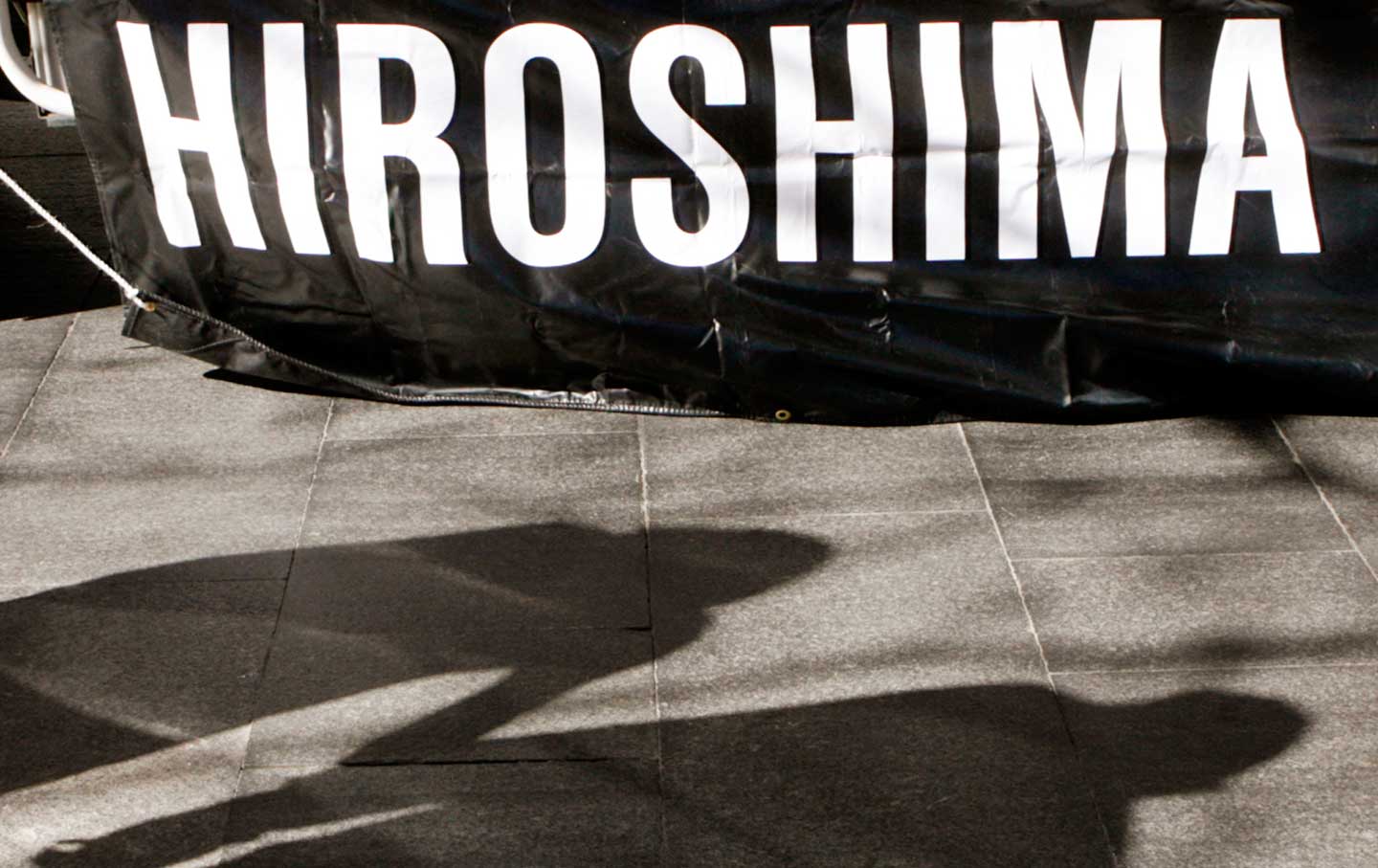
The War Was Won Before Hiroshima—and the Generals Who Dropped the Bomb Knew It
Seventy years after the bombing, will Americans face the brutal truth?
 www.thenation.com
Indeed, it would have been surprising if they had: Despite the terrible concentrated power of atomic weapons, the firebombing of Tokyo earlier in 1945 and the destruction of numerous Japanese cities by conventional bombing killed far more people. The Navy Museum acknowledges what many historians have long known: It was only with the entry of the Soviet Union’s Red Army into the war two days after the bombing of Hiroshima that the Japanese moved to finally surrender. Japan was used to losing cities to American bombing; what their military leaders feared more was the destruction of the country’s military by an all-out Red Army assault.
The record is quite clear: From the perspective of an overwhelming number of key contemporary leaders in the US military, the dropping of atomic bombs on Hiroshima and Nagasaki was not a matter of military necessity. American intelligence had broken the Japanese codes, knew the Japanese government was trying to negotiate surrender through Moscow, and had long advised that the expected early August Russian declaration of war, along with assurances that Japan’s emperor would be allowed to stay as a figurehead, would bring surrender long before the first step in a November US invasion could begin.
Weatherman2020
Diamond Member
- Thread starter
- #471
The Soviet land grab? Soviets had a tiny force in the East and took an undefended island. Soviets were all in the West, a months journey away.How did any of those people know what the Japanese Government was trying to do?
The War Was Won Before Hiroshima—and the Generals Who Dropped the Bomb Knew It
Seventy years after the bombing, will Americans face the brutal truth?
Indeed, it would have been surprising if they had: Despite the terrible concentrated power of atomic weapons, the firebombing of Tokyo earlier in 1945 and the destruction of numerous Japanese cities by conventional bombing killed far more people. The Navy Museum acknowledges what many historians have long known: It was only with the entry of the Soviet Union’s Red Army into the war two days after the bombing of Hiroshima that the Japanese moved to finally surrender. Japan was used to losing cities to American bombing; what their military leaders feared more was the destruction of the country’s military by an all-out Red Army assault.
The record is quite clear: From the perspective of an overwhelming number of key contemporary leaders in the US military, the dropping of atomic bombs on Hiroshima and Nagasaki was not a matter of military necessity. American intelligence had broken the Japanese codes, knew the Japanese government was trying to negotiate surrender through Moscow, and had long advised that the expected early August Russian declaration of war, along with assurances that Japan’s emperor would be allowed to stay as a figurehead, would bring surrender long before the first step in a November US invasion could begin.
Weatherman2020
Diamond Member
- Thread starter
- #472
US spent much of our money rebuilding Japan after the war. How much has Japan spent rebuilding China, Philippines, Indonesia, Korea, etc?

gipper
Diamond Member
- Jan 8, 2011
- 81,481
- 45,383
- 2,605
Pay attention to your superior officers, grunt. Or court martial for you and life at Leavenworth.That was actually already being done. Several of the conventional attacks prior to Hiroshima killed even more than that did.
However, because of distance that was much more risky than it was over Europe. The changes of surviving a crash over Europe were much higher than if the same thing happened over the Pacific Ocean.
Listen to what these idiots had to say. lol
“The use of this barbarous weapon…was of no material assistance in our war against Japan.” —Adm. William Leahy, Truman's Chief of Staff
“It was a mistake.... [the scientists] had this toy and they wanted to try it out, so they dropped it.” —Adm. William “Bull” Halsey
“the Japanese position was hopeless even before the first atomic bomb fell, because the Japanese had lost control of their own air.” -US Army Air Forces, General Henry “Hap” Arnold
“It wasn’t necessary to hit them with that awful thing.” Ike…ever heard of him?
“the atomic bomb had nothing to do with the end of the war at all.” -Maj. Gen. Curtis LeMay
Weatherman2020
Diamond Member
- Thread starter
- #474
Yea, I too prefer firebombing people.Pay attention to your superior officers, grunt. Or court martial for you and life at Leavenworth.
Listen to what these idiots had to say. lol
“The use of this barbarous weapon…was of no material assistance in our war against Japan.” —Adm. William Leahy, Truman's Chief of Staff
“It was a mistake.... [the scientists] had this toy and they wanted to try it out, so they dropped it.” —Adm. William “Bull” Halsey
“the Japanese position was hopeless even before the first atomic bomb fell, because the Japanese had lost control of their own air.” -US Army Air Forces, General Henry “Hap” Arnold
“It wasn’t necessary to hit them with that awful thing.” Ike…ever heard of him?
“the atomic bomb had nothing to do with the end of the war at all.” -Maj. Gen. Curtis LeMay
gipper
Diamond Member
- Jan 8, 2011
- 81,481
- 45,383
- 2,605
I‘m certain you do and the more babies burned up, the happier you are.Yea, I too prefer firebombing people.
View attachment 679244
Weatherman2020
Diamond Member
- Thread starter
- #476
Moral of the story:I‘m certain you do and the more babies burned up, the happier you are.
Don’t f*k with Americans.
gipper
Diamond Member
- Jan 8, 2011
- 81,481
- 45,383
- 2,605
Yeah because they have no problem committing war crimes and telling their dumb citizens (like you) it was necessary.Moral of the story:
Don’t f*k with Americans.
Weatherman2020
Diamond Member
- Thread starter
- #478
Did Japan surrender before or after we nuked them?Yeah because they have no problem committing war crimes and telling their dumb citizens (like you) it was necessary.
Unkotare
Diamond Member
- Aug 16, 2011
- 147,005
- 33,371
- 2,180
Billions.US spent much of our money rebuilding Japan after the war. How much has Japan spent rebuilding China, Philippines, Indonesia, Korea, etc?

BackAgain
Neutronium Member & truth speaker #StopBrandon
Ironically, every single one of your posts established conclusively that it is you who doesn’t know what he is talking about.Proving again you know nothing. The Japanese people were starving by 1945. Most of their young fighting age men were dead or overseas. They had no air or naval capabilities.
The people had no arms in which to fight, unless you fear pitchforks. You are a ***** so you likely think pitchforks would stop the world’s greatest military.
Similar threads


- Replies
- 1
- Views
- 240


- Replies
- 33
- Views
- 731


- Replies
- 2
- Views
- 117
New Topics
-

-

-
-
-
 Why Do They Keep Pushing This Narrative On Little Kids?
- Started by ChristisKing
- Replies: 44


