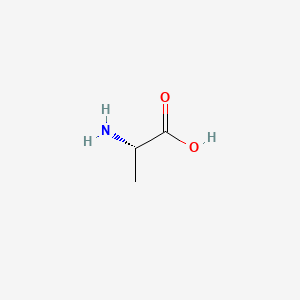
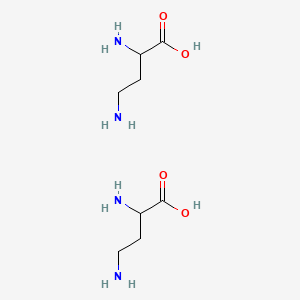
The 20 amino acids in life (proteinous) are listed, along with their functions, here:
The amino acids are organic compounds formed by carboxyls and amines. These compounds bind to form proteins and other macromolecules....

www.lifepersona.com
Lists are here (the first in alphabetic order, the second according to properties):
"The Twenty Amino Acids
The twenty amino acids (that make up proteins)each have assigned to them both three-letter (can be upper or lower case) and one-letter codes (upper case). This makes it quicker and easier for notation purposes and are worth learning. The following list gives these notations along with hypertext references to download amino acid gif images and also interactive molecules.
The format of the list is: amino acid name - 3 letter code - 1 letter code (reference to gif image, reference to interactive molecule)
alanine - ala - A (gif, interactive)
arginine - arg - R (gif, interactive)
asparagine - asn - N (gif, interactive)
aspartic acid - asp - D (gif, interactive)
cysteine - cys - C (gif, interactive)
glutamine - gln - Q (gif, interactive)
glutamic acid - glu - E (gif, interactive)
glycine - gly - G (gif, interactive)
histidine - his - H (gif, interactive)
isoleucine - ile - I (gif, interactive)
leucine - leu - L (gif, interactive)
lysine - lys - K (gif, interactive)
methionine - met - M (gif, interactive)
phenylalanine - phe - F (gif, interactive)
proline - pro - P (gif, interactive)
serine - ser - S (gif, interactive)
threonine - thr - T (gif, interactive)
tryptophan - trp - W (gif, interactive)
tyrosine - tyr - Y (gif, interactive)
valine - val - V (gif, interactive)
Sometimes it is not possible two differentiate two closely related amino acids, therefore we have the special cases:
asparagine/aspartic acid - asx - B
glutamine/glutamic acid - glx - Z
Here is list where amino acids are grouped according to the characteristics of the side chains:
Aliphatic - alanine (gif, interactive), glycine (gif, interactive), isoleucine (gif, interactive), leucine (gif, interactive), proline (gif, interactive), valine (gif, interactive)
Aromatic - phenylalanine (gif, interactive), tryptophan (gif, interactive), tyrosine (gif, interactive)
Acidic - aspartic acid (gif, interactive), glutamic acid (gif, interactive)
Basic - arginine (gif, interactive), histidine (gif, interactive), lysine (gif, interactive)
Hydroxylic - serine (gif, interactive), threonine (gif, interactive)
Sulphur-containing - cysteine (gif, interactive), methionine (gif, interactive)
Amidic (containing amide group) - asparagine (gif, interactive), glutamine (gif, interactive)"
===================
As I have already posted, Glycine is the simplest amino acid which would account for its relative ease in synthesis. From google search:
""
Glycine (symbol Gly or G; /ˈɡlaɪsiːn/) is an amino acid that has a single hydrogen atom as its side chain. It is the simplest amino acid (since carbamic acid is unstable), with the chemical formula NH2‐CH2‐COOH.
Glycine is one of the proteinogenic amino acids.
Chemical formula: C2H5NO2"
Note that NH2-CH2-COOH involves the 2-d structure (it is actually 3-d) while C2H5NO2 is the relative proportion of each element (C=carbon; H = hydrogen; N - Nitrogen; O = Oxygen).
From the above 20 amino acid list, Glycine is aliphatic. From Bing search:
"relating to or denoting organic compounds in which carbon atoms form open chains (as in the alkanes), not aromatic rings. Compare with
alicyclic....Open-chain compounds contain no rings of any type, and are thus aliphatic."
As noted, Glycine is one of the 20 amino acids needed for life. It is logical that the Chemist (God) who created life would use this simplest amino acid.
The product proportion in Miller's experiment: 440.
=========================
Alanine, the most prevalent amino acid produced by Miller (790) - in my next post: