The Illusion of Certainty
Ahmaud Arbery’s death was horrible—but was it racist?
by
Coleman Hughes
The shooting death of Ahmaud Arbery, a 25-year-old black man from Georgia, has reignited the national debate about racial profiling. On February 23, Arbery
entered an empty construction site in the city of Brunswick, lingering for several minutes before leaving. Shortly afterward, Gregory McMichael, a white ex-cop who lived down the street, noticed Arbery running. He grabbed his gun, enlisted his son Travis, and pursued.
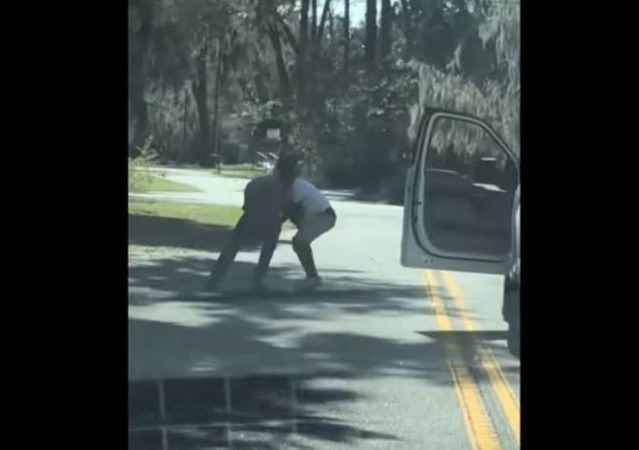
After he and his father had chased Arbery in a truck for four minutes, Travis exited the driver’s side and confronted Arbery, shotgun in hand. The video of what followed, captured by William Bryan Jr., a neighbor aiding in the chase, leaves much to be desired. The beginning of the confrontation, when Travis fires his first shot, is completely ob
While it’s tempting to assume that the McMichaels were motivated by racism, the only intellectually honest position is to admit that we do not know what motivated them—at least, not yet. On the one hathat the McMichaels would not have pursued a white suspect under the same circumstances. On the other, contextual facts make the allegation of racism less compelling.
To start, there is a plausible, non-racist explanation for why the McMichaels pursued Arbery. An unidentified black man (it’s unclear if it was Arbery) had trespassed on the same construction site
four times—once in October, November, December, and early February. The absentee homeowner caught these incidents on his motion-activated security camera. After the December incident, Gregory McMichael offered to help catch the serial trespasser. Local police
subsequently texted the homeowner, advising him to reach out to McMichael “day or night” if he picked up motion on his security camera—the implication being that McMichael could respond faster than they could.
While McMichael’s eagerness to fight crime proactively might seem strange at first glance, it begins to make sense when you consider the crime problem facing Brunswick residents. Though commentators have mostly downplayed it, Brunswick is among the most crime-ridden cities in America. In 2018, the Brunswick crime rate was
6,311 crimes per 100,000 residents. For comparison, the crime rate in the Austin section of Chicago—which NBC news dubs Chicago’s “
most dangerous neighborhood”—was
6,528 per 100,000; the U.S. national average was 2,580. What’s more, McMichael was not the only neighbor who offered to help. In November, Diego Perez, who lives next door to the construction site,
texted the homeowner: “If you catch someone on your cameras, let me know right away, I can respond in mere seconds.”
Perhaps the McMichaels pursued Arbery solely because of racial bias. Or perhaps they pursued him because of their arrangement with local police, and with the homeowner, to respond immediately upon seeing the trespasser. Or perhaps their motives were mixed. Those who pretend to know with certainty what motivated the McMichaels are deceiving themselves.
In the rush to paint the McMichaels as racists, we have failed to discuss the real problems revealed by the Arbery incident. First and foremost, it is troubling that a police officer advised the homeowner to rely on McMichael, a civilian, to help catch a suspect. It is easy to see how an arrangement like this might encourage a civilian to behave like a vigilante, secure in the knowledge that local police condone his vigilantism. Second, the initial decision not to press charges against the McMichaels raises concerns about prosecutorial bias—though we do not know whether the McMichaels benefitted from being white or from the “blue wall of silence” that can come with being a former police officer.
Third, citizen’s arrest laws are fundamentally flawed: from the perspective of the arrestee, a citizen’s arrest can look no different from a mugging or kidnapping. Arbery, for example, had little reason to assume that the armed men chasing him had pure intentions; his decision to grab McMichael’s gun must be viewed in light of this fact. Moreover, civilians are not trained in de-escalation. If cops struggle to make peaceful arrests in tense situations, we should not be surprised that civilians struggle even more.
When all is said and done, it’s likely that the McMichaels, and perhaps Bryan, will do time for killing Arbery. Georgia’s
citizen’s arrest law requires arrestors to have “immediate knowledge” of the misdemeanor in question. In
one relevant case, a judge explained that “immediate knowledge” is a synonym for directly witnessing a crime with one’s own senses. Though the McMichaels might have seen video footage of a man who resembled Arbery trespassing on previous occasions, they did not physically witness him trespassing on the day of the shooting.
Regardless of how this particular case turns out, the problems with citizen’s arrest laws will remain. Such laws evolved in the Middle Ages—an era without organized police forces, telephones, cars, or cultures of widespread gun ownership. While citizen’s arrest laws remain an important component of public safety, we should bring them in line with modernity by placing
stricter conditions on when such arrests can be made.
In a better world, Arbery’s death might have provoked a bipartisan movement to reform these laws. Instead, it has mainly been used to stoke fears of white supremacy.
People are prone to irrational fears—of everything from plane crashes to
Satanic day-cares. Part of the media’s job is to assess these risks coolly and let the public know whether its fears are justified. On the issue of racism, the media have failed. “There are times when I wish that I could go for that walk, that jog, and feel absolutely at ease, free of worry,” philosopher Georgy Yancy
opined in reaction to Arbery’s death
. “But that would entail becoming white, and the price of that ticket is far too high.” Lebron James’s
tweet—“We’re literally hunted EVERYDAY/EVERYTIME we step foot outside the comfort of our homes!”—received over 300,000 likes.
One need not dismiss legitimate concerns about racism to call this fearmongering. In 2019, nine unarmed black people, along with 19 unarmed white people, were
shot dead by the police in the United States. That puts the typical person’s odds of getting killed by the cops while unarmed on par with his chances of being struck by lightning or killed by a jihadi. Yet while any celebrity who feared jihadist terror every time he left the house would rightly be dismissed as an alarmist, James is celebrated for such views.
This double standard can be attributed to a combination of white liberal guilt, which leads some to exaggerate racism, and a socially acceptable bigotry that holds black people to a lower standard while patting itself on the back for its antiracism.
We might wonder why the Arbery killing, among the roughly 14,000 homicides that happen in America every year, made its way into our news feeds. The reason: many who report the news are swept up in a moral panic about white supremacy. They promote stories that confirm their preexisting opinions and ignore stories that do not. That’s why people know
Tamir Rice but not
Daniel Shaver, a white man killed under similar circumstances. It’s why people remember
Alton Sterling but not
Dylan Noble. And it’s why the Ahmaud Arbery story achieved escape velocity from local news.
A life is a life, regardless of its color, and regardless of the color of the person who takes it. It’s hard to imagine a principle more important in America than this one—and more under threat from the prevailing passions of our time.
Coleman Hughes (@coldxman) is a fellow at the Manhattan Institute and contributing editor of City Journal
. His writing has appeared in Quillette, the New York Times
, the Wall Street Journal
, National Review
, and the Spectator.
Nonsense....media bull shit....ahmaud was never cornered....ridiculous to claim that.
Ahmaud did not stop jogging until he attacked Travis...he had freedom of movement at all times.
But since you make this ridiculously stupid claim please inform the board what you would do to corner someone with your vehicle?
Maybe first of all you should define what you mean by cornered? Just to make sure we are on the same page boyo????
Regarding a citizen's arrest...st ..Greg did say he intended to make a citizens arrest as he began the pursuit because he recognized ahmaud as he was jogging by his house from a video he had seen of trespassser and suspected burglar also he allegedly had previous contact with ahmaud back when he was still on the police force.
But irregardless....he never made a citizens arrest....nor did he even attempt to. Apparantly he changed his mind about that and decided to let the police handle it when they got there.