
HikerGuy83
Diamond Member
- Dec 26, 2021
- 21,916
- 17,287
- 2,288
The list of failed predictions is getting to long.So sea levels will rise 26 ft in five years?
One has to wonder when they will actually try to say something sane?
Follow along with the video below to see how to install our site as a web app on your home screen.
Note: This feature may not be available in some browsers.
The list of failed predictions is getting to long.So sea levels will rise 26 ft in five years?
I can't believe they are still making predictions.The list of failed predictions is getting to long.
One has to wonder when they will actually try to say something sane?

Fake **** MAGAt poster. LOL
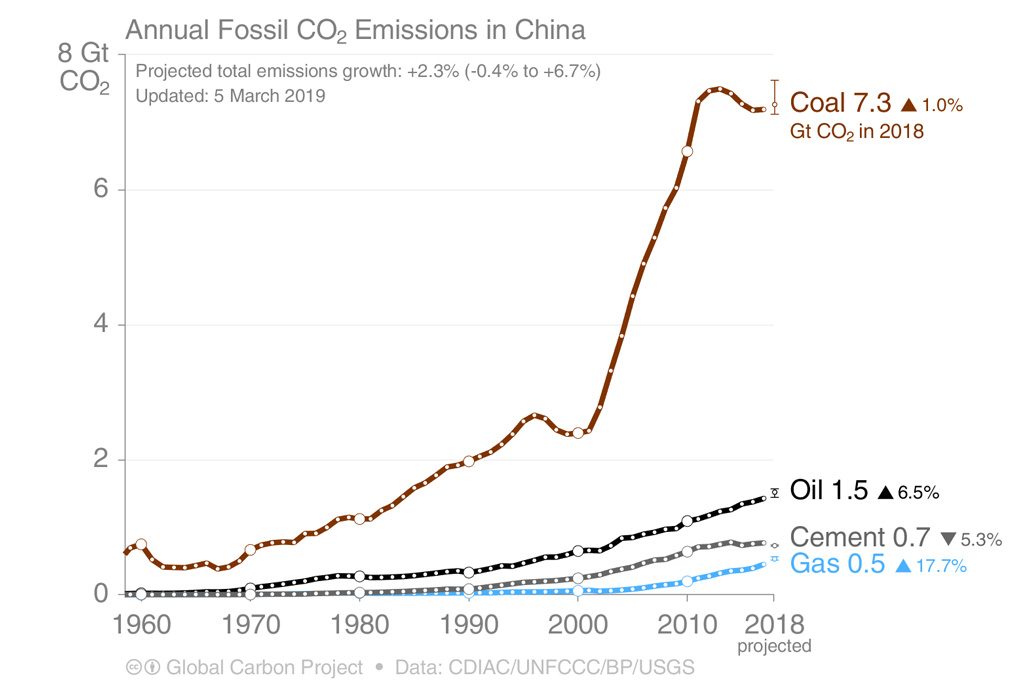
How much industry did China have in 1960, 70, 80?Fake ******* CCP news
If what you're saying is true, and there's no chance of that, today's CO2 should be in the thousands

How much CO2 the USA has been adding annually?
They must be betting on the principle that even a broken clock is right twice a day.I can't believe they are still making predictions.
Except the IPCC doesn't show that in their reports. According to you the planet should be naturally cooling even still today. Which is dumb in and of itself because glacial events are abrupt as ****. But it's even worse than that because according to you CO2 has saved the planet from thousands of feet of ice over significant parts of North America, Europe and Asia.Yep, right up to the start of the industrial revolution.
Sheesh. The typical "Conservative' liar has spoken again. The predictions of the real scientists have if anything, been too conservative. We are seeing now what the 'alarmists' predicted for 2050.The list of failed predictions is getting to long.
One has to wonder when they will actually try to say something sane?
Damn, any more nonsense to spew? Yes compared to the descent into a glacial period, the warming is adrupt, in that it takes only about 14,000 years to go from deep glacial to full interglacial. And your third sentence is a stupid lie. I have never said that we should be in a deep glacial period by now. On the contrary, I posted many graphs showing by the ice core record it takes a much long period to to from interglacial to full glacial than from full glacial to interglacial. And were you not so determinedly willfully ignorant, you could easily find the scientific papers explaining that.Except the IPCC doesn't show that in their reports. According to you the planet should be naturally cooling even still today. Which is dumb in and of itself because glacial events are abrupt as ****. But it's even worse than that because according to you CO2 has saved the planet from thousands of feet of ice over significant parts of North America, Europe and Asia.
Really stupid post.They must be betting on the principle that even a broken clock is right twice a day.
Not that they've hit one yet.
How much industry did China have in 1960, 70, 80?
Virtually none compared to today. Today, China produces 260% of the US output
So for the chart to show the same high to low relationship in an overall increasing trend MUST mean that mankind contribution is negligible, doesn't even register on this chart
Really stupid post.
Publication Abstracts
Hansen et al. 1981
Hansen, J., D. Johnson, A. Lacis, S. Lebedeff, P. Lee, D. Rind, and G. Russell, 1981: Climate impact of increasing atmospheric carbon dioxide. Science, 213, 957-966, doi:10.1126/science.213.4511.957.
The global temperature rose 0.2°C between the middle 1960s and 1980, yielding a warming of 0.4°C in the past century. This temperature increase is consistent with the calculated effect due to measured increases of atmospheric carbon dioxide. Variations of volcanic aerosols and possibly solar luminosity appear to be primary causes of observed fluctuations about the mean trend of increasing temperature. It is shown that the anthropogenic carbon dioxide warming should emerge from the noise level of natural climate variability by the end of the century, and there is a high probability of warming in the 1980s. Potential effects on climate in the 21st century include the creation of drought-prone regions in North America and central Asia as part of a shifting of climatic zones, erosion of the West Antarctic ice sheet with a consequent worldwide rise in sea level, and opening of the fabled Northwest Passage.
I'm NEVER in an interglacial; ALWAYS ice free!!!

The Arctic Ocean has experienced periods of being ice-free.
You don't know what you are talking about. You are trying to distract from the fact that you claim the planet should be slowly cooling NOW which but that's not what the IPCC report shows at all. It's funny that you believe CO2 has saved the planet from 1000's of feet of ice over large portions of North America, Europe and Asia.Damn, any more nonsense to spew? Yes compared to the descent into a glacial period, the warming is adrupt, in that it takes only about 14,000 years to go from deep glacial to full interglacial. And your third sentence is a stupid lie. I have never said that we should be in a deep glacial period by now. On the contrary, I posted many graphs showing by the ice core record it takes a much long period to to from interglacial to full glacial than from full glacial to interglacial. And were you not so determinedly willfully ignorant, you could easily find the scientific papers explaining that.
Damn, any more nonsense to spew? Yes compared to the descent into a glacial period, the warming is adrupt, in that it takes only about 14,000 years to go from deep glacial to full interglacial. And your third sentence is a stupid lie. I have never said that we should be in a deep glacial period by now. On the contrary, I posted many graphs showing by the ice core record it takes a much long period to to from interglacial to full glacial than from full glacial to interglacial. And were you not so determinedly willfully ignorant, you could easily find the scientific papers explaining that.

Well, this is actually likely true. I'm not sure about the Arctic, but I'm pretty sure studies have proven that at least back during dinosaur times, there were somewhat tropical conditions at the pole, and dinosaurs lived there.
Pot meet kettle.Really stupid post.
Publication Abstracts
Hansen et al. 1981
Hansen, J., D. Johnson, A. Lacis, S. Lebedeff, P. Lee, D. Rind, and G. Russell, 1981: Climate impact of increasing atmospheric carbon dioxide. Science, 213, 957-966, doi:10.1126/science.213.4511.957.
The global temperature rose 0.2°C between the middle 1960s and 1980, yielding a warming of 0.4°C in the past century. This temperature increase is consistent with the calculated effect due to measured increases of atmospheric carbon dioxide. Variations of volcanic aerosols and possibly solar luminosity appear to be primary causes of observed fluctuations about the mean trend of increasing temperature. It is shown that the anthropogenic carbon dioxide warming should emerge from the noise level of natural climate variability by the end of the century, and there is a high probability of warming in the 1980s. Potential effects on climate in the 21st century include the creation of drought-prone regions in North America and central Asia as part of a shifting of climatic zones, erosion of the West Antarctic ice sheet with a consequent worldwide rise in sea level, and opening of the fabled Northwest Passage.


