Indeed, climate predictions are inherently uncertain due to several factors: 
1.
Complexity of Climate Systems: The Earth’s climate is influenced by numerous interrelated systems, including atmospheric, oceanic, and terrestrial processes. This complexity makes it challenging to model interactions accurately.
2.
Data Limitations: Climate models rely on historical data to make predictions. Incomplete or inconsistent data can lead to inaccuracies. For example, regional variations may not be well-documented, affecting localized predictions.
3.
Emission Scenarios: Predictions often depend on future human activities, such as greenhouse gas emissions. Uncertainties in policy decisions, technological advancements, and societal behavior make exact forecasting difficult.
4.
Natural Variability: Climate systems exhibit natural variability, including phenomena like El Niño and La Niña, which can cause short-term fluctuations that complicate long-term predictions.
5.
Model Differences: Different climate models may adopt varying assumptions, methodologies, and parameterizations, leading to divergent outcomes. This range of predictions reflects the uncertainty inherent in climate science.
6.
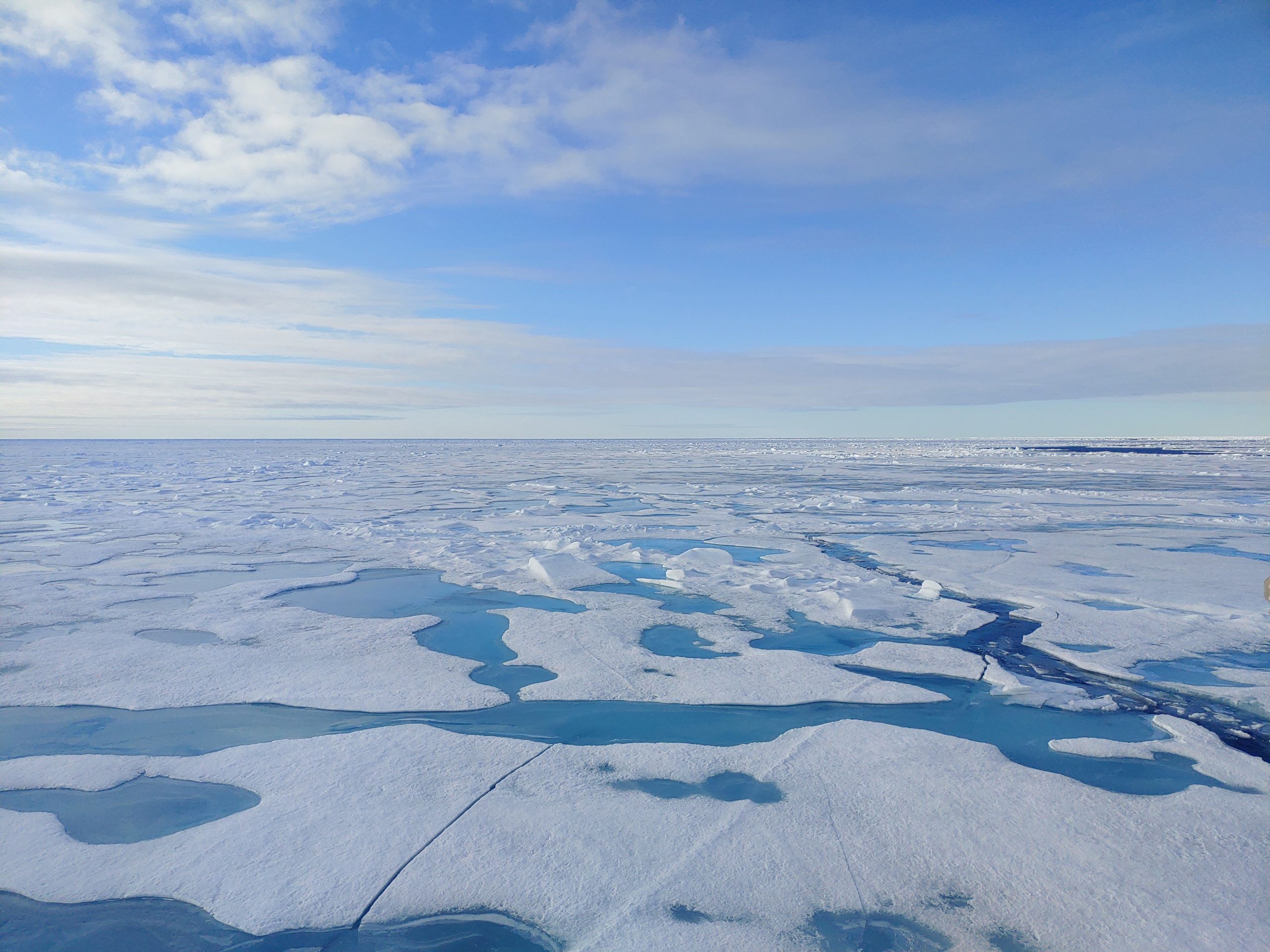
Feedback Mechanisms: Climate feedbacks, such as the ice-albedo effect or changes in cloud cover, can amplify or dampen warming.
Understanding these feedback loops is still a developing area in climate science.
Despite these uncertainties, scientists strive to provide the best predictions possible, emphasizing trends and potential impacts rather than precise outcomes.
 The 2027 claim is a plausible extreme-case projection from a peer‑reviewed study, not a guaranteed prediction — and past statements that sounded alarmist but were based on limited data have sometimes needed revision as observations improved.
Key points:
The 2027 claim is a plausible extreme-case projection from a peer‑reviewed study, not a guaranteed prediction — and past statements that sounded alarmist but were based on limited data have sometimes needed revision as observations improved.
Key points:
-
The specific 2027 phrasing comes from a Nature Communications modeling study (Jahn & Heuzé et al., Dec 2024) that used >300 simulations to estimate when the Arctic might see its first single ice‑free day (defined as <1 million km² of September sea ice). Some model runs produced an ice‑free day as early as 2027; most gave a range of roughly 2032–2043 for the first ice‑free day, and earlier/later dates depend on internal variability and emissions.
-
That study explicitly framed 2027 as an extreme but non‑zero possibility driven by a string of unusually warm seasons — not a near‑term inevitability. It did not claim the Arctic will definitely be ice‑free in 2027.
-
Why such headlines appear: journalists often condense probabilistic, model‑based results into a single dramatic year; that simplifies communication but can overstate certainty.
-
Why scientists’ past statements sometimes look wrong: climate science deals with long‑term trends plus large natural variability. Early studies used fewer observations and simpler models; projections have narrowed as data and models improved. Scientists update estimates as new evidence arrives — that’s normal scientific practice, not proof of a “cabal.”
-
What matters: long‑term trend = clear decline in Arctic summer sea ice extent (~>10% loss per decade since 1979) and high confidence the Arctic will see substantially less summer ice as the planet warms. Whether the first single ice‑free day occurs in 2027, 2035, or later, the physical direction and risks are well supported.
sources:
1. Nature Communications (paper): Heuzé, C. & Jahn, A. et al., "The first ice‑free day in the Arctic Ocean could occur before 2030", Nature Communications, 2024. DOI/link:
https://www.nature.com/articles/s41467-024-10101 (paywalled / journal page)
2. University press release (CU Boulder): "Countdown to an ice‑free Arctic: New research warns of accelerated timelines" —
https://www.colorado.edu/news/2024/...ctic-new-research-warns-accelerated-timelines
3. University of Gothenburg summary: "Risk of a day without sea ice in the Arctic" —
https://www.gu.se/en/news/risk-day-without-sea-ice-arctic
4. National/technical reporting: IFLScience summary —
NASA Observations Suggest Asteroid 2024 YR4 Now Has 1-In-23 Chance To Hit The Moon In 2032 (coverage of the study)
5. NSIDC background on definitions/observations (context for "<1 million km²" ice‑free threshold):
Learn | National Snow and Ice Data Center
6.
Arctic Sea Ice Could Reach Turning Point by 2027
7.
Arctic Ocean could see its first ice free day by 2027 - Oceanographic
8.
The first ice-free day in the Arctic Ocean is almost here
9.
Risk of a day without sea ice in the Arctic