Rising atmospheric CO\({}
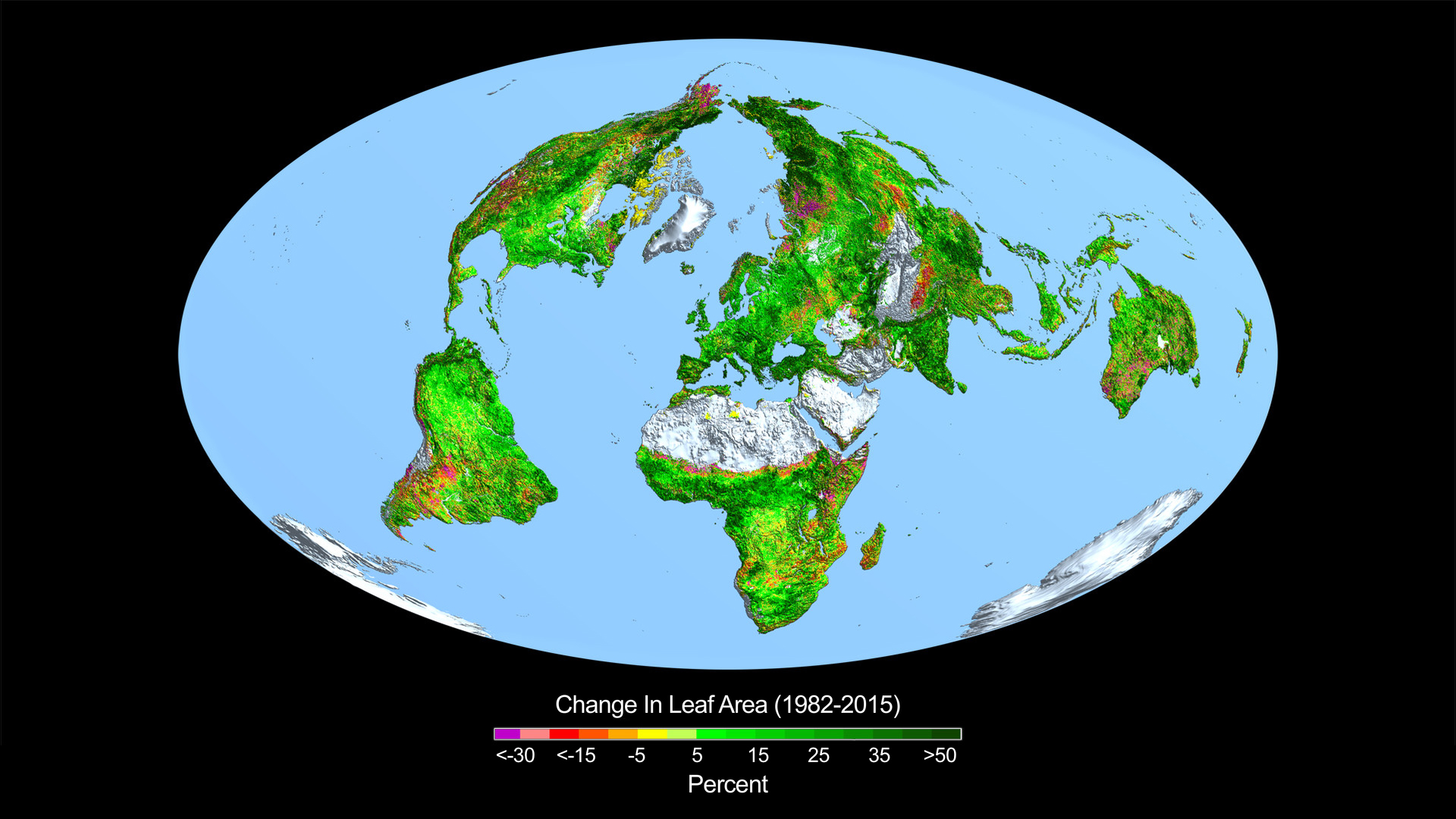
{2}\) is causing a "greening" effect on Earth by enhancing photosynthesis and improving water-use efficiency in plants, with studies attributing roughly 70% of this effect to increased carbon dioxide. This trend, often called CO\({}{2}\) fertilization, has increased vegetation cover over roughly one-quarter to one-half of the planet's vegetated land over the past 35 years. [
1,
2]
Key Findings on Global Greening:
- Fertilization Effect: Higher CO\({}{2}\) levels allow plants to grow faster, larger, and use less water, as they can partially close their stomata while still absorbing enough CO\({}{2}\).
- Study Data: A 2016 study, utilizing data from NASA satellites, identified that CO\({}_{2}\) fertilization is the primary driver (70%) of this greening, followed by nitrogen (9%), climate change (8%), and land management (4%).
- Dryland Impact: The fertilization effect is particularly strong in arid regions, where increased water efficiency allows vegetation to flourish, according to research published in Nature Portfolio. [1, 2, 3, 4, 5]
Limitations and Long-Term Outlook:
- Not a Permanent Solution: Ecologists warn that the greening effect may be temporary. As CO\({}_{2}\) drives climate change, the benefits could be outpaced by negative impacts like heat stress, drought, and nutrient limitations.
- Ecological Disruptions: Increased vegetation can alter ecosystems, potentially putting native species at a disadvantage and consuming limited water resources in dry areas.
- Not All Plants Benefit: While many crops like wheat and soy benefit, others, including corn and sugar cane, are less affected, note researchers from Columbia Climate School. [1, 2, 3, 4, 5]
While the greening trend is well-documented, the long-term impact on global ecosystems is complex, as rising CO\({}_{2}\) also acts as the primary driver of climate change, bringing risks such as sea-level rise and extreme weather, according to NASA Science