
You're right, I've never heard anyone offering tens of trillions of dollars in foreign aid to combat global warming.Here's the thing... I have brought up things to you in this discussion that you have never thought of before. You can't unread what you have read.That's a lot of solar cookers!!!I have a sneaking suspicion that the price tag is tens of trillions of dollars.
Why else would they be so dishonest with their intentions?
Navigation
Install the app
How to install the app on iOS
Follow along with the video below to see how to install our site as a web app on your home screen.
Note: This feature may not be available in some browsers.
More options
Style variation
You are using an out of date browser. It may not display this or other websites correctly.
You should upgrade or use an alternative browser.
You should upgrade or use an alternative browser.
The Progs will DENY SCIENCE when it comes to record snowfalls, that havent happened like this over 100 years.
- Thread starter Mikeoxenormous
- Start date

I did a quick calculation. There are 1 billion people without electricity. Using 10k per installation for solar that's 10T. Now let's get them some electric cars for another 10T. Hence tens of trillions of dollars.Got a link for that number or are you pulling from where the sun don't shine?Not on a tens of trillions of dollars scale, there's not.Is there any foreign aid that is not robbing peter?No. I am saying africans burning wood isn't the reason for a 1 billion ton per year per year acceleration of carbon emissions.Are you saying there is NO additional CO2 from Africans burning wood?Again... you are presuming poor africans burning wood is the reason for a 1 billion ton per year per year acceleration in carbon emissions. What you will really be funding is their commercial and industrial development. I don't see how that is painless to the ones being forced to pay for it.
It is in our interests to foster commercial and industrial development in poor countries. This generally results in slower population growth (and less CO2 emissions) and creating new markets for our products.
Does foreign aid benefit the U.S. or foreigners?
BOTH. Foreign aid typically aims to support security as well as the economic, social, and political development of recipient countries and their people. At the same time, such assistance also advances one or all of the following overriding U.S. interests:
- Contributing to U.S. national security by supporting allies in promoting regional and global stability and peace.
- Reflecting the core U.S. value of caring for others in need—providing humanitarian assistance to victims of war, violence, famine, and natural disasters.
- Advancing U.S. and recipient economic interests by building economies and markets.
The definition of foster is encourage or promote the development of (something, typically something regarded as good). Seems disingenuous for peter to rob paul and call it fostering.
But it's really more than you have done. You didn't even realize what the problem or the solution were and you are a true believer.
Especially when 580 ppm is better than 400 ppmYou're right, I've never heard anyone offering tens of trillions of dollars in foreign aid to combat global warming.Here's the thing... I have brought up things to you in this discussion that you have never thought of before. You can't unread what you have read.That's a lot of solar cookers!!!I have a sneaking suspicion that the price tag is tens of trillions of dollars.
Why else would they be so dishonest with their intentions?

You're more generous than me.I did a quick calculation. There are 1 billion people without electricity. Using 10k per installation for solar that's 10T. Now let's get them some electric cars for another 10T. Hence tens of trillions of dollars.Got a link for that number or are you pulling from where the sun don't shine?Not on a tens of trillions of dollars scale, there's not.Is there any foreign aid that is not robbing peter?No. I am saying africans burning wood isn't the reason for a 1 billion ton per year per year acceleration of carbon emissions.Are you saying there is NO additional CO2 from Africans burning wood?Again... you are presuming poor africans burning wood is the reason for a 1 billion ton per year per year acceleration in carbon emissions. What you will really be funding is their commercial and industrial development. I don't see how that is painless to the ones being forced to pay for it.
It is in our interests to foster commercial and industrial development in poor countries. This generally results in slower population growth (and less CO2 emissions) and creating new markets for our products.
Does foreign aid benefit the U.S. or foreigners?
BOTH. Foreign aid typically aims to support security as well as the economic, social, and political development of recipient countries and their people. At the same time, such assistance also advances one or all of the following overriding U.S. interests:
- Contributing to U.S. national security by supporting allies in promoting regional and global stability and peace.
- Reflecting the core U.S. value of caring for others in need—providing humanitarian assistance to victims of war, violence, famine, and natural disasters.
- Advancing U.S. and recipient economic interests by building economies and markets.
The definition of foster is encourage or promote the development of (something, typically something regarded as good). Seems disingenuous for peter to rob paul and call it fostering.
But it's really more than you have done. You didn't even realize what the problem or the solution were and you are a true believer.
$50 x 1,000,000 is only 50 billion dollars, very doable within current budgets.
And won't do diddly squat to reduce the 1 billion tons per year per year of acceleration of carbon emissions.You're more generous than me.I did a quick calculation. There are 1 billion people without electricity. Using 10k per installation for solar that's 10T. Now let's get them some electric cars for another 10T. Hence tens of trillions of dollars.Got a link for that number or are you pulling from where the sun don't shine?Not on a tens of trillions of dollars scale, there's not.Is there any foreign aid that is not robbing peter?No. I am saying africans burning wood isn't the reason for a 1 billion ton per year per year acceleration of carbon emissions.Are you saying there is NO additional CO2 from Africans burning wood?Again... you are presuming poor africans burning wood is the reason for a 1 billion ton per year per year acceleration in carbon emissions. What you will really be funding is their commercial and industrial development. I don't see how that is painless to the ones being forced to pay for it.
It is in our interests to foster commercial and industrial development in poor countries. This generally results in slower population growth (and less CO2 emissions) and creating new markets for our products.
Does foreign aid benefit the U.S. or foreigners?
BOTH. Foreign aid typically aims to support security as well as the economic, social, and political development of recipient countries and their people. At the same time, such assistance also advances one or all of the following overriding U.S. interests:
- Contributing to U.S. national security by supporting allies in promoting regional and global stability and peace.
- Reflecting the core U.S. value of caring for others in need—providing humanitarian assistance to victims of war, violence, famine, and natural disasters.
- Advancing U.S. and recipient economic interests by building economies and markets.
The definition of foster is encourage or promote the development of (something, typically something regarded as good). Seems disingenuous for peter to rob paul and call it fostering.
But it's really more than you have done. You didn't even realize what the problem or the solution were and you are a true believer.
$50 x 1,000,000 is only 50 billion dollars, very doable within current budgets.
How much will it reduce it?And won't do diddly squat to reduce the 1 billion tons per year per year of acceleration of carbon emissions.You're more generous than me.I did a quick calculation. There are 1 billion people without electricity. Using 10k per installation for solar that's 10T. Now let's get them some electric cars for another 10T. Hence tens of trillions of dollars.Got a link for that number or are you pulling from where the sun don't shine?Not on a tens of trillions of dollars scale, there's not.Is there any foreign aid that is not robbing peter?No. I am saying africans burning wood isn't the reason for a 1 billion ton per year per year acceleration of carbon emissions.Are you saying there is NO additional CO2 from Africans burning wood?Again... you are presuming poor africans burning wood is the reason for a 1 billion ton per year per year acceleration in carbon emissions. What you will really be funding is their commercial and industrial development. I don't see how that is painless to the ones being forced to pay for it.
It is in our interests to foster commercial and industrial development in poor countries. This generally results in slower population growth (and less CO2 emissions) and creating new markets for our products.
Does foreign aid benefit the U.S. or foreigners?
BOTH. Foreign aid typically aims to support security as well as the economic, social, and political development of recipient countries and their people. At the same time, such assistance also advances one or all of the following overriding U.S. interests:
- Contributing to U.S. national security by supporting allies in promoting regional and global stability and peace.
- Reflecting the core U.S. value of caring for others in need—providing humanitarian assistance to victims of war, violence, famine, and natural disasters.
- Advancing U.S. and recipient economic interests by building economies and markets.
The definition of foster is encourage or promote the development of (something, typically something regarded as good). Seems disingenuous for peter to rob paul and call it fostering.
But it's really more than you have done. You didn't even realize what the problem or the solution were and you are a true believer.
$50 x 1,000,000,000 is only 50 billion dollars, very doable within current budgets.
Diddly squat.How much will it reduce it?And won't do diddly squat to reduce the 1 billion tons per year per year of acceleration of carbon emissions.You're more generous than me.I did a quick calculation. There are 1 billion people without electricity. Using 10k per installation for solar that's 10T. Now let's get them some electric cars for another 10T. Hence tens of trillions of dollars.Got a link for that number or are you pulling from where the sun don't shine?Not on a tens of trillions of dollars scale, there's not.Is there any foreign aid that is not robbing peter?No. I am saying africans burning wood isn't the reason for a 1 billion ton per year per year acceleration of carbon emissions.Are you saying there is NO additional CO2 from Africans burning wood?Again... you are presuming poor africans burning wood is the reason for a 1 billion ton per year per year acceleration in carbon emissions. What you will really be funding is their commercial and industrial development. I don't see how that is painless to the ones being forced to pay for it.
It is in our interests to foster commercial and industrial development in poor countries. This generally results in slower population growth (and less CO2 emissions) and creating new markets for our products.
Does foreign aid benefit the U.S. or foreigners?
BOTH. Foreign aid typically aims to support security as well as the economic, social, and political development of recipient countries and their people. At the same time, such assistance also advances one or all of the following overriding U.S. interests:
- Contributing to U.S. national security by supporting allies in promoting regional and global stability and peace.
- Reflecting the core U.S. value of caring for others in need—providing humanitarian assistance to victims of war, violence, famine, and natural disasters.
- Advancing U.S. and recipient economic interests by building economies and markets.
The definition of foster is encourage or promote the development of (something, typically something regarded as good). Seems disingenuous for peter to rob paul and call it fostering.
But it's really more than you have done. You didn't even realize what the problem or the solution were and you are a true believer.
$50 x 1,000,000,000 is only 50 billion dollars, very doable within current budgets.

ReinyDays
Platinum Member
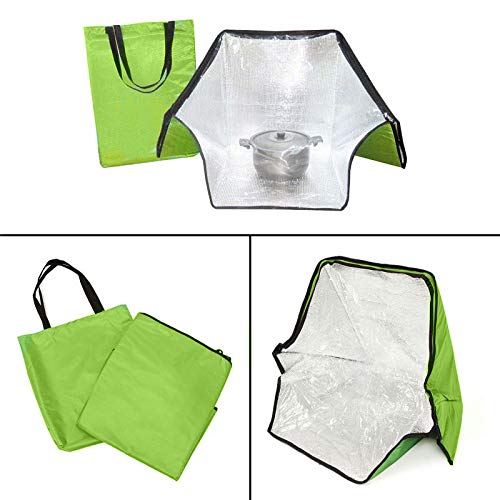
That's a lot of solar cookers!!!
You should try a solar cooker ... and then explain how we feed 1 billion people with them ... and they'll still be hungry on cloudy days ...
What's the carbon footprint of manufacture? ... will they be built to last, or just 'feel good today" cheap junk? ... how about counties run by a ruthless military junta? ... you might be surprised that corrupt governments and intense poverty are very well correlated ... if you've ever lived in the United States, it would be easy to see why ...
ReinyDays
Platinum Member
You would be excluding everyone but the outliers to arrive at the conclusion that dropping out was good.One of us is confused. If we keep the outliers, Bill Gates and Mark Zuckerberg, we could wrongly conclude that everyone now enrolled should drop out of college. It is only when we discard data about them do we see dropping out is not a good choice.
No data should be discarded. You can still conclude that dropping out is a bad choice even with the outliers in the dataset.
The mistake here is alang is treating this graph as a probability distribution chart ... where the margins need great care ... but the chart shows empirical data, we know the CO2 output and we know the population ... there's no probability here at all, thus the margins count ... it really does say Trinidad and Tobago is the 2nd most carbon intense society in the entire world ...
HAW HAW HAW HAW HAW HAW HAW HAW HAW ...
God, that's rich ...
Very scientific. Is that metric?Diddly squat.How much will it reduce it?And won't do diddly squat to reduce the 1 billion tons per year per year of acceleration of carbon emissions.You're more generous than me.I did a quick calculation. There are 1 billion people without electricity. Using 10k per installation for solar that's 10T. Now let's get them some electric cars for another 10T. Hence tens of trillions of dollars.Got a link for that number or are you pulling from where the sun don't shine?Not on a tens of trillions of dollars scale, there's not.Is there any foreign aid that is not robbing peter?No. I am saying africans burning wood isn't the reason for a 1 billion ton per year per year acceleration of carbon emissions.Are you saying there is NO additional CO2 from Africans burning wood?Again... you are presuming poor africans burning wood is the reason for a 1 billion ton per year per year acceleration in carbon emissions. What you will really be funding is their commercial and industrial development. I don't see how that is painless to the ones being forced to pay for it.
It is in our interests to foster commercial and industrial development in poor countries. This generally results in slower population growth (and less CO2 emissions) and creating new markets for our products.
Does foreign aid benefit the U.S. or foreigners?
BOTH. Foreign aid typically aims to support security as well as the economic, social, and political development of recipient countries and their people. At the same time, such assistance also advances one or all of the following overriding U.S. interests:
- Contributing to U.S. national security by supporting allies in promoting regional and global stability and peace.
- Reflecting the core U.S. value of caring for others in need—providing humanitarian assistance to victims of war, violence, famine, and natural disasters.
- Advancing U.S. and recipient economic interests by building economies and markets.
The definition of foster is encourage or promote the development of (something, typically something regarded as good). Seems disingenuous for peter to rob paul and call it fostering.
But it's really more than you have done. You didn't even realize what the problem or the solution were and you are a true believer.
$50 x 1,000,000,000 is only 50 billion dollars, very doable within current budgets.
No less scientific than your silly assertions.Very scientific. Is that metric?Diddly squat.How much will it reduce it?And won't do diddly squat to reduce the 1 billion tons per year per year of acceleration of carbon emissions.You're more generous than me.I did a quick calculation. There are 1 billion people without electricity. Using 10k per installation for solar that's 10T. Now let's get them some electric cars for another 10T. Hence tens of trillions of dollars.Got a link for that number or are you pulling from where the sun don't shine?Not on a tens of trillions of dollars scale, there's not.Is there any foreign aid that is not robbing peter?No. I am saying africans burning wood isn't the reason for a 1 billion ton per year per year acceleration of carbon emissions.Are you saying there is NO additional CO2 from Africans burning wood?Again... you are presuming poor africans burning wood is the reason for a 1 billion ton per year per year acceleration in carbon emissions. What you will really be funding is their commercial and industrial development. I don't see how that is painless to the ones being forced to pay for it.
It is in our interests to foster commercial and industrial development in poor countries. This generally results in slower population growth (and less CO2 emissions) and creating new markets for our products.
Does foreign aid benefit the U.S. or foreigners?
BOTH. Foreign aid typically aims to support security as well as the economic, social, and political development of recipient countries and their people. At the same time, such assistance also advances one or all of the following overriding U.S. interests:
- Contributing to U.S. national security by supporting allies in promoting regional and global stability and peace.
- Reflecting the core U.S. value of caring for others in need—providing humanitarian assistance to victims of war, violence, famine, and natural disasters.
- Advancing U.S. and recipient economic interests by building economies and markets.
The definition of foster is encourage or promote the development of (something, typically something regarded as good). Seems disingenuous for peter to rob paul and call it fostering.
But it's really more than you have done. You didn't even realize what the problem or the solution were and you are a true believer.
$50 x 1,000,000,000 is only 50 billion dollars, very doable within current budgets.
I'm rubber, you're glue.No less scientific than your silly assertions.Very scientific. Is that metric?Diddly squat.How much will it reduce it?And won't do diddly squat to reduce the 1 billion tons per year per year of acceleration of carbon emissions.You're more generous than me.I did a quick calculation. There are 1 billion people without electricity. Using 10k per installation for solar that's 10T. Now let's get them some electric cars for another 10T. Hence tens of trillions of dollars.Got a link for that number or are you pulling from where the sun don't shine?Not on a tens of trillions of dollars scale, there's not.Is there any foreign aid that is not robbing peter?No. I am saying africans burning wood isn't the reason for a 1 billion ton per year per year acceleration of carbon emissions.Are you saying there is NO additional CO2 from Africans burning wood?Again... you are presuming poor africans burning wood is the reason for a 1 billion ton per year per year acceleration in carbon emissions. What you will really be funding is their commercial and industrial development. I don't see how that is painless to the ones being forced to pay for it.
It is in our interests to foster commercial and industrial development in poor countries. This generally results in slower population growth (and less CO2 emissions) and creating new markets for our products.
Does foreign aid benefit the U.S. or foreigners?
BOTH. Foreign aid typically aims to support security as well as the economic, social, and political development of recipient countries and their people. At the same time, such assistance also advances one or all of the following overriding U.S. interests:
- Contributing to U.S. national security by supporting allies in promoting regional and global stability and peace.
- Reflecting the core U.S. value of caring for others in need—providing humanitarian assistance to victims of war, violence, famine, and natural disasters.
- Advancing U.S. and recipient economic interests by building economies and markets.
The definition of foster is encourage or promote the development of (something, typically something regarded as good). Seems disingenuous for peter to rob paul and call it fostering.
But it's really more than you have done. You didn't even realize what the problem or the solution were and you are a true believer.
$50 x 1,000,000,000 is only 50 billion dollars, very doable within current budgets.

My carbon emissions bounce off me and stick on you.I'm rubber, you're glue.No less scientific than your silly assertions.Very scientific. Is that metric?Diddly squat.How much will it reduce it?And won't do diddly squat to reduce the 1 billion tons per year per year of acceleration of carbon emissions.You're more generous than me.I did a quick calculation. There are 1 billion people without electricity. Using 10k per installation for solar that's 10T. Now let's get them some electric cars for another 10T. Hence tens of trillions of dollars.Got a link for that number or are you pulling from where the sun don't shine?Not on a tens of trillions of dollars scale, there's not.Is there any foreign aid that is not robbing peter?No. I am saying africans burning wood isn't the reason for a 1 billion ton per year per year acceleration of carbon emissions.Are you saying there is NO additional CO2 from Africans burning wood?Again... you are presuming poor africans burning wood is the reason for a 1 billion ton per year per year acceleration in carbon emissions. What you will really be funding is their commercial and industrial development. I don't see how that is painless to the ones being forced to pay for it.
It is in our interests to foster commercial and industrial development in poor countries. This generally results in slower population growth (and less CO2 emissions) and creating new markets for our products.
Does foreign aid benefit the U.S. or foreigners?
BOTH. Foreign aid typically aims to support security as well as the economic, social, and political development of recipient countries and their people. At the same time, such assistance also advances one or all of the following overriding U.S. interests:
- Contributing to U.S. national security by supporting allies in promoting regional and global stability and peace.
- Reflecting the core U.S. value of caring for others in need—providing humanitarian assistance to victims of war, violence, famine, and natural disasters.
- Advancing U.S. and recipient economic interests by building economies and markets.
The definition of foster is encourage or promote the development of (something, typically something regarded as good). Seems disingenuous for peter to rob paul and call it fostering.
But it's really more than you have done. You didn't even realize what the problem or the solution were and you are a true believer.
$50 x 1,000,000,000 is only 50 billion dollars, very doable within current budgets.

itfitzme
Silver Member
The first thing people - who are trying to solve a problem that doesn't exist - need to do is to be honest about what the problem is. Something I have yet heard anyone from your "camp" do. The second thing people - who are trying to solve a problem that doesn't exist - need to do is to be honest about the solution. Also something I have yet heard anyone from your "camp" do. Now the only reason that I can think of why they haven't done those things is because if they do those things, people like yourself who support solving a problem that doesn't exist would actually start to question what they have been told.
Of course there's going to be record snowfalls if the record only goes back a very short time. Same thing with record high temperatures and record low temperatures.
They are meaningless.
I wouldn't call them meaningless ... but, yeah, these records get broken all the time ... no reason to tie knots in your knickers ...
This is only a record for that date, October 20th, and there's only been 100 Oct 20ths in the past 100 years ... so a fairly small sample pool, we must take care to attach too much emphasis to the data ... also, the article says this is NOT a record for the month of October ... which means the meteorological conditions that produced this snowfall amount are known to occur, just "random" chance it happen to occur on October 20th rather than October 26th (or wharever) ...
Consider this:
There are about 6,000 weather stations around the world ... each one will have an extreme high temp, and extreme low temp and an extreme precipitation amount ... three extremes times 6,000 gives us 18,000 possible extreme events per day ... for a "hundred year" event (or a 1% chance of occurring), we should average 180 events per day worldwide ... so if this was an average day, there will be 179 other extreme weather reports to be had ...
This data is useful for planning purposes ... if we want to build a factory, and check the climate records ... we might see it rained 42" one day back 45 years ago, so we better make sure our factory can deal with that ... because it will rain 42" again someday, perhaps more ...
Warmer surface temperatures will most definitely allow more water vapor into the atmosphere ... roughly 7% per ºC at usual surface temperatures ... and what goes up must come down, as rain ... and there's every reason to believe considering Arctic Amplification this rainfall will be more widespread and less likely to cause flooding events ... and with a little bit of temperature rise we should only expect floods to be a little less likely ...
There are 6,000 weather stations around the US alone. Climatologists only use 1,500 of them.
Why is that?
Says who?
" The Berkeley Earth Surface Temperature Study has created a preliminary merged data set by combining 1.6 billion temperature reports from 16 preexisting data archives. Whenever possible, we have used raw data rather than previously homogenized or edited data. After eliminating duplicate records, the current archive contains over 39,000 unique stations. "
About the Data Set - Berkeley Earth
The Berkeley Earth Surface Temperature Study has created a preliminary merged data set by combining 1.6 billion temperature reports from 16 preexisting data archives. Whenever possible, we have used raw data rather than previously homogenized or edited data. After eliminating duplicate records...
 berkeleyearth.org
itfitzme
Silver Member
ReinyDays said:There are 6,000 weather stations around the US alone. Climatologists only use 1,500 of them.
Why is that?
Says who?
" The Berkeley Earth Surface Temperature Study has created a preliminary merged data set by combining 1.6 billion temperature reports from 16 preexisting data archives. Whenever possible, we have used raw data rather than previously homogenized or edited data. After eliminating duplicate records, the current archive contains over 39,000 unique stations. "
About the Data Set - Berkeley Earth
The Berkeley Earth Surface Temperature Study has created a preliminary merged data set by combining 1.6 billion temperature reports from 16 preexisting data archives. Whenever possible, we have used raw data rather than previously homogenized or edited data. After eliminating duplicate records...
berkeleyearth.org
Tell me... where are carbon emissions increasing, why are they increasing and how would you propose to halt the increase?The first thing people - who are trying to solve a problem that doesn't exist - need to do is to be honest about what the problem is. Something I have yet heard anyone from your "camp" do. The second thing people - who are trying to solve a problem that doesn't exist - need to do is to be honest about the solution. Also something I have yet heard anyone from your "camp" do. Now the only reason that I can think of why they haven't done those things is because if they do those things, people like yourself who support solving a problem that doesn't exist would actually start to question what they have been told.
Of course there's going to be record snowfalls if the record only goes back a very short time. Same thing with record high temperatures and record low temperatures.
They are meaningless.
I wouldn't call them meaningless ... but, yeah, these records get broken all the time ... no reason to tie knots in your knickers ...
This is only a record for that date, October 20th, and there's only been 100 Oct 20ths in the past 100 years ... so a fairly small sample pool, we must take care to attach too much emphasis to the data ... also, the article says this is NOT a record for the month of October ... which means the meteorological conditions that produced this snowfall amount are known to occur, just "random" chance it happen to occur on October 20th rather than October 26th (or wharever) ...
Consider this:
There are about 6,000 weather stations around the world ... each one will have an extreme high temp, and extreme low temp and an extreme precipitation amount ... three extremes times 6,000 gives us 18,000 possible extreme events per day ... for a "hundred year" event (or a 1% chance of occurring), we should average 180 events per day worldwide ... so if this was an average day, there will be 179 other extreme weather reports to be had ...
This data is useful for planning purposes ... if we want to build a factory, and check the climate records ... we might see it rained 42" one day back 45 years ago, so we better make sure our factory can deal with that ... because it will rain 42" again someday, perhaps more ...
Warmer surface temperatures will most definitely allow more water vapor into the atmosphere ... roughly 7% per ºC at usual surface temperatures ... and what goes up must come down, as rain ... and there's every reason to believe considering Arctic Amplification this rainfall will be more widespread and less likely to cause flooding events ... and with a little bit of temperature rise we should only expect floods to be a little less likely ...
There are 6,000 weather stations around the US alone. Climatologists only use 1,500 of them.
Why is that?
Says who?
" The Berkeley Earth Surface Temperature Study has created a preliminary merged data set by combining 1.6 billion temperature reports from 16 preexisting data archives. Whenever possible, we have used raw data rather than previously homogenized or edited data. After eliminating duplicate records, the current archive contains over 39,000 unique stations. "
About the Data Set - Berkeley Earth
The Berkeley Earth Surface Temperature Study has created a preliminary merged data set by combining 1.6 billion temperature reports from 16 preexisting data archives. Whenever possible, we have used raw data rather than previously homogenized or edited data. After eliminating duplicate records...
As that was the major point of the comment you replied to.
ReinyDays
Platinum Member
Says who? ...ReinyDays said:There are 6,000 weather stations around the US alone. Climatologists only use 1,500 of them.
Why is that?
Why did you attribute to me something I never posted? ... in the future, please be careful how you edit these quotes ...
But, yeah ... and I'd add all the blue-water shipping in the world ... these captains need minute-by-minute updates on current weather conditions ... they carry a full set of meteorological instruments and this is added to the database we use to calculate global mean temperature ...
Polar readings are thin ... but improving ... I'm very very pleased with the research being done there ... research long overdue ... if Hysteria brings funding for this research, then, well, "the sky is falling, the sky is falling, the sky is falling, the sky is falling" ... [giggle] ... THAT you can quote me on ...

esalla
Platinum Member
- Banned
- #219
Carbon emissions are pollution and they are increasing everywhere. Even as temps do not rise in tandemTell me... where are carbon emissions increasing, why are they increasing and how would you propose to halt the increase?The first thing people - who are trying to solve a problem that doesn't exist - need to do is to be honest about what the problem is. Something I have yet heard anyone from your "camp" do. The second thing people - who are trying to solve a problem that doesn't exist - need to do is to be honest about the solution. Also something I have yet heard anyone from your "camp" do. Now the only reason that I can think of why they haven't done those things is because if they do those things, people like yourself who support solving a problem that doesn't exist would actually start to question what they have been told.
Of course there's going to be record snowfalls if the record only goes back a very short time. Same thing with record high temperatures and record low temperatures.
They are meaningless.
I wouldn't call them meaningless ... but, yeah, these records get broken all the time ... no reason to tie knots in your knickers ...
This is only a record for that date, October 20th, and there's only been 100 Oct 20ths in the past 100 years ... so a fairly small sample pool, we must take care to attach too much emphasis to the data ... also, the article says this is NOT a record for the month of October ... which means the meteorological conditions that produced this snowfall amount are known to occur, just "random" chance it happen to occur on October 20th rather than October 26th (or wharever) ...
Consider this:
There are about 6,000 weather stations around the world ... each one will have an extreme high temp, and extreme low temp and an extreme precipitation amount ... three extremes times 6,000 gives us 18,000 possible extreme events per day ... for a "hundred year" event (or a 1% chance of occurring), we should average 180 events per day worldwide ... so if this was an average day, there will be 179 other extreme weather reports to be had ...
This data is useful for planning purposes ... if we want to build a factory, and check the climate records ... we might see it rained 42" one day back 45 years ago, so we better make sure our factory can deal with that ... because it will rain 42" again someday, perhaps more ...
Warmer surface temperatures will most definitely allow more water vapor into the atmosphere ... roughly 7% per ºC at usual surface temperatures ... and what goes up must come down, as rain ... and there's every reason to believe considering Arctic Amplification this rainfall will be more widespread and less likely to cause flooding events ... and with a little bit of temperature rise we should only expect floods to be a little less likely ...
There are 6,000 weather stations around the US alone. Climatologists only use 1,500 of them.
Why is that?
Says who?
" The Berkeley Earth Surface Temperature Study has created a preliminary merged data set by combining 1.6 billion temperature reports from 16 preexisting data archives. Whenever possible, we have used raw data rather than previously homogenized or edited data. After eliminating duplicate records, the current archive contains over 39,000 unique stations. "
About the Data Set - Berkeley Earth
The Berkeley Earth Surface Temperature Study has created a preliminary merged data set by combining 1.6 billion temperature reports from 16 preexisting data archives. Whenever possible, we have used raw data rather than previously homogenized or edited data. After eliminating duplicate records...
As that was the major point of the comment you replied to.
ReinyDays
Platinum Member
Carbon emissions are pollution and they are increasing everywhere. Even as temps do not rise in tandem
Well ... the adage is that money produces pollution ... if we want to get rid of pollution, we have to get rid of money ... just how far are we willing to reduce the standard of living we enjoy in Western Europe and Anglo-America? ... getting rid of 90% of passenger vehicles, airline travel and meat consumption ... sounds recessionary ...
This is a case where the cure is worse than the disease ... the whole world biking to work to save a single ºC? ...
Similar threads

- Replies
- 648
- Views
- 15K


- Replies
- 153
- Views
- 32K


New Topics
-
 Arab uses garbage truck to smuggle 60 illegal "palestinians", see nazi sturmer pallywood twisting it
- Started by Pastelli
- Replies: 3
-

-
Yuval Abraham: Staged IDF Provocateur Turned Oscar-Winning Anti-Israel Propagandist – A Profile
- Started by Pastelli
- Replies: 3
-

-
Latest Discussions
-
-
 It Only Takes One Change of Government and It's Lost Forever
- Latest: Deplorable Yankee
-

