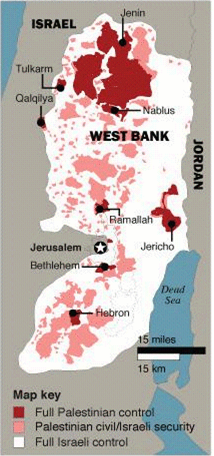
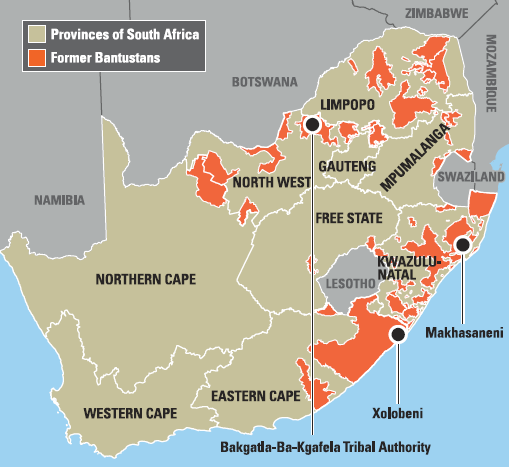
The Occupied Territories Are the Biggest Prison on Earth
※→ P F Tinmore,
et al,
Let's puts a couple of these arguments together.
It doesn't. It was just a direct response to one of Rocco's long, irrelevant, off topic rants.
(COMMENT)
• All the answers applied directly to your question. ALL of them were applicable or pertinent. I even went to the trouble of separating the questions and tie the response to a question.
• Well, they were all on target for the question asked. They may not have been on topic for the thread.
Interesting point. Israel points to Resolution 181 to pretend to have legitimacy. What Israel ignores, however, is that Resolution 181 states that all Palestinians who normally live in the territory that becomes the Jewish state will become citizens of that state. This follows the rule of nationality and citizenship of state succession under international law.
This means that about 40% of the people in the West Bank, about 75% of the people in Gaza, and all of the Palestinians living elsewhere are legally Israeli citizens.
(COMMENT)
You cannot have it both ways. The Palestinians cannot reject Resolution 181(II), and then turn around and use it as if they were a party to the agreement or a participant in the Steps Preparatory to Independence. Not only did the Arab Palestinians reject the validity of the Resolution, they:
In a letter to the Secretary-General signed by Isa Nakleh, the committee declared that the Arabs would fight “to the last man” against any force going to Palestine to partition that country,” and charged the United States with having exercised “flagrant interference and pressure” to force votes favoring partition. (Browne; N.Y. Times)
The inhabitants of the region, later to become known as the Arab Palestinians, has some right to sovereignty over the territory; and they invoke the “right to self-determination” → including their demand for autonomy — or, in some cases, secession
Nobody has ever mentioned succession.
The Palestinian's right to sovereignty and self determination?
Sure, reaffirmed in subsequent UN resolutions.
(COMMENT)
• The application of the word "succession" is relative to the claim that the Arab Palestinians have some treaty protected right ⇒
the "right or sequence of inheriting a position, title, etc" (
or in this case some sovereign authority over territory).
• All cultures and people have the right to self-determination and sovereignty. That is not at all unique to the Arab Palestinians. Even the Israelis have such rights. But sovereignty implies the ultimate authority and I'm not sure that the Arab Palestinians have established that anywhere in the last millennium. The right to self-determination was attempted and filed.
(What can I say?)
• The Arab Palestinians have the tendency to argue and advocate that self-determination confers the right to independence and statehood on every distinctive ethnic group
(which they consider the Arab Palestinian a part). When you and I talk about sovereignty and self-determination, we might as well be speaking different languages. Arab Palestinians in the 21st Century still justify their demand for self-determination as a way to end years of repression and human rights violations by the minority ethnic Jews.
In any event, there are not very many nations
(if any exist today) that will just up and allow an ethnic group the self-determination to separate and form their own sovereignty. The conflict is ideological and practical. The Arab Palestinians have little experience with the Western nations
(generally but not entirely the Allied Powers) long history of sovereignty and statehood ⇒ and are thus not prepared to adhere to the Western insistence on the inviolability of existing borders. And the attempt to force an answer by turning to international legal standards on the right to self-determination does not resolve the problem, since the right has never been explicitly defined. You and I disagree on the Arab Palestinian claims of a self-determination movement
("right or sequence of inheriting a position, title, etc" by treaty), since no such right exists in international law. And it is unlikely that the major powers of the world are going to step-in and define such a right that might later be the cause of a break-up. While overwhelming success was achieved in the break-up of the Austria-Hungary and Ottoman Empires, in each such calculated partitioning process leaves wholes. Of course the Kurds were one, just as the Serbo-Croat conflicts were another. And then there was the Arab-Palestinians 'vs' the Jews.
I believe that the Arab-Palestinians have rights. I disapprove in the way that the Majority of Arabs attempted to crush the rights of the minority. This is an age-old problem.
Most Respectfully,
R