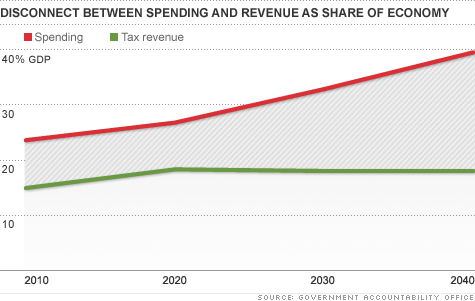
The GOP is right about one thing: The country is spending more than it can afford. And economists on the left and right generally agree that big tax increases can hurt economic growth. But there is abundant evidence showing that taxes must be part of debt reduction, however distasteful the GOP finds them.
Why? Because the looming debt problem is just too big. And reducing it by spending cuts alone would require draconian changes that could hurt the economy far more than a mix of spending cuts and tax increases. Here's one way to conceive of just how big the problem is. If lawmakers wanted to permanently freeze the debt held by the public at the today's level -- 62% of GDP -- they would need to immediately cut spending by 35% or about $1.2 trillion, according to the Government Accountability Office. And those cuts would need to be permanent from hereon out.
How hard would that be? Consider that in 2010, all of discretionary spending -- including defense -- totaled $1.35 trillion. In other words, to do deficit reduction all on the spending side means "you have to cut into the real meat," said Roberton Williams, senior fellow at the Tax Policy Center.
Consider, too, how much fun lawmakers are having right now trying to negotiate spending cuts for this year alone. Their working range: Between $10 billion and $61 billion. And here's the kicker: Even permanently cutting $1.2 trillion today wouldn't be the end of the story. Deficit hawks note that public debt at 60% is still well above the country's historical average -- which is below 40%. So more cutting would need to occur in subsequent decades.
Slowing the real drivers of debt takes time