Global warming stalled in 1998. Warming scientists have admitted this.
So what's causing this erosion?
Is anyone actually working on this without bringing bullshit reasons into play?
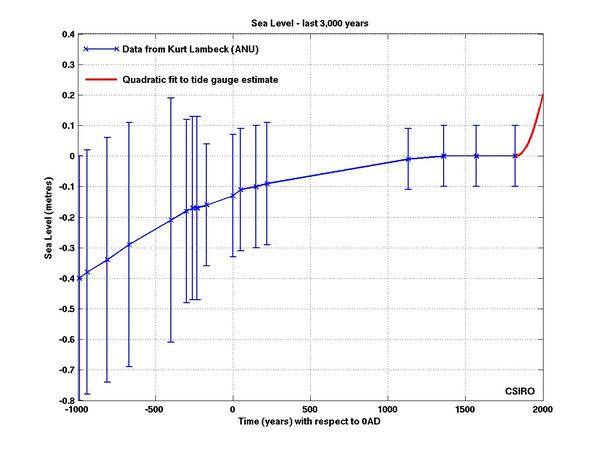
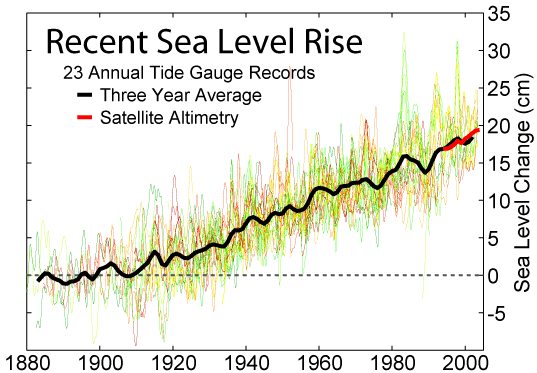
{Lets understand that the worlds mean temperatures have been rising at a pretty constant rate of about one degree Ferenheight (0.6oC) over the past 100 years, and is likely to continue , although with both warmer and cooler fluctuations, for many hundreds of years into the future. Over each of the past several centuries, including the last one, sea levels rose by about 7 inches (18 cm).
Accordingly, neither the overall warming trend or sea level rise began with the fossil-burning Industrial Revolution
nor have they changed in any detectable way due to human influences. And we cant even really know that the second follows the first. Sea levels rose during the Little Ice Age from about 1400-1859 AD
a period which was considerably colder than now.}
Alarmists Are In Way Over Their Heads On Rising Ocean Claims - Forbes
You have intermingled two completely unrelated things.
Whatever nature does to earth's climate in unpredictable and uncontrollable. It is whatever it is.
What mankind does to the climate is neither. Now that the IPCC has reached a competent level of climate science, we know the cause and effect of AGW, if not perfectly, adequately.
Because nature's effect is random, it's undeterminable as to whether, in the future, it will add to or subtract from AGW.
So, there's no sense in considering it.
We can calculate from any assumed future fossil fuel consumption, how much OLR will be further reduced. We can calculate from that, how much warmer the earth has to get to restore energy balance.
We will need much more science before we can calculate long term weather forecast to know how many years it takes for stable energy balance to be restored from any further perturbation, and what the transition will look like in terms of precipitation, winds, local temperatures, extreme weather, sea level, ice and snow extent, etc. All of the things that might require mitigation by relocating, rebuilding, additional protection.
One other thing is certain. Fossil fuels are in limited supply and will have to be replaced by sustainable energy at some rate over the next lifetime or two.
We are relying on the IPCC to determine the least expensive rate of conversion. We are relying on the engineers, investors, builders, and government involved in the energy business to figure out the optimum replacement technology.