You cannot prove the claims based on Jack Smith's congressional testimony are false.As you know, that's horseshit.
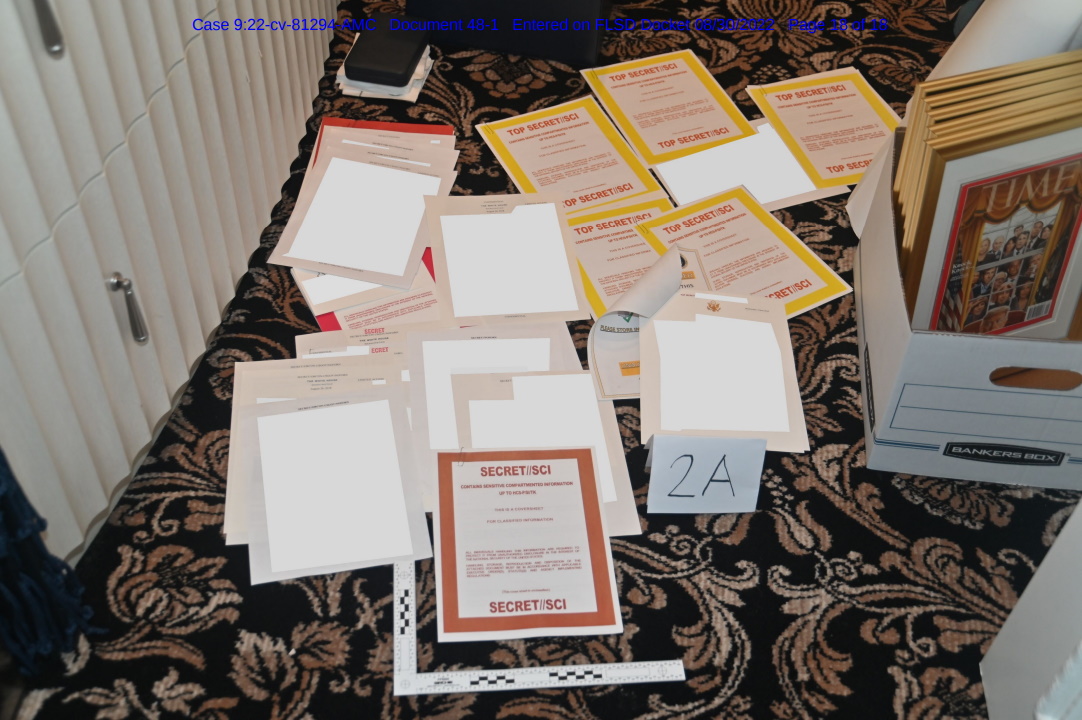
McCarthy Distorts Facts About DOJ Search of Mar-a-Lago - FactCheck.org
In questioning why the FBI "raid[ed] President Trump," House Speaker Kevin McCarthy falsely claimed that government officials "could have come and taken" classified government documents stored at Donald Trump's private club and residence in Florida "any time they wanted."www.factcheck.org
Nothing you have posted on this thread so far comes close to the truth. But keep right on lying. I enjoy humiliating you.
Navigation
Install the app
How to install the app on iOS
Follow along with the video below to see how to install our site as a web app on your home screen.
Note: This feature may not be available in some browsers.
More options
Style variation
You are using an out of date browser. It may not display this or other websites correctly.
You should upgrade or use an alternative browser.
You should upgrade or use an alternative browser.
January 6 Committee…what a joke!
- Thread starter Roudy
- Start date
The facts remain incontrovertible. Someone urged NARA to seek the return of documents in Trump's possession. NARA notified Trump of the specific documents they wanted returned and Trump returned all the documents NARA identified and asked for. Others corrupt parties moved into the gap and claimed Trump could possibly still be wrongly holding some unknown documents so they urged NARA to refer the matter to Biden's DOJ so the DOJ could begin armed raids on Trump's homes in search of evidence they did not know for sure existed.No amount of smears against those involved in the classified docs case can change the essential facts. 1. trump stole classified documents. 2. He refused to fully comply with a subpoena for their return.
The search warrant signed by Merrick Garland did not list a single specific item or document he believed Trump was illegally keeping.
NARA got every document it asked for so TDS false accusers within Biden's weaponized government were lying when they claimed Trump did not return the documents NARA asked for.NARA was looking for some very important and well known presidential records, and figured out they were missing.
Specifically they asked for the letter from Kim Jong Un which Trump had taken when he left office.
Once NARA got the boxes and found the classified documents, they elevated it to the DoJ who started the investigation.

berg80
Diamond Member
- Oct 28, 2017
- 36,462
- 29,646
- 2,820
It's almost sad that you've become so much of a caricature of a rabid trump disciple that making stuff crazy shit up is all you have left.Jan 2022
NARA retrieved boxes from Trump.
February 2022
NARA had retrieved all documents it felt had been taken but someone involved from the Biden administration was not sure NARA had retrieved all documents taken so that unknown leftist urged NARA to refer the matter to the DOJ. Clearly the matter is not that NARA has claimed Trump is withholding specific documents they want back but someone is referring the matter to Biden's DOJ to see if they can get a legal warrant to rifle through every home Trump owned in their search for something they could charge Trump with. What that means is that someone suspected there may be more documents that NARA did not know about in Trump's possession so the democrats in Biden's administration used that opportunity and suspicion to instigate a full-blown raid by armed FBI agents with shoot to kill orders.
That had nothing to do with NARA documents and everything to do with corrupt weaponization of Biden departments in an all-out effort to destroy Trump.
Neither NARA nor democrats cared at all about the trove of secret documents Biden had illegally taken and stashed in his office shared by Communist Chinese spies, but they were hell-bent on continuing rifling through Trump's properties everywhere to see if they could possibly find other documents they thought he might be keeping that the democrats could charge him for. That is how the Biden administration weaponized government agencies went after Trump like armed Nazi Gestapo goons.
February 9, 2022
News outlets, including CNN, report that NARA asked the Justice Department to investigate Trump's handling of White House records and whether he violated the Presidential Records Act and other laws related to classified information. The Presidential Records Act requires all records created by a sitting president to be turned over to the National Archives at the end of their administration.
February 18, 2022
NARA informs the Justice Department that some of the documents retrieved from Mar-a-Lago included classified material. NARA also tells the department that, despite being warned it was illegal, Trump tore up documents while he was president, and that senior officials in the Trump administration did not properly preserve their social media messages, draft tweets and deleted tweets.
I can identify documents NARA asked for and received from Trump. Nobody can identify a single document NARA might have claimed Trump was still incorrectly holding onto. Garland and his armed FBI Gestapo boys certainly had no idea of what specific document or documents they were looking for because nobody knew if Trump really was holding any document in particular that NARA should have reported missing but did not report missing.The more markef posts the more the conspiratorial nature of his beliefs is revealed. He has immersed himself in propaganda, clinging to it like a life raft in a sea of facts that refute his beliefs.

Marener
Diamond Member
- Jul 26, 2022
- 64,954
- 27,559
- 2,173
Once NARA discovered there were a lot of classified documents in the boxes, it was turned over to the DoJ to investigate as a criminal matter.NARA got every document it asked for so TDS false accusers within Biden's weaponized government were lying when they claimed Trump did not return the documents NARA asked for.
Trump wasn’t indicted for failing to turn documents over to NARA.
Stalinberg is the new illegally declared winner of the corrupt Virginia election for governor.GASLIGHT THEATRE BULLSHIT OVERLOAD
Stalinberg is a-------------->


Mueller was unable to prove someone stole the emails by hacking instead of taking them from inside the DNC at a DNC office in the US.Explaining why Billy the Bagman was so eager to mis-characterize Mueller's report as exonerating trump before the public could see for itself the report did nothing of the kind.
Marener
Diamond Member
- Jul 26, 2022
- 64,954
- 27,559
- 2,173
Obviously you never read the Mueller report because they detailed how they knew it was hacked.Mueller was unable to prove someone stole the emails by hacking instead of taking them from inside the DNC at a DNC office in the US.
It's almost sad that you've become so much of a caricature of a rabid trump disciple that making stuff crazy shit up is all you have left.
Yes, leftists in Biden's weaponized government moved someone at NARA to tell Biden's DOJ that Trump may still have documents he shouldn't have even though NARA had no specific knowledge of any documents that may be in question.February 9, 2022
News outlets, including CNN, report that NARA asked the Justice Department to investigate Trump's handling of White House records and whether he violated the Presidential Records Act and other laws related to classified information. The Presidential Records Act requires all records created by a sitting president to be turned over to the National Archives at the end of their administration.
There is no proof that any honest officials at NARA had any specific knowledge of Trump destroying any records illegally like Hillary destroyed tens of thousands of subpoenaed records or the weaponized leftist J-6 Committee illegally destroyed all the government records of their bogus witch-hunt investigations and unjust criminal charges against innocent Americans. All of the charges are blamed on NARA but it was the leftist attack dogs in the Biden administration that was driving this effort that was later completely upended, overthrown, and dismissed by court order after Trump was re-elected.February 18, 2022
NARA informs the Justice Department that some of the documents retrieved from Mar-a-Lago included classified material. NARA also tells the department that, despite being warned it was illegal, Trump tore up documents while he was president, and that senior officials in the Trump administration did not properly preserve their social media messages, draft tweets and deleted tweets.
berg80
Diamond Member
- Oct 28, 2017
- 36,462
- 29,646
- 2,820
That's not a fact. It's a delusion.The facts remain incontrovertible. Someone urged NARA to seek the return of documents in Trump's possession.

SeaMajor7
Diamond Member
She's a clown too.Stalinberg is the new illegally declared winner of the corrupt Virginia election for governor.
A standing court order dismissed very similar charges against Bill Clinton over classified documents, but Biden's weaponized Nazis did not recognize precedent law when trying to unjustly destroy Trump.Once NARA discovered there were a lot of classified documents in the boxes, it was turned over to the DoJ to investigate as a criminal matter.
Trump wasn’t indicted for failing to turn documents over to NARA.
2012 case in which federal judge ruled that NARA does not have the authority to seize presidential records - SearchTop of Form
2012 case in which federal judge ruled that NARA does not have the authority to seize presidential records
Bottom of Form
2012 Case: Judicial Watch v. NARAIn Judicial Watch, Inc. v. National Archives and Records Administration (845 F.Supp.2d 288 (D.D.C. 2012)), a federal district court ruled that the National Archives and Records Administration (NARA) does not have the authority to seize presidential records from a former president.
Background
Judicial Watch, a conservative watchdog group, sued NARA to compel the agency to designate certain audiotapes made by historian Taylor Branch during Bill Clinton’s presidency as “presidential records” under the Presidential Records Act (PRA). The group sought that NARA assume custody and control of the tapes and deposit them in the Clinton Presidential Library vLex+1.
The tapes, reportedly stored in Clinton’s sock drawer at one point, were created during official duties and contained some of Clinton’s telephone conversations. Judicial Watch argued they should be treated as official records and made available to the public POLITICO.
Court’s Ruling
U.S. District Judge Amy Berman Jackson dismissed the case, holding that:
- NARA lacks statutory authority to seize presidential records from a former president. The PRA allows NARA to request the Attorney General to recover records, but it does not mandate that NARA invoke this process — the agency has complete discretion on whether and when to act vLex+1.
- The tapes were not in NARA’s custody and had never been transferred to the Archives.
- Judicial Watch could not identify any remedy the court could order that NARA was legally obligated to perform vLex.
Significance
The decision reinforced that:
- The PRA’s enforcement mechanism is voluntary for NARA, not mandatory.
- A former president can retain official materials as personal property without a court order compelling NARA to act.
- Judicial review of a president’s designation of personal records is limited.
What lying leftist democrats cannot do is identify the person at NARA who allegedly claimed Trump may have possibly been still withholding documents and no democrat can identify any specific document they dishonestly claim NARA said Trump was still holding onto.That's not a fact. It's a delusion.
berg80
Diamond Member
- Oct 28, 2017
- 36,462
- 29,646
- 2,820
You seem to be oddly fixated on how the NARA became aware trump had committed crimes regarding laws pertaining to record retention and the theft of classified docs. As if it matters with respect to the commission of the crimes. It doesn't. Crimes he is still committing.There is no proof that any honest officials at NARA had any specific knowledge of Trump destroying any records illegally
Watchdog groups sue Trump over attempt to violate presidential records law
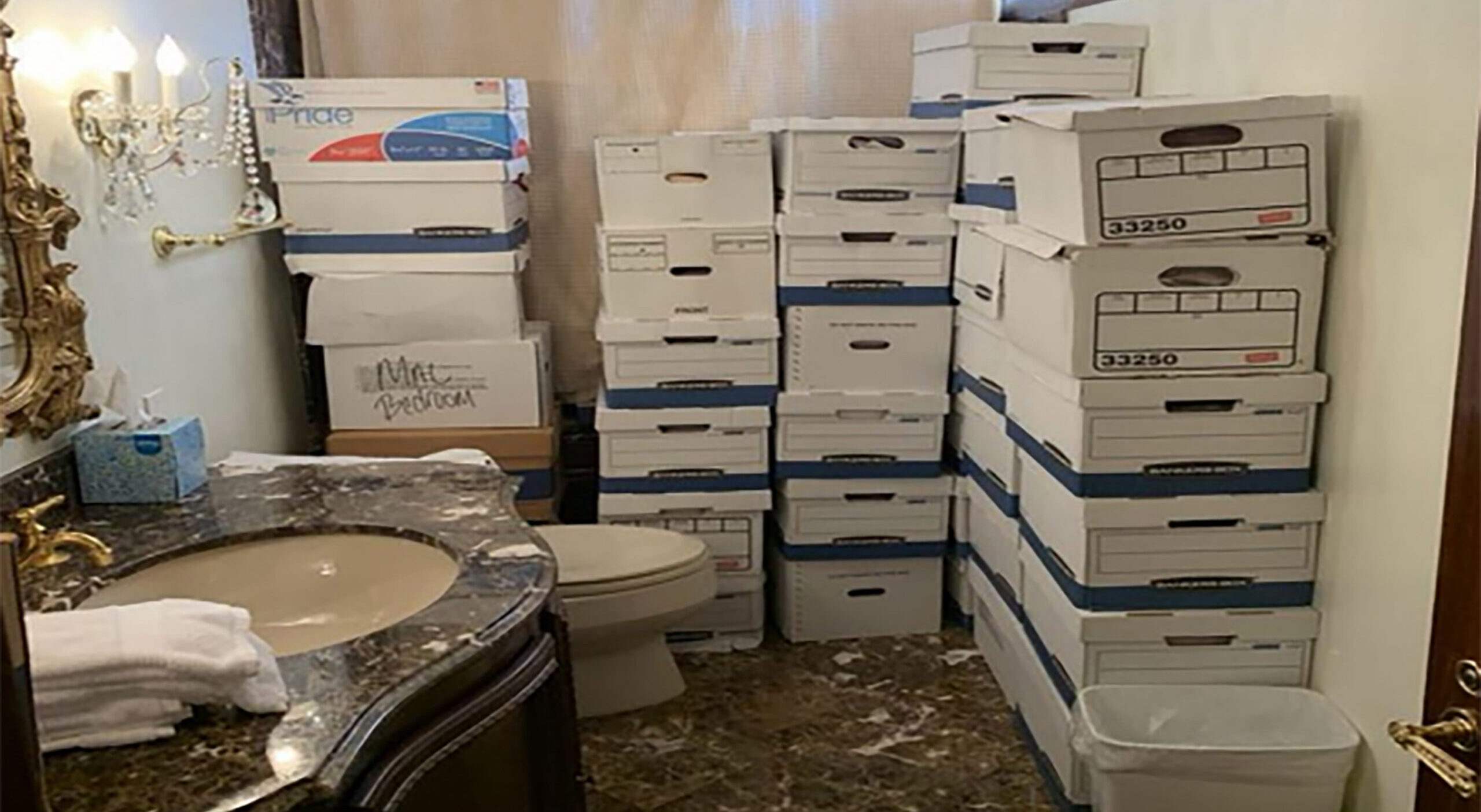
Watchdog groups sue Trump over attempt to violate presidential records law
“Government for the people, by the people, and of the people this is not," the lawsuit reads.
 www.democracydocket.com
berg80
Diamond Member
- Oct 28, 2017
- 36,462
- 29,646
- 2,820
You seem to be oddly fixated on how the NARA became aware trump had committed crimes regarding laws pertaining to record retention and the theft of classified docs. As if it matters with respect to the commission of the crimes. It doesn't. Crimes he is still committing.What lying leftist democrats cannot do is identify the person at NARA who allegedly claimed Trump may have possibly been still withholding documents and no democrat can identify any specific document they dishonestly claim NARA said Trump was still holding onto.
Marener
Diamond Member
- Jul 26, 2022
- 64,954
- 27,559
- 2,173
You’re totally wrong here for a multitude of reasons.A standing court order dismissed very similar charges against Bill Clinton over classified documents, but Biden's weaponized Nazis did not recognize precedent law when trying to unjustly destroy Trump.
Start with the fact that there were no charges against Bill Clinton. There was no DoJ investigation. There was no subpoena. There was no grand jury indictment.
The case you reference is a lawsuit from Judicial Watch that asked the judge to order NARA to order Clinton to hand over tapes that Judicial Watch thought were presidential records. No one else thought they were presidential records. Not NARA. Not the DoJ. Not Clinton. Not the judge. The judge said that Judicial Watch has zero standing to tell NARA what to do. That’s it. A civil lawsuit from a private entity with no standing.
That has nothing to do with the case with Trump.
NARA referred the case to the DoJ because they had evidence of illegal mishandling of classified documents. The DoJ launched an investigation and the rest is history. The criminal case against Trump has nothing to do with presidential records act or NARA. It has everything to do with Trump retaining classified documents and hiding them from the DoJ even after a subpoena was issued.
Of course demented leftists will still claim Trump must be illegally keeping classified documents in spite of the fact that we know for a fact Biden illegally took classified documents and stored them in an office he shared with Communist Chinese spies. Sheesh democrats are hypocritical and stupid.You seem to be oddly fixated on how the NARA became aware trump had committed crimes regarding laws pertaining to record retention and the theft of classified docs. As if it matters with respect to the commission of the crimes. It doesn't. Crimes he is still committing.
Watchdog groups sue Trump over attempt to violate presidential records law
Watchdog groups sue Trump over attempt to violate presidential records law
“Government for the people, by the people, and of the people this is not," the lawsuit reads.
In spite of the fact that there is ample evidence democrats don't give a flip if democrat presidents or lesser democrat politicians steal classified documents and mishandle them, the judge still ruled in the Clinton case that NARA has no right to seize records in the possession of presidents or ex-presidents.You’re totally wrong here for a multitude of reasons.
Start with the fact that there were no charges against Bill Clinton. There was no DoJ investigation. There was no subpoena. There was no grand jury indictment.
The case you reference is a lawsuit from Judicial Watch that asked the judge to order NARA to order Clinton to hand over tapes that Judicial Watch thought were presidential records. No one else thought they were presidential records. Not NARA. Not the DoJ. Not Clinton. Not the judge. The judge said that Judicial Watch has zero standing to tell NARA what to do. That’s it. A civil lawsuit from a private entity with no standing.
That has nothing to do with the case with Trump.
NARA referred the case to the DoJ because they had evidence of illegal mishandling of classified documents. The DoJ launched an investigation and the rest is history. The criminal case against Trump has nothing to do with presidential records act or NARA. It has everything to do with Trump retaining classified documents and hiding them from the DoJ even after a subpoena was issued.
Marener
Diamond Member
- Jul 26, 2022
- 64,954
- 27,559
- 2,173
It’s not entirely accurate. The judge never ruled on the ability for NARA to do anything, because she didn’t have to. Judicial Watch lacked any standing.In spite of the fact that there is ample evidence democrats don't give a flip if democrat presidents or lesser democrat politicians steal classified documents and mishandle them, the judge still ruled in the Clinton case that NARA has no right to seize records in the possession of presidents or ex-presidents.
But it’s totally irrelevant because NARA never tried to seize any records from Trump.
I’ll repeat myself so you can see it again. Trump was not prosecuted for keeping documents from NARA or anything to do with the Presidential Records Act.
Similar threads

- Replies
- 32
- Views
- 639


- Replies
- 68
- Views
- 1K

- Replies
- 3
- Views
- 329

- Replies
- 102
- Views
- 2K


