It would seem to me the residual fallout of the 12 Day War in Iran is a message that "U.S technology is better than Russian/Iranian technology"

shockedcanadian

Diamond Member
Joined
Aug 6, 2012
Messages
43,973
Reaction score
43,009
Points
3,605
Of course you could also advocate that the intelligence was superior but the speed in which Israel in particular neutralized so many Iranian military sites is impressive. Then for tthe U.S to employ from what I heard was 125 vehicles to travel halfway around the globe carrying 30000 pound payload and hitting all of their targets while immediately returning home unscathed, has to be a reminder that American military technology is far better than Russian technology. Much of Iranian technology including the SAMs and jets were Russian in origin. They were simply no.match for American made machinery. A reminder that centralized systems of nepotism and privilege will always lose to free thinking competitve capitalists.
 
Of course you could also advocate that the intelligence was superior but the speed in which Israel in particular neutralized so many Iranian military sites is impressive. Then for tthe U.S to employ from what I heard was 125 vehicles to travel halfway around the globe carrying 30000 pound payload and hitting all of their targets while immediately returning home unscathed, has to be a reminder that American military technology is far better than Russian technology. Much of Iranian technology including the SAMs and jets were Russian in origin. They were simply no.match for American made machinery. A reminder that centralized systems of nepotism and privilege will always lose to free thinking competitve capitalists.
There's a fair amount of Chinese machinery in there too including Chinese engineers and military advisors. All of them were left with egg on their face. Trump actually was not exaggerating when he said this is the only military in the world that could have pulled this off.
 
The more important message is that the U.S. now has a President who is willing to pull the trigger when faced with untenable developments abroad.

Consider...what would happen if Putin started using chemical, biological, or radiological weapons in Ukraine? A nuke or two?

Now Putin knows what would happen.

Deterrence don't mean shit if you are not willing to deter.
 
The more important message is that the U.S. now has a President who is willing to pull the trigger when faced with untenable developments abroad.

Consider...what would happen if Putin started using chemical, biological, or radiological weapons in Ukraine? A nuke or two?

Now Putin knows what would happen.

Deterrence don't mean shit if you are not willing to deter.
Bingo
 
Consider...what would happen if Putin started using chemical, biological, or radiological weapons in Ukraine?

US Presidents have been playing "patty-cake" with Iran for over four decades now, and for the first time one has shown that they will take direct action as needed.

And it actually reminds me of when President Obama finally got the US involved in Syria. He gave his famous "Red Line" speech, and when chemical weapons were used he acted.

And it is nothing new that President Trump would react this way. One thing that has to be remembered, long before he got into politics he was known for being a deal maker. And he withdrew the US from the Iran Nuclear Deal in 2018 when it was obvious Iran was violating it. And he also withdrew from the INF missile treaty with Russia for the same reason in the same year. The other side was violating it, so there was no reason to pretend it was still in effect.

And for all the screams at the time, nobody can deny that in both of those cases Russia and Iran were breaking the treaties.

If a country makes a treaty and promises to do something, they need to either stick with it or face the consequences. Otherwise we end up with cases like North Korea. Who also entered multiple deals and treaties to stop their development of nuclear weapons. Which they broke repeatedly and developed anyways.

Maybe now they will realize that they take those actions at their own peril, and they can not rely on the US to just ignore them and there will be no repercussions when they break treaties.
 
Much of Iranian technology including the SAMs and jets were Russian in origin.

The Air Defense systems of Iran are actually kind of interesting. As it is a kind of a mix of US equipment, Soviet-Russian Equipment, and domestic equipment.

Of course, like many nations in the region they have several variants of the ZU-ZSU 23-57mm antiaircraft guns. Which ironically is the largest threat they have against stealth aircraft, if deployed correctly and the attacker is stupid enough to attack at the wrong time in the wrong way.

But after that, it is an eclectic mix of many systems. Ranging from the MIM-23 HAWK system built by the US, and a domestic copy they have made from it called the Mersad (and an upgrade of that called the Mersad-16). And others like the Herz-9, which is a copy of the Chinese HQ-7 (CH-SA-4, a copy of the French R-440 Crotale).

And the usual mix of Soviet-Russian equipment, from the 2K12 Kub (SA-6 Gainful), 9K33 Osa (SA-8 Gecko), S-300 (SA-10 Grumble), and others. And what a lot of people seem to miss is that being such a wide variety of systems, there is going to be a hell of a lot of problems in actually operating them in a coordinated fashion. Multiple different generations, from multiple source nations.

And their only real experience in using them actually dates back to the 1980s with the Iran-Iraq War. And Iraq was never seen as a formidable air power, so Iran now appears to be seriously overestimating their air defense capabilities. Something both Israel and the US showed them how wrong they were in their confidence.

Something driven home even more after that, as of the 14 missiles they themselves launched at Al Udeid, 13 were intercepted and destroyed, one was allowed to continue on as it was not going to impact on the defended asset.
 
has to be a reminder that American military technology is far better than Russian technology

And I am going to circle back to this, as it is something that must be realized.

There are huge differences in how the US and Russia operate their militaries. Not just in manpower but in material.

The US since WWII has concentrated far more on equipment quality than quantity.

The 5,000 M1 Abrams tanks that the US has may sound massive, but most of those are actually in reserve. Of those 5,000 tanks, only around 1,400 are assigned to active use. And notice, that is the only tank the US has in their inventory.

As of last year, Russia had over 14,500 tanks. And that is split among six different main lines (T-14, T-36, T-55, T-72, T-76, and T-80). So it should be obvious, this is going to cause problems in both crew training and logistics. And many of them are absolutely ancient, actually dating to the period between WWII and the Korean War.

The US long ago made the choice to concentrate on newest technologies, and retiring older ones. The Soviets on the other hand will continue to use absolutely antiquated systems, often because they simply can not afford to replace them because of the massive numbers of equipment and units they maintain.

And even when you break it down to the soldiers themselves. Their actual battlefield tactics have evolved little from WWII when it was often human wave tactics with overwhelming numbers. Itself simply a variant of the Blitzkrieg of Germany from WWII (but putting much greater emphasis on rockets and artillery). And in every conflict since WWII the enemy they faced tended to be significantly weaker.

The US on the other hand has continued to evolve what they call "Joint Forces Operations", where the Army, Air Force, Navy, and Marines all work together as a cohesive force. Each taking their part, but ultimately all working together as a single team. And that doctrine has evolved significantly in the decades since WWII.

Compare the attacks on Iraq twice and Afghanistan, as compared to the Soviet-Russian attacks on Afghanistan and Ukraine.

And this even goes beyond technology. The backbone of all 4 branches of the US military is the NCO. Those are professional servicemen and women with anywhere from 4-20+ years of experience. Career professionals, that continue to attend schools in order to take on more responsibility. In this, Russia is just like the Soviet Union was. They have no real "Professional NCO Corps", their NCOs are selected from the Privates in basic training based primarily on their dedication to the government more than on ability.

So what you have is say a squad led by a Sergeant, who has just as much experience in the Army as the Privates they lead do. Significantly different than the Sergeant in the US Army. Who will have 4-6+ years of service, and is significantly more experienced than those they lead.

And the US military NCO corps prides themselves on their knowledge. Not only of their own equipment, but the equipment of their adversaries. With most having decades of experience, they are constantly learning. Because the best way to make your own equipment more effective is to know what and how your adversary uses their equipment and what it is. And that also helps you to know how to exploit the weaknesses in that equipment.
 
And I am going to circle back to this, as it is something that must be realized.

There are huge differences in how the US and Russia operate their militaries. Not just in manpower but in material.

The US since WWII has concentrated far more on equipment quality than quantity.

The 5,000 M1 Abrams tanks that the US has may sound massive, but most of those are actually in reserve. Of those 5,000 tanks, only around 1,400 are assigned to active use. And notice, that is the only tank the US has in their inventory.

As of last year, Russia had over 14,500 tanks. And that is split among six different main lines (T-14, T-36, T-55, T-72, T-76, and T-80). So it should be obvious, this is going to cause problems in both crew training and logistics. And many of them are absolutely ancient, actually dating to the period between WWII and the Korean War.

The US long ago made the choice to concentrate on newest technologies, and retiring older ones. The Soviets on the other hand will continue to use absolutely antiquated systems, often because they simply can not afford to replace them because of the massive numbers of equipment and units they maintain.

And even when you break it down to the soldiers themselves. Their actual battlefield tactics have evolved little from WWII when it was often human wave tactics with overwhelming numbers. Itself simply a variant of the Blitzkrieg of Germany from WWII (but putting much greater emphasis on rockets and artillery). And in every conflict since WWII the enemy they faced tended to be significantly weaker.

The US on the other hand has continued to evolve what they call "Joint Forces Operations", where the Army, Air Force, Navy, and Marines all work together as a cohesive force. Each taking their part, but ultimately all working together as a single team. And that doctrine has evolved significantly in the decades since WWII.

Compare the attacks on Iraq twice and Afghanistan, as compared to the Soviet-Russian attacks on Afghanistan and Ukraine.

And this even goes beyond technology. The backbone of all 4 branches of the US military is the NCO. Those are professional servicemen and women with anywhere from 4-20+ years of experience. Career professionals, that continue to attend schools in order to take on more responsibility. In this, Russia is just like the Soviet Union was. They have no real "Professional NCO Corps", their NCOs are selected from the Privates in basic training based primarily on their dedication to the government more than on ability.

So what you have is say a squad led by a Sergeant, who has just as much experience in the Army as the Privates they lead do. Significantly different than the Sergeant in the US Army. Who will have 4-6+ years of service, and is significantly more experienced than those they lead.

And the US military NCO corps prides themselves on their knowledge. Not only of their own equipment, but the equipment of their adversaries. With most having decades of experience, they are constantly learning. Because the best way to make your own equipment more effective is to know what and how your adversary uses their equipment and what it is. And that also helps you to know how to exploit the weaknesses in that equipment.
Those are basically the differences between talassacratic and tellurocratic armies. When you deliver your expeditionary forces by sea, it makes logistics your worst enemy. You can't afford to send a lot of men and equipment, and you try to compensate it by "better quality". If you fight on your own land against numerically superior enemy - you need numbers as well (and may be even more) as quality. If you want to win a war against, say, Mexico, backed by their Latino friends, Russia and China - you'll have a make a large Army, either.

But what I failed to realise, is why do you invest that much in the better quality of equipment, but don't invest your money in the better quality of manpower (poor salaries, lack of social guarantees, no conscription to allow young men to test themselves, etc...)
 
The jury is out on Russian technology but there is no Iranian technology left since Israel wiped out their air defense and nuclear scientists and the U.S. took our their reactors.
 
The jury is out on Russian technology but there is no Iranian technology left since Israel wiped out their air defense and nuclear scientists and the U.S. took our their reactors.

Well, the Iranian technology is an interesting mix of primarily US and Soviet-Russian equipment. Along with some domestic copies.

At the time of the Iranian Revolution, they were probably tied neck and neck with Israel in that area. Both militaries professionally trained, and equipped with some of the best equipment that the US would export. Some of which they have actually never exported to anybody else. Like the F-14, the only two nations to ever use that state of the art fighter was the US and Iran.

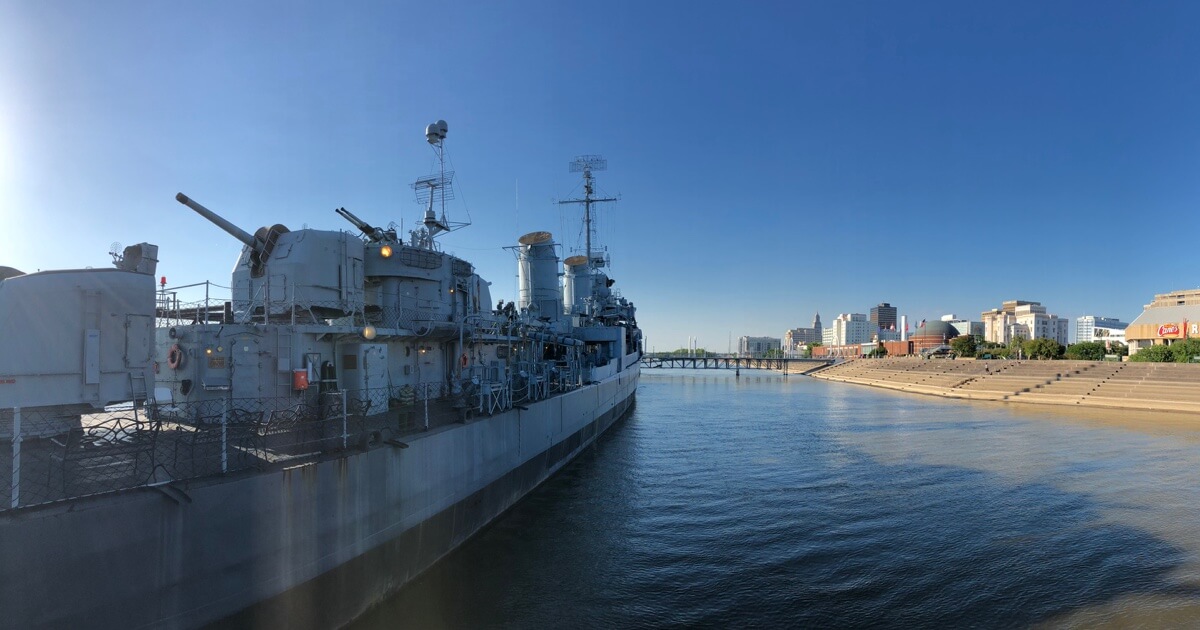
Or another one many are not aware of, the "Kidd Class Destroyers". Often jokingly called the "Dead Admiral Class", because of the names they were given. Built in the late 1970s as a localized copy of the Spruance class Destroyers, those were at the time the most advanced ships of the type in the world. And only used by the US. But when Iran requested some for themselves, the US built four of them.

Not much different than a Spruance, but having more emphasis on climate control ("super sized AC") and dust filtration being the largest differences. But the Revolution came shortly before the first was to have been delivered, so the US simply kept them. Naming them the Kidd class, and each ship named after an Admiral that had died in combat.

And serving in the Navy from 1981-1999, when the four ships were sold to Taiwan.

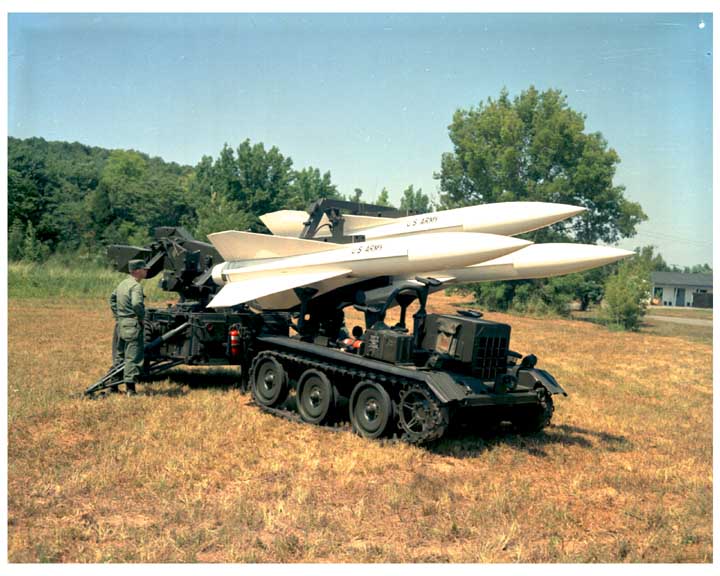
But Iran has since then done some rather interesting things with the technology they inherited from the Shah. Like the previously mentioned HAWK missile. Now that was a 1950s era missile, three bare missiles sitting on a launcher.

hawk_16oct62_rsa_01.jpg


Now one of the most interesting adaptations was when during the Iran-Iraq war they started running low on US made air-to-air missiles, and the Soviet missiles would not work on their F-14. So their solution was to modify the HAWK missile to work from the F-14.

message-editor%2F1589414716616-hawk-f-14.jpg


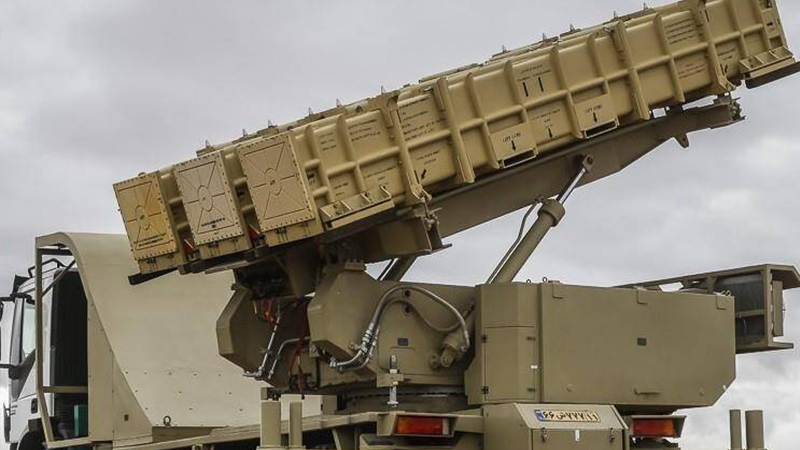
And in the decades since, they have continued to refine the system. Improving the RADAR, and most recently with the Mersad-16 variant placing the missiles into shipping-launching containers that are then placed on the launcher.

637663575638797924.jpg


And from a technological and functional standpoint, that is actually a considerable upgrade. But in the end, it is still just a modification of the original HAWK system. Firing a domestically made version of the original HAWK from 1960.

Not the kind of evolutionary journey of say the PATRIOT. Which other than the launcher vehicle itself bears almost nothing in common between those fielded in the early 1980s and today. Multiple generations of missiles, as well as a major upgrade in the launcher itself. For the Mersad-16 to have made a similar change, each of these "New Launchers" would actually be sporting not 3 but 12 missiles each. And being designed to kill their targets via kinetic kill, not proximity fused detonations.

Over the decades, they have gone from being tied for first to one of the weaker militaries in the region in regard to quality and capability of equipment. Still a match for the nations they border, but as was seen nowhere close to the US and Israel.

I am sure they can still pump out more Mersad-16 missiles and launchers. But their effectiveness was so poor, I am not sure why they would even want to. Even with the upgrades they did, it is still a system over six decades old. And simply not up to the challenge of taking out much more modern aircraft.

Ironically, maybe a good use for them would be to sell them to Ukraine. A lot of the aircraft being used against them are exactly the kinds of aircraft that was designed to counter in the first place.
 
Now to show a bit of the PATRIOT evolution.

TWBsl85X_o.jpg


Now that is the original PATRIOT launcher, circa 1975 from my own collection. And yes, taken at the same date and place as my avatar image. And I can spot multiple differences from even the "Base Patriot" we use today. The generator is much smaller, that was upgraded in the 1980s to power the more advanced electronics that were completely replaced. And the antenna in this was just an antenna. Today, it has integrated a GPS puck so the launcher knows where it is.

And the 4 canisters of 1 missile each, a thing of the past.

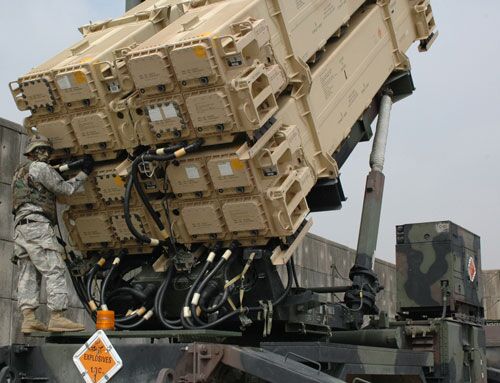
bf20b41551a907e7ae5be249f80d1ebd.Patriot1awiki.jpg


This is the PAC-3 version, and the differences are quickly obvious. In that, they scrapped the Proximity fuse, and now each individual canister has 4 missiles that destroy the target by kinetic energy. So not 4 missiles per launcher, but 16 missiles per launcher.

And the missiles used on the original launchers are similarly upgraded. From the original "Standard" missile, to the PAC-2 of the early 1990s (adding a tungsten rod to kill with both proximity and kinetic energy), to the GEM and GEM+ to the newest GEM-C and GEM-T. GEM-C still retaining proximity fuses and intended for "Air Breathing Threats" (aircraft and cruise missiles), and GEM-T with the kinetic kill warhead for ballistic missiles.

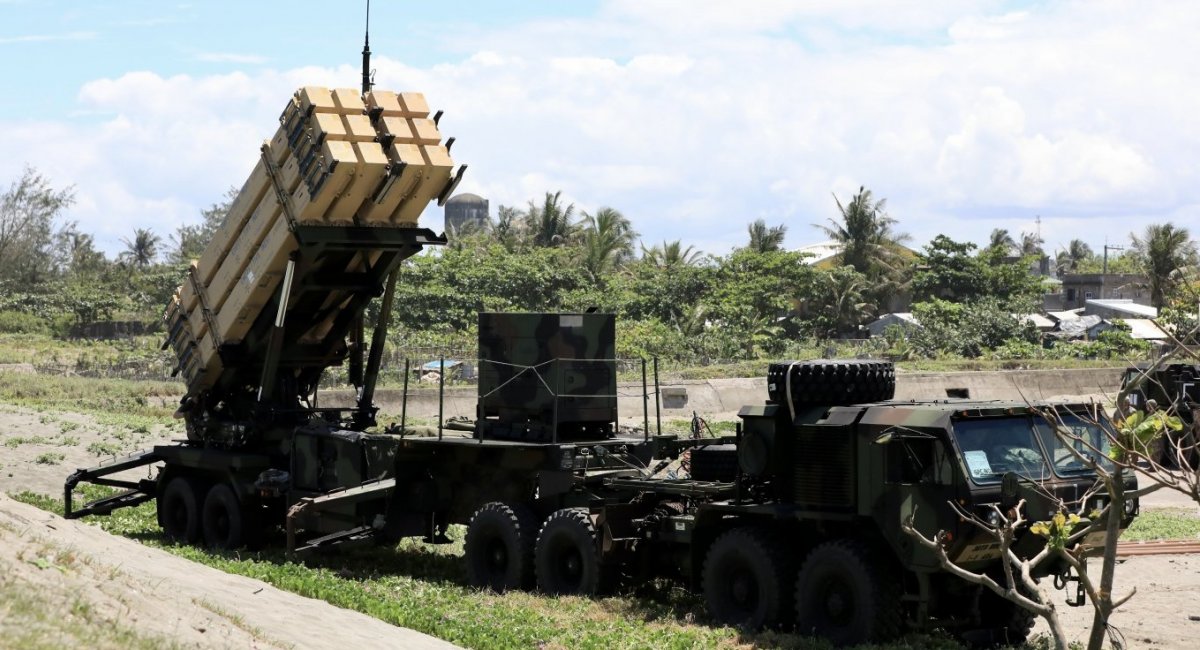
To the newest version, the PATRIOT PAC-3 MSE.

3d464835bb9a7508-1.jpg


This is also interesting, in essence taking parts of the failed MEADS concept, but integrating them into older launchers. This system can mix and match all of the previous missiles, where as the PAC-3 could not. You could load those with the PAC-2 missiles, or PAC-3 in an either-or configuration. Now, they can load PAC-2 series, PAC-3 series, as well as the newer PAC-3 MSE missiles at the same time. This allows a single launcher to address multiple threats at the same time, targeting the different threats with missiles specifically designed to take care of that threat.

Not as good as what MEADS could have been, but still a hell of an upgrade on what is basically a fifty year old system. The only part that remains from the "Original PATRIOT" is quite literally the trailer itself. Everything else from stem to stern is completely new and modern.
 
The Air Defense systems of Iran are actually kind of interesting. As it is a kind of a mix of US equipment, Soviet-Russian Equipment, and domestic equipment.

Of course, like many nations in the region they have several variants of the ZU-ZSU 23-57mm antiaircraft guns. Which ironically is the largest threat they have against stealth aircraft, if deployed correctly and the attacker is stupid enough to attack at the wrong time in the wrong way.


But after that, it is an eclectic mix of many systems. Ranging from the MIM-23 HAWK system built by the US, and a domestic copy they have made from it called the Mersad (and an upgrade of that called the Mersad-16). And others like the Herz-9, which is a copy of the Chinese HQ-7 (CH-SA-4, a copy of the French R-440 Crotale).

And the usual mix of Soviet-Russian equipment, from the 2K12 Kub (SA-6 Gainful), 9K33 Osa (SA-8 Gecko), S-300 (SA-10 Grumble), and others. And what a lot of people seem to miss is that being such a wide variety of systems, there is going to be a hell of a lot of problems in actually operating them in a coordinated fashion. Multiple different generations, from multiple source nations.

And their only real experience in using them actually dates back to the 1980s with the Iran-Iraq War. And Iraq was never seen as a formidable air power, so Iran now appears to be seriously overestimating their air defense capabilities. Something both Israel and the US showed them how wrong they were in their confidence.

Something driven home even more after that, as of the 14 missiles they themselves launched at Al Udeid, 13 were intercepted and destroyed, one was allowed to continue on as it was not going to impact on the defended asset.
Anti-aircraft guns are useless against anything but CAS aircraft. You, of all people, should know that.
 
Well, the Iranian technology is an interesting mix of primarily US and Soviet-Russian equipment. Along with some domestic copies.

At the time of the Iranian Revolution, they were probably tied neck and neck with Israel in that area. Both militaries professionally trained, and equipped with some of the best equipment that the US would export. Some of which they have actually never exported to anybody else. Like the F-14, the only two nations to ever use that state of the art fighter was the US and Iran.

Or another one many are not aware of, the "Kidd Class Destroyers". Often jokingly called the "Dead Admiral Class", because of the names they were given. Built in the late 1970s as a localized copy of the Spruance class Destroyers, those were at the time the most advanced ships of the type in the world. And only used by the US. But when Iran requested some for themselves, the US built four of them.

Not much different than a Spruance, but having more emphasis on climate control ("super sized AC") and dust filtration being the largest differences. But the Revolution came shortly before the first was to have been delivered, so the US simply kept them. Naming them the Kidd class, and each ship named after an Admiral that had died in combat.

And serving in the Navy from 1981-1999, when the four ships were sold to Taiwan.

But Iran has since then done some rather interesting things with the technology they inherited from the Shah. Like the previously mentioned HAWK missile. Now that was a 1950s era missile, three bare missiles sitting on a launcher.

hawk_16oct62_rsa_01.jpg


Now one of the most interesting adaptations was when during the Iran-Iraq war they started running low on US made air-to-air missiles, and the Soviet missiles would not work on their F-14. So their solution was to modify the HAWK missile to work from the F-14.

message-editor%2F1589414716616-hawk-f-14.jpg


And in the decades since, they have continued to refine the system. Improving the RADAR, and most recently with the Mersad-16 variant placing the missiles into shipping-launching containers that are then placed on the launcher.

637663575638797924.jpg


And from a technological and functional standpoint, that is actually a considerable upgrade. But in the end, it is still just a modification of the original HAWK system. Firing a domestically made version of the original HAWK from 1960.

Not the kind of evolutionary journey of say the PATRIOT. Which other than the launcher vehicle itself bears almost nothing in common between those fielded in the early 1980s and today. Multiple generations of missiles, as well as a major upgrade in the launcher itself. For the Mersad-16 to have made a similar change, each of these "New Launchers" would actually be sporting not 3 but 12 missiles each. And being designed to kill their targets via kinetic kill, not proximity fused detonations.

Over the decades, they have gone from being tied for first to one of the weaker militaries in the region in regard to quality and capability of equipment. Still a match for the nations they border, but as was seen nowhere close to the US and Israel.

I am sure they can still pump out more Mersad-16 missiles and launchers. But their effectiveness was so poor, I am not sure why they would even want to. Even with the upgrades they did, it is still a system over six decades old. And simply not up to the challenge of taking out much more modern aircraft.

Ironically, maybe a good use for them would be to sell them to Ukraine. A lot of the aircraft being used against them are exactly the kinds of aircraft that was designed to counter in the first place.
Actually, they were always referred to as the "Ayatollah Class". My high school classmate who also joined the Navy was assigned to one in San Diego. They are actual DDG variants of the Spruance as it had a complete missile system forward and aft like the nuclear CGs.
 
Anti-aircraft guns are useless against anything but CAS aircraft. You, of all people, should know that.

In this you are completely wrong. And this is why.

When it comes to dealing with aircraft with "Stealth capabilities", missile systems are actually pretty much useless. If the RADAR can not "see" the target, they can not hit the target. In fact, they will not even launch. You can't "force" a RADAR guided missile to launch, it is a key part of the safety. If it can't see a target, you can't launch a missile. Even even if you did launch it, then you have the timer, generally around 30-120 seconds. Where if it loses or misses the target, or simply finds nothing to lock onto it self-destructs.

And Heat Guided missiles suffer from the same problem. Either refusing to launch, or not finding a target and self-destructing.

This is where actual "guns" are different. Yes, all the modern guns since WWII are linked to RADAR systems. And 99% of the time are targeted by RADAR. However, they also still maintain a "Manual Mode". Primarily this is so that the same weapon can be targets below where the RADAR can see and fire at targets on the ground.

In this way, it is closer to the 8.8 cm Flak guns of Germany in WWII. Being able to be used not only on inbound aircraft, but against ground targets like tanks and bunkers. The ZU-ZSU series still have this capability, which is why you sometimes see them mounted on technicals for ground targets.

And because they do not rely on RADAR, they can be used to target "Stealth" targets visually. There is a reason why in all conflicts since 1989 that involved stealth aircraft happened almost entirely at high altitude at night. Darkness and coloration prevents the aircraft from being spotted and targeted visually, as well as the altitude.

Now if an F-35A pilot was stupid enough to conduct an attack in daylight at a lower altitude, it would be just as vulnerable to ground based direct fire weapons as would an F-18 or A-10. Because while almost completely safe from RADAR and heat tracking weapons, it has no defense against manually operated direct fire weapons.

Oh, and the few times we have had accidental launches of modern missiles (Qatar 2007), that shows just why. When doing training, there are in essence two "switches" that must be thrown. The first changes so the control van is not seeing the information from the real life RADAR but an "injected" image from a computer simulation. The other turns off the actual firing capability so that when the command is given nothing launches, it only launches in the simulation.

In 2007, the crew changed one and not the other. So when they gave the order to launch in the simulation, the launcher fired a real missile. Which about 30 seconds after firing and not finding the target that it "thought it saw" it detonated. Because those are "RADAR homing" missiles. They are not actually acquiring and targeting based on their own RADAR, it is not powerful enough for that (the RADAR on the missile only activates in the final seconds before intercept for final guidance and command to detonate for those with a proximity fuse). It is literally homing in on the "RADAR Echo" of the signal from the main system RADAR. In essence, it thought it had a good target and track, so when ordered it launched. But once it left the canister, it saw nothing so did just what it was designed to do. Fly to a safe altitude and blow itself up.
 
Actually, they were always referred to as the "Ayatollah Class".

Originally named Kouroush, the ship was ordered by the Shah of Iran, but was undelivered when the 1979 Iranian Revolution occurred. Subsequent to this, the U.S. Navy elected to commission the Kidd-class for service in the Persian Gulf and Mediterranean, as they were equipped with heavy-duty air conditioning and were also well suited to filtering sand and the results from NBC warfare. Kidd-class ships were known in the fleet informally as the “Ayatollah” or “dead admiral” class.

That is directly from the online USS Kidd Veteran's Museum (dedicated to the museum ship DD-661 but also covering other ships of the name). And I often heard them called "Dead Admiral" when they were active.

Kind of like how I knew a guy that served on the CV-63 in the 1990s, and called it a common name that would get me flagged if I repeated in here. But almost everybody should know the rhyming version of the "Crappy Kitty" name for the Kitty Hawk.
 
In this you are completely wrong. And this is why.

When it comes to dealing with aircraft with "Stealth capabilities", missile systems are actually pretty much useless. If the RADAR can not "see" the target, they can not hit the target. In fact, they will not even launch. You can't "force" a RADAR guided missile to launch, it is a key part of the safety. If it can't see a target, you can't launch a missile. Even even if you did launch it, then you have the timer, generally around 30-120 seconds. Where if it loses or misses the target, or simply finds nothing to lock onto it self-destructs.

And Heat Guided missiles suffer from the same problem. Either refusing to launch, or not finding a target and self-destructing.

This is where actual "guns" are different. Yes, all the modern guns since WWII are linked to RADAR systems. And 99% of the time are targeted by RADAR. However, they also still maintain a "Manual Mode". Primarily this is so that the same weapon can be targets below where the RADAR can see and fire at targets on the ground.

In this way, it is closer to the 8.8 cm Flak guns of Germany in WWII. Being able to be used not only on inbound aircraft, but against ground targets like tanks and bunkers. The ZU-ZSU series still have this capability, which is why you sometimes see them mounted on technicals for ground targets.

And because they do not rely on RADAR, they can be used to target "Stealth" targets visually. There is a reason why in all conflicts since 1989 that involved stealth aircraft happened almost entirely at high altitude at night. Darkness and coloration prevents the aircraft from being spotted and targeted visually, as well as the altitude.

Now if an F-35A pilot was stupid enough to conduct an attack in daylight at a lower altitude, it would be just as vulnerable to ground based direct fire weapons as would an F-18 or A-10. Because while almost completely safe from RADAR and heat tracking weapons, it has no defense against manually operated direct fire weapons.

Oh, and the few times we have had accidental launches of modern missiles (Qatar 2007), that shows just why. When doing training, there are in essence two "switches" that must be thrown. The first changes so the control van is not seeing the information from the real life RADAR but an "injected" image from a computer simulation. The other turns off the actual firing capability so that when the command is given nothing launches, it only launches in the simulation.

In 2007, the crew changed one and not the other. So when they gave the order to launch in the simulation, the launcher fired a real missile. Which about 30 seconds after firing and not finding the target that it "thought it saw" it detonated. Because those are "RADAR homing" missiles. They are not actually acquiring and targeting based on their own RADAR, it is not powerful enough for that (the RADAR on the missile only activates in the final seconds before intercept for final guidance and command to detonate for those with a proximity fuse). It is literally homing in on the "RADAR Echo" of the signal from the main system RADAR. In essence, it thought it had a good target and track, so when ordered it launched. But once it left the canister, it saw nothing so did just what it was designed to do. Fly to a safe altitude and blow itself up.
Thank you for proving my point. Did you not understand what I said and then went out of your way to prove I was right? If radar doesn't work and you cannot see it at night, how do you shoot it?
 
15th post

That is directly from the online USS Kidd Veteran's Museum (dedicated to the museum ship DD-661 but also covering other ships of the name). And I often heard them called "Dead Admiral" when they were active.

Kind of like how I knew a guy that served on the CV-63 in the 1990s, and called it a common name that would get me flagged if I repeated in here. But almost everybody should know the rhyming version of the "Crappy Kitty" name for the Kitty Hawk.
Thank you once again for proving me correct. Are you feeling OK today?

They were known as the Ayatollah class and never referred to as the Dead Admiral Class as most ships are named for dead naval officers or Marines. I served 23 years active and reserve in the Navy. My brothers both served in the Navy. I have facts. You have rumors since you never served in the Navy. Both of my cruisers were named for dead admirals. One brother decommissioned a Spruance class destroyer when he retired. His commanding officer and I served together when I was active.
 
Did you not understand what I said and then went out of your way to prove I was right? If radar doesn't work and you cannot see it at night, how do you shoot it?

And where did you say "at night"? The vast majority of CAS missions occur in the daytime. So you are apparently changing the parameters here.
 
They were known as the Ayatollah class and never referred to as the Dead Admiral Class

Well, other than many of us that served then. Oh, and the USS Kidd (DD-993) museum. Funny how you are still insisting they were never called that, when the museum web site clearly states that they were called that.

Are you alright?
 
And where did you say "at night"? The vast majority of CAS missions occur in the daytime. So you are apparently changing the parameters here.
Stealth aircraft are designed to be used at night and high altitude to avoid the very gun systems you cited. They aren't painted international orange for a reason.
 
Back
Top Bottom