Phoenall,
et al,
Yes, this is often a Palestinian held view.
Then try UN res 242 that spells out the facts, there are no recognised borders of Israel and Palestine. In fact it states that Israel should negotiate with its neighbours "secure and recognized boundaries" , and does not mention the Palestinians or any of their claims.
(COMMENT)
I have often heard
Security Council Resolution 242 of 22 November 1967 (also known as. "land for peace" resolution), interpreted in that respect.
The State of Israel, did attempt to negotiate with its neighbors.
- In March 1979, Treaty of Peace between the Arab Republic of Egypt and the State of Israel, which established boundaries.
1979 Peace Treaty Egypt-Israel said:
Article II
The permanent boundary between Egypt and Israel is the recognized international boundary between Egypt and the former mandated territory of Palestine, as shown on the map at Annex II, without prejudice to the issue of the status of the Gaza Strip. The Parties recognize this boundary as inviolable. Each will respect the territorial integrity of the other, including their territorial waters and airspace.
- In October 1994 Treaty of Peace between The State of Israel and The Hashemite Kingdom of Jordan, which established boundaries.
Peace Treaty Jordan - Israel said:
Article 3 - International Boundary
1. The international boundary between Israel and Jordan is delimited with reference to the boundary definition under the Mandate as is shown in Annex I(a), on the mapping materials attached thereto and co-ordinates specified therein.
2. The boundary, as set out in Annex I (a), is the permanent, secure and recognised international boundary between Israel and Jordan, without prejudice to the status of any territories that came under Israeli military government control in 1967.
... ... ... plus Paragraphs 3 thru 9.
The State of Palestine did NOT come into being until its
Declaration of Independence in November 1988. However, the UN had, in the Partition Plan, allocated territory for another Arab State. When the Peace Treaty between Israel and Egypt was negotiated, there was no State of Palestine to interact with in terms of having the "Capacity of States to Conclude Treaties" on behalf of the Palestinians under
Treaty Law Convention (Article 6). The 1974 Arab Summit resolution (League of Arab States) at Rabat, which designated the PLO as the sole legitimate representative of the Palestinian people, was the closest equivalent.
The 1994 Treaty with Israel was, in part, worded to recognized the 1988 Palestinian Declaration of Independence, and to consummate the
1988 Jordanian disengagement decision. Prior to the 1988 disengagement, the PRINCIPAL SECRETARY (to the UN) reported that he had received, for purposes of information, from the Headquarters Secretariat of the United Nations, the full text of the resolution of the Jordan Parliament as approved (April 1950) by the King providing for
the annexation of the Arab part of Palestine. Afterwards, the 1993 Oslo Accord became the primary guiding instrument.
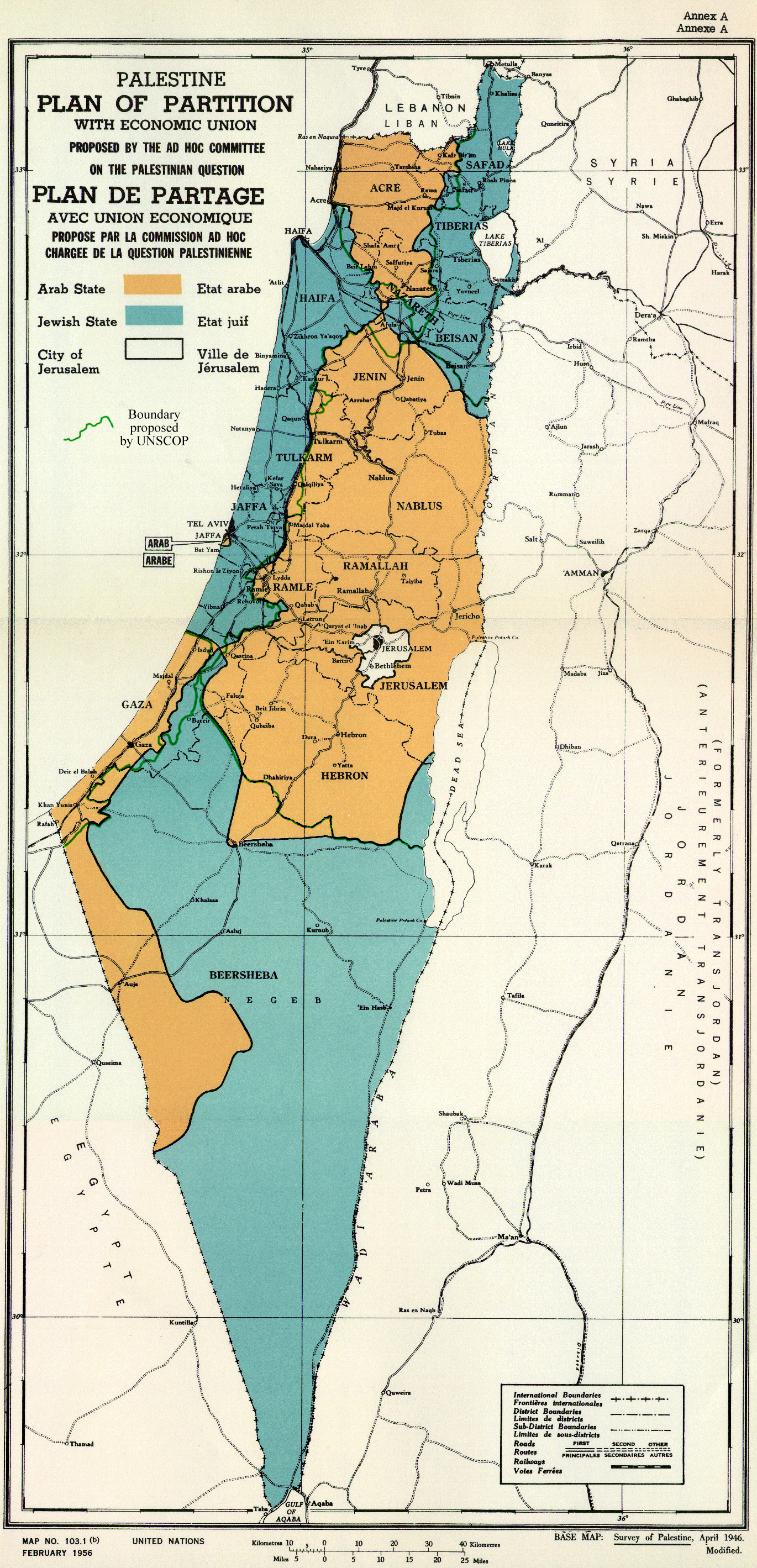
Much of the Security Council Resolution 242, particularly since there is such a very large faction of Palestinians that refuse to recognize the map and boundaries outlined in the
associated Map #3243 appended to the Resolution. So, form a Palestinian perspective, UNSC Resolution 242, as viewed today, is defective, as it cites international boundaries that are not recognized by the Palestinians. And the Palestinians have factions that refuse to recognize the international boundaries cited by treaty.
It should be noted that the Palestinians have not terminated "all claims or states of belligerency and respect for and acknowledgment of the sovereignty, territorial integrity and political independence of every State in the area and their right to live in peace within secure and recognized boundaries free from threats or acts of force." They are still arguing the validity of Maps and the sovereignty of the State.
Most Respectfully,
R