Two weeks ago Turkish forces launched a military assault in the Duhok region of Iraqi Kurdistan. Villagers were forced to ‘flee in terror’ from raining bombs. It was only the latest bombardment of the beleaguered Kurds by Turkey, NATO member and Western ally. It did not trend online. There were no noisy protests in London or New York. The Turks weren’t talked about in woke circles as crazed, bloodthirsty killers. Tweeters didn’t dream out loud about Turks burning in hell.
The Onion didn’t do any close-to-the-bone satire about how Turkish soldiers just
love killing children. No, the Duhok attack passed pretty much without comment.
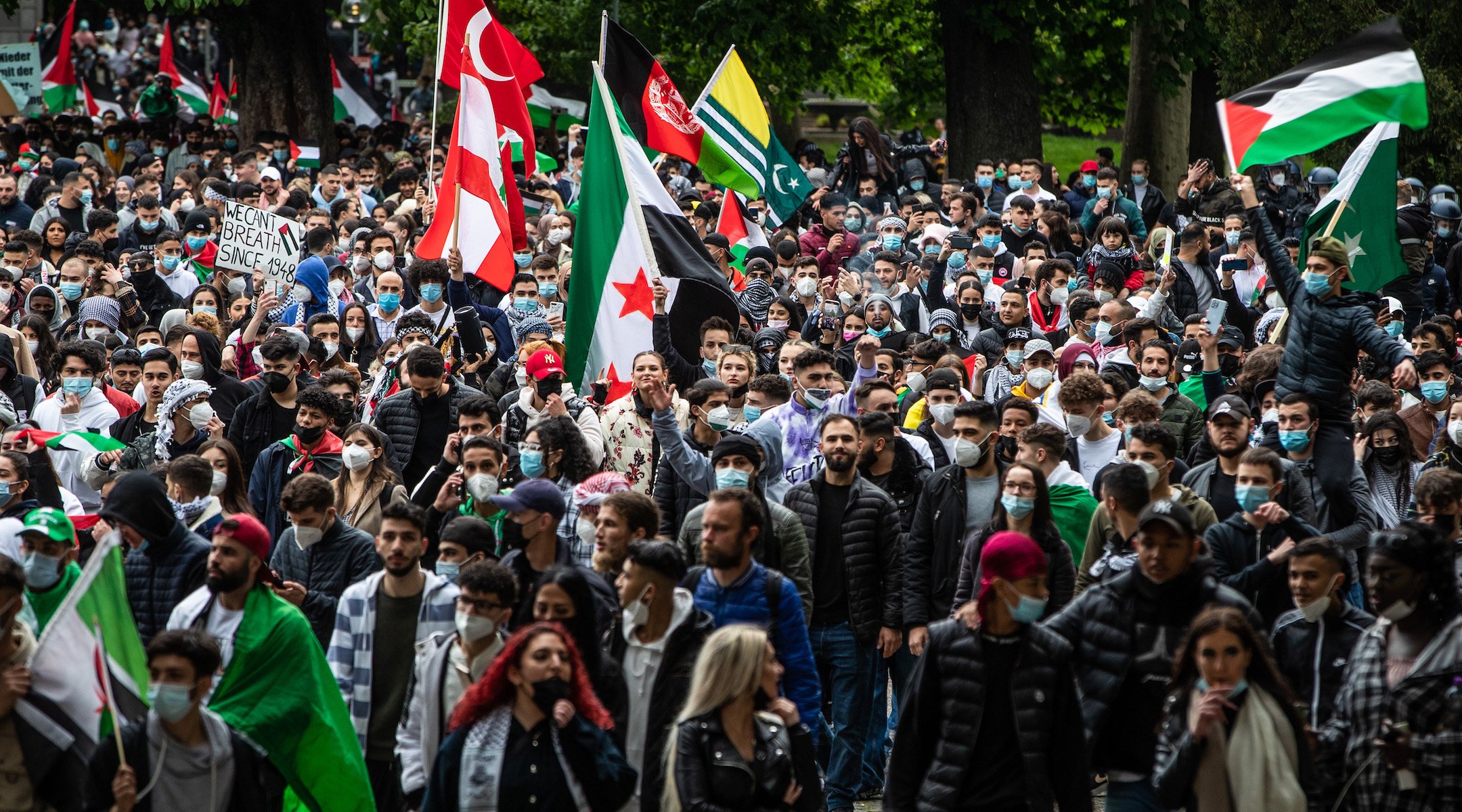
But when Israel engages in military action, that’s a different story. Always. Every time. Anti-Israel fury in the West has intensified to an extraordinary degree following an escalation of violence in the
Middle East in recent days. Protests were instant and inflammatory. Israeli flags were
burned on the streets of London. Social media was awash with condemnation. ‘IDF Soldier Recounts Harrowing, Heroic War Story Of Killing 8-Month-Old Child’, tweeted
The Onion, to
tens of thousands of likes.
This is the question anti-Israel campaigners have never been able to answer: why do they treat Israel so differently to every other nation on Earth? Why is it child-killing bloodlust when Israel takes military action but not when Turkey or India do?
The global woke loathing for Israel is taking an even darker turn.

www.spiked-online.com
Read to understand the current violence in Palestine.
The Israeli right’s urge to take the Temple Mount threatens to turn 2,000 years of Judaism on its head, says academic Yair Wallach

www.theguardian.com
On Monday, an apocalyptic video from Jerusalem began to circulate on social media. In the background, it showed a large fire raging on the site Muslims call al-Aqsa or al-Haram al-Sharif, and Jews call the Temple Mount. A tree was ablaze next to al-Aqsa mosque (some blamed Israeli police stun grenades, others blamed Palestinians shooting fireworks, perhaps aiming at Jewish worshippers).
Below, the large plaza of the Western Wall was full with young Jewish Israelis, identified with the religious Zionist right, celebrating “Jerusalem Day” (marking the occupation of East Jerusalem in 1967). They were cheering at the sight of the fire, singing an anthem of vengeance popular in extreme-right circles. The lyrics are the words of Samson, just before he pulled down the pillars of the Temple in Gaza: “O God, that I may with one blow take vengeance on the Philistines for my two eyes!” The Israeli teenagers, visibly ecstatic, jumped up and down and shouted: “May their name be effaced!”
This is not the first time that the holy sites have been ground zero for a major violent escalation in the conflict, and it is therefore tempting to interpret this vengeful frenzy as merely the latest eruption of an atavistic devotion to ancient stones, one bound to spiral out of control. But this is a misleading story: the political significance of these places – and their very meaning – has changed dramatically over the past century, particularly for Jewish Israelis.
continued
Thr Jews didn't worship at the Western wall until the 16th century.








 -
-


