How many times has humanity been wiped down to near extinction?

I remember that in the 1990's an American Archaeologist found evidence of human settlements in NM dated to 250,000 years ago. She was shunned by "trained archaeologists" her work discredited.

Recently 4 separate analyses have confirmed her results that set back human habitation in the Americas by at least 200,000 years

Don't forget, 80,000 years ago the Supervolcano eruption of Toba wiped the entire worldwide human population down to a few thousand individuals

So when "trained archaeologists" ask, "Where's the evidence that humans were in America that long ago?" Look at Pacific Palisades after 2 years now. Imagine civilization ended for tens of thousands of years, what would remain?

I remember her name: Virgina Steen McIntyre and the place was Hueyaltaco

I say
I had a prof. at University tell us about that in one of my physical anthropology classes. She noted that the reaction from the establishment on that brought a chilling affect to the field.
things like Politics and NAGPRA in America are modern day issues , and the Religious Leaders & Smithsonian were issues in the past .
 
Trained archaeologists are burying GT

Trained archaeologists spent their entire careers parroting that civilization began in the Tigris Euphrates 5,000 years ago. Rather than being intellectually honest that there were many, many sites that made that narrative impossible, they simply assumed that EVERYTHING was subsequent to and derived from their fictional narrative
Since nothing else of significance was found before 1968 (GT) - their assumptions were correct.

Finding new archeological sites, that change our previous understanding has nothing to with "trained archeology" not working - it's factually the opposite.
"Trained archeology" simply refutes and proofs that "Ancient Aliens" don't exist - maybe that's your actual problem with "trained archeology"?
 
Since nothing else of significance was found before 1968 (GT) - their assumptions were correct.

Finding new archeological sites, that change our previous understanding has nothing to with "trained archeology" not working - it's factually the opposite.
"Trained archeology" simply refutes and proofs that "Ancient Aliens" don't exist - maybe that's your actual problem with "trained archeology"?
No, Honey Boo boo. I don’t subscribe to Ancient Aliens

I do believe a prior human civilization was less arrogant and far more technically advanced than the current crop of shoe wearing chimpanzees with car keys inhabiting planet Earth.

According to Jimmy Corsetti at Bright Insight “trained archaeologists” are probably making fortunes covering up and selling out human past

 
No, Honey Boo boo. I don’t subscribe to Ancient Aliens

I do believe a prior human civilization was less arrogant and far more technically advanced than the current crop of shoe wearing chimpanzees with car keys inhabiting planet Earth.

According to Jimmy Corsetti at Bright Insight “trained archaeologists” are probably making fortunes covering up and selling out human past
I am certainly not one of those disputing the possibility of previous even advanced civilizations (like Egypt or Sumerians) having existed on the planet. First time I visited the Mesa Verde museum in 1979 - I was actually shocked by the idea of "those builders" being depicted in "model displays" as Neanderthals. Whilst in Europe they were depicted as modern Humans who live e.g. 2000 years ago.

The oldest modern Homo sapiens findings are presently dated at around 300.000. B.C. "Morocco". So who knows presently as to where these ancestors might have settled and even build advanced cities/civilizations???

However those who compare Earth Mounds clad with stones (e.g. Central America) - to be equivalent to Egyptian Pyramids also got it very wrong. To me the "tales" of dragons has always been of interest - that lead me to the idea that some prehistoric Dino's might have coexisted with early humans, or at least giant reptiles - therefore the always reoccurring as the most frightening aspects in all human mythology, descriptions and statues.

The Sahara is known to have reoccurring climate cycles spaced at 21.000 year cycles. Maybe someone needs to start digging there.

But to envision some cultures being anywhere near as advanced as today's civilization - is for me a stretch way too far.

I liked the last part of the video ..... or maybe an alien.... - they never do give up, do they?
 
Last edited:
I am certainly not one of those disputing the possibility of previous even advanced civilizations (like Egypt or Sumerians) having existed on the planet. First time I visited the Mesa Verde museum in 1979 - I was actually shocked by the idea of "those builders" being depicted in "model displays" as Neanderthals. Whilst in Europe they were depicted as modern Humans who live e.g. 2000 years ago.

The oldest modern Homo sapiens findings are presently dated at around 300.000. B.C. "Morocco". So who knows presently as to where these ancestors might have settled and even build advanced cities/civilisations???

However those who compare Earth Mounds clad with stones (e.g. Central America) - to be equivalent to Egyptian Pyramids also got it very wrong. To me the "tales" of dragons has always been of interest - that lead me to the idea that some prehistoric Dino's might have coexisted with early humans, or at least giant reptiles - therefore the always reoccurring as the most frightening aspects in all human mythology, descriptions and statues.

The Sahara is known to have reoccurring climate cycles spaced at 21.000 year cycles. Maybe someone needs to start digging there.

But to envision some cultures being anywhere near as advanced as today's civilization - is for me a stretch way too far.
Are you unfamiliar with megalithic stones in Montana?

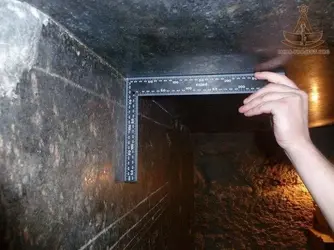
And are you at all familiar with the complex subterranean infrastructure at Giza?

All goes well beyond our modern capabilities
 
Are you unfamiliar with megalithic stones in Montana?

And are you at all familiar with the complex subterranean infrastructure at Giza?

All goes well beyond our modern capabilities
It only goes beyond our momentary knowledge - regarding forgotten construction techniques and partially tool-materials.

It isn't IMO any indication towards a or civilizations that would have been anywhere near today's modern technologies.
Since we advanced our civilization continuously - e.g. fabrication of bricks, concrete, glass and e.g. steel/aluminum or cutting smaller rocks/stones, we where not in need for the past 3000 years to move giant stones or megaliths.

The finding of a tooth dated 45.000 years old showing signs of "dental work" doesn't imply modern today's known dental tools and treatment. Only that some poor toothache plagued fellow received some rather "primitive" treatment 45.000 years ago.

Take today's agricultural machines e.g. tractors - and compare them with those steam driven monsters a 100 -120 years ago. Having seen these behemoth - my first question was, how the hell did they manage to even bring them to the fields and move them across some wet- muddy ground? well, they obviously had a lot of time and crops and harvest timing 120 years ago provided for a different soil and ground.

Str.webp


Str2.webp
 
You need to have an appreciation for large scale construction to understand why Giza is a marvel.

Whoever built it had to KNOW that the bedrock would support it.

Here's a topo map showing how advanced these ancient copper chisels and stone hammer builders actually were.

Instead of piling the stones on sand, they leveled a substantial portion of the Giza Plateau. You see to the straight lines to the left of the pyramids? That's the extent to which the foundation was prepared, perfectly level too! Toward the rear of the site, the topo lines show they cleared 15 feet of bedrock. Copper chisels? Stone mallets? Nah.

Any contractors or site engineers in the audience?

Topographic-map-of-the-Giza-plateau-after-modified-and-location-of-the-study-monuments.webp


The Leaning Tower of Pisa and One Seaport in NYC are classic examples what happens when you neglect the bedrock. The stones that make up Giza (Khufu has nothing to do with its construction) weigh an estimated 6.5MM tons. Any problem with the foundation would have manifested before they went too vertical. And any foundation settlement would have been painfully obvious by now.

Clearly the builders had some way of knowing they were able to stack the stones in perfect alignment.

Then, there's the manner of the subterranean infrastructure. Currently, "trained archaeologist" dismiss it the same way they dismissed the possibility that an advanced civilization existed 6 millenium before civilization dawned on the Tigris Euphrates. It's laughable at this point. They remind me of the Black Knight from Monty Python Holy Grail.
 
....Instead of piling the stones on sand, they leveled a substantial portion of the Giza Plateau. You see to the straight lines to the left of the pyramids? That's the extent to which the foundation was prepared, perfectly level too! Toward the rear of the site, the topo lines show they cleared 15 feet of bedrock. Copper chisels? Stone mallets? Nah.
This is known for a long time - maybe not to you - there are numerous examples of massive leveled natural rock foundations in the Levant. Which also indicate - proof - that these massive rocks and boulders were not brought there from miles and hundreds of miles away. But where hammered and carved out from an existing rock-bed being already at place - which partially puts an end to these "moving" discussions.
 
This is known for a long time - maybe not to you - there are numerous examples of massive leveled natural rock foundations in the Levant. Which also indicate - proof - that these massive rocks and boulders were not brought there from miles and hundreds of miles away. But where hammered and carved out from an existing rock-bed being already at place - which partially puts an end to these "moving" discussions.
Not sure why you’re having such a difficult time with this

To prepare the foundation for “Khufu” Pyramid alone, several million cubic feet of bedrock had to be moved and perfectly leveled

This was not the work of slaves with copper chisels
 
Not sure why you’re having such a difficult time with this

To prepare the foundation for “Khufu” Pyramid alone, several million cubic feet of bedrock had to be moved and perfectly leveled

This was not the work of slaves with copper chisels
I don't have a problem with this - but obviously you.

They had all the time in the world - they didn't use slaves, but a very skill full labor force - trained and experienced for centuries.
That Europeans lost their knowledge, respec. Roman and Celtic construction knowledge is obvious - since they took 250 years to build a gothic cathedral and another 400 years to finish it. - aka a doghouse compared to a Pyramid.

As for your never ending "copper-tool" saga - they proved the existence of arsenic knowledge - therefore creating a totally different type/alloy of metal - not just pure copper. Recent archaeological evidence reveals that iron was first used and smelted in India as early as 3300 BCE.

Southern India (Tamil Nadu):
Excavations at sites like Sivagalai and Mayiladumparai in Tamil Nadu have yielded iron tools, furnaces, and burial urns dating to around 2900 BCE.

14th to 11th Century BC: Meteoric iron was used in China, for decorative or luxury weapon blades, typically cast into bronze handles.

There are two types of bronze smelting techniques in early China, namely the section mold process and the lost-wax process. The earliest bronze ware found in China is the bronze knife unearthed in Linjia, Dongxiang, Gansu, and dated to about 3000 BC.
 
Last edited:
Not sure why you’re having such a difficult time with this

To prepare the foundation for “Khufu” Pyramid alone, several million cubic feet of bedrock had to be moved and perfectly leveled

This was not the work of slaves with copper chisels
I don't have a problem with this - but obviously you.

They had all the time in the world - they didn't use slaves, but a very skill full labor force (estimated to be between 20-40,000 trained and experienced workers for centuries.
That Europeans lost their knowledge, respec. Roman and Celtic construction knowledge is obvious - since they took 250 years to build a gothic cathedral and another 400 years to finish it. - aka a doghouse compared to a Pyramid.

As for your never ending "copper-tool" saga - they proved the existence of arsenic knowledge - therefore creating a totally different type/alloy of metal - not just pure copper. Recent archaeological evidence reveals that iron was first used and smelted in India as early as 3300 BCE.

Southern India (Tamil Nadu):
Excavations at sites like Sivagalai and Mayiladumparai in Tamil Nadu have yielded iron tools, furnaces, and burial urns dating to around 2900 BCE.

14th to 11th Century BC: Meteoric iron was used in China, for decorative or luxury weapon blades, typically cast into bronze handles.

There are two types of bronze smelting techniques in early China, namely the section mold process and the lost-wax process. The earliest bronze ware found in China is the bronze knife unearthed in Linjia, Dongxiang, Gansu, and dated to about 3000 BC.


And if e.g. 10,000 workers remove 100 tones (1300 cubic feet) a day (10 kg per worker, which wouldn't be much - it would only take 6-10 years to remove e.g. 5 million cubic feet. (a cubic feet of rock weighs around 75 kg), not counting the chiselling or breaking off, which then they used to build the pyramid or whatever structures.
 
I don't have a problem with this - but obviously you.

They had all the time in the world - they didn't use slaves, but a very skill full labor force (estimated to be between 20-40,000 trained and experienced workers for centuries.
That Europeans lost their knowledge, respec. Roman and Celtic construction knowledge is obvious - since they took 250 years to build a gothic cathedral and another 400 years to finish it. - aka a doghouse compared to a Pyramid.

As for your never ending "copper-tool" saga - they proved the existence of arsenic knowledge - therefore creating a totally different type/alloy of metal - not just pure copper. Recent archaeological evidence reveals that iron was first used and smelted in India as early as 3300 BCE.

Southern India (Tamil Nadu):
Excavations at sites like Sivagalai and Mayiladumparai in Tamil Nadu have yielded iron tools, furnaces, and burial urns dating to around 2900 BCE.

14th to 11th Century BC: Meteoric iron was used in China, for decorative or luxury weapon blades, typically cast into bronze handles.

There are two types of bronze smelting techniques in early China, namely the section mold process and the lost-wax process. The earliest bronze ware found in China is the bronze knife unearthed in Linjia, Dongxiang, Gansu, and dated to about 3000 BC.


And if e.g. 10,000 workers remove 100 tones (1300 cubic feet) a day (10 kg per worker, which wouldn't be much - it would only take 6-10 years to remove e.g. 5 million cubic feet. (a cubic feet of rock weighs around 75 kg), not counting the chiselling or breaking off, which then they used to build the pyramid or whatever structures.
The Gothic cathedrals are a mystery to me!

They began once the Templars returned from Jerusalem and ended when the Templars were banished in the early 1300’s. At Chartres Cathedral there’s a pillar that shows men wheeling a box and the saying “here you shall work through the Ark”

I assume along with the Ark of the Covenant they brought back the architectural “plans” and knowledge of stained glass and cymatics from Jerusalem, and absolutely the financial resources— but where were the predecessor constructions?

If the knowledge came from Solomon’s Temple, where are the Gothic cathedrals built in Solomon’s time anywhere in the world?

Also, here’s the precision used to “carve”
these “Egyptian” works


IMG_3710.webp


IMG_3563.webp
 

Attachments

  • IMG_3563.webp
    IMG_3563.webp
    62.7 KB · Views: 0
15th post
The Gothic cathedrals are a mystery to me!

They began once the Templars returned from Jerusalem and ended when the Templars were banished in the early 1300’s. At Chartres Cathedral there’s a pillar that shows men wheeling a box and the saying “here you shall work through the Ark”

I assume along with the Ark of the Covenant they brought back the architectural “plans” and knowledge of stained glass and cymatics from Jerusalem, and absolutely the financial resources— but where were the predecessor constructions?

If the knowledge came from Solomon’s Temple, where are the Gothic cathedrals built in Solomon’s time anywhere in the world?

Also, here’s the precision used to “carve”
these “Egyptian” works
Gothic Cathedrals aren't much of a mystery to me.

They are clearly inspired by Byzantine & Islamic architecture and building skill - such as the great Mosque of Cordoba or the Dom zu Aachen (Germany). Both structures being build in the 8th - 10th century - way before the crusades. Basically a mix between Romanic and Islamic style - with an urge to build a higher "nave" - therefore making the further invention of side-struts necessary. Giving it that "Gothic Style".

And the fundamental knowlege in Mathematics and Physics to build such high structures came from Byzantine and the Arabs.

I remember visiting a Bavarian castle-ruine in Bavaria some 45 years ago - acompanied by an old man (a local farmer & caretaker of the ruine) - and pointed out a window that I had previously noticed - that didn'f fit into the known architecture. He was happy to point out to me that it was brought in from the Middle-east by one of the Counts who had participated in a Crusade.

The higher construction of the nave via rib vaults, (already visible in Romanic/Islamic structures), then called for or enabled those massive and high, painted glass windows. The pigmentation of those colors hasn't been solved until today - so either invented by Europeans in Europe or maybe copied/ brought in from the crusades. Whereby I wouldn't be familiar with any Islamic structure having these kind off colored/painted glass windows.

The Great Mosque of Cordoba - built from the 8th to 10th century

GMAC.webp


The Dom zu Aachen (Germany) - built from the 8th to 10th century

DzA 1.webp

DzA 2.webp
Extended in the 13th century via the "Gothic ship".
 
Last edited:
Back
Top Bottom