schmidlap
Platinum Member
- Oct 30, 2020
- 15,064
- 9,595
- 1,138
- Thread starter
- #101
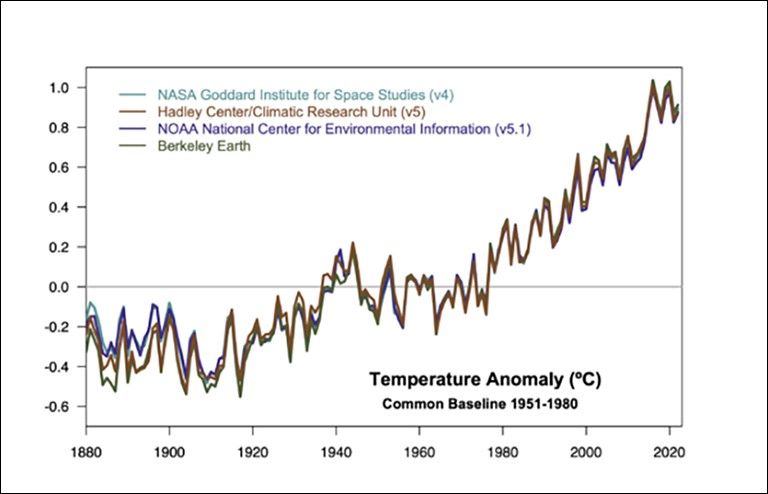
Obviously, capitalism cannot afford to indulge itself in your scientific denialism, but must confront reality:Political. Not science. There is zero empirical evidence to support AGW. It is ALL derived from computer models.
And those models are so poorly written that no matter what numbers are plugged in the results are always the same.
Your ideological perversions don't apply to the real world. Only the world of computer derived fiction.
Morgan Stanley has published a new report showing most companies around the world are feeling the impacts of a warming world.
- Over half of the firms surveyed in a recent Morgan Stanley report experienced the climate's impact on operations within the past year, including increased costs, worker disruption and revenue losses.
- Extreme heat and storms were the leading disruptions, followed by wildfires and smoke, water shortage, and flooding or rising sea levels.
- Nearly 90% of South American companies expect climate change to be a risk to their business models by the end of the decade, with raw material availability and pricing, and the risk of existing manufacturing processes becoming obsolete among their top concerns.
Climate change is already having an impact on companies around the world.
Over half of the firms surveyed in a recent Morgan Stanley report experienced the climate's impact on operations within the past year, including increased costs, worker disruption and revenue losses. The growing financial impacts are a key reason some companies are continuing to pursue emissions cuts and adapt to a warming world even amidst political turbulence, the survey found.
Extreme heat and storms were the leading disruptions, followed by wildfires and smoke, water shortage, and flooding or rising sea levels, according to the new report. The US alone has spent nearly $1 trillion on disaster recovery and other climate-related needs over the past year, a recent Bloomberg Intelligence analysis found. Data collected by the US Census Bureau shows how these impacts can play out locally: For example, nearly two-thirds of businesses in the Tampa metro area surveyed reported losses due to extreme weather following last year’s hurricane season when Helene and Milton made landfall on Florida’s west coast...
The impacts are hardly limited to companies operating in the US. This year’s Canadian wildfires forced evacuations of oil sands projects in Alberta, Canada, while a disastrous 2022 flood recently led Toyota to file a lawsuit for over $360 million in damages in South Africa. Extreme heat is forcing Australian mining companies to adapt their operations...
The findings show nearly 90% of South American companies expect climate change to be a risk to their business models by the end of the decade. Companies ranked raw material availability and pricing, as well as the risk of existing manufacturing processes becoming obsolete among their top concerns. While being the areas most likely to experience extreme weather, the Middle East and North Africa reported the highest rates of viewing sustainability as a driver of value creation.
The challenges are different in North America, though, where companies see political volatility as the top barrier to investing in sustainability. The backlash to ESG, particularly among US Republicans, caused 21% of North American companies to report political hostility as a top barrier to their climate transition. In response, some companies have taken to “greenhushing” — a phenomenon of pushing to meet climate goals while not touting them — while others have rolled back or abandoned their emissions targets.