Let's Build an Amp Cradle

Chuz Life

Diamond Member
Joined
Jun 18, 2015
Messages
14,423
Reaction score
8,373
Points
1,250
Location
USA
Hey all.

I've been working on some ideas for an "Amp Cradle" to help with future amp repairs and rebuilds on the new bench. (Suggested by scruffy ) I hope you are doing ok scruffy. It would be great to see you back.

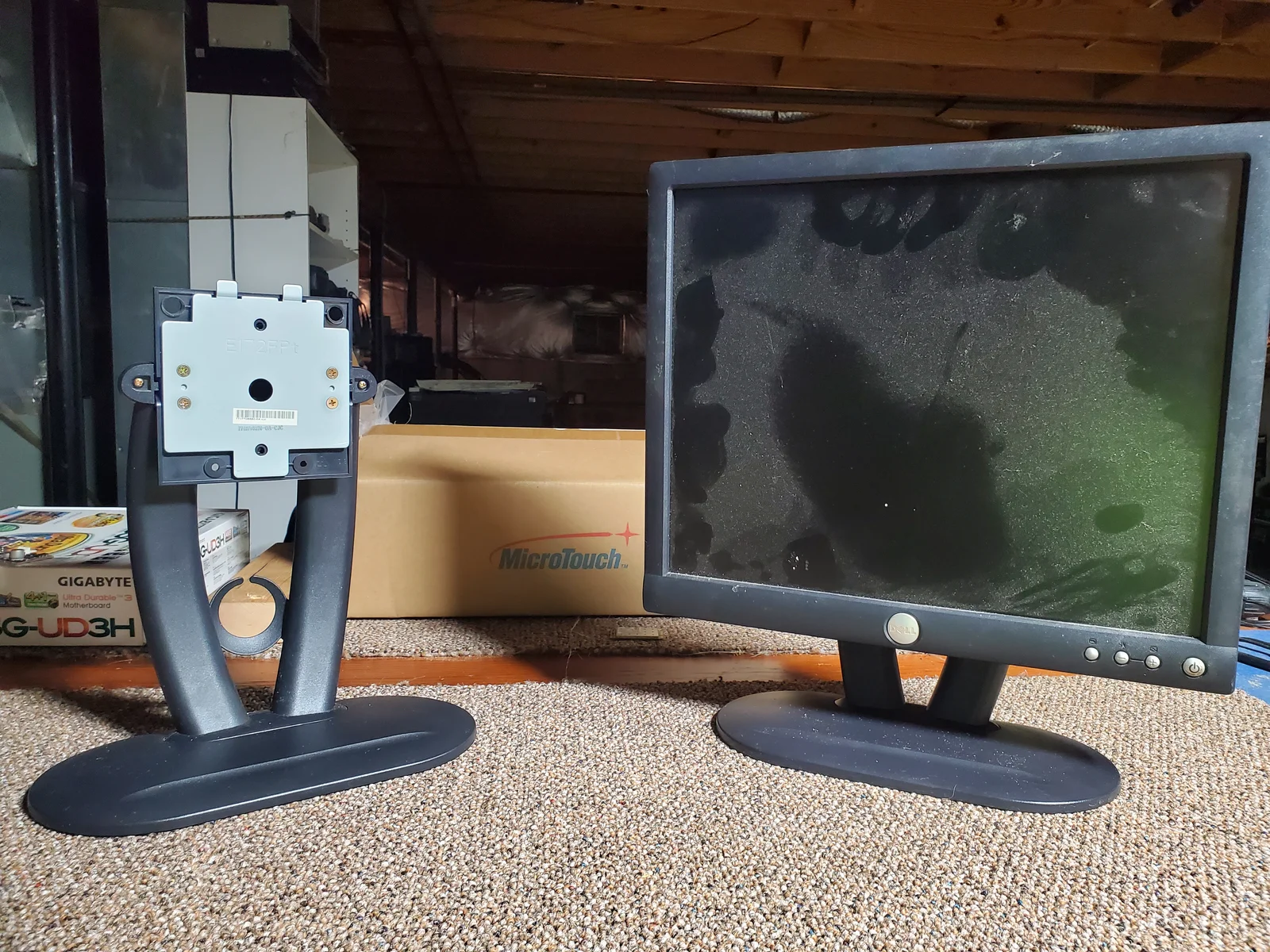
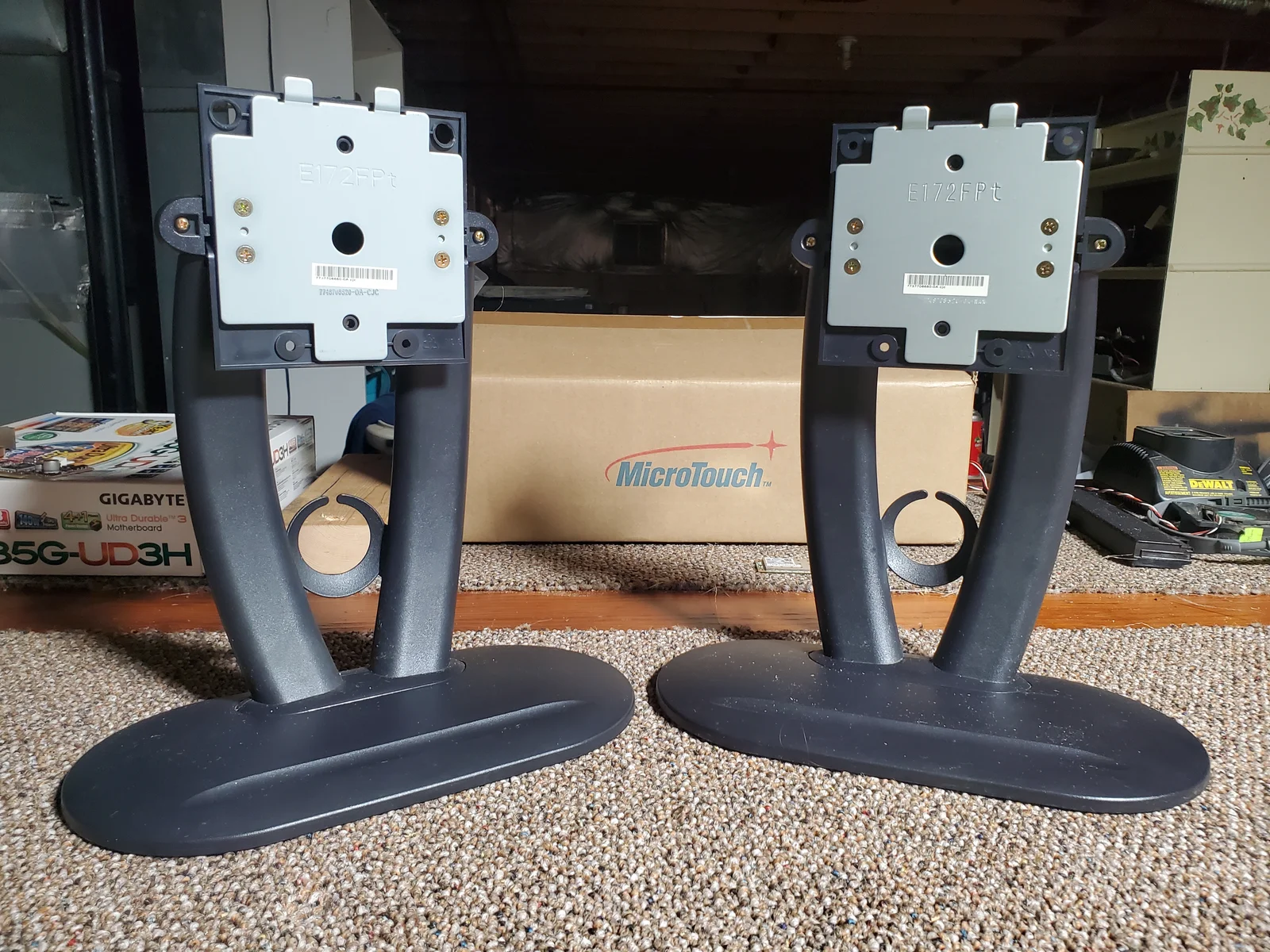
I was going to do a complete build out of (scrap) wood that I have left over from the bench. . . but I have this idea to use two computer monitor stands (for the support ends).
20260603_012622.webp


I have these two identical stands and they are very strong.

I've ordered some Delrin drop pieces to re-shape for the adjustable claw looking shelf pieces.

I'm not sure about the hardware, yet.

But I will share that as things develop.
20260603_012830.webp


As for the base, I hope to fix one of the two stands to a piece of 3/4 inch plywood and the other will be adjustable. The whole thing after that will be on a large diameter "lazy susan" (I hope), so after the chassis is secured, I can spin it around - without fear of tipping.

toobfreak - any thoughts?

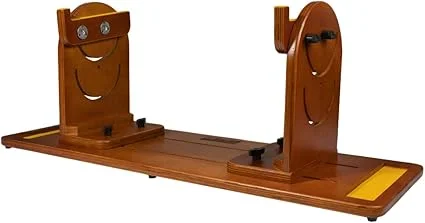
MojoTone's version - Nearly $200

I know I can beat that and still have a decent cradle.
1780467889609.webp
 
Last edited:
I've been working on some ideas for an "Amp Cradle"
toobfreak - any thoughts?

Well, I've not used an amp cradle though I remember the subject being bandied last winter. I'm more of a machined metal kind of guy than wood though wood offers electrical isolation if working on powered circuits.

My idea of an amp table might be made out of 6061-T6 mounted on rubber feet to prevent skidding (and create some electrical isolation), then have the two "arms" made to slide sideways along tracks, requiring only pulling on a spring loaded tang or lever to release the lock from a toothed surface to allow free adjustment to the width of the amp, locking back in place in position by simply releasing the springed lever.

Similarly, the rotation of the holders for flipping the amp this or that way could be accomplished similarly. It could be anything from a friction plate clamped in position by twist knobs to, again, just a quick release latch which when let go, a tooth engaged some type of positive capture--- a hole, a groove, something so the amp can be unbalanced (as most amps are not evenly weight-distributed) so the thing can't turn or flip on you.

Of course, the feet of the thing could be adjustable too or at least extend out far enough so that there is no possibility of the whole stand flipping and toppling over.

Even neater might be if the amp stand were built into the work bench--- maybe it flips out of the way when unneeded, but flips up into place when used?

Back in the 90s, I had a Pennsylvania company make me a very high-end telescope, but it arrived with a rotating part which was supposed to hold position at various angles by a thumbscrew applying friction, but it proved inadequate for the weight of some special oculars which can be big as a grenade, heavy, and quite expensive. So I took the rotating section apart, put it in a dividing engine, and milled a ring of evenly-spaced "detents" (conical holes) around the inner sleeve so that when the thumbscrew was tightened, this time, the tip of the screw actually was captured by the detent closest to the chosen position for a positive hold so that even if the screw loosened, the rotator still could not turn.

Maybe out of this you might get some ideas--- here is a file photo of the part I modified--- maybe some variant of this idea might have utility for designing your amp stand. The holes below were spaced close enough together so that I could always find a locked position close enough to what I needed. I'm guessing there was something like 24 detents in my sleeve which placed them each 15° apart.

Picture_f30b.webp
 
Well, I've not used an amp cradle though I remember the subject being bandied last winter. I'm more of a machined metal kind of guy than wood though wood offers electrical isolation if working on powered circuits.
I am aware of the need for isolation. My entire setup will be isolated via the power source in my "Let's Build a Bench" thread. However, you're right about wood being better for safety (isolation.) I think it will be fine (for me and my setup), but not ideal for anyone who doesn't fully understand the risks, ground loops, etc.

My idea of an amp table might be made out of 6061-T6 mounted on rubber feet to prevent skidding (and create some electrical isolation), then have the two "arms" made to slide sideways along tracks, requiring only pulling on a spring loaded tang or lever to release the lock from a toothed surface to allow free adjustment to the width of the amp, locking back in place in position by simply releasing the springed lever.

Especially if I were to be doing a lot of amp work.

Similarly, the rotation of the holders for flipping the amp this or that way could be accomplished similarly. It could be anything from a friction plate clamped in position by twist knobs to, again, just a quick release latch which when let go, a tooth engaged some type of positive capture--- a hole, a groove, something so the amp can be unbalanced (as most amps are not evenly weight-distributed) so the thing can't turn or flip on you.

Of course, the feet of the thing could be adjustable too or at least extend out far enough so that there is no possibility of the whole stand flipping and toppling over.

Even neater might be if the amp stand were built into the work bench--- maybe it flips out of the way when unneeded, but flips up into place when used?

"Flips out of the table" was actually something I considered. My grandmother had a sewing machine that was built like that. That kind of inspired the thought. There when you needed it but, just a table when the machine wasn't needed.

Back in the 90s, I had a Pennsylvania company make me a very high-end telescope, but it arrived with a rotating part which was supposed to hold position at various angles by a thumbscrew applying friction, but it proved inadequate for the weight of some special oculars which can be big as a grenade, heavy, and quite expensive. So I took the rotating section apart, put it in a dividing engine, and milled a ring of evenly-spaced "detents" (conical holes) around the inner sleeve so that when the thumbscrew was tightened, this time, the tip of the screw actually was captured by the detent closest to the chosen position for a positive hold so that even if the screw loosened, the rotator still could not turn.

I hope you shared your "fix" with the mfgr.

Maybe out of this you might get some ideas--- here is a file photo of the part I modified--- maybe some variant of this idea might have utility for designing your amp stand. The holes below were spaced close enough together so that I could always find a locked position close enough to what I needed. I'm guessing there was something like 24 detents in my sleeve which placed them each 15° apart.

View attachment 1264604

Yes. It's in line with a few ideas I have for adjustments and changing angles and such. For sure.

Mine is probably going to be overkill already. I only have four ams that I know I will be working on. Then, I doubt many more.

I wish I had more time for these kinds of projects 20-30 years ago. Life happens, though.

Today, I have to start mowing. Five acres or more, and I'm not looking forward to it.
 
I don't think I thought things through well enough for my two Rails/ Rests, whatever they should be called.

I ordered this piece of Delrin that is just enough to cut the two pieces out of, but the only thing I have to cut it with is a small coping saw.

1780631090780.webp


Cradle Rests.webp


Suggestions?
 
I ordered this piece of Delrin that is just enough to cut the two pieces out of, but the only thing I have to cut it with is a small coping saw.
Suggestions?

Good luck with that. I've never tried cutting delrin, that's is really tough. IMO, trying to cut it with a coping saw is futile and will end horribly. I would try a table saw or band saw, but at that, you still need just the right blade and tooth profile, something super sharp made of high-speed steel or carbide with a positive rake angle, and employ air blasts or coolants for optimal results to keep heat from building up.

Even at that, you would likely still need to mill the cut surface with something like a fly cutter to get a smooth finish. Because of that, I always order delrin in the size and thickness I need and just use it as it comes.
 
Good luck with that. I've never tried cutting delrin, that's is really tough. IMO, trying to cut it with a coping saw is futile and will end horribly. I would try a table saw or band saw, but at that, you still need just the right blade and tooth profile, something super sharp made of high-speed steel or carbide with a positive rake angle, and employ air blasts or coolants for optimal results to keep heat from building up.

Even at that, you would likely still need to mill the cut surface with something like a fly cutter to get a smooth finish. Because of that, I always order delrin in the size and thickness I need and just use it as it comes.

I've cut it with a hacksaw before. Still an option for this, I suppose.

I don't have access to a bandsaw anymore. We used CNC mills back when I was in maintenance but I did occasionally cut small pieces by hand.

This is gonna suck.

LOL!
 
I've cut it with a hacksaw before.

Well, I don't have your plans in front of me nor can see what you're working with nor know the desired shape and result so, hard to say. Maybe it can be hacksawed if you have the right blade and technique, just that I sure wouldn't want to be the one to try.

I assume you want delrin to use as some sort of sliding surface for adjusting the arms.
 
Well, I don't have your plans in front of me nor can see what you're working with nor know the desired shape and result so, hard to say. Maybe it can be hacksawed if you have the right blade and technique, just that I sure wouldn't want to be the one to try.

I assume you want delrin to use as some sort of sliding surface for adjusting the arms.
It's shown in the drawing I shared. (not to scale)

The two pieces are shown in red.

It will pivot (Delin can be tapped and will hold threads, or I can use a brass nutcert.)

Delrin (Acetate) is a very hard plastic, and these pieces are what the amp will rest on. (can see same in the MojoTone cradle in the OP)
 
It's shown in the drawing I shared. (not to scale)
The two pieces are shown in red.

I wondered about that. Looks like you will be trying to cut a dovetail shape in it. They make dovetail cutters that do that very well.

Looks pretty tricky to do by hand.

If you pull it off, I'd like to see pictures! My hat is off to you if you can pull it off!
 
I wondered about that. Looks like you will be trying to cut a dovetail shape in it. They make dovetail cutters that do that very well.

Looks pretty tricky to do by hand.

If you pull it off, I'd like to see pictures! My hat is off to you if you can pull it off!

I do have a tablesaw, but there is no way to go straight in for any worthwhile distance. Plus, I imagine the saw bucking quite a bit, chatter, etc.

I will definitely share pics.
 
Back
Top Bottom