
james bond
Gold Member
- Oct 17, 2015
- 13,409
- 1,805
- 170
Trying to educate you on science is a waste of time.You do realize that matter and energy are equivalent, right?
No. Is a dingbat the equivalent of ding?
You can create matter, but not energy.
So whether I say matter or energy can’t exist without creating space time it like saying the same thing, right.
I think you're confused. People may think matter and energy are the same because they are found together. I agree both need space time. But then you can't create energy. Thus, big bang is impossible.
So what did God do?
so you understand the concept of space but are confused by space time. Space is the 3 dimensions represented by x, y and z coordinates. The 4th dimension t or time represents or is a measurement of expansion. Time doesn’t really exist it’s just a convenient way of demarcating the expansion of space. Space time is usually shown as a cone since the universe is relatively flat.
I’m not your enemy. So stop acting like I am.
C'mon you're just making stuff up. d = r * t, so t = d/r.
You fly from SF to NYC in a jet and your watch shows it takes you almost 6 hours. I go in the transporter and my watch shows less than a second has elapsed. Time exists and it's not always based on space expansion. Are you just saying that to fit big bang? What are you missing? Hint: Einstein.
Are you really an engineer?
And why does my post make you think I am your enemy?
I just debunked your space and time definition
 . It's not just the light cone.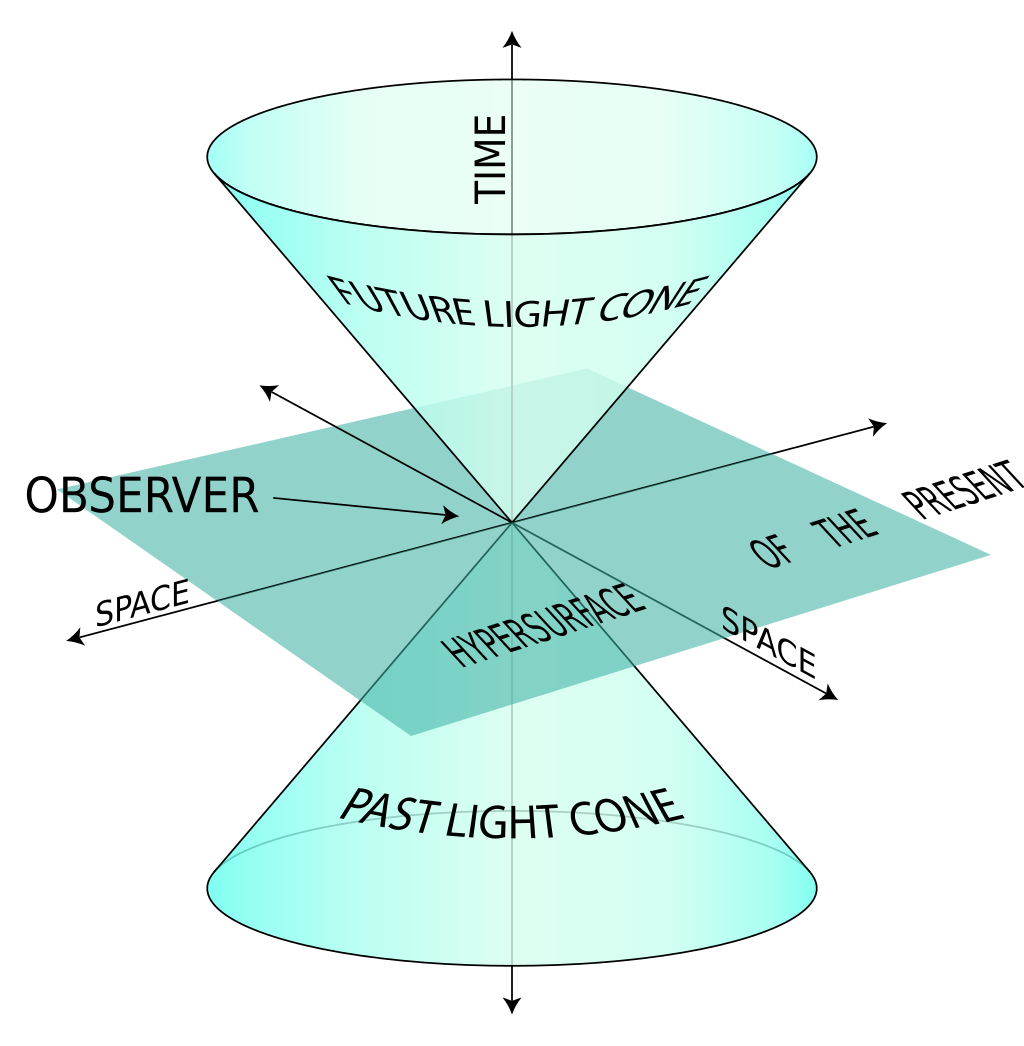
And God creating light first and space and time from the void is backed up by science while you just have a scrunched up face.



 Not any of the atheists I know.


