I called on thousands of businesses from large corporations to mom and pop operations for over 20 years. One common theme I recognized was the most successful companies were run by people who valued their employees and treated them well. Workers are not stupid. Their loyalty or lack of it will manifest when no one is watching. At highly successful companies, I saw a sense of ownership on the part of employees, it was THEIR company. And they took personal responsibility for the companies success. On the flip side, workers who were exploited returned that exploitation at every opportunity, any business that has contempt for their employees, will ultimately have contempt for their customers...and customers aren't stupid either.
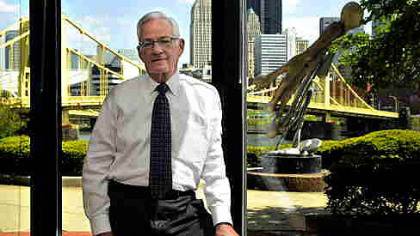
Here is a great example of how to turn a company around. Paul O'Neill who George W. Bush hired as his first Treasury Secretary and then fired when O'Neill disagreed with Bush's second round of tax cuts for the rich and our going to war with Iraq turn Alcoa around. He had zero experience in the aluminum business. O’Neill was the CEO who turned Alcoa around during his tenure from 1987 – 2000. He joined a company in turmoil, and under his leadership, the value of the company doubled and the annual revenue went from $1.5 Billion in 1987 to $23 Billion.
O'Neill started with a focus on the MOST important way of valuing your employees, making sure at the end of the day they return home safely to their families.
'Habitual excellence': The workplace according to Paul O'Neill - Pittsburgh Post-Gazette
In an extensive interview, Mr. O'Neill, who left Alcoa in 2000, said he wasn't sure how comfortable he was in having his worker safety emphasis described as a method for creating good habits because, "I have a little negative reaction to the idea that human beings are infinitely malleable into habit robots."
He saw his safety goal as part of a broader emphasis on creating "habitual excellence."
"I believe an organization has the potential for greatness if every person can say yes to three questions without reservation," Mr. O'Neill said. "The first is, 'Can I say every day I am treated with dignity and respect by everyone I encounter without respect to my pay grade, or my title, or my race, or ethnicity or religious beliefs or gender?' And you know, there are not a lot of places like that.
"The second question is, 'Am I given the things I need - education, training, tools, encouragement - so I can make a contribution to this organization that gives meaning to my life?' And the third question is, 'Am I recognized for what I do by someone I care about?'
"Every company I know of says somewhere in its annual report, 'People are our most important resource,' but my observation from all these places I had worked was that there was no evidence it was true."
The worker safety campaign at Alcoa, which already had a well-regarded injury rate, was more than mere rhetoric. In his 13 years at the helm, Alcoa went from 1.86 lost work days per 100 workers to 0.2. And the ethos has continued: as of last week, the rate stood at 0.125.
Discretionary Energy and Paul O’Neill
Before becoming the 72nd US Treasury Secretary Mr. O’Neill was the CEO of Alcoa. When he came into the organization, by all accounts Alcoa was lagging behind in terms of both employee morale and revenues and not delighting users. Instead of focusing on increasing revenues, Mr. O’Neill zeroed in on safety. At first glance it seemed like a very curious choice and one that did get immediate negative feedback from his management team and some of the long time tenured employees at Alcoa.
So why would a new CEO spend most of his time on an initiative focused on safety? Really, how would that lead to profit and revenue growth? The answer is the concept of Discretionary Energy.
Discretionary energy is the amount of attention you are getting from your employees and it speaks to their willingness to be “checked-in” vs. their willingness to be “checked-out” during work hours. What Mr. O’Neill recognized was that there was a correlation between his employees’ safety violations decreasing and discretionary energy increasing. Amazingly, even with his internal detractors, his theory played out. What he saw was a huge decrease in safety violations and a huge increase in discretionary energy.
Once the employee base discretionary energy was at a heightened level, Mr. O’Neill could begin leveraging his successful experiment by rolling out additional top-down initiatives that would spur additional activities / yielding results that he wanted. With employees already going the extra mile and sending additional energy around safety it wouldn’t be a stretch to ask them to do the same around other tasks.