Navigation
Install the app
How to install the app on iOS
Follow along with the video below to see how to install our site as a web app on your home screen.
Note: This feature may not be available in some browsers.
More options
Style variation
You are using an out of date browser. It may not display this or other websites correctly.
You should upgrade or use an alternative browser.
You should upgrade or use an alternative browser.
1000 mile range, 5 minute charge
- Thread starter Old Rocks
- Start date
Old Rocks
Diamond Member
- Thread starter
- #102
Present battery technology has developed and is developing many battery chemistries. We now have iron-air batteries that look ideal for grid use, the LFP batteries have a longer lifespan, are less costly, and have a longer lifespan than the present lithium ion, but also have a lower energy density. The statements about the Toyota and Tesla aluminum ion are that they are lighter, have higher energy density, are much safer, and have very long lifespans. Also less costly to manufacture. Seems to be a win-win for everybody if they can live up to these brags.Depending on usage, other types of batteries might be better.
Weight is always a factor.
LiFePO4 batteries are safer than lithium ion and provide better amperage per unit, but weigh a bit more.
Probably more ideal for generator backup/maybe even running of solar lights and small appliances.

Toddsterpatriot
Diamond Member
Since there were several kinds of batteries mentioned in that post, to which one are you referring? And what do you mean by efficiency? Difference between power in and power out, or time to discharge and charge?
Huge iron-air battery being constructed by Form in Maine as we post. A smaller outfit in Wilsonville, Oregon is manufacturing iron-air batteries also.
Difference between power in and power out,
Yes.

Sunsettommy
Diamond Member
- Mar 19, 2018
- 16,497
- 14,239
- 2,400
And if God meant us to fly he would have given us wings. LOL Still standing in the horse turds at the side of the road, eh?
I see that you couldn't show any defense of that shallow 3 min video.
Thank you for your latest failure.

Toyota just developed and started manufacture of aluminum batteries with 1000 mile range, and 5 minutes. No fire hazard, no exotic metals, and already tested by third parties. This battery looks to be usable over the spectrum of battery uses, grid scale utility, EV's, residential batteries. Seriously disruptive technology;
per gemini this is their goal one day but not being developed right now, they are working on solid state batteries that could have a range of 700 miles with faster charging times
it's in the pipeline and could be 10+years before they actually make a working prototype
as of now it's a theoretical concept......not yet, maybe not ever
Last edited:

Really? Show us, don't tell us. Because, to be quite frank, you're a liar.LOL Must you continue to prove what an uninformed ass you are? Huge iron-air battery being constructed by Form in Maine as we post. A smaller outfit in Wilsonville, Oregon is manufacturing iron-air batteries also. LFP batteries are powering many of the lesser range vehicles because of cost and life span of the battery. Both Toyota and Tesla state they are engaged in manufacturing the Al batteries as we post. I think those horse turds you are standing in have about reached knee level for you.

Woodznutz
Diamond Member
- Dec 9, 2021
- 35,347
- 18,066
- 1,788
And the price has to come down as well.A _____ and their _____ are soon _____ ...


ReinyDays
Platinum Member
And the price has to come down as well.
You said you didn't care how long it took to charge ... I come up with three whole days on a residential service (220 VAC @ 10 amps) ...
Magic beans grow into magic bean stalks that reach a magic giant's house with a magic goose that lays magic eggs ...
Woodznutz
Diamond Member
- Dec 9, 2021
- 35,347
- 18,066
- 1,788
A home charging outlet could be wired for 50 amps.You said you didn't care how long it took to charge ... I come up with three whole days on a residential service (220 VAC @ 10 amps) ...
Magic beans grow into magic bean stalks that reach a magic giant's house with a magic goose that lays magic eggs ...
Last edited:
Sunsettommy
Diamond Member
- Mar 19, 2018
- 16,497
- 14,239
- 2,400
A home charging outlet could be wired for 50 amps.
Not without a permit at the city Hall and expanding power supply which cost millions to implement and support or the whole electrical system will crash.
With No Solar and intermittent Wind power production at night is a recipe for failure.
Old Rocks
Diamond Member
- Thread starter
- #112
Here is a site with information on advantages and disadvantages of present Iron-air batteries. As research and development on these batteries is ongoing even as we post, some of this may be dated. Form and ESS seem to be ahead of some of that statements at that site, as they are claiming much better longevity;Huge iron-air battery being constructed by Form in Maine as we post. A smaller outfit in Wilsonville, Oregon is manufacturing iron-air batteries also.
Difference between power in and power out,
Yes.

Iron-Air Batteries: The Ultimate Guide | Nanopowder and Nanoparticles, Nanomaterial Powders
Iron-air batteries are an emerging technology that is gaining attention for its potential to provide long-duration energy storage with high efficiency and cost-effectiveness.
 nanomaterialpowder.com
Woodznutz
Diamond Member
- Dec 9, 2021
- 35,347
- 18,066
- 1,788
Most EV's would be charged at night during off-peak usage hours. Time of use limits can be placed as well.Not without a permit at the city Hall and expanding power supply which cost millions to implement and support or the whole electrical system will crash.
With No Solar and intermittent Wind power production at night is a recipe for failure.
Sunsettommy
Diamond Member
- Mar 19, 2018
- 16,497
- 14,239
- 2,400
Most EV's would be charged at night during off-peak usage hours. Time of use limits can be placed as well.
It has been shown to false as power usage can be higher at night especially during the winter when energy use goes up which is bad as Solar has few hours to negligible sunlight hours and WindPower can be none for days at a time
Most homes are not wired to handle single 50 amps flow and there is a reason why the limit to the standard 240 volts and 100-200 amps allowance per home.
Woodznutz
Diamond Member
- Dec 9, 2021
- 35,347
- 18,066
- 1,788
Where I live rates are lower at night, winter and summer.It has been shown to false as power usage can be higher at night especially during the winter when energy use goes up which is bad as Solar has few hours to negligible sunlight hours and WindPower can be none for days at a time
Most homes are not wired to handle single 50 amps flow and there is a reason why the limit to the standard 240 volts and 100-200 amps allowance per home.
People who buy EV's likely live in newer homes. Most provide 30 amps for the clothes dryer. That should do for charging an EV.
Old Rocks
Diamond Member
- Thread starter
- #116
Really? Show us, don't tell us. Because, to be quite frank, you're a liar.
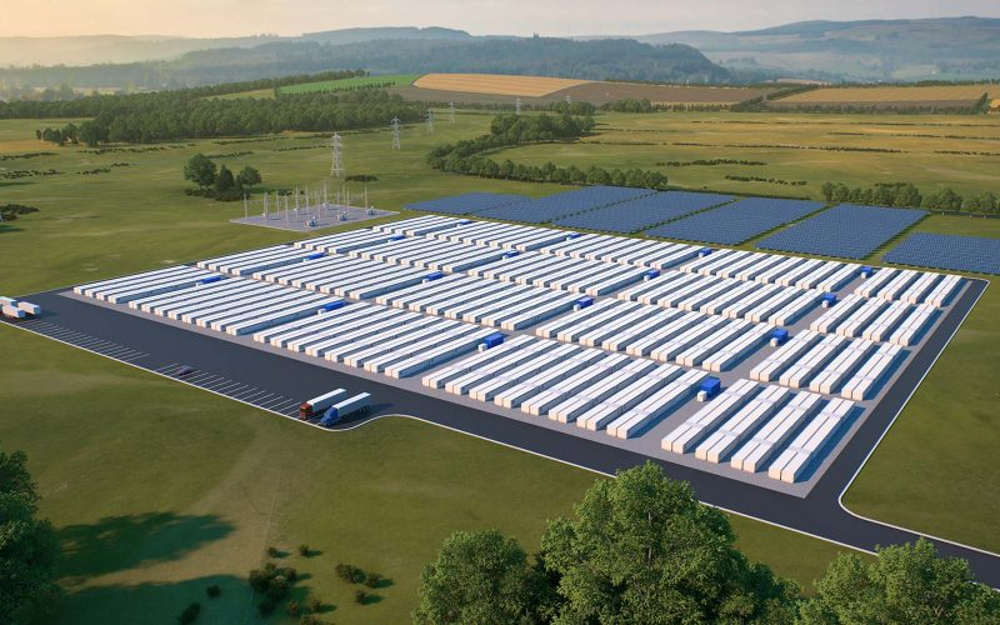
Form Energy To Build World's Largest Battery Energy Storage System In Maine - CleanTechnica
From Energy has chosen Maine as the site of its first large-scale grid storage installation with a capacity of 85 MW and 8500 MWh.
 cleantechnica.com
But there is a local iron-air manufacturer here in Oregon.
Long-duration Energy Storage | ESS, Inc.
ESS enables the energy transition and accelerates renewables with long-duration energy storage that is safe and sustainable.
 essinc.com
"ESS’ American-made solutions are rapidly deployable, available in months instead of years. Iron flow technology delivers unlimited cycling with zero capacity degradation over a 25-year design life."
Once again, Mr. Westwall, you prove to be a fool.
Sunsettommy
Diamond Member
- Mar 19, 2018
- 16,497
- 14,239
- 2,400
Where I live rates are lower at night, winter and summer.
People who buy EV's likely live in newer homes. Most provide 30 amps for the clothes dryer. That should do for charging an EV.
LOL, now you deflect to the dryer outlet which is INSIDE the home, sorry but that isn't good enough for the mythical Aluminum battery that Old Rocks still can't verify from post one.
You still overlook the part that 240 Volts (120V + 120V) is the maximum, allowed in the home and in single phase while that unverified mega battery would need third phase power flow to have a chance to charge it up overnight.
From Wiki,
As compared to a single-phase AC power supply that uses two current-carrying conductors (phase and neutral), a three-phase supply with no neutral and the same phase-to-ground voltage and current capacity per phase can transmit three times as much power by using just 1.5 times as many wires (i.e., three instead of two). Thus, the ratio of capacity to conductor material is doubled.
Three-phase supplies have properties that make them desirable in electric power distribution systems:
- The phase currents tend to cancel out one another, summing to zero in the case of a linear balanced load, which allows a reduction of the size of the neutral conductor because it carries little or no current. With a balanced load, all the phase conductors carry the same current and so can have the same size.
- Power transfer into a linear balanced load is constant, which, in motor/generator applications, helps to reduce vibrations.
- Three-phase systems can produce a rotating magnetic field with a specified direction and constant magnitude, which simplifies the design of electric motors, as no starting circuit is required.
Last edited:
Old Rocks
Diamond Member
- Thread starter
- #118
Yappity-yap yap.LOL, now you deflect to the dryer outlet which is INSIDE the home, sorry but that isn't good enough for the mythical Aluminum battery that Old Rocks still can't verify from post one.
You still overlook the part that 240 Volts (120V + 120V) is the maximum, allowed in the home and in single phase while that unverified mega battery would need third phase power flow to have a chance to charge it up overnight.
From Wiki,
As compared to a single-phase AC power supply that uses two current-carrying conductors (phase and neutral), a three-phase supply with no neutral and the same phase-to-ground voltage and current capacity per phase can transmit three times as much power by using just 1.5 times as many wires (i.e., three instead of two). Thus, the ratio of capacity to conductor material is doubled.
Three-phase supplies have properties that make them desirable in electric power distribution systems:
However, most loads are single-phase. In North America, single-family houses and individual apartments are supplied one phase from the power grid and use a split-phase system to the panelboard from which most branch circuits will carry 120 V. Circuits designed for higher powered devices such as stoves, dryers, or outlets for electric vehicles carry 240 V.
- The phase currents tend to cancel out one another, summing to zero in the case of a linear balanced load, which allows a reduction of the size of the neutral conductor because it carries little or no current. With a balanced load, all the phase conductors carry the same current and so can have the same size.
- Power transfer into a linear balanced load is constant, which, in motor/generator applications, helps to reduce vibrations.
- Three-phase systems can produce a rotating magnetic field with a specified direction and constant magnitude, which simplifies the design of electric motors, as no starting circuit is required.
Level 1: Chargers that plug into a regular 120-volt home outlet . Charge time: 10-20+ hours . Level 2: 240-volt chargers (like a dryer outlet) can fully charge an empty battery-only EV (BEV) in 4-10 hours
Can I charge an EV using a Dryer Outlet? - EVchargerReviews.net
If the location of the plug is within cable reach of your vehicle, the dryer outlet can be an inexpensive way to deliver Level 2 charging speeds to your EV.
 www.evchargerreviews.net
Seems you have no idea what you are talking about.
Woodznutz
Diamond Member
- Dec 9, 2021
- 35,347
- 18,066
- 1,788
That's something for the energy providers to figure out.LOL, now you deflect to the dryer outlet which is INSIDE the home, sorry but that isn't good enough for the mythical Aluminum battery that Old Rocks still can't verify from post one.
You still overlook the part that 240 Volts (120V + 120V) is the maximum, allowed in the home and in single phase while that unverified mega battery would need third phase power flow to have a chance to charge it up overnight.
From Wiki,
As compared to a single-phase AC power supply that uses two current-carrying conductors (phase and neutral), a three-phase supply with no neutral and the same phase-to-ground voltage and current capacity per phase can transmit three times as much power by using just 1.5 times as many wires (i.e., three instead of two). Thus, the ratio of capacity to conductor material is doubled.
Three-phase supplies have properties that make them desirable in electric power distribution systems:
However, most loads are single-phase. In North America, single-family houses and individual apartments are supplied one phase from the power grid and use a split-phase system to the panelboard from which most branch circuits will carry 120 V. Circuits designed for higher powered devices such as stoves, dryers, or outlets for electric vehicles carry 240 V.
- The phase currents tend to cancel out one another, summing to zero in the case of a linear balanced load, which allows a reduction of the size of the neutral conductor because it carries little or no current. With a balanced load, all the phase conductors carry the same current and so can have the same size.
- Power transfer into a linear balanced load is constant, which, in motor/generator applications, helps to reduce vibrations.
- Three-phase systems can produce a rotating magnetic field with a specified direction and constant magnitude, which simplifies the design of electric motors, as no starting circuit is required.
Sunsettommy
Diamond Member
- Mar 19, 2018
- 16,497
- 14,239
- 2,400
That's something for the energy providers to figure out.

By standard and often by LAW, 240v 200amps is the maximum allowed for the home as my link you ignored points out thus those "energy providers" can't do anything about it.
It is clear you are running on fumes here....
Similar threads

- Replies
- 3
- Views
- 279

- Replies
- 25
- Views
- 523


- Poll
- Replies
- 19
- Views
- 1K

- Replies
- 41
- Views
- 2K
New Topics
-
-

-

-
 Wild Poolside Brawl Breaks Out at Bahama Resort
- Started by Captain Creeper
- Replies: 3

