Still on the fence a bit regards this reviewer's take on the "social message" within this movie, but it was very enjoyable to watch and had some interesting twists and turns. May have to watch it again.
‘Knives Out’ Is a Surprisingly Subversive Mystery
Rian Johnson’s 2019 movie celebrates the whodunit—while also skewering its traditional power structure to condemn the 1%.
...
Knives Out, the 2019 film from writer/director Rian Johnson, bills itself as a whodunit. That’s more than fair. It wears the traditional framework very neatly. The story begins when a wealthy patriarch is found in his study, dead of a knife wound to the throat. All the guests at his estate (his various relatives and housekeepers) have reasons for wanting him killed. There are virtually no clues. There is no way anyone could have made it into his chamber to do the deed. And so a brilliant detective shows up on the scene to help the police investigate the crime—a crime which is, at this point, totally unsolvable.
There are twists and turns and tweed and a very satisfying ending. It’s set sometime during autumn in a cozy Massachusetts town. The detective who shows up on the case has a thick accent and is a celebrity. The baroque mansion is full of passageways and wood-paneling. All of the guests are protecting their own dark secrets. Indeed,
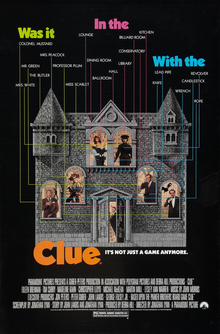
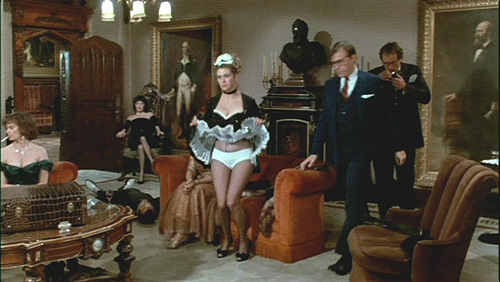
Knives Out seems to be the perfect whodunit; it checks every possible box associated with the genre, denoting a stylistic mystery lineage and then enthusiastically participating. The film acknowledges many of its canonical forefathers—the mansion is likened to a “Clue board,” a character jokes that the detective’s Southern accent means he belongs in
CSI: KFC, someone in the background watches a police procedural (whose drama is exaggerated for comic effect), the detective picks a helper and calls her his “Watson,” and, most importantly, the victim is Harlan Thrombey (Christopher Plummer), an octogenarian, best-selling mystery novelist with his own publishing house and liquid assets totaling $60 million. A mystery novelist, for crying out loud! The victim is a mystery novelist! The film is, for lack of a better word, a “fan” of the genre.
But
Knives Out’s adherence to hallmarks of the whodunit isn’t parody or even pastiche. And the film’s eagerness and self-awareness about joining the murder mystery pantheon might seem to portend a dull story—a regurgitative derivation, or a worshipful imitation, or something else well-meaning but unoriginal. But it doesn’t.
Knives Out is cleverer than its reverence lets on. Its enthusiasm is not exactly a trick (it is very sincere), but it does allow for a degree of underestimation. What
Knives Out really is, is subversive. Virtually everything about the film, and its set up, is a trick. I won’t spoil anything about the plot (this is a murder mystery, after all!). But the fact that
Knives Out is something of a wolf in sheep’s clothing, in terms of its narrative, underscores how it helpfully undoes, understands, and repurposes the genre which it wants so badly to inhabit.
It flips the thematic expectation of the genre, making the mystery plot secondary to the giant metaphor it provides. The film wages that the most important thing about this genre is not the question “who done it?” but the adjoining accusation: not the fact that someone is guilty, but the fact that other, innocent people are conveniently blamed.
...
Knives Out, the new film from writer/director Rian Johnson, bills itself as a whodunit. That’s more than fair. It wears the traditional framework very neatly. The story begins when a wealthy patria…

getpocket.com






:extract_focal()/https%3A%2F%2Fpocket-syndicated-images.s3.amazonaws.com%2Farticles%2F7867%2F1653367967_Sherlocks-Ready-960x430.jpg)
:extract_focal()/https%3A%2F%2Fpocket-syndicated-images.s3.amazonaws.com%2Farticles%2F8207%2F1665444983_6344abfb9dc33.png)