The economy by all measurable metrics is lights out good or, as characterized below, is a superstar! You are living in one of the most opportunistic economies that the US has had in decades. If you aren’t making it now then you need to think about whether the US is structurally set up for you to succeed or if it is one of those bootstrap things you need to pull yourself up by. I will 100% concede that a cranking US economy doesn’t trickle down to the working class as much as it makes the rich richer - but that is a stuctural problem not an economy problem.
How blessed are we?
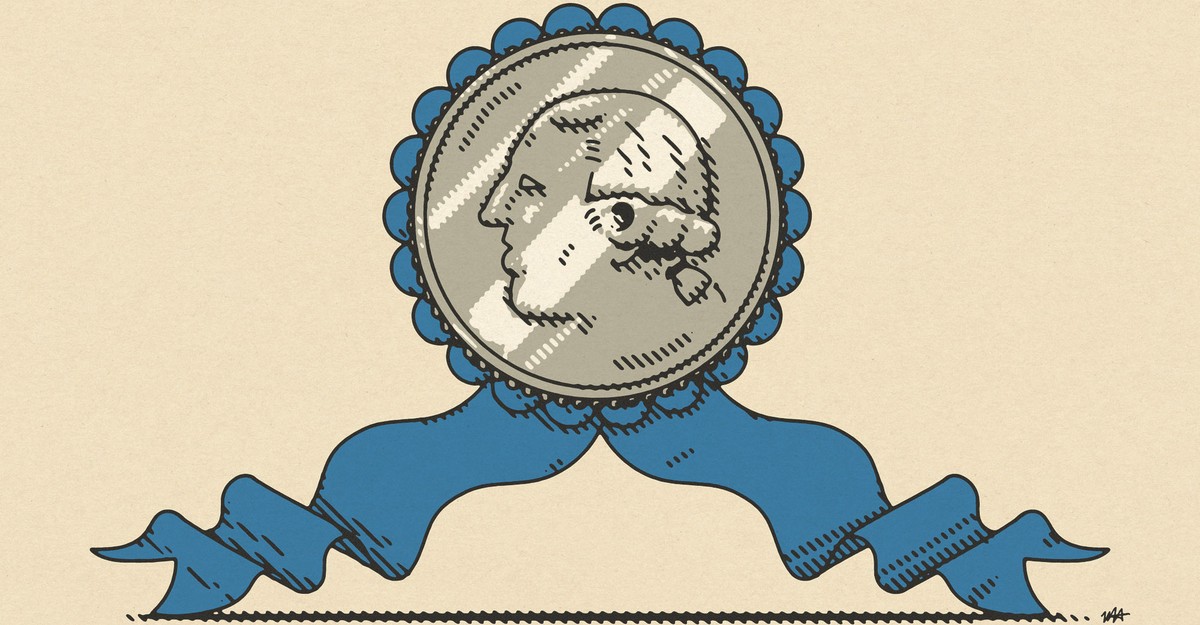
If the United States’ economy were an athlete, right now it would be peak LeBron James. If it were a pop star, it would be peak Taylor Swift. Four years ago, the pandemic temporarily brought much of the world economy to a halt. Since then, America’s economic performance has left other countries in the dust and even broken some of its own records. The growth rate is high, the unemployment rate is at historic lows, household wealth is surging, and wages are rising faster than costs, especially for the working class. There are many ways to define a good economy. America is in tremendous shape according to just about any of them.
The American public doesn’t feel that way—a dynamic that many people, including me, have recently tried to explain. But if, instead of asking how people feel about the economy, we ask how it’s objectively performing, we get a very different answer.
Let’s start with economists’ favorite metric: growth. When an economy is growing, more money is being spent. More stuff is being produced, more services are being performed, more businesses are being started, more workers are being hired—and, because of this abundance, living standards are probably rising. (On the flip side, during a recession—literally, when the economy shrinks—life gets materially worse.) Right now America’s economic-growth rate is the envy of the world. From the end of 2019 to the end of 2023, U.S. GDP grew by 8.2 percent—nearly twice as fast as Canada’s, three times as fast as the European Union’s, and more than eight times as fast as the United Kingdom’s.
Price increases on their own, however, can’t tell us if the cost of living has gone up. What really matters is the relationship between how expensive things are and how much money people have to spend on them. If prices go up but people’s incomes go up faster, then the cost of living decreases. And that is exactly what has happened in the U.S. over the past five years.

______________________________
IF you want an explanation why you feel worse than you should:
 www.theatlantic.com
How blessed are we?
If the United States’ economy were an athlete, right now it would be peak LeBron James. If it were a pop star, it would be peak Taylor Swift. Four years ago, the pandemic temporarily brought much of the world economy to a halt. Since then, America’s economic performance has left other countries in the dust and even broken some of its own records. The growth rate is high, the unemployment rate is at historic lows, household wealth is surging, and wages are rising faster than costs, especially for the working class. There are many ways to define a good economy. America is in tremendous shape according to just about any of them.
The American public doesn’t feel that way—a dynamic that many people, including me, have recently tried to explain. But if, instead of asking how people feel about the economy, we ask how it’s objectively performing, we get a very different answer.
Let’s start with economists’ favorite metric: growth. When an economy is growing, more money is being spent. More stuff is being produced, more services are being performed, more businesses are being started, more workers are being hired—and, because of this abundance, living standards are probably rising. (On the flip side, during a recession—literally, when the economy shrinks—life gets materially worse.) Right now America’s economic-growth rate is the envy of the world. From the end of 2019 to the end of 2023, U.S. GDP grew by 8.2 percent—nearly twice as fast as Canada’s, three times as fast as the European Union’s, and more than eight times as fast as the United Kingdom’s.
Price increases on their own, however, can’t tell us if the cost of living has gone up. What really matters is the relationship between how expensive things are and how much money people have to spend on them. If prices go up but people’s incomes go up faster, then the cost of living decreases. And that is exactly what has happened in the U.S. over the past five years.
______________________________
IF you want an explanation why you feel worse than you should:
What Would It Take to Convince Americans That the Economy Is Fine?
When it comes to prosperity, Americans trust feelings more than facts.
www.theatlantic.com