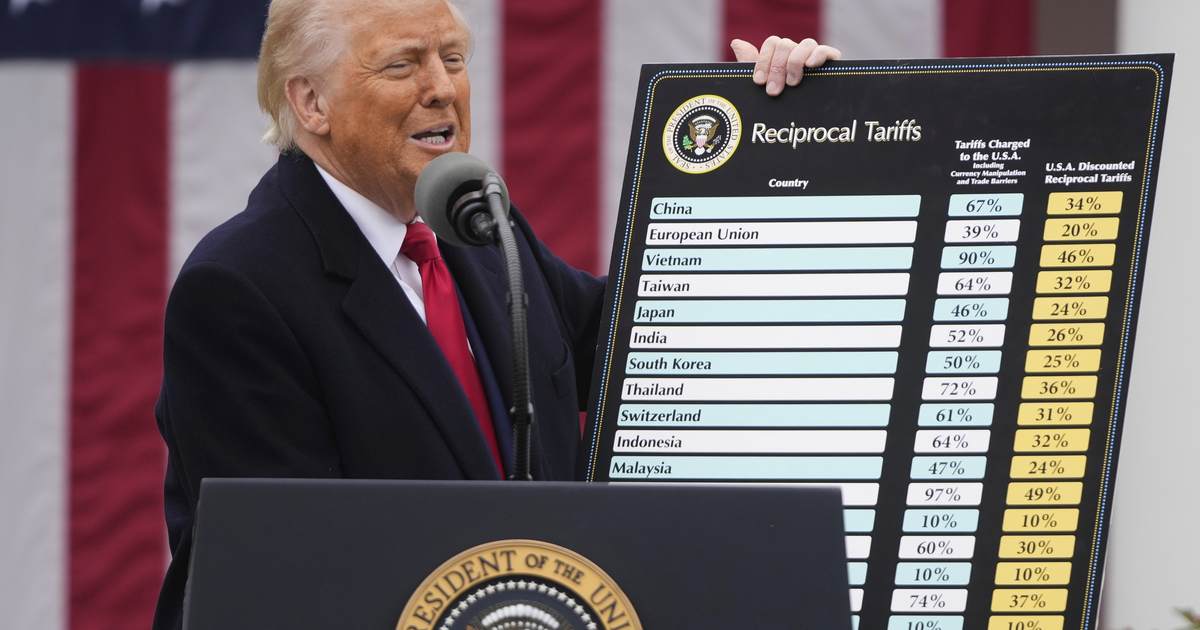
Trump's tariff revenue is on pace for another monthly record in June

The stock market not only rebounded, it is now higher than ever...and the tariffs are working according to plan....

The U.S. Treasury reported a budget surplus in June, driven in large part by a surge in tariff revenue, thanks to President Donald Trump’s America-first trade policies. The surplus offers a clear reminder that strategic tariffs can strengthen the nation’s bottom line while prioritizing domestic industries and American jobs.

Are you joking? The so called surplus is being paid by tax payers compensating for the tarriffs. Do t be so gullible. You are literally cheering on government revenue paid for by tax payers. Is that really the ideology you want to stand behind?
 
Are you joking? The so called surplus is being paid by tax payers compensating for the tarriffs. Do t be so gullible. You are literally cheering on government revenue paid for by tax payers. Is that really the ideology you want to stand behind?
Tariffs generate revenue for the government but often act as a hidden tax on consumers. When a tariff is imposed on imported goods, the importing country collects the tax from the importer. For example, U.S. Customs Service data shows tariffs generated $88.3 billion in revenue in 2022. However, importers typically pass these costs to consumers through higher prices. A 2019 study by the National Bureau of Economic Research found that U.S. consumers bore over 90% of the cost of tariffs on Chinese goods, with prices rising significantly for affected products like washing machines.The net effect depends on context. Tariffs can protect domestic industries, potentially saving jobs, but they raise costs for consumers and can disrupt supply chains. For instance, a 2020 Peterson Institute study estimated that Trump-era tariffs reduced U.S. GDP by 0.2% and cost 142,000 jobs due to higher input costs for manufacturers. Conversely, revenue from tariffs can fund government programs, but it’s a small fraction of total revenue—$88.3 billion in 2022 was about 2% of U.S. federal receipts.So, while tariffs bring in money for the government, consumers often pay the price through higher costs, making it a de facto tax. The trade-off depends on how the revenue is used and the economic goals, like protecting local industries versus minimizing consumer costs.

but...........many tariffs are on raw goods like steel, does it trickle down to where your ford might cost more? possible but how often do you buy a new vehicle to notice?

And who buys a new vehicle all the time? RICH people, not the poor

in a broader sense it's a hidden tax on the rich who can afford to pay a bit more, right?

is that not what democrats always want, tax the rich?
 
I'm sure they could end tomorrow..or sooner...you know....TACO! :auiqs.jpg:

That's it, Jack, now you're getting it, that is how tariffs work, like a TACO... full of refried beans, like your theories on economics.

Lessee Jack----

  • Trump saves the USA 27 billion dollars but he doesn't know what he is talking about!

  • YOU on the other hand have saved the USA -SQUAT- but now you're an expert on the subject.
 
Yes, but they're a tax levied against foreign producers, making their products less competitive with domestically produced goods. If you don't like paying more for foreign products, don't ******* buy them.
As I posted earlier many tariffs are on raw goods to make a product.
You won't see a huge rise in prices of trinkets from china, maybe a small bump from your TV from SK

if you are a contractor, bump in the price of copper tubing

vehicles can get hit or basic steel for buildings, bridges etc but the contractor deals with that.
hell, they usually get grants, tax breaks etc to build something in a certain city or state.

domestic made vehicles even foreign companies it does not matter if they use domestic steal [US steel, Nucor]

If the aluminum which is very common today in vehicles is from Alcoa, again no price rise

this does not effect mom and pop....
 
Yes, but they're a tax levied against foreign producers, making their products less competitive with domestically produced goods.
Strange...foreign producers don't pay them. American importers do and pass those higher corporate taxes onto customers.
 
Strange...foreign producers don't pay them. American importers do and pass those higher corporate taxes onto customers.
still missing the point, tariff copper, steel and aluminum which hurts our domestic producers, not rubber dildo's
 
15th post
This is a clear demonstration of the tax burden moving off of the rich and onto the working class and poor. Trump gave a tax cut to the wealthy and then raised the taxes on goods purchased. What’s hilarious is that he is still net -$3T in revenue.

This is like watching the titanic hit the iceberg and saying… see, not that bad? Check in next April when taxes are due.
 
The stock market not only rebounded, it is now higher than ever...and the tariffs are working according to plan....

The U.S. Treasury reported a budget surplus in June, driven in large part by a surge in tariff revenue, thanks to President Donald Trump’s America-first trade policies. The surplus offers a clear reminder that strategic tariffs can strengthen the nation’s bottom line while prioritizing domestic industries and American jobs.


I’m not sure what “calender adjustments’ figured in the one month surplus. But without them, the deficit would have been $80 billion, not a surplus at all.

Overall, the deficit is running 1.3 trillion

 
Tariffs are taxes, right?
Tell us how to get manufacturing to return with a fair wage for those who work in those fields. You guys purchased foreign vehicles during the two gasoline problems in the 1970's because the Japanese built smaller cars better. And yet backed the auto unions. Always the talk while you live well and letting others support what you say you do.
 

New Topics

Latest Discussions

Back
Top Bottom